Feeds:
Posts
Comments

Archive for the ‘Memoir’ Category

Hashish

This is a chapter from Volume I of my autobiography entitled Sex with a Sunburnt Penis. The chapter was in fact removed from the second draft as part of a lengthy culling process and re-organisation of the material. Sex with a Suburnt Penis (hereafter, SWASP) was written between July and November of 1997 after a particularly bad break-up of a relationship that had lasted four and a half years. It goes without saying that I brought it all upon myself through repeated misdemeanours, but still was genuinely devastated when the shit hit the fan. It set me off on a particularly introspective  period of binge-drinking and autobiographical writing, inspired by Henry Miller, Lawrence Durrell and Ernest Hemingway to name a few. My habit of diary-keeping – still have not missed a day since 1986 – made this process considerably easier as I had a wealth of material to mine, alongside my then more vivid recollections of the events.  Whilst not in evidence here, I still consider some of the the stronger passages of SWASP to be my most visceral and honest writing to date.


Hashish

One afternoon when I was sixteen years old, whilst helping my dad to paint the lounge-room, he asked me a question out of the blue.

“Mate, do you smoke marijuana?”

“Ummm, no,” I replied.

“Look,” he said, “I used to smoke it a bit myself, and I’m not against it. But I still think you’re a bit young to be getting into it.”

I nodded and said, without making eye contact, “Well, I haven’t tried it.”

“Well, look, mate,” said my dad, squaring up, “if you ever take anything, for whatever reason, and you get into any trouble, I want you to know that you can always call your dad. Just get straight on the phone and I’ll come and get you, wherever you are. Don’t be afraid of being in trouble – the first priority is to make sure you’re alright.”

He was looking at me so intently that I felt embarrassed. I was glad to have the roller in my hand.

“You’re my son,” he said, “and I don’t want you to do anything stupid, obviously. But we all make mistakes. Don’t be afraid of calling your dad if you need any help.”

“Umm, I won’t. Thanks.”

He turned back to the wall and smiled to himself.

“I tell you what,” he said, “smoking dope used to make me as hungry as buggery.”

The truth, of course, was that I had started smoking dope the year previous, though I never seemed to get properly stoned. I rather wondered what all the fuss was about, for none of my friends seemed to get stoned either. My closest friend, Jason, tried his best to prove otherwise one truant afternoon by hiding in the cupboard and pretending to be linen, but it didn’t exactly wash. I felt sure he was faking it, and so did everyone else, yet our doubts were mixed with the envious fear that he was actually stoned. It seemed churlish to challenge him so I just pretended I was stoned as well. We all did.

Such pretending certainly had its precedents, for, earlier that year, Jason and I had spent many hours practising with tea-leaves. One terribly immature evening we donned some paisley head-scarves, ordered a pizza and rolled up a savage, nine-skin, Earl Grey and Russian Caravan Tea joint. After a heavy dose of bergamot we upped the ante with a few lines of sherbet, put on The Tracks of my Tears and re-enacted the scene from Platoon in which Charlie Sheen smokes through a gun-barrel, albeit with Irish Breakfast and a plastic tube. It was a farcical charade of retro cool, but at fifteen we longed for a taste of counter culture so badly that even mere pretence had the tang of rebellion.

Well versed as I was on the subject of tea, when it came to marijuana I was entirely ignorant of the varieties and in all likelihood we were only smoking leaf. No wonder we never got stoned, but then, getting hold of any stuff, let alone good stuff, was a serious obstacle. In my third year of high school Jason and I had tried to buy our first “foil” from a classmate called Duke. A few days later in maths he handed our twenty dollars back. No luck. It was to become a familiar story and our hopes were regularly dashed in this fashion.

By the time we were sixteen, marijuana began to show up at parties. I puffed away on the rare and holy joints of empty leaf, but so little effect did it have beyond inducing an overexcited and ultimately frustrated musing on its workings, that I entrusted my evenings to the siege engines of tequila. Not having been properly stoned made it difficult to know what to recognise when it finally happened. Yet, when I did find out, the contrast was immediately apparent and set a benchmark I was unlikely ever to forget.

Like so many pivotal moments in life, fortune smiled from the unmapped realm of the random. One Friday night, a mere week after my father’s enquiry, I walked into the Paddington Green hotel to see if anyone was about. This pub was notorious for turning a blind eye to underage drinkers and was a favourite haunt of the more game amongst my high school peers. “Game” was a tag to which I keenly aspired.

In the front room I spotted two friends, James and Rowena, who were playing the card machines. They seemed happy to see me, so I bought a beer and pulled up a stool.

“I’m having shit luck,” said James. “Why don’t you have a crack?”

“Okey dokes, though I haven’t the faintest…”

They showed me what to do and I doubled up a few hands; a fifty-fifty choice between red or black cards. I can only assume that it was a brilliant spate of beginner’s luck, but within five minutes I had won them forty dollars. It was no piddling amount for a teenager back then.

“Fucking excellent,” said James. “What a champion. We should go and get smashed!”

Both he and Rowena were keen as mustard to get hammered and it was plain they knew how to make it happen. I was scared of their capability; James and Rowena were united in rebellion against school and convention and were known to indulge in harder things than booze and pot. Despite being curious and adventurous, I retained much childhood timidity.

“Maybe we could get some speed as well,” said James, confirming all of my worst fears.

“Oh, no,” I protested nervously, “I don’t want to get involved with anything like that.”

“Nah, well, don’t worry, man,” said James, “we wouldn’t want to do make you do anything you don’t want to do.”

I was pleased with how quickly they ruled it out. I felt completely reassured and my spirits rose again. They were going to look after me! I was excited by the prospect of heading into a world with a harder edge; nothing too dramatic, and hardly a patch on what was to come only a year later, yet it had all the gravity of anticipated significance.

Before long we were on the ever-reliable 380 bus to Bondi. The long bus swung and dipped its winding way to the Royal Hotel, where James said a quick score was certain. “We’ll get some hash, man. Have you ever smoked hash?”

“Nah,” I said, swallowing my resurrected uncertainty.

“It’s just like dope, man. It’s the same stuff. But different. Better.”

Rowena smiled. She was beautiful, Italian, wearing a little too much foundation.

“I love hash,” she said.

It sure seemed sexy now.

The pub terrified me. I’d never seen a place with so many rough blokes in it and there was none bigger and rougher than the bloke whom James approached and disappeared with into the toilets. I waited outside on the street with my nerves crippling my conversation. I liked Rowena, but she was so grown up for a girl her age that I felt like a child beside her. I stood dumb, expecting something awful to happen; that somehow we would all be the victims of violence. The real world could be frightening, exposing the thinness of my bravado. It was vast and I felt small. It struck me that out on the edge there was less room to run.

When James emerged a couple of minutes later I couldn’t wait to get moving. “It’s sweet, man,” he said, “I got a hell-good deal.”

The humid air was full of spring blossom and the sea. We hurried off into the night, all of us with an extra spring in our step.

“Have a look, man,” said James, offering me a stick of hash. I had no preconception of what hashish might look like and was surprised to find a slightly sticky, malleable brown lump in my hand. It was like the chocolate Spacefood bars I’d eaten in primary school and similarly moulded into a rectangle. I gave it a light squeeze and took a sniff. It was nutty, pungent and dusky. I smiled and handed it back to James.

Away from the main strip I was able to relax. Since being harassed by Nazi punks only a year before, I was wary of everyone and felt more at ease away from the main strip. In the side streets I could hide in the shadows, but Bondi Road swarmed with fired up, drunk young men and it was anyone’s guess as to who or what they might not like.

Before long we arrived at James’ house. It was a modern, red-brick semi which mirrored the one adjacent; set back from the road down a fragrant path.

“My mum’s home downstairs,” he said, “so we have to be real quiet.”

We tip-toed along a hall and into the front room; James held his finger to his lips. This was much more familiar territory; a game I knew only too well. I was adept at being stealthy and had a whisper so low it might be mistaken for the brush of silk.

We settled against bookshelves, sitting cross-legged. “I’ll be back,” said James, and snuck off into the hall. Rowena and I remained silent, smiling and raising eyebrows. I wondered what she saw in James. He might be cool and know a thing or two, but he was jug-eared and acned. It must have been his street cred, his dedication to the dark side that gave him the upper hand.

He returned just two minutes later with a bowl, a bong and a packet of biscuits.

“Are you mixing?” James asked, handing the bowl to Rowena to confirm this demarcation.

She took the hash from him and squeezed it into a ball. In the bowl was an unfolded, blackened paperclip. Using the paperclip as a prong, she stuck the round ball of hash on the spike, then placed it beside her. Without a word she removed a cigarette from the packet and began toasting it with the lighter; running flame up and down its length. The paper browned and blackened in spots and soon, satisfied, she put down the lighter and rubbed the cigarette between her fingers. The now drier and more brittle tobacco spilled out into the bowl. Next she took the paperclip in her fingers and held the lighter under the ball of hash. She turned this over and over in the flames, flicking it in and out and being careful not to set it alight. Sweet and heady smoke arose to mix with the toasted tobacco smell, and then, in a quick move, she pinched the hash from the end between thumb and forefinger, plunged it into the tobacco and began to work the mix with her fingers. In no time she had transformed the contents of the bowl into a dark, finely ground powder. I’d never seen anything like it and had watched the whole process in silent awe. Marijuana was marijuana, but this looked more like drugs. Perhaps it was really Rowena who had all the cred, and it was James who was along for the ride.

I still did not say a word; partly in honour of the request to remain silent, and partly out of a desire not to reveal my ignorance by asking naïve questions. James just sat smiling, saying nothing either. Rowena now packed this powder into the cone of the bong and handed it to me with a lighter.

“You go first,” she said, with a polite smile.

“Are you sure?” I whispered?

“Yeah, go on.”

I put the bong to my lips, put my thumb across the air hole and fired up the cone. The smoke tasted as rich as it smelled; it was a brown and heavy flavour, dusty and woody, and within seconds of tasting it I felt my head reeling. I leaned back against the bookshelf and didn’t move or say a word. I knew it was regarded as unmanly not to “punch” a cone, to finish it in one hit, but I took it slowly through several breaths. By the time I placed the bong on the floor and nodded silent thanks, I was well on my way to a new sensation.

James and Rowena smiled and turned their focus back to the business of packing and smoking their own cones. I sat silently, feeling myself accelerate and slow simultaneously. I guessed that this must be it, that I must be becoming stoned! Time slowed down further and my heart began pounding in my chest; the few words uttered by James and Rowena reverberated in my ears. The quiet, almost inaudible sounds of the room became echoes in what seemed a vast soundscape. I shuddered with the sounds; I shuddered in myself; I heard a sliding, throbbing noise and listened to the blood coursing through my veins. I pressed myself close against the bookshelf and watched the other two going through the motions of smoking. I had absolutely nothing to say. I was afraid of hearing my voice.

I felt both fearful and elated; and rose and dipped rapidly between the two. James and Rowena were smiling. “Excellent,” said James. “Excellent hash,” and I found myself laughing, having never heard anything so funny before in my life. It was the release I needed, but it was not enough. A moment later I felt the shelves against my spine and began to reason my way through this.

“Okay,” I thought, “this must be it. So, I’m stoned at last – tick – but what the hell do I do now? What happens next?” It was almost unbearable being forced to sit here so quietly, and then I realised that James was talking. He was talking to Rowena! Weren’t we supposed to be quiet? I couldn’t really understand what they were saying, for by the time he’d reached the end of a sentence, I’d forgotten how it started. I blinked and then closed my eyes, but things began to spin, so I opened them again and looked straight ahead. The packet of biscuits was being offered to me.

“Have one,” said James, “they’re fucking excellent.”

The biscuits were crisp and cheesy and I took two. I stuck one in my mouth and broke it in my teeth. It was dry and so was my mouth, yet in no time I chewed it into a salty, cheddary paste. They were superb biscuits! I felt the world had once again grounded itself. This was the key – sustenance! How could mankind live without food? I felt myself growing hysterically excited, tears welled in the corners of my eyes, my throat caught and thickened , but I said nothing. I was afraid of what might happen if I started to speak. What would come out? My words or someone else’s?

I ate the second biscuit. It was an historic moment. Here, still, after thousands of years, we were making things from wheat, as once they had in the fertile crescent. Where would we be without crops? Without agriculture? Where we would be without all these slow accumulations?

I was nodding to myself, nodding and chewing my way through that second biscuit. Damn the biscuit was good. I reached out and took another one. So this was what they called ‘the munchies.’ Now I could say I’d officially had the munchies, and yes, I was officially stoned!

James got up to leave the room again. Suddenly there were only two of us – how odd it all seemed. This room felt desultory. I hated overhead lights, yet, propped like some quarto volume leaned against the shelves – a book full of words and pictures – I felt small and inconspicuous. Safe enough to begin speaking.

I opened my mouth and nothing came out. I hadn’t prepared anything at all. Where should I start?

“I’m really stoned,” said Rowena.

“Yes, yes, me too!” I said, thrilled to have a contribution. So, it wasn’t just me, of course! We were both stoned. And what about James? He must be stoned as well. How was he faring out there, sneaking like a cat, like a hunching goblin, picking adventurers’ pockets, hiding the gems in his little chest…

I spoke on; unfocussed, confused inanities to Rowena. James returned and smiled at us. No toilet had flushed, no tap had run – where had he gone? I dived back into the crackers like a man possessed. I needed something to do; I needed to return to the Fertile Crescent. I ate three, four, five more biscuits; but still could not think of a way to start a conversation. I saw Rowena reaching for the bowl, saw her filling the cone. Was she mad? Was it time for another? How much time had gone by? Oh my god, what day was it? Where the hell was I? She was leaning forward with her almond eyes, her cunning smile, her lures and wiles all just for James. I took the proffered bong – it had come from a beautiful woman. Could I say no and still be a man? I smoked it, more quickly this time. By gosh my mouth was dry.

Time stretched out, accordion-like, and I tumbled backwards into the widening distance. It was slow in there, heart-pumpingly slow. I took a deep breath and fell further back into a new and juddering slowness, only this time I kept falling. I could feel the bookshelves against my back, but no longer did they anchor me to the world. I was turning over and over, in an ever-faster spin. I pushed myself more firmly against the shelves to discomfort myself back to reality. It didn’t change anything; I tumbled ever on into a ghastly image of an Icelandic maelstrom conjured from some children’s book.

Oh god, I thought, and suddenly felt very sick indeed.

“James,” I said, breathing carefully, trying to right myself, “I don’t feel so good. I think I need some fresh air.”

“Okay man,” he said.

“Are you alright?” asked Rowena.

“I dunno,” I said. The saliva rushing into my cheeks was sobering; enough to give me speech, but not enough to stop the spinning.

I stood up, climbing hand over hand behind my back, shelf by shelf. James steadied my elbow and guided me through the door. I was listing and reeling, but I stayed my course and we made it to the entrance.

“Are you alright, man?” asked James.

“I’ll just be a bit,” I said and left him standing in the doorway.

I stumbled into the night and made straight for the nature strip, feeling sure I was going to puke. I lay on the grass and welcomed the cool of the springy blades, stretching my neck to place my cheeks on the cold concrete gutter. I had learned from several overzealous tequila nights that cold floors were my salvation. Ideally I’d be lying on bathroom tiles, but at least the air was fresh out here.

I held off the first wave of nausea and tried to haul myself in. I wanted to close my eyes and go to sleep, but could only avoid the spins by keeping them open and focussed on the streetlights. What was wrong, I wondered? Was it the cheese biscuits? The earlier beers? Or could hash do this all by itself? What would my father think of all this?

I slowly managed to get myself together. I felt confused and disoriented, but my stomach had stopped its lurching. I couldn’t stay out here forever and decided, after some time that I was well enough to go in.

I stood up, turned around and found myself in serious trouble. The two houses in front of me were identical, and like a butterfly print, their doors faced the same central path. I remembered that the door had been on my left when I came outside, and therefore, I reasoned, it must be the door on the left. I walked towards it and tried the handle, but it was locked. I was afraid that I had been locked out accidentally and reached for the buzzer. It was only then that I realised my mistake. I stepped back, walked over to the door on the right, found it unlocked, and went back inside the house.

I made it through to the room where James and Rowena were sitting, gave a little wave and welcomed their smiles, but the moment I caught a whiff of the hash my stomach vaulted. My head reeled and saliva rushed again to flood my gums. I wobbled, flushed with panic and turned straight back around to head for the pavement once more.

I took up my previous position. The grass was waxy and sharp and pressed through my loose black shirt. The concrete smelled of stale sun. I could scent the cool rubber of a car tyre and the metallic grease of the brakes. I desperately wanted some water, but had not had the good sense to ask for it. I was still an amateur at looking after myself, still working out all the cures. I stared at the lights, hiding in the shadows. At first I had been too anxious to be ashamed, but now I was beginning to feel conspicuous.

I pulled myself together, stood up and brushed myself down. I was dizzy and confused, but my stomach felt sound. I made for the doorway but once again faced a dilemma. Which door was it? The left or the right? I struggled to remember. All I knew was that I had gotten it wrong last time. I recalled my previous mistake and tried to work through it – I had started confident but came to the wrong conclusion. Only where had I started from last time? What was the basis of my previously flawed logic? I could not remember, but the door on the left looked attractive. It looked familiar. Had I not perhaps gone through it before?

I tried the handle on the screen door. It was locked again! I couldn’t think at all. What had happened last time? Had I rung the buzzer? Had I knocked on the window? I couldn’t remember a thing. Was this what it was like to be stoned? I pressed the buzzer. What the hell, I needed water; I needed to get inside. I waited only a few seconds before being struck by the terrifying realisation that this was the wrong door. Of course! The other door had been open all along. I ran across the path, tried the other door and was through into the hall in a flash.

I needed water, but wasn’t going to try finding the bathroom by myself, so I walked through to where James and Rowena were sitting. It looked and smelled as though they’d just had another cone; the air was thick with smoke, coiling around the glaring, ugly light. The reek was dreadful, overpowering, and before I could say a thing I felt myself reeling again. “Oh, god,” I said, “get me some water!” Then I turned straight back, ran this time through the front door, lunged towards the gutter and vomited into the concrete.

“Oh, god, oh god,” I moaned, as the full scale of my cheese-cracker consumption became gaudily apparent.

I rose with the heaving retches, otherwise lying flat as a lizard. I don’t imagine anyone likes to vomit, yet I had lived with a phobia of it since suffering a terrible bout of gastro-enteritis at the age of eleven. I was old enough to know I would shrug it off, however, and did not feel overly concerned, but rather, humiliated, ashamed, longing for home. My father’s words now came back to me clearly. His offer of assistance would be more than welcome now, yet my troubles did not seem to be on the scale his words had suggested. Still I imagined him helping me up, grabbing me under the armpits and lifting me to my feet. “We’ll get you home, don’t worry, son. You’ll be alright.”

My home grew great and necessary in my heart. What was wrong within me to make me seek these alternatives, these frontiers? Could I not be happy at home, clean and fed, loved and looked after? Of course it came with a swathe of attendant woes, but the core things, beyond all the bickering, brought a simple, profound happiness. I wished these truths could be always predominant. What a pleasure it would be to go home now and feel them in my body and soul; to feel the safety, comfort and love.

One evening when I was twelve years old, walking home with my father along Oxford Street, we passed by a scene that shocked me to the core. On the bus-stop bench sat two young men with a girl lying across their lap. The girl was, to all intents and purposes, unconscious and had vomit trickling from her mouth, right into the lap of one of the blokes, who seemed so out of it as not to care.

“Jesus,” said my father, “who bloody-well sold them the booze?”

I felt at the time a mix of fear and shame, but worst of all, it made me feel very, very ill owing to my morbid, indeed, at the time, pathological phobia of vomiting. I could not comprehend how people could put themselves into such situations. And yet, look at me now! Perhaps it wasn’t always so obvious where the limits lay.

I retched and retched until I could retch no more, praying that no one would walk past, wanting neither their scorn, their charity or their pity. I was especially fearful that some young child might walk past with their father or mother and that I would become the fearful blueprint of how not to behave. I cursed my fate. So, being stoned could make you sick as well? I suppose I wasn’t to know.

After fifteen minutes I stood up and steadied myself. I was disappointed that neither James nor Rowena had come to check on me; yet perhaps things were more discrete without a pavement congregation. I faced my foe one last time: the two identical doors. Surely I could not make the same mistake a third time, and yet I did, trying the handle repeatedly on their tight screen door. I stood a while shaking my head. How could I be so useless? How I longed to be home, showered and changed, warm in my bed with a good book and the dogs snoring at my feet. How I looked forward to the happy normality of Sunday, killing time with my brother.

I soon realised my mistake and crossed to the right side of the path. I turned the handle and walked on in, back with the low, roiling scents of oily hash. I marched straight through to see James and Rowena and told them I was leaving.

“Can you call me a taxi?” I asked, and they were more than obliging. Perhaps they had just forgotten about me out there; perhaps they had simply not cared. I couldn’t be sure, but I was pleased to be leaving.

“Can I use the bathroom, man?”

“Sure thing.”

Rowena showed me through with a curious, sorrowful smile. I wondered if their hearts were hardening in this life they led, or were they harder to begin with.

I washed my face and hands, rinsed out my mouth, drank a small amount of water. When I emerged from the bathroom, James and Rowena were waiting to see me off.

“Taxi’s coming,” said James, “it won’t be long now.”

We all walked outside.

Later that night as I sat up in bed, freshly showered, book on my lap, nursing a hot cup of tea, I made a silent promise that my father need never come fetch me. Despite his willingness, was it really necessary for him to know of my shame?

So it was, that on the hard nights to come, on the speed and acid, coke and ecstasy nights of the reeling future, I didn’t muck around, but instead went straight to hospital.

Read Full Post »

“Do you want some books? Some English books?”

It was Sunil speaking, my auto-rickshaw driver for the last two days in Jaipur.

Jaipur - The Boss

“I have two books. You can take them with you.”

“What books?”

“Two English books. A girl gave them to me to read. She said they are very good books. She gave them to me to read them when I learn to read properly.”

“Oh, nice. What books are they?”

“I’ll get them.” He stood up in his chair and I rose halfway myself.

“No, it’s cool, man,” I said. “Don’t worry. It’s too much trouble.”

“No, it’s no trouble. I live across the road. I’ll get them.”

“Really, only if it’s no trouble.”

He laughed and smiled again. “It’s just across the road.”

“Okay, sure. If you want to, thanks.”

Sunil left in a flash and I eased back into my chair. I was sitting on the open rooftop of the hotel; drinking black tea and picking away at a paratha. For the last twenty-four hours I’d had stomach problems aplenty and had only just gotten through the day’s activities: a visit to the Jantar Mantar and Amber Fort; a test of endurance in forty degree heat.

Amber Fort, Jaipur
At the far end of the rooftop, before a painted arch, a two-man troupe were putting on a puppet show; stories of the Ramayana. At times the volume was too much, the cymbals too clanging. I was too fragile for much patience, but also a tad too weak to feel any annoyance. I was still acclimatising to India, to Rajasthan, and I guess getting sick was part of the trip.
Sunil and I had just cut a deal. His uncle, Shyam, was to drive me around Rajasthan for the next ten days, starting the following morning. The price was fair and it seemed a far more convenient arrangement than taking my chances with the local buses and trains. It would also ensure I could see the more remote forts and temples, provided I was well enough.
I began to wonder about the books Sunil was bringing. What would they be? Rudyard Kipling, for heaven’s sake? I wasn’t terribly optimistic, though I wasn’t too pessimistic either. The worst case scenario would be a couple of airport potboilers, or some junk about spiritual enlightenment, though I most expected him to hand me some inoffensive, lightweight fiction.

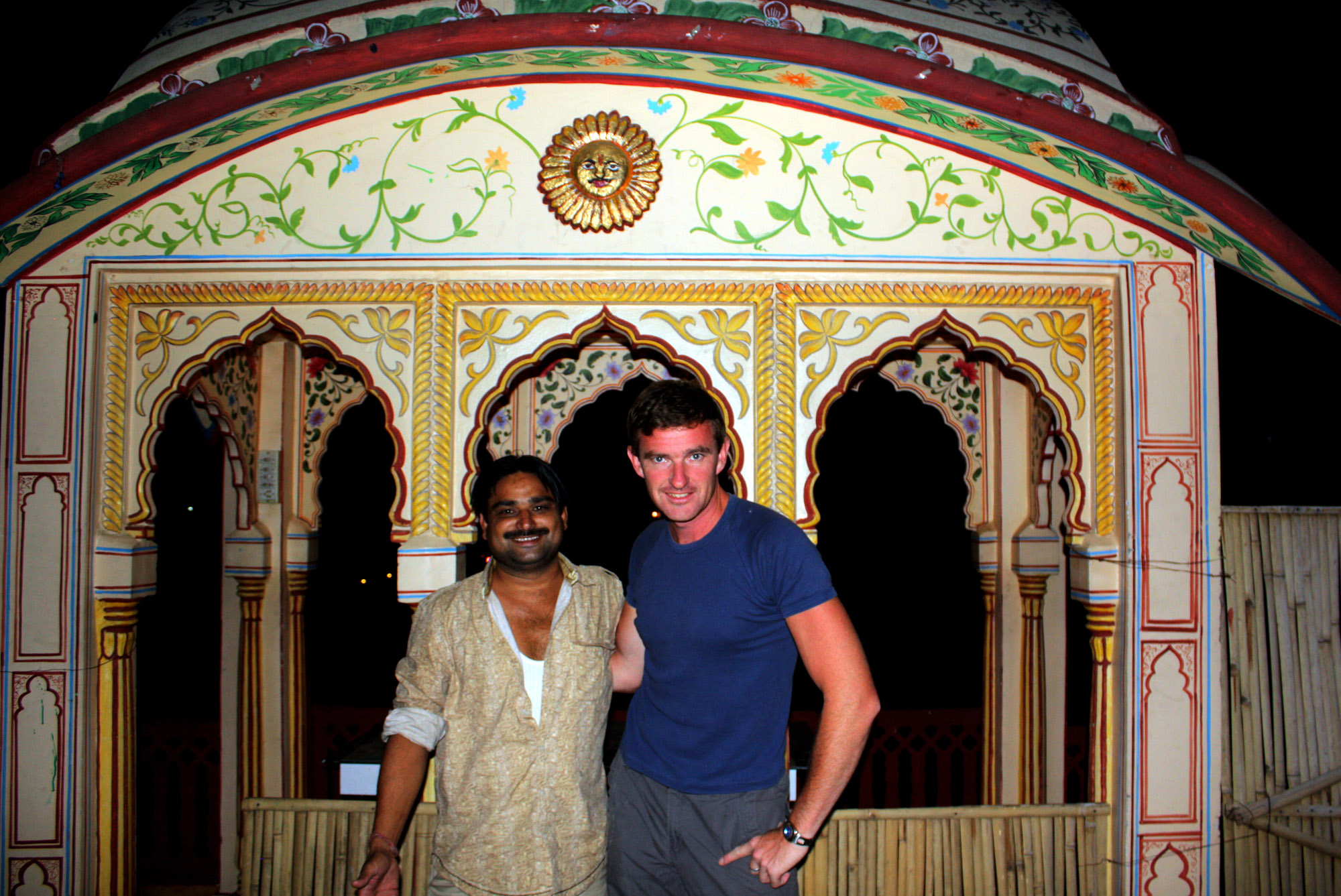
Jaipur Hotel
Sunil returned after five minutes, wielding two books. One was a hardback, the other, a floppy paperback.

“Here they are!” he said.

He was slightly out of breath. A short, moustachioed, rotund and cheerful man in his mid-thirties, Sunil always had an air of abundant enthusiasm.
He placed the books on the table and as soon as I saw the titles, I was pleased and surprised.
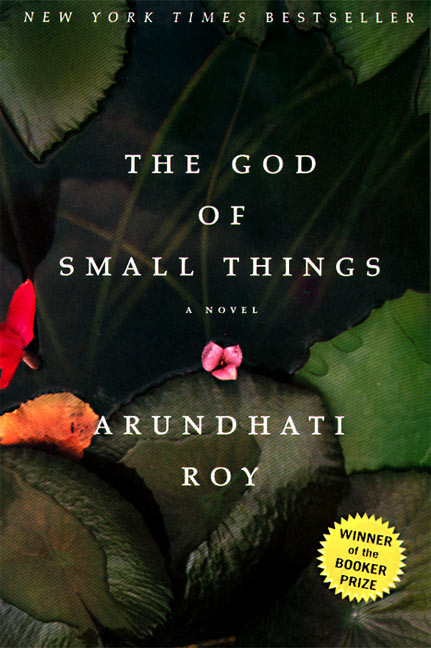
Summertime by J.M. Coetzee and The God of Small Things by Arundhati Roy.
I had read neither of them, but had wanted to do so, and now I was free to take them with me around Rajasthan.

“Oh, cool,” I said. “Excellent.” I picked up Summertime.

Summertime - Coetzee

“This guy, Coetzee, is a very famous author. Have you heard of him?”

“No.”

“He won the Booker prize, twice. It’s like the biggest prize in writing and only two or three people have won it twice. I’ve read about six of his books. Hell, I even taught his stuff once!”

“But that’s great,” said Sunil. “See, I knew these books would be good. The girl was very nice, very clever.”

“And have you heard of Arundhati Roy?”

He shook his head.

“She’s Indian, though I don’t know where from. This book also won the Booker prize. It’s supposed to be very, very good.”

“Very good then! And now, you can read them and tell me what you think. One day, I will read them too.”

We turned back to planning my route through Rajasthan over a large map of the region. I was very excited, though uneasy with stomach cramps. As we sat there over the next half hour, I kept glancing at the books and wondering whether or not these would really be the best place to start reading English literature. Coetzee might be just the thing, with his terse, laconic use of language and simple sentences, but I had no idea what to expect from Arundhati Roy. Still, as an Indian writing about India, the book could well be a lot more interesting and accessible for Sunil. There was only one way to find out: Read them.
The following morning I set off for Pushkar with Sunil’s uncle, Shyam. I had decided, on account of recurrent stomach problems, to hole up there for a couple of days in the hope of getting over my illness. The drive was easy, if disappointingly desolate, until the final stretch that is, when we turned off the main road. The land became more fertile, with many trees and patches of green growth; it was a yellow land, the colour of wheat heads, baking in the sun at the end of the long, hot dry, yet nourished by wells and tanks from the last monsoon.

Shyam!
We arrived at just after one in the afternoon, and made straight for the hotel. It took some time to rouse reception, but once on hand, it wasn’t long before I had the keys. I had booked a somewhat luxurious room – white marble, high ceiling, fan, air-con, a king-sized bed – all subtly decorated with painted flowers and curlicues. The small balcony overlooked the swimming pool and surrounding countryside; framed by tall hills of scrub and martian rock, the low-land was bright with crops of flowers grown for Puja. It was stupidly cheap at twenty dollars a night.

Pushkar street
After a swim and a meal of dry garlic naan and black tea, I set off into town to explore. My fragile stomach rebelled at the powerful scents of dung and refuse, and, feeling physically exhausted, I was not in the mood for solicitations. I lasted only two hours before heading back to the hotel; tired, with a headache, wanting to have eaten, but having no appetite whatsoever. It was simply too hot, at thirty-six degrees and there was nothing for it but to read. I picked up The God of Small Things and lay down by the bright window. I was soon completely hooked.

God of small things
The following day, my guts had not improved and I again only managed a short visit to town. It was disappointing, but I made the most of the time and took some good photographs. I was quite content to stay in the hotel anyway, with my imperial view across the fields of flowers to the hills, the swimming pool and abundant natural light. I spent a couple of hours watching women in traditional clothes harvesting flowers in the fields, before returning to my room to read.
Late that afternoon, as the sun fell quickly behind the turrets, painting the sky a brief pink and purple, I finished the book. I felt immediately bereft, having gained and lost so much so quickly.

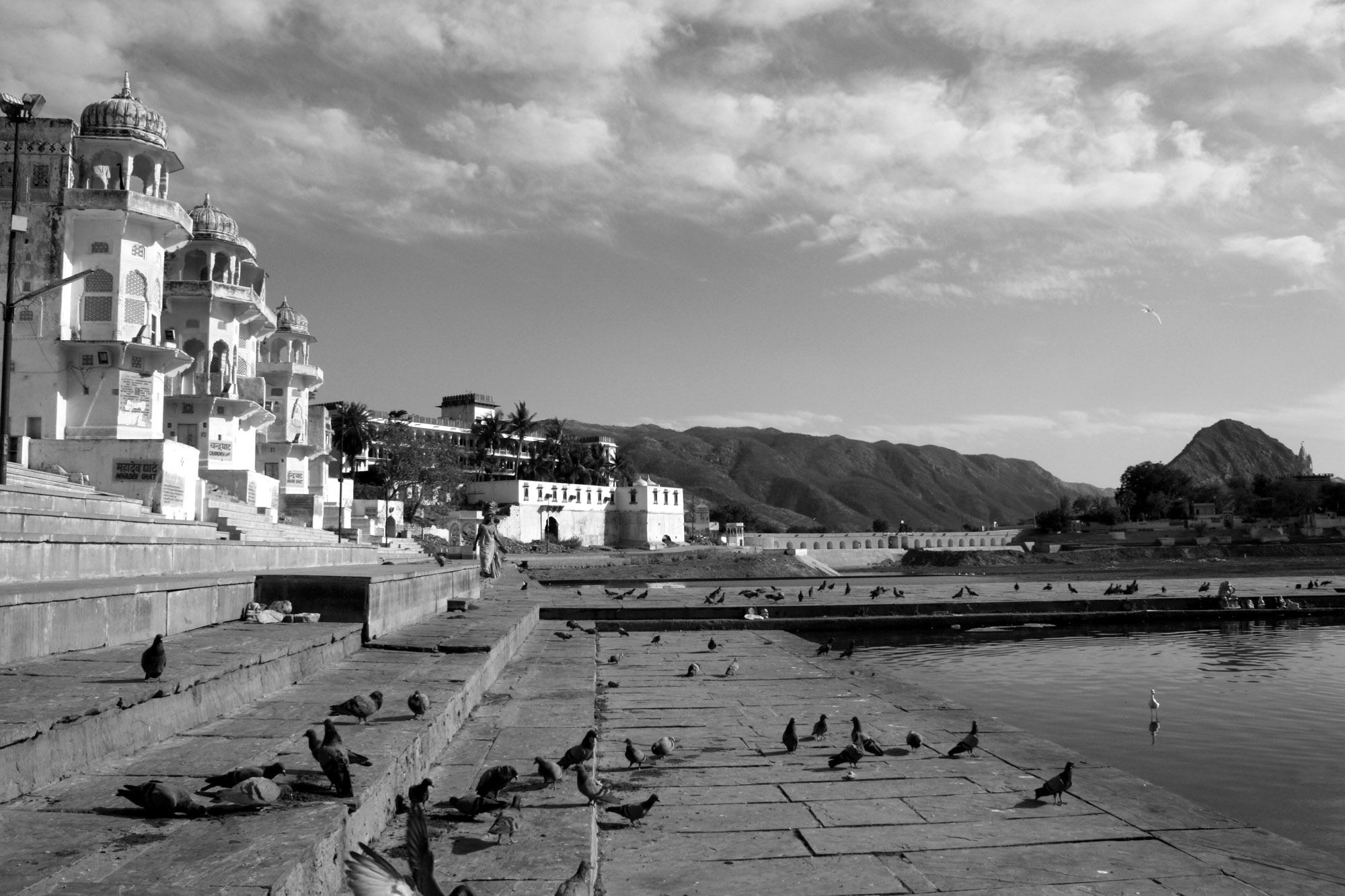
Pushkar

Pushkar
I was exhausted and weak. I’d eaten some bananas and half a pineapple that day, along with more dry bread and black tea, but it was nowhere near enough food and I had to force myself to eat it. I decided I needed antibiotics, but had left it rather late to get something.
Tired, yet restless, I forced myself to start reading Summertime, if only not to feel so hollow. It took me a while to get started, but slowly and surely, it drew me in and gave me sufficient solace to get through the evening.
The following morning, Shyam and I left early to head down through Chittorgarh, en route for Udaipur, where I finally got hold of some antibiotics. I left Summertime in the car by accident, but was not in any great hurry to finish it.

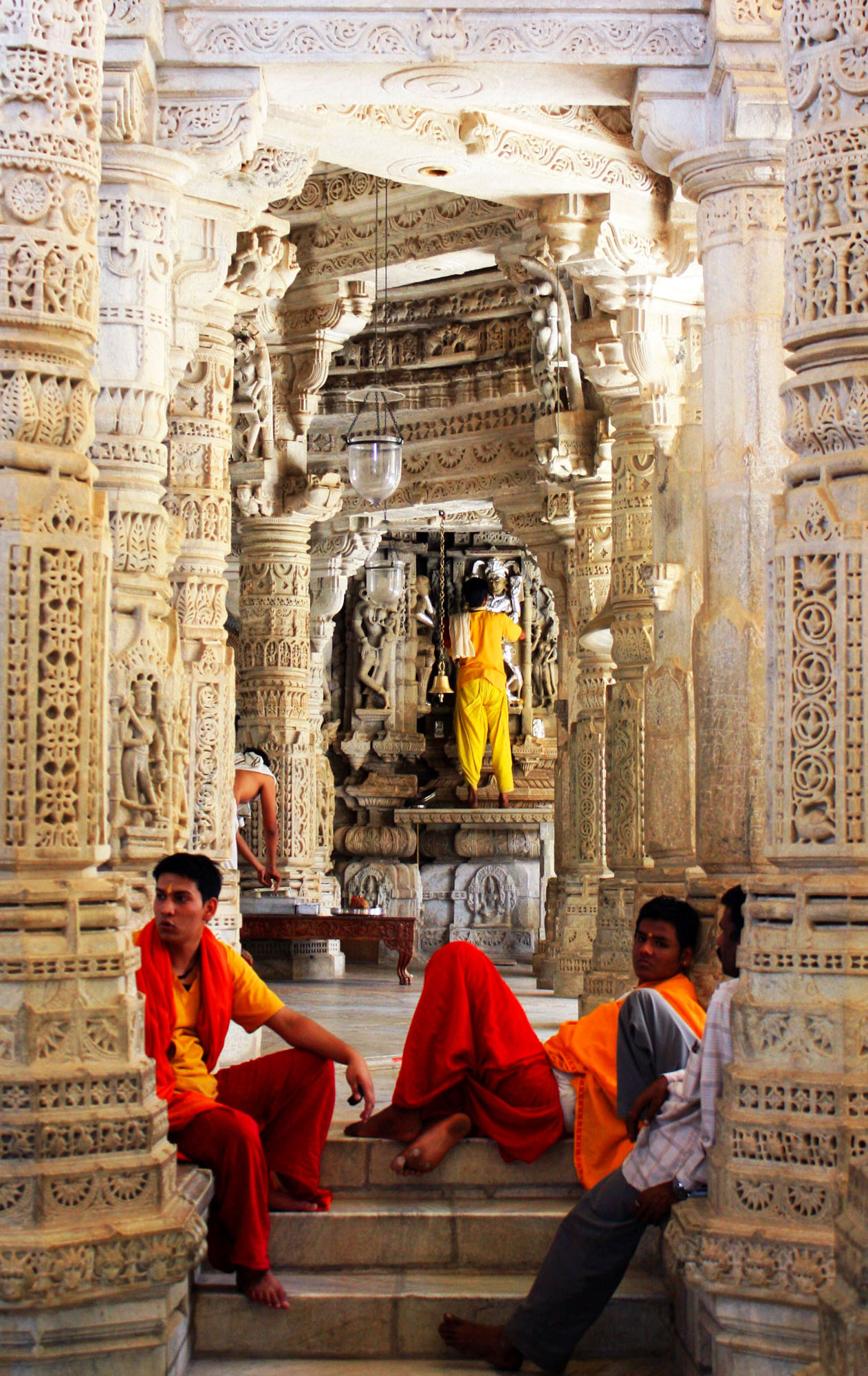
Ranakpur

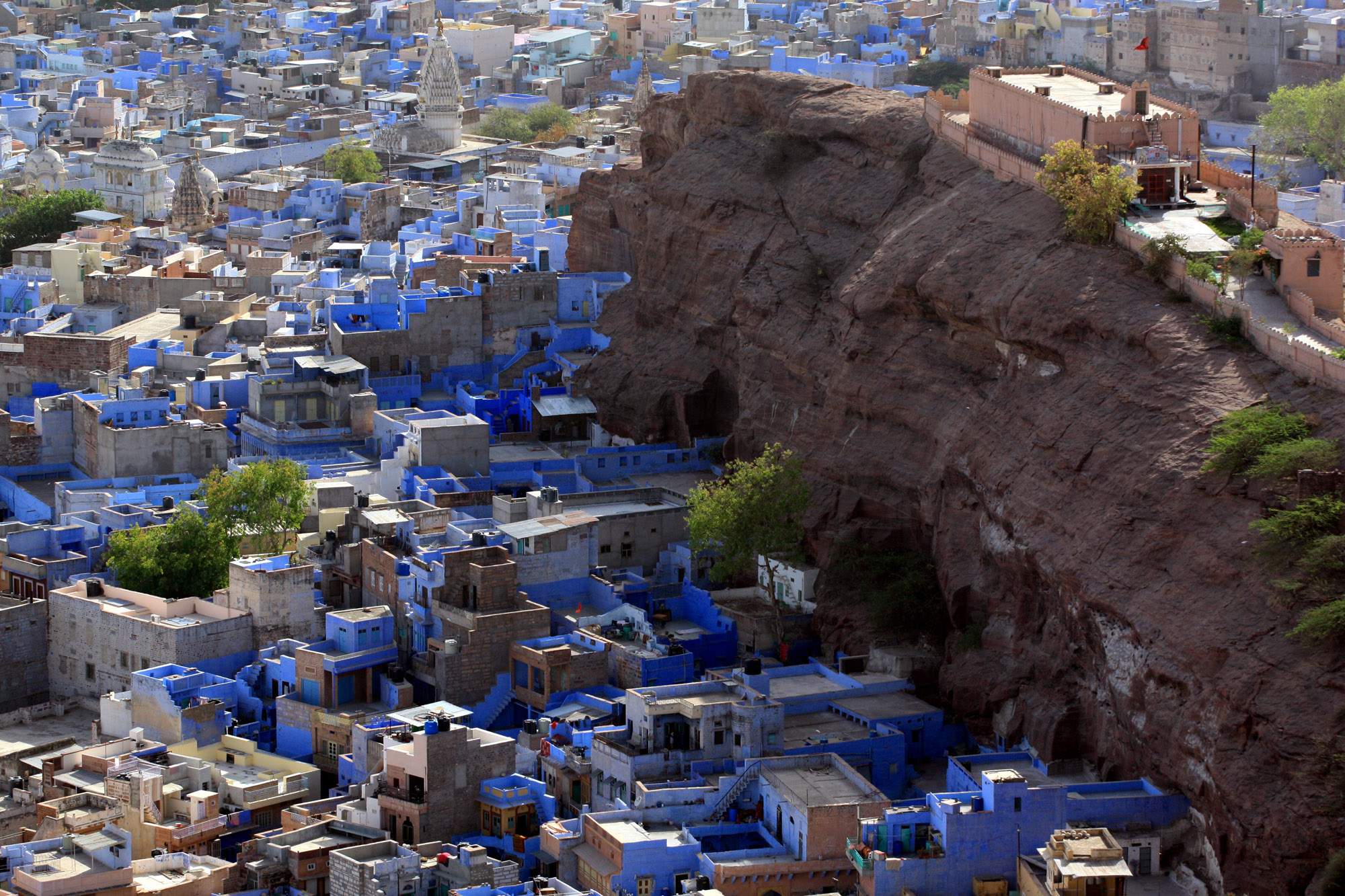
Jodphur

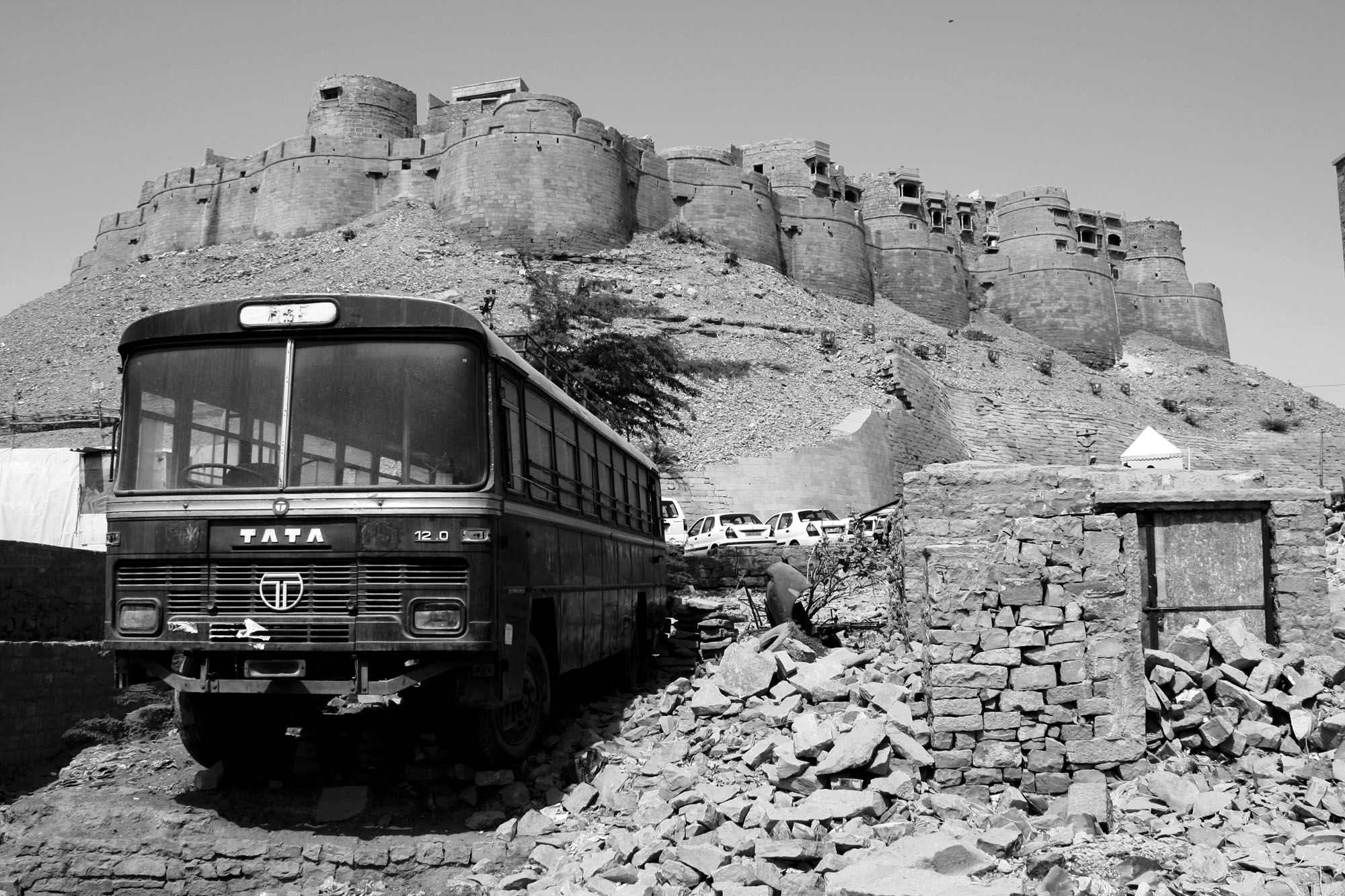
Jaisalmer

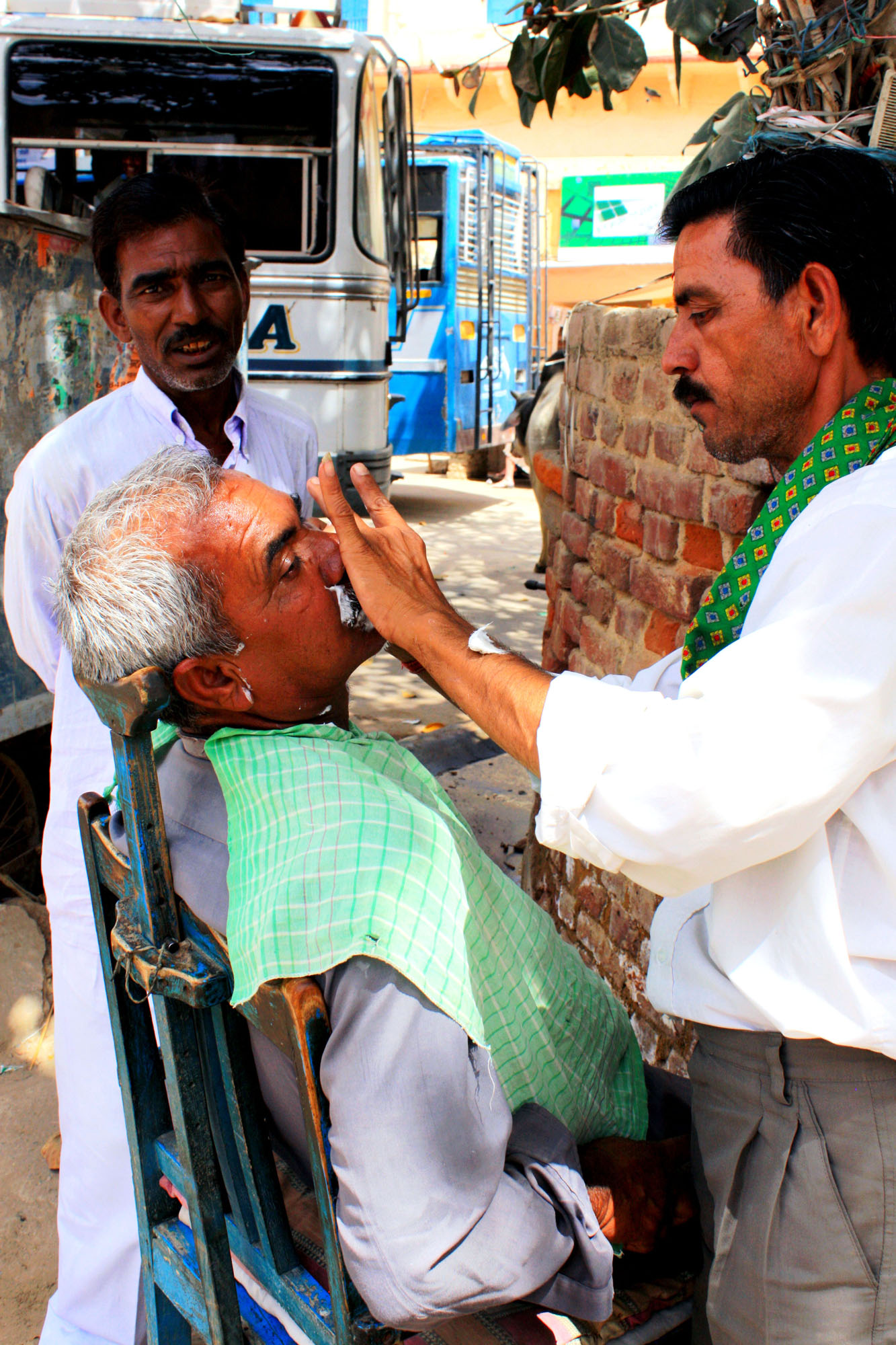
Shekhawati Shyam

There was now the Indian Premier League Cricket to watch, and, with my recovery starting the moment I took the first pill, I wanted to spend the time seeing things and taking photographs.

It was thus more than a week later, at the end of the Rajasthani tour, driving from Jaisalmer to Bikaner, that I finished reading the book. It had had its moments, though I was left feeling a tad nonplussed. The organisation of the book seemed too arbitrary, too random, though the writing throughout was quality.

When Sunil and I finally sat down together again in Jaipur, eleven days after our last encounter, I brought the two books with me. Sunil produced a small bottle of rum and poured us both a glass.

Team Jaipur!

“Do you know what rum means?” he asked.

“No, I don’t. Does it mean something?”

“Yes,” said Sunil. “The letters. R.U.M – Regular Use Medicine.”

We laughed together and I took a slug of Sunil’s medicine. Soon the waiter came by and I ordered a vegetarian thali and a bottle of beer.

“Look, about these books. I’m not sure that either of them is a good place to start reading.”

“Why not?”

“Basically, I think you’ll find Summertime rather boring and too academic. It has some very simple and easily understood parts to it, but it also discusses literature, theory – university stuff. It’s not really going to be that easy, I think, if you don’t know half the words. And, you know, that’s kind of the problem with The God of Small Things. I loved this book, it’s a great read – yet the language is very idiosyncratic. I mean, she uses a lot of words in strange ways, in different ways, and here and there she adds new words. It also moves back and forth in time, and has some complicated scenes where it was at first difficult to work out who was who. I had to read the first chapter twice to work out who the people were. I think it’s going to be a hard place to start reading English novels!”

I was concerned that he might think I thought him stupid, whereas I knew from our conversations that he had a very agile mind. But I also knew how limited his writing and reading skills were, because he had asked me to compose and type text messages for him to his English-speaking French girlfriend, so uncomfortable was he with spelling and grammar. What he needed was a great novel with simple language and limited nuance, though not devoid of it.

“But you liked the books? They are good?”

“Yes, I liked the books a lot. This one in particular,” I pointed to The God of Small Things. “But maybe you’d be better off starting with something else. Something with easier language in it.”

I began to wonder if he wouldn’t just prefer to read a crime thriller or action story of some kind. In truth, I hardly knew the guy, and apart from his professed interest in women of all shapes and sizes, I didn’t have a handle on his tastes. Then, I had an idea.

“Hang on. I think I have a suggestion. I’ll write it down for you.” I felt in the front pocket of my bag. “Oh crap.”

“What?”

“I don’t have a pen.”

He turned and called out in Hindi. The waiter came over with a pen.

“Write on the napkin,” said the waiter.

“No, no,” said Sunil. “I want to keep it. A napkin is not good paper.”

“Hang on,” I said, taking the pen. I pulled a folded sheet with an old hotel booking from my bag, pressed the folds and tore off a quarter. The waiter moved away.

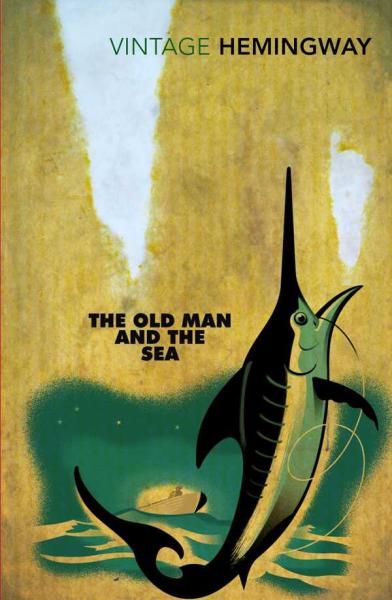
“The book is called The Old Man and the Sea, by Ernest Hemingway. It’s a great classic and you’ll be able to find it in India, no problem.”

The Old Man and the Sea - Ernest Hemingway

Not long afterwards we parted ways for the last time and I returned to my hotel room. I smoked a little hashish, watched the cricket and went to bed. Before sleeping, I thought more about my recommendation. The choice seemed sound enough, and I felt rather too smugly pleased with myself for having suggested it. I suppose, having read a lot of novels and studied literature at university for years, along with teaching English, I ought to be able to make a good recommendation for a first English novel, or at least reserve the right not to feel like a total fraud in doing so. Still, what troubled me was that I had only read The Old Man and the Sea once, more than twenty years ago, when still in high school. Did I really know what I was talking about?

Four days later, sitting in the German bakery overlooking the wire suspension bridge, Lakshman Jhula, in Rishikesh, I noticed that there was a bookstore next door. I had walked straight past it and missed it altogether, yet they had a side window that opened into the café; a window, I had, strangely mistaken for either a mirror or a poster. Precisely what it was supposed to be reflecting or advertising, I can’t say.
I finished my meal of fruit salad, banana pancake with honey and two bowel-shifting filter coffees, and walked inside. By coincidence, the first shelf I looked at contained a collection of Hemingway novels and short stories. Sure enough, there it was: The Old Man and the Sea. I pulled it out and flipped it over: one hundred and ten rupees, or two dollars fifty. I could hardly just leave it, especially as, with a mere hundred pages, it would be no burden to cart around with me.
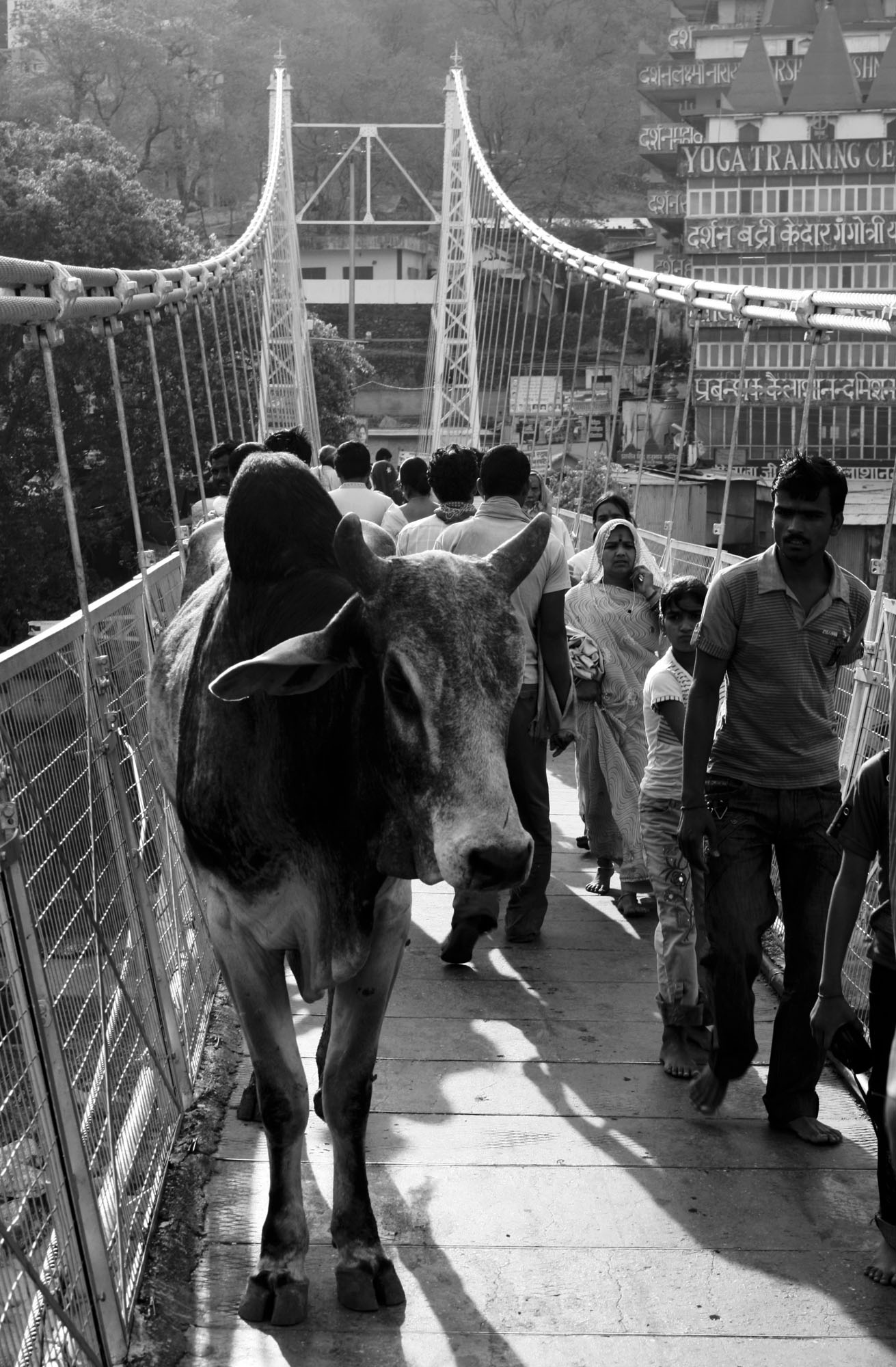
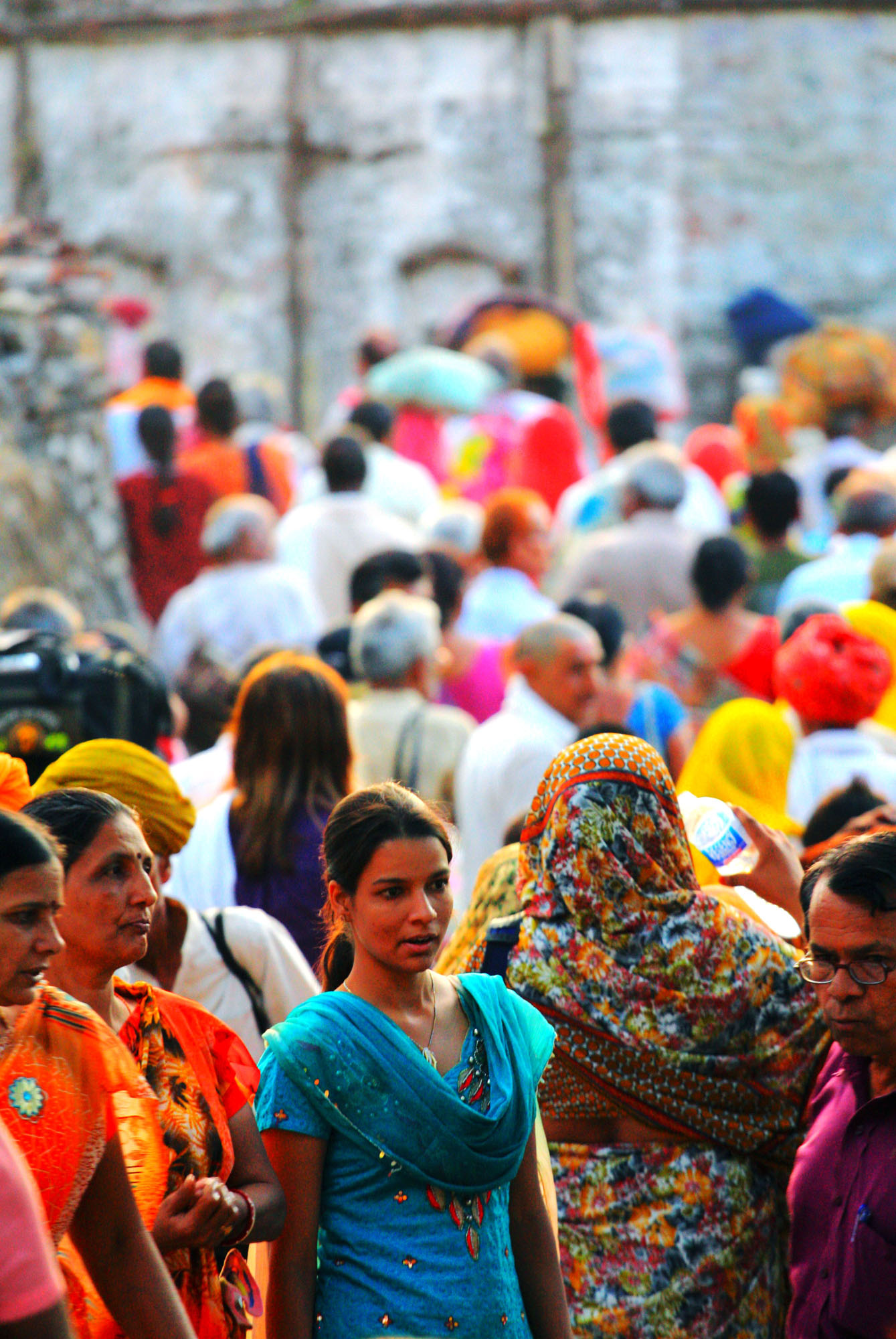
That day I took it back to my room at the Jaipur Inn; an expensive place at almost thirty dollars a night, but all I had been able to find at this time of year. It wasn’t quite full season yet, but the Kumbh Mela, a once-every-four-year Hindu festival of epic proportions, indeed, the largest gathering of people on Earth, was on down in Haridwar, a mere ten miles from Rishikesh. I was lucky to have a room at all, for the town was jam-packed full of pilgrims, sadhus, nomads, middle and upper class Indians, and tourists who had come either to find or lose themselves.

Rishikesh

Rishikesh

Rishikesh

Rishikesh

I needed a break from the throng, and, after negotiating the ever-crowded Lakshman Jhula, I showered, lay down on my bed and began to read the book.

Oh dear, was my first thought, as the characters began to speak. I have never been entirely comfortable with Hemingway’s dialogue; at times it has a crisp and simple reality to it; his characters speak in no-nonsense, no-frills, laconic utterances; brutally factual, often quietly defensive, formidably stoic. At other times, the tone is lighter; a slight playfulness creeps in, if somewhat reluctant, hard-boiled, guarded. Yet all too often, Hemingway’s characters speak with an odd and awkward formality. One understands that, particularly in his Spanish-speaking characters, he is attempting to replicate the more formal qualities of the grammar and niceties of the language. Yet it feels inauthentic, staid and archaic. In an attempt to create something naturalistic, there is too much evident process. His characters sound more like people reading lines, uncomfortably; like people bent on finishing their sentences with peculiar completeness.
This was my response to The Old Man and the Sea. I pushed on through the first twenty pages, wondering how on earth I could have recommended this novel. It wasn’t that it was bad, in fact, I was very much enjoying the setting, the observational detail, the tone and mood. But it struck me as a very odd book to choose as one’s first novel to read in English. It was full of jargon peculiar to fishing; hooks, lines, hawsers, thwarts. Would my Rajasthani friend bother reaching for his dictionary to understand the anatomy of a boat, of the fisherman’s trade? I very much doubted it. Would the story interest him; this slow-starting yarn of physical and psychological endurance? This melancholy tale of struggle, victory, loss and quiet respect? I very much doubted it.

I finished the book in an hour and a half, then got up to go back outside. I was very much inside the story, and it was very much inside me. I relished the intensity of mood it had brought on; it truly was a great story, and very well told, but I couldn’t help feeling I had given my friend a bum steer.
After a couple of minutes, my embarrassment passed. I began to laugh to myself. Hadn’t Sunil, after all, given me a bum steer as well? Hadn’t he told me that the Kumbh Mela would in no way effect Rishikesh, for all the pilgrims and tourists stayed in Haridwar? Hadn’t he told me I’d have no trouble getting up to Gangotri, only to find on arrival in Rishikesh that the road was closed until opened by the army on May 15? Hadn’t he sent me to the wrong bus-station in Delhi? I smiled at the thought of him settling in with The Old Man and the Sea. Perhaps he would find a way in, just as I had made my way here and found a hotel room despite tribulations. Yet, somehow, I didn’t think English novels were for him.

Read Full Post »

New Delhi train station was a daunting sight. The air was a combination of acrid and flatulent scents. Human and animal excrement, raw exhaust from a variety of fuels; smog, wood-smoke, burning manure, charcoal fires, kerosene, refuse and sewage. The people did not seem threatening, but their poverty assailed me in a way I had not expected. I had seen very poor people in Cambodia and Vietnam, yet here they seemed far poorer and dirtier. Indeed, some men, some children, seemed as lank and undernourished as the hungry, mangy animals; the eczema dogs, the cataract cats. It was heart-breaking. In their midst I didn’t feel so much like a target as a brazen show of opulence, if only for being clean and well-fed; like the occupants of the billboards, who smiled down with success.

It was five in the morning and the floor of the station concourse was full of sleeping people. Either they slept here regularly or were awaiting early trains. Where was this fabled new middle class, I wondered? Perhaps they would arrive later in taxis.

Having been the unsuccessful target of several confidence tricks already, I was wary, but confident now that I would not be fooled; or, at least, not fooled in a way that was not to my advantage. I stepped through the people, who oddly enough paid no attention to me, until I was closer to the ticket window. A man spotted me and called.

“Ticket, ticket!”

“Yes sir.”

“Here, you must come here, fill in form.”

“What form?”

“Here, form for ticket.”

I followed him, expecting another scam of some sort. He took me to the far ticket window and picked up a form from the counter, handing it to me.

“Here fill in, then must come to office. Office is closed, so you go to emergency office. Come.”

He started to walk off. So perfunctory! I followed him. I had read that there was an office for foreigners upstairs that opened at eight. So far, he seemed to be telling the truth. I looked at the form, it was shabbily printed from and antiquated stencil, but it could well be legitimate. What would I know? I followed him back out of the station; through the jostling, belching auto-rickshaws, across the potholes and puddles, down a street full of rubbish. Again I saw an office with an official sounding name, this time up a steep and narrow staircase across a temporary bridge over an open sewer. The man motioned me to follow him up the stairs. I went up, head ducked against the low roof. Inside was a tired little office and a tired little man. His forehead was covered in sweat and his eyes were red. He looked half asleep and entirely exhausted. I thought he might be sick, and a moment later, he coughed as he tried to speak, then gave up.

The man who had brought me here spoke in Hindi. I heard the word Agra and figured he now knew my purpose. Immediately after speaking, my escort left.

“The six-fifteen,” I reiterated. “Please, thank you.”

The tired man turned on his computer and I began to despair. If this was the official, emergency tourist office, why was his computer off in the first place? I felt sure once again that I had been brought to another poser who would sooner have me in the back of his brother’s taxi than on the train to Agra.

His computer took forever to boot, and tired and nervous, I laughed. If his computer was as shit as this, then it likely was the official office! At least now I was near the train station and soon it would be light. If he couldn’t help me, someone nearby surely could. After a time, he had the website up on his screen. He looked. I looked. It was entirely different to the one I had seen earlier in the other conman’s office.

“No,” he said. “No tickets. But, you can go on the eleven-thirty train. No problems.”

It was a set-back, but I was pleased. I suddenly felt a strong inclination to trust him. He looked tired and bored enough not to be trying to sell me something. He had an air of exhausted honesty about him.

“That’s good,” I said. “But it is much later. Does the ticket office open at eight?”

“Yes, at eight o’clock.”

“Good. Then, I will go there at eight.”

I wanted to get away, though I wasn’t sure where. It never occurred to me to ask him about buses, and I walked out of the office with the idea in mind that I would go and find out about these. Where, exactly, I did not know, but I had seen many buses in the car park and figured the train station might also serve as a bus station.

I crossed the sewer, crossed the road, and walked to the ticket terrace at the front of the station. Now I was approached by another man. He was tall and lean, with hollow cheeks and a short, sparse beard. He had a laid-back wisdom in his eyes, and something about his expression suggested he was genuine.

“Where are you going?” he asked, as everyone had before.

“To Agra. But the train is full.”

“Do you have a piece of paper? A pen?”

“Yes.”

I pulled some paper from my pocket and handed it to him.

“Agra, yes?”

“Yes.”

He turned to the wall, and, leaning on it, proceeded to write some numbers down.

“This is the train you want. Number 2165. This is the time, 0615.”

“Yes, yes,” I said. “But I have no ticket. The train is full.”

“You need a ticket? Then come with me.”

I wondered why he seemed so genuinely concerned. Perhaps he hoped for a tip of some kind. Either way, he seemed to want to help me and I was grateful. The first three people I’d met had tried to con me. The next three had tried to help. The balance sheet was evening up and already I felt more hopeful about the next couple of months. It was, after all, only reasonable to expect rip-off artists in a big, poor city like Delhi. It was hardly any different in Naples.

He led me the same way that the first man had led me; through the crowd of people and rickshaws, through the mud and dogs and cows. I began to smile with bemusement as he showed me to the very same office to which the other man had showed me.

“Oh, yes, I have been here before.”

“Come,” he said, and led me up the stairs.

There, once again, was the tired, sick man behind his desk. He smiled at me, a little surprised to see me again. Or was it because he had been expecting me? I fumbled in my pocket for a small note, but I only had 500s. I wanted to tip the man who had brought me here. I apologised, but he waved it away. At last, a truly honest man!

The lean man spoke in Hindi, and again I heard the word Agra.

“I know, the train is full,” I said, over their conversation. “Is there a bus?”

“Yes, there is a bus at six thirty,” said the man behind the desk.

“Perfect, I’ll take the bus.”

The lean man left, and I stood before the desk.

“Why not sit down?”

“OK, I will sit down.”

I took off my bag and sat on the cushioned bench before his desk. His eyes were more alert and his face less pasty. He wiped his brow with a cloth.

“There is the normal bus, or the tourist bus. The normal bus takes six and a half hours, and the tourist bus four and a half. They are three hundred or seven hundred and fifty.”

“Definitely the tourist bus.”

“No problem.”

He tapped into his keyboard, then picked up his mobile phone.

“Just for one? You?”

“Yes.”

I looked at the time. It was five forty five. I was going to get to Agra after all, this very day. My plans were not to be thwarted.

When he had finished on the phone he smiled at me again.

“Relax. The bus will come here.”

“And it’s direct to Agra?”

“Yes direct. Tea?”

“Sorry?”

“Do you want some tea?”

“Umm, yes. Sure.”

He stood up and walked to the top of the stairs, calling out.

“They will bring,” he said, on returning to his desk.

I paid him the money and he printed the ticket, and a couple of minutes later, a man arrived with two cups of hot, sweet, milky tea. It seemed the largest hurdle was behind me; the size of which I had not foreseen.

I decided to introduce myself properly. His name was Sharad Kumar, a name I shan’t forget in a hurry for being so curiously hospitable. We talked about my further plans, the proposed trip around Rajasthan after Agra. Again he suggested taking a private taxi to tour around the region. His offer was not dissimilar to the first one I received, only it was a hundred dollars cheaper, and I promised that I would consider it. I took his card.

The tall lean man, my second helper, returned to the office. This time he brought two Asian girls with him. I quickly moved across to the other bench so they could sit in front of his desk. They too wanted to go to Agra.

Mr Kumar introduced himself, but before he could address their needs, his phone rang, so it was I who explained about the trains and buses. Julie was Chinese Canadian, whilst Naoko was from Japan. It wasn’t long before they were booked on the same bus as myself. Just in time for its arrival.

We sat waiting in the office and I chatted to the two girls. I was exhausted, but had passed my lowest point and felt stronger knowing I would have comrades on this journey. Julie had been travelling in India for a month already and would be a very useful ally. Naoko had just flown in that morning, and it was equally comforting to have another noob with which to share my general culture shock and astonishment.

When we stepped out into the street, dawn had already come. The sun hung under an overpass at the end of the street like a polished gong, its outline visibly distinct with the smog to cushion the glare. What it illuminated was even more chaotic than what had been visible in the dark, if less threatening with the addition of colour. Caravaggio’s  chiaroscuro often seemed stripped of menace, though we know that behind it lay swordplay and vendettas.

I was surprised to see a camel pulling a cart, cows grazing the rubbish heaps, men so lean and small beneath heavy burdens. The road was a mere remnant of itself, kept flat by the constant steamroller of traffic. I stopped to take a photograph and the girls got ahead of me, so I followed their backpacks up the street. We walked under the footbridge, past roadside stalls, beggars and rickshaws. Around the corner was a stretch of ruined buildings; like war damage. Walls had collapsed, roofs caved in, and the piles of bricks spilled down into the street. It seemed these tall, jagged, irregular buildings were still inhabited.

Everything was fascinating to me. I thought, having been to Cambodia and Vietnam, that I was prepared for anything India could offer; yet this seemed to go far beyond it somehow. It must be the scale, I thought; the sheer number of people, the great burden, the pressure on everything. How else could a city, not currently at war, be so derelict? Then again, I reminded myself, this was the train station, and major train stations the world over are often in pretty run-down locales. Was not Piazza Garibaldi in Naples something of a mess? Was not Kings Cross in London surrounded by bleak concrete grime? Yet nowhere, surely, that I could recall, was as battered and wasted as this.

We walked past the rubble, skipped over the potholes. People called on either side.

“Hey, Hello, sir!” but we were on a mission and nothing was going to slow me down. I nodded, smiled, waved.

A hundred metres down the street we reached the bus. It was a battered old thing with patched Perspex windows and the back bumper tied to the chassis. So long as it drove, I wasn’t too fussed. We stepped through the doors and were sent to the back, to a long, deep bench seat. It was dirty and sticky, but it looked very comfortable. I thought I was fortunate in getting a window seat in the corner, and opened it wide to look out at the rubble across the street.

At last! I was on a bus for Agra. Again, I reflected on my victory over the liars and cheats. My mission was still on track. I’d expected to be on a 0630 train, but a 0630 bus would do fine. The sunrise shone orange through the back window. I smiled into it and forced a positive frame of mind. Delhi was always going to be the worst, I told myself. Everything else will be easier, more cool, more shanti. I’ve never liked big cities; especially not polluted, heaving, overpopulated ones. India had given me a shock, but so had Rome when first I stepped out there; so had Bratislava; so had Sarajevo, so had Hanoi.

The bus began to drive, and I smiled across to the two girls who had come aboard with me.

“This is comfortable enough,” said Julie.

“Yes, I suppose so.”

After a few hundred metres the bus stopped in heavy traffic, and more people were brought on board. Three people, who looked European, were led to the very back bench on which we were sitting. It was, at a stretch, designed to seat five. They were crammed in between us. I pressed myself into the corner, my bag lifted up onto my lap. Now things were very far from being comfortable. Inwardly I groaned. Oh god, just get me there! Now the five hours struck me as being a very long time. I wondered if we would in fact arrive in five hours. Would there be delays?

I introduced myself to the chap next to me. He was a young, short, blonde guy with an angular face and pointed jaw.

“I am Alex,” he said. “Russian.”

“Aha!”

The bus, however, was going nowhere. We sat and grew increasingly uncomfortable on that back bench for the next half hour. I passed the time watching Indians at work through the window. One young man had been sleeping on top of his truck. He woke up and leaned over to chat to his friends or colleagues below. An old man walked by, carrying a staff and a small metal pail. Stretched above and hanging low, a jumble of wires. Behind it all, dirty shops with faded posters, roller doors, hand-painted advertisements, flaked and darkened with soot. All about, horns sounded, scooters, rickshaws, cars and buses wove in a slow mess.

Then, at last, we started to move through the traffic. I was already in great discomfort. Having had no sleep or food and being already physically and mentally exhausted made it difficult to marshal good spirits. I tried as best as I could, but my legs were stiff and cramped and the bag on my knees was very heavy.

On we drove, down the dirty road. Never in my life had I seen such poverty; people as black as soot, with matted hair, lying in dirt by the road, begging from hell knows who; children, naked in piles of refuse; men, lean and greased, dressed only in loin-cloths, working with rusty car parts. We drove past shanties, slums, past plastic-sheet and cardboard dwellings, cripples crawling to vehicles at the traffic lights.

Where was the fabled middle class? Where was all the new money? The whole length of the road, through the first four hours of driving, seemed lined only with the poor, rubbing shoulders with the desperately poor. How anyone made any money from the few things they had to offer, with so many seeming thousands offering exactly the same, was beyond me. And perhaps that was exactly it. No one wanted what they sold, and so they made no money, but there was nothing else for them at all. And those with the stalls were the lucky ones. Still, this was a major road leading out of town, not a fashionable new suburb, and it was likely offering a particular view; the lower caste, working class side of town. Perhaps soon my eyes would adjust and I would see things differently. The people did not all look unhappy, and many were impeccably groomed, if clearly not wealthy. And of course! The middle class were tucked away in the other cars on the road.

I realised what I should have realised earlier. That the poverty in India was far worse than I had ever imagined; that despite having heard often, and seen on television, stories of the poor and desperate, I had never in my life imagined it to be on such a grand scale. How could so many people be so utterly destitute? How could this road, which ran for mile after mile, be lined with such terrible despair? As yet I had not understood. I had been in shock, I had my own concerns. I was searching for an escape, for an exit, for a long ride away from the things that upset me, towards something more beautiful, more clean. But I realised now that my own concerns were terribly petty. There was nothing I had to face that came close to the abject nature of some of these people’s lives, nor would there ever be. I was Australian and even the worst-off and most neglected people in my country could seek help and redress; it was there for them in some form; and certainly more so than it seemed to be here. I could always escape, indeed, I was always escaping. But these people would never escape. They were trapped in poverty for ever; for some, it was on the cruellest, most persistent, most hellishly relentless scale.

I straightened up in my chair. I was awfully uncomfortable, exhausted. The young Russian’s head was banging against my shoulder. He’d fallen asleep again. So long as he did not drool, then I had no problem. I adjusted my nuts. I stretched my back and shoulders, then pushed up and re-seated myself. It did not matter that I was hot, sweaty, sticky, sore, stiff, hungry and needing the toilet. It did not matter that I must spend the next four hours stuck in this same cramped position, the underside of the footrest cutting into my leg, bottom aching. The truth was that in a few hours I’d be in a shower, in a hotel, with a clean bed to lie on and plenty of money to spend on food. I was rich. Richer than a hundred of these people put together. I was the raja, and so I should bloody well stop thinking about myself as though I were in some way unfortunate to be cramped in the back of this shabby bus. The truth was that I had it all, and the poor bloody Indians outside my window didn’t have a goddamned thing. How awful it was that I would soon try to put them from my mind and enjoy myself.

Read Full Post »

Pre-dawn Delhi

Delhi, 19th March, 2010.


Having come from Abu Dhabi, with its highly polished, if dusty infrastructure, I expected stark contrast once I stepped out into New Delhi. I did not, however, expect it to be so apparent as soon as I stepped inside the airport. It was not merely shabby, old and run down, but it was also very small and poorly designed. There were insufficient toilets, which were overrun and not especially clean, and two ATM machines, of which only one was functional, and both of which were hopelessly antiquated. There was no tourist information desk and only one café. I have seen regional airports in small cities in Italy which were far superior.

India is a vast and very poor country and one must take this into account in one’s expectations. Yet, having heard of the extraordinarily rapid economic growth rate of the last ten years, the widespread and rapid swelling of the middle class, and the increased investment in infrastructure, I had expected a modern airport and not a 1970s bus-shed. That this is the only major international airport in the city which is to host the 2010 Commonwealth Games is not encouraging.

I went to the pre-paid taxi desk and ordered a taxi for New Delhi train-station. I had booked a hotel in Agra and planned to take the 0615 express train there that morning and get straight out of Delhi. It was, undoubtedly, stupid and naïve of me not to have booked a ticket in advance, yet I have never in my life booked a train ticket in advance and never been inconvenienced by not doing so.

I stepped outside. There was a great crowd of people milling about. Old men with long, full white beards, children sleeping on the floor, families sitting on bags. It was, in essence, not unlike any other airport scene, except that it was much darker, dirtier and unwelcoming. Around the car-park before me, the air was a thick and hazy orange; smog.

A man approached me immediately. “Prepaid taxi, sir?”

“Yes.” I waved  my ticket.

“This way, sir. This way.”

He asked me where I was from and I told him New Zealand. After a spate of recent attacks on Indian students in Melbourne and the ensuing anger about it in India, I decided not to disclose my true nationality unless absolutely necessary.

We talked about cricket as he led me to a taxi; I enjoyed making fun of my supposed national team. Here I met the driver, a short, bearded young man who seemed pleasant enough. Fortunately he did not ask me where I was from until I was inside the taxi and out of earshot of the other man. I decided to tell him I was Australian, as, not having slept after a long day of walking in the sun with my pack on, sitting around an airport for five hours, with a three hour flight for dessert, I was too tired to sustain a complicated lie. Again we talked about cricket. This time, the IPL. I’m a Rajasthan Royals man, whilst he supports the Mumbai team. He asked me where I was going. Did I have a train ticket? No, I told him, I did not.

I had read about many of the more common scams in India. They are, to a degree universal in poorer countries. The gem scam, where tourists are tricked into paying to carry worthless “gems” back home to be sold to an agent for a large fee, when of course, the agent does not exist, is a true classic. Most taxi drivers receive some sort of commission for bringing people to hotels or shops, so they will do everything possible to get you to a place that will pay them said commission. This is often backed up by some very brazen lies. The hotel the tourist wants to go to has burned down; there are riots; the road is blocked and there is no other route; a recent earthquake caused major damage; the hotel was closed for health reasons; it is a bad hotel, where customers have been drugged and robbed etc. They will do anything to divert you from your purpose.

The same applies for travel arrangements. If you do not have a ticket, they will ensure that you obtain the ticket or other means of transport through their preferred agent. This agent will usually pose as an official of the national tourist board or some such organization, even going so far as to have fake official-looking signs complete with appropriate acronym made and placed on the wall behind their desk. That said, they are often able to provide the service one desires, albeit it at an increased cost. It was to one such place that I was about to be taken.

The driver made a phone call, conducted in Hindi, then we continued our conversation. The road was heaving with trucks, which are only allowed to use the roads at night. They swung across our bow and stern with great noise and bustle, and we swept through them like a small fish amongst whales. All around, horns sounded and engines groaned.

I had no means of determining where I was and hence had little choice but to trust the driver. Soon we stopped in a dark street with a few lit shop entrances, and he said “come with me.”

Warily, I stepped out into the warm night. I had fallen quiet for a while and was not thinking as clearly as I ought. He had not told me where we were going, but I suspected he was going to get a friend to arrange my ticket. I rather liked the idea and figured that paying a slightly inflated price would be worth avoiding the hustle of the train station.

The driver led me into what purported to be an office of the INTB, the so-called Indian National Tourist Board. I was immediately on my guard, and determined not to be won over to something about which I was doubtful. The word “official” appeared too many times on the signage to be trustworthy. It was clearly buttressing a lie.

The gentleman behind the desk greeted me. He spoke well-educated English and seemed genuinely affable. He was clearly a northerner, and looked more Pakistani than Indian. I wanted to trust him, but could not bring myself to do so.

“You want to go to Agra?” he asked, and I told him yes, I did.

He searched online for train tickets, then, shaking his head, turned the screen towards me. What he showed me was, allegedly, the ticket availability from the official website of the India railways. The trains for Agra were booked out for the next seven days, both at 0615 and 1130. That much I could see. I looked at the web address, but was not wearing my glasses and, sadly, could not read the URL. I felt little inclined to trust him. Partly because I had been warned of just how elaborate some ruses could be, but mostly because he now attempted to steer me towards his preferred suggestion: that I hire a taxi for twelve days to travel around Rajasthan, which is where I intended to go next. It would cost around 700 hundred US, all expenses included, and be far more comfortable and flexible.

I was tempted by the offer; it struck me as quite an affordable and sensible option. Yet, I did not trust the man. I was sure he had lied to me about the trains and didn’t want him to be rewarded for being a con-man. If I could arrange such a deal with him, I could likely arrange it with someone else; someone else who had not tried to trick me into accepting it. I stood my ground through all his friendly explanations and cajoling, through his lengthy sermon on the difficulty of travelling through Rajasthan by train and bus, saying that I appreciated the suggestion, but was too tired to make a decision. My plan was simply to get to Agra, and if a train could not be had, then I would find a bus or somesuch to get me there.

I now grew tired of sitting there and wanted to be away. I changed the tone of my voice.

“Look, I want the taxi driver to take me to the train station and I will see what can be done from there.”

He tried once again to convince me that this would result in nothing, the taxi driver now chiming in to reiterate this. Again, I refused to believe them.

“I paid for a taxi to the train station and that is where I wish to be taken.”

And so, my driver now with a rather hangdog expression, reluctantly led me back to his taxi. This was not, however, the end of the scam. First he tried further to convince me to accept the deal. Then, as we drove to the station entrance, he assured me that I would not be able to get inside without a ticket, and that the ticket office was closed.

“There was a recent bomb-blast and no one is allowed near the station without a ticket.”

This sounded like precisely the sort of horse-shit I had been warned to be wary of, and told him I wanted to go anyway. He drove me to a closed gate with a big neon sign above it. It was clearly genuine, and was in fact an official body involved in train-tickets, and it was indeed closed and locked.

“See,” he said, “you can’t go inside.”

“Where is the front entrance to the train station?” I said.

“That is it, it is locked.” I did not believe him. It was clearly not the front entrance to a train station. For one, the street was deserted, and I knew from long experience of train stations the world over that there were always people around and outside them through the whole night.

“Take me to the entrance of the train station,” I insisted.

“That is it, sir. It is locked.”

Though I did not believe him, I did not know exactly how I could prove him wrong. Tiredness was catching up with me. I started to feel despair.

“So, what are you going to do?” he asked.

“Look,” I said. “I am going to Agra, and I am going to get there by my own means. If you won’t take me to the train station, then I shall go by bus. If I have to fly, I will fly. If I have to go by taxi, I will take a taxi.”

“I can drive you there, sir. I can drive you.”

He pulled away from the closed gate and began to drive, I knew not where. I did not know how to counter him. It was all very well not to trust or believe him, yet what did I know about Delhi?

We entered an open public square, and I saw a wide, marble neo-classical façade.

“What is this?” I asked. “Where are we?”

I feared I was sounding desperate, and his response held a tone of disrespect, as though I were some madman in his vehicle.

“It is the centre of Delhi, sir. Where do you want to go?”

“I want to get to Agra. How much for you to drive me?”

I had reached a new low. The tiredness was like a drug, though I did not feel sleepy. I felt edgy, anxious, fatigued, strung out.

He picked up his phone and made a call, presumably to his boss.

After some negotiation, he turned to me.

“To go to Agra will cost 5690 rupees.”

I thought for a moment, it was roughly 42 to the dollar. Should I just say yes to solve this problem and be on my way? I did not want to pay so much, but it would make life so much easier.

“No,” I said. “It is too much.”

“But, sir, it is a fair price.”

“It might be a fair price, but it is too much for me. I don’t wish to pay so much.”

“But you can afford it, sir, surely?”

“No, truth is, I can’t. I am travelling for a month or two, I will have many expenses.”

I wondered why on earth I was explaining this to him at all. He was, after all, the taxi driver I had paid to take to the train station, and he still hadn’t taken me to the damned train station! I grew angry now, flooded with a new and bitter resolve.

“Look, I don’t care. I’m not paying that much money to go to Agra. You won’t take me to the train station, so you can take me to the bus station. I don’t care, no more arguments. Take me to a bus station and I will find a bus for Agra. I know there are many.”

He groaned and protested, but he started driving.

“To the bus station!” I said. I just wanted out of his damned, infernal taxi.

“But nothing is open, sir, it is too early. You are tired. Don’t you want a hotel?”

Christ, did I ever want a hotel. But not here, not in Delhi, and not from him.

“No, no, no. How many times do I have to tell you. My plan is to go to Agra, I don’t care about anything else, I am going to Agra, and you will take me to the bus station now.”

At this, his shoulders slumped. He could see at last that I was not going to do as he wanted. I was considerably larger and more physical than he, and without back up, he had not other recourse to extract money from me. The game was up, and, thus defeated, he drove me a couple of blocks from where we were, en route, I hoped, for the bus station.

Suddenly, all about were people, lights, offices, shops, life. It was filthy – open sewers, tuk-tuks, rickshaws, cows, rubble, dung, horses, naked children, smoke from fires and hundreds and hundreds of poor, dirty people. I knew at last that I was where I needed to be.

“This is the bus station,” he said.

I opened the door as soon as the car stopped, and stepped out of the taxi.

He too stepped out.

“Here,” he said. “But you must not trust anyone. That man before, he was an honest man. You should have listened to him. Here people will lie to you. You are tired, you are not thinking.”

“I am thinking,” I said. “I am thinking many things. I am thinking I should trust no one. I am thinking I should not accept a deal from someone at five in the morning who tells me I have no other choice.”

“But you must be careful,” he said. “Many people will tell lies.”

“I know,” I laughed.

“Use your eyes,” he said. “Be careful. Use your eyes.”

Then, he seemed deeply sad of a sudden. He had not only lost a chance of commission, but had lost the chance of earning over one hundred dollars. So much for his hour and a half-long detour. He put his head down and moved back to his car, beaten. I wondered if he felt ashamed, that I was soon to discover what a liar he was.

“Goodbye then,” he said.

“Hey,” I called. “Here, I will give you something.”

I pulled out some small change and handed it to him. He might be a liar and a cheat, but either way, he was clearly quite poor and I felt sorry for him. I also felt I had won quite a complicated battle, and was inclined to generous in my moment of glory.

“Thankyou,” he said, without much conviction. I turned my back on him and walked away.

I walked alongside the sewer, past pissing men and pooing children. Faces loomed out of the dim orange smog light. To my left, on the other side of the road, stretched a row of shabby offices and shops. So nothing was open, huh! I walked between two cows, tiptoed across puddles, and came to a huge set of swinging iron gates. I felt scared, but hopeful. Perhaps I would meet an honest man here. I looked across the crowded space to the illuminated building at the back of the square. Imagine my surprise when I realised that before me was the once-grand façade of the New Delhi train station.

Read Full Post »

« Newer Posts