Feeds:
Posts
Comments

Archive for the ‘Photography’ Category

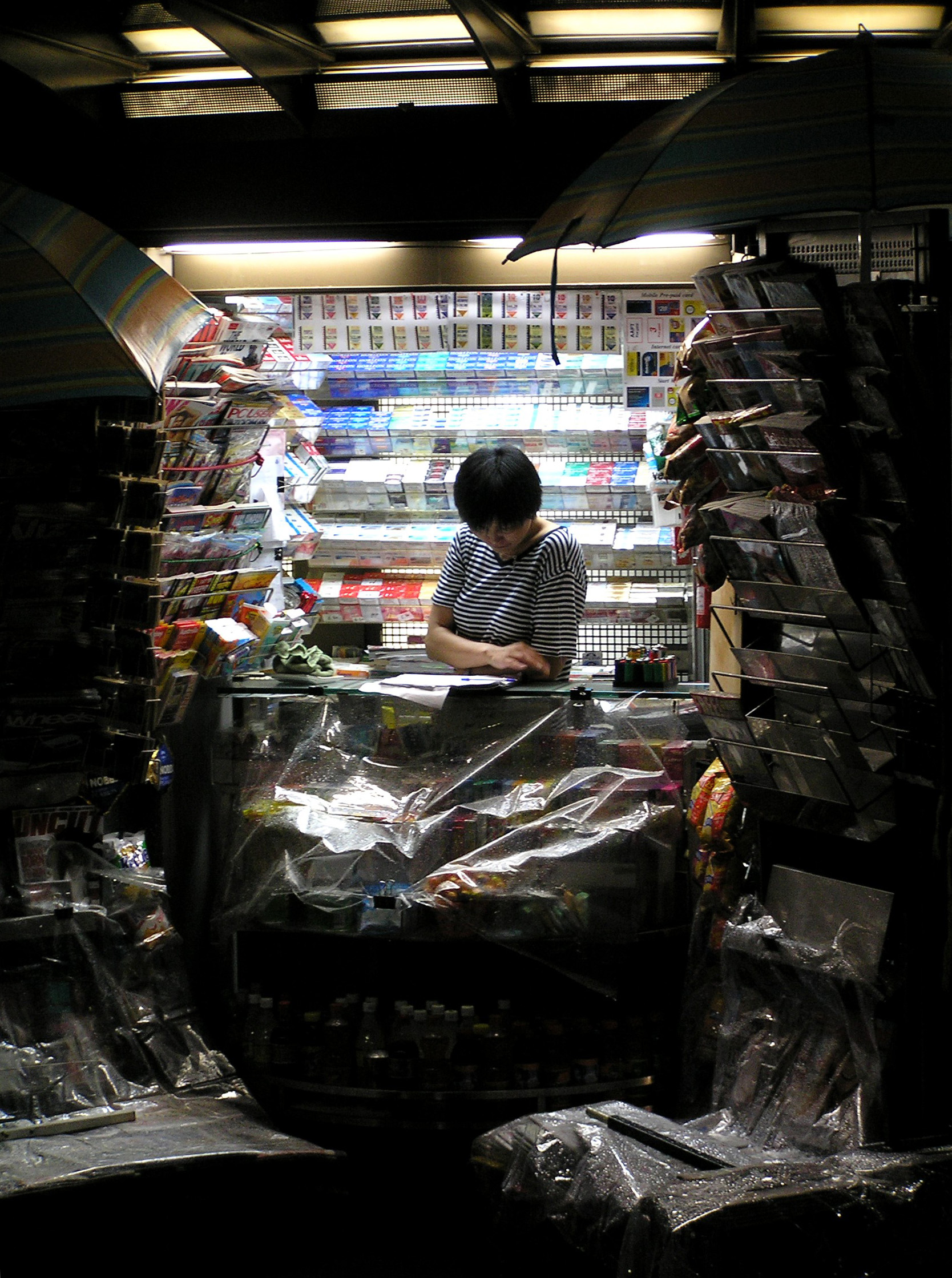
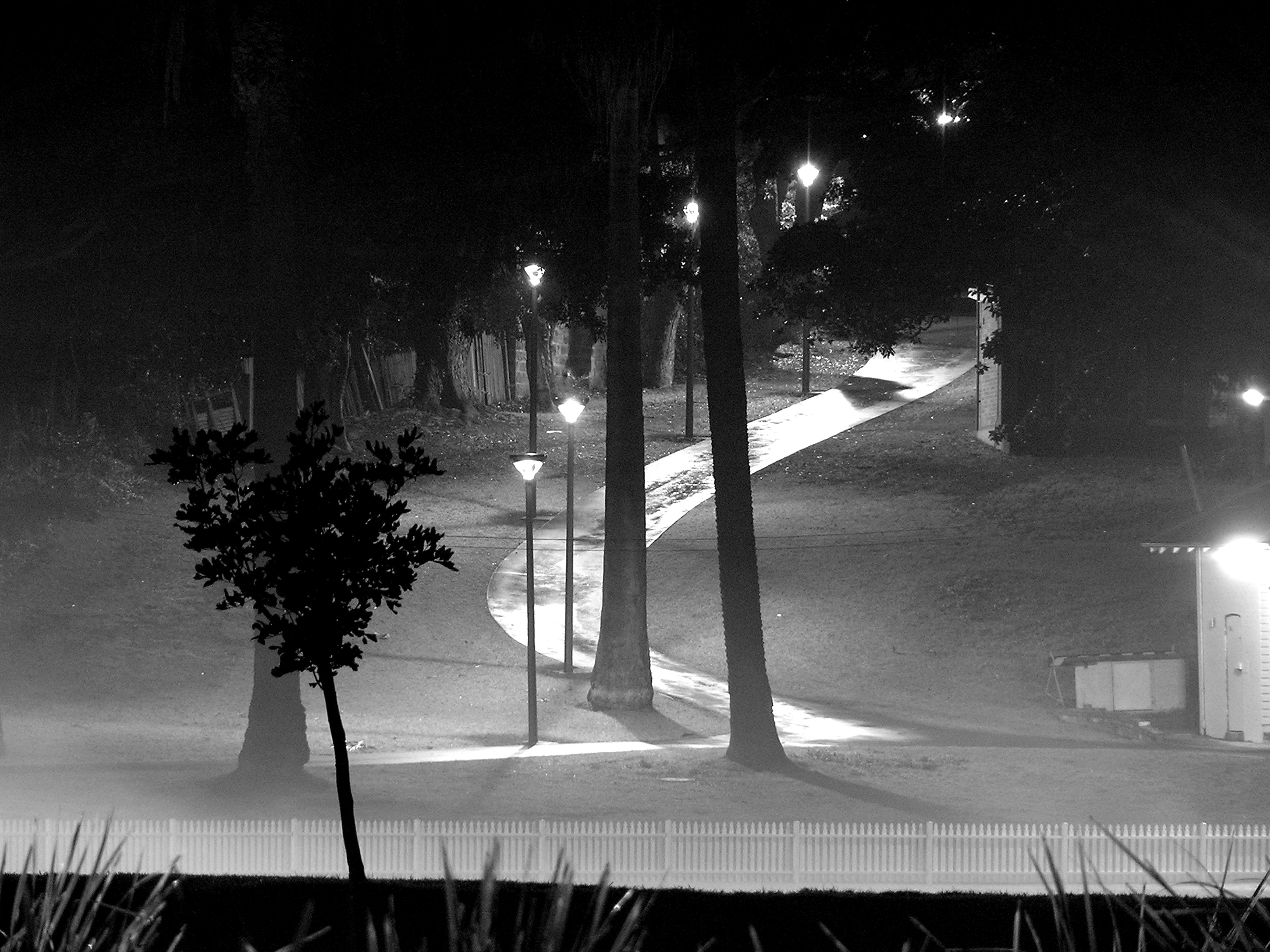
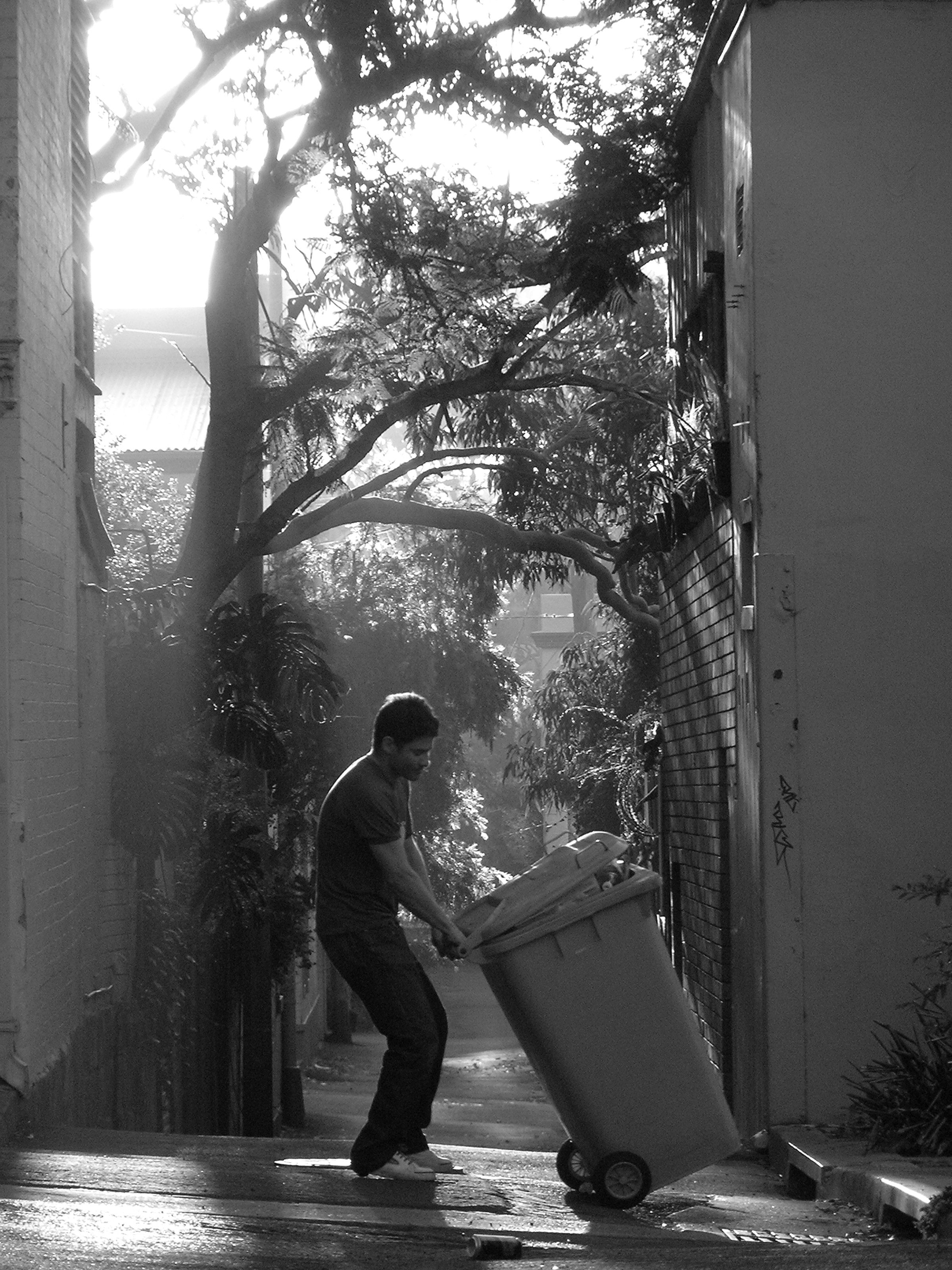
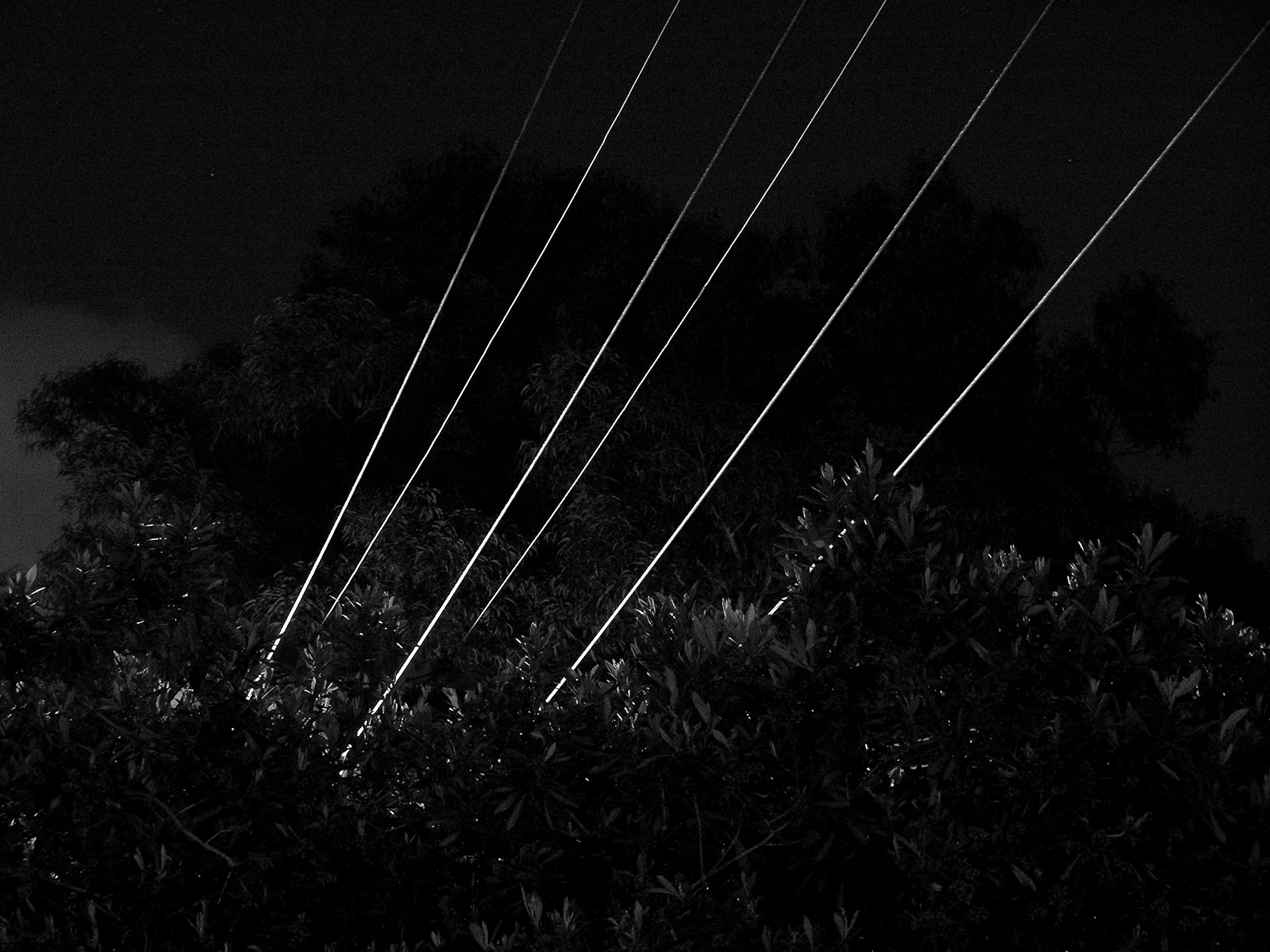
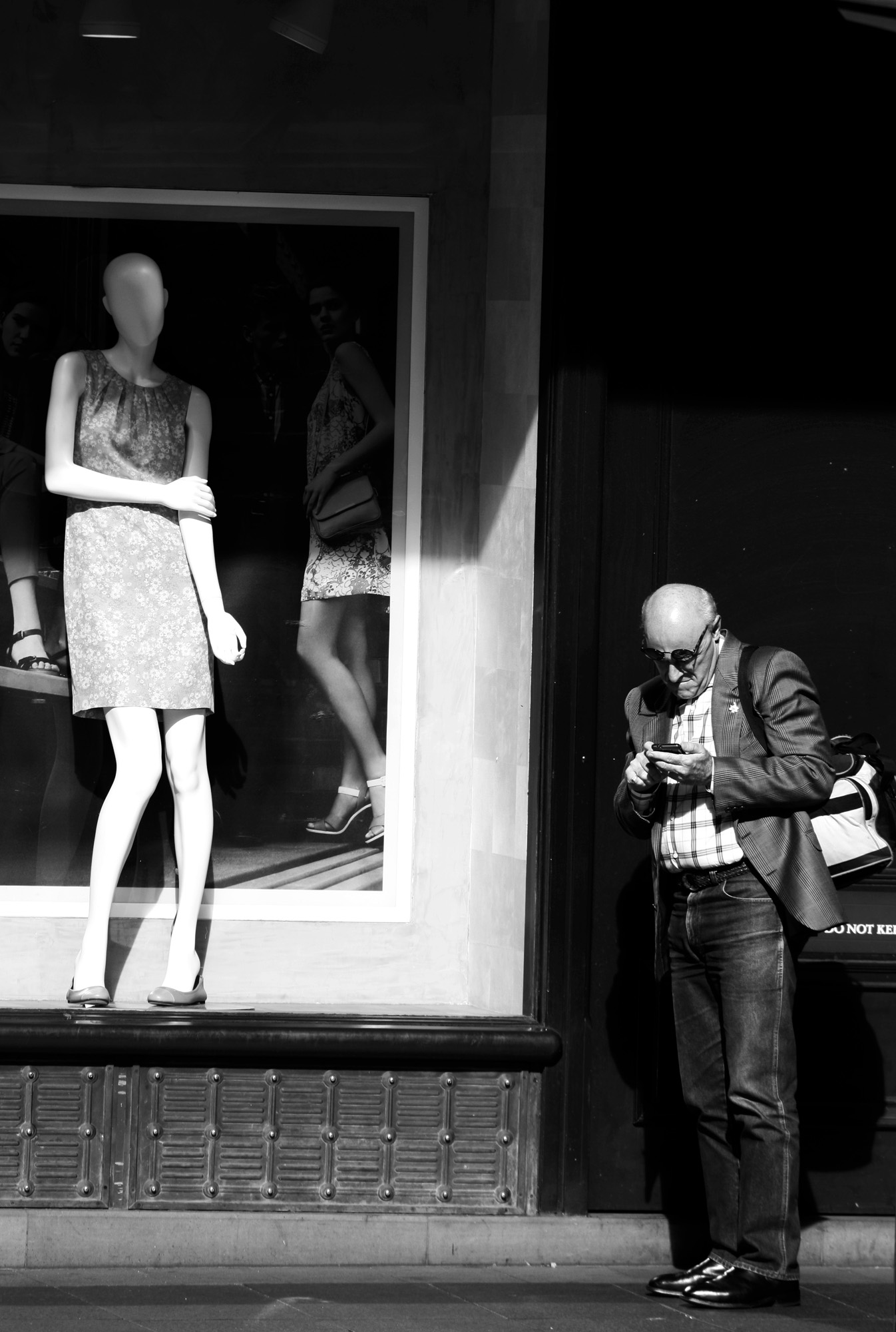
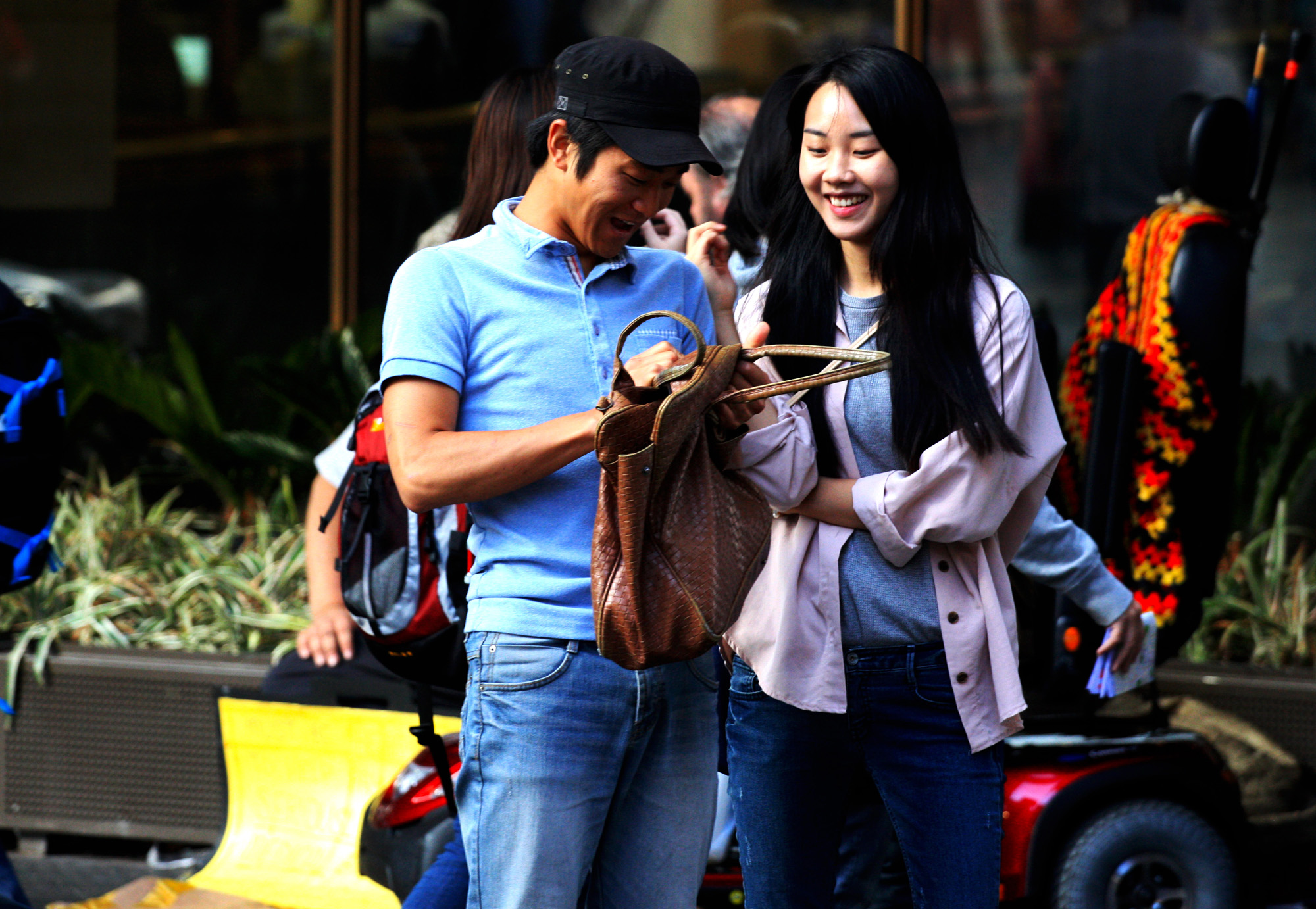
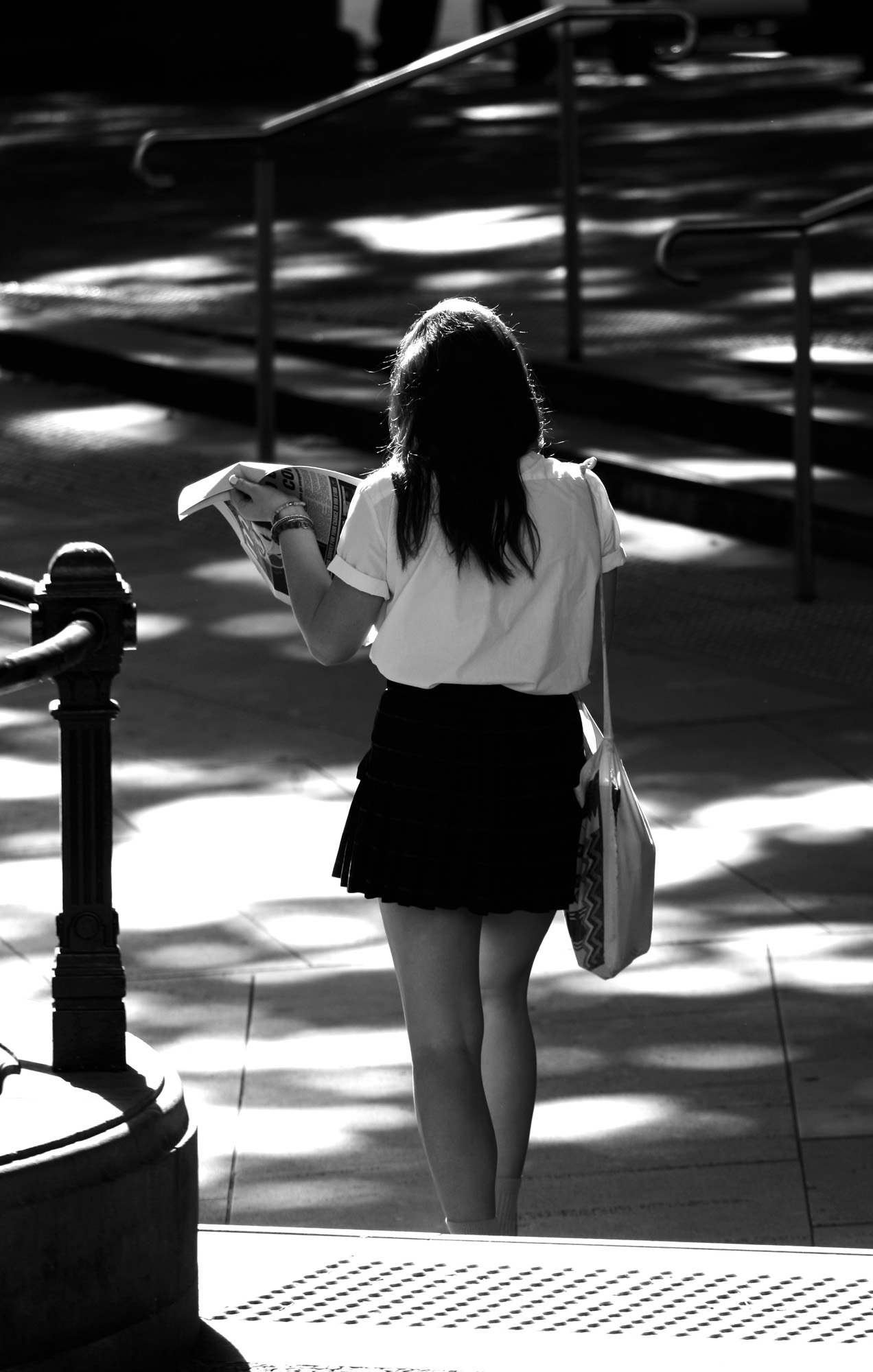
Since returning from India, now almost six months ago, I still haven’t really fallen back into the habit of shooting a lot. It’s not so much a case of the cup runneth dry so much as the well runneth over, for I’ve got a daunting backlog of photographs to get through. Much of that work has been earmarked for travel writing and is being held in reserve. Hopefully it won’t be too long before I get it out there. In the meantime, here are some of the photos I have taken recently.

Courthouse Hotel, Newtown

Oxford street

Skippy girls, Wilson street, Newtown

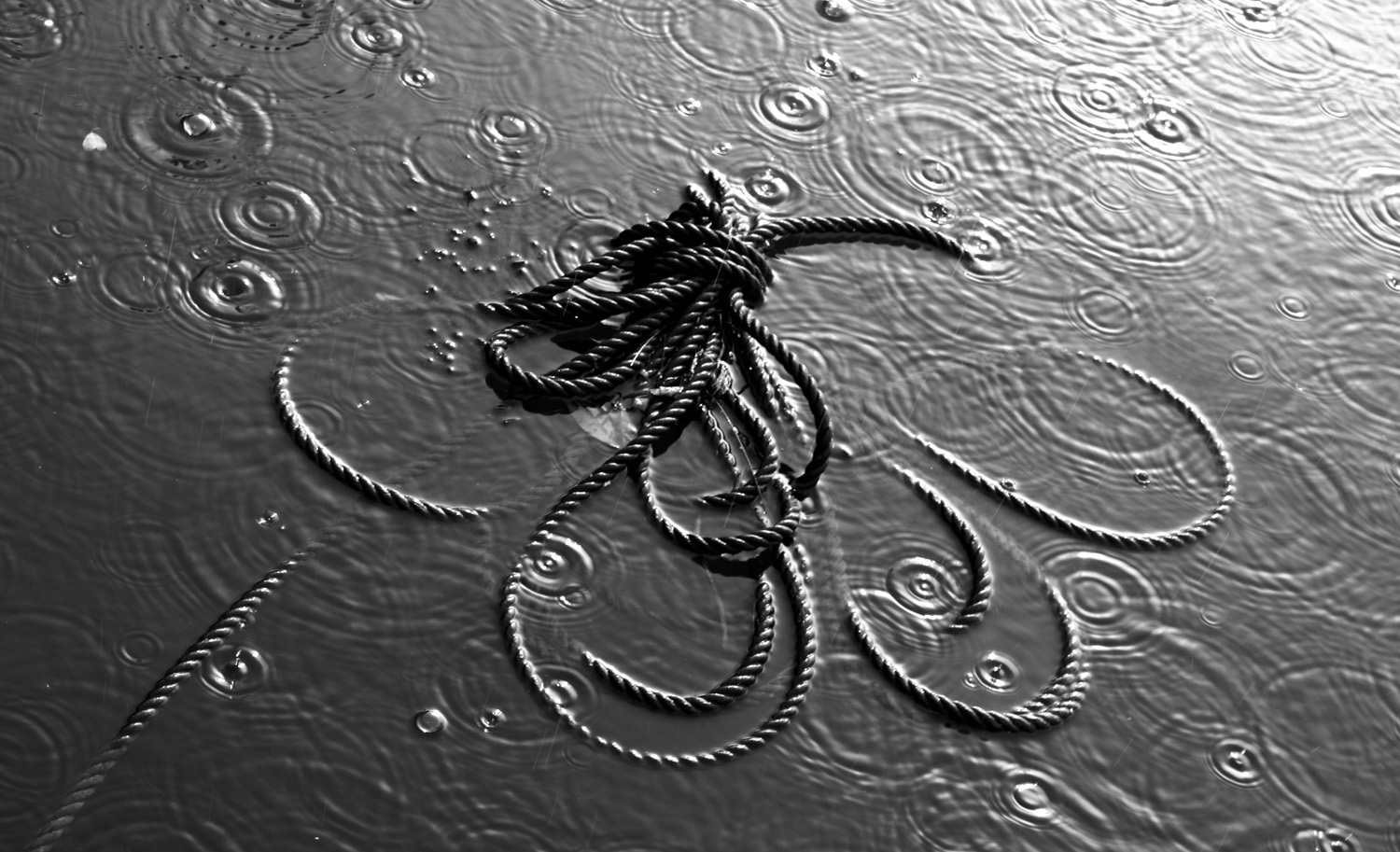
Floating rope

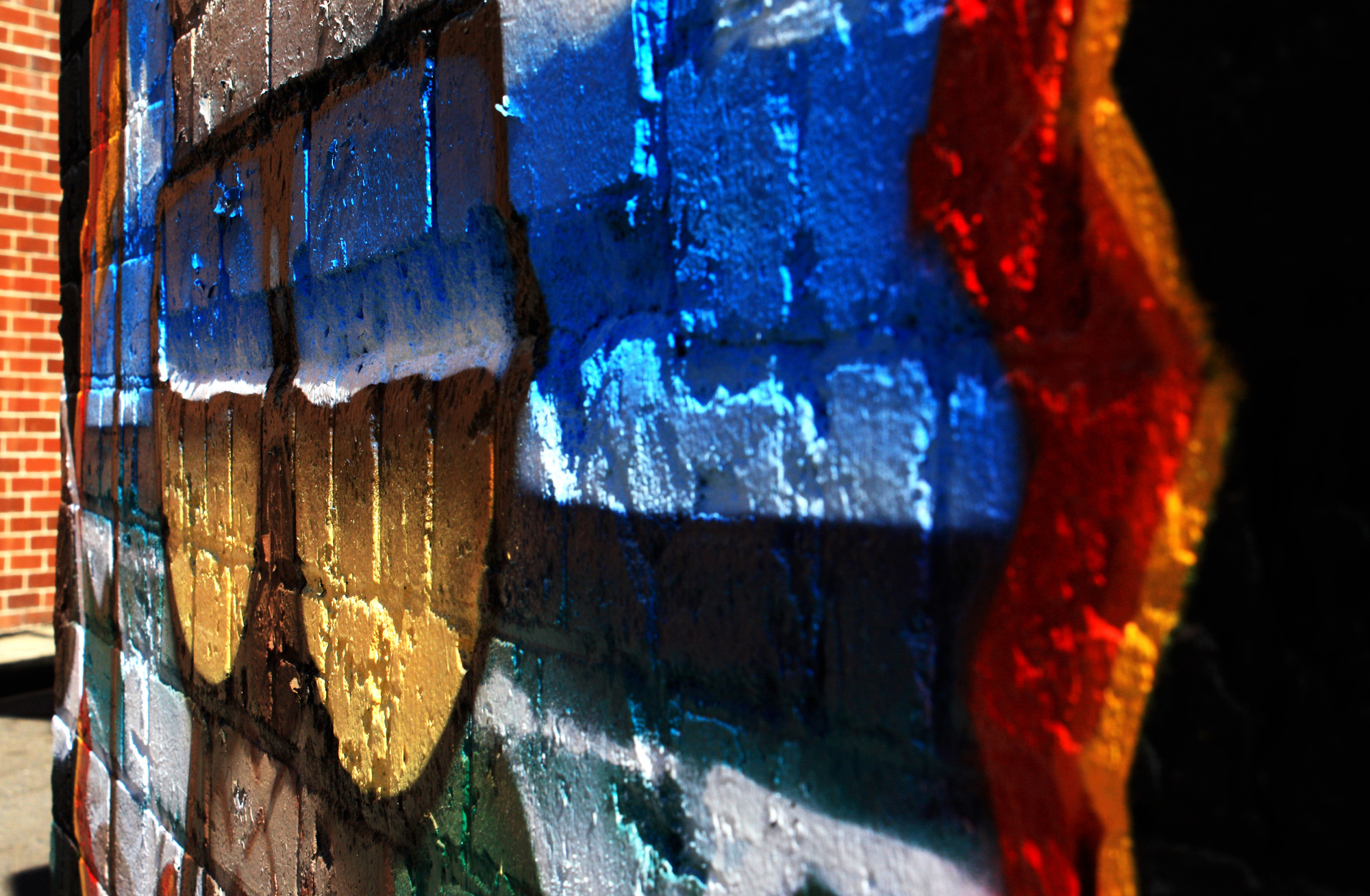
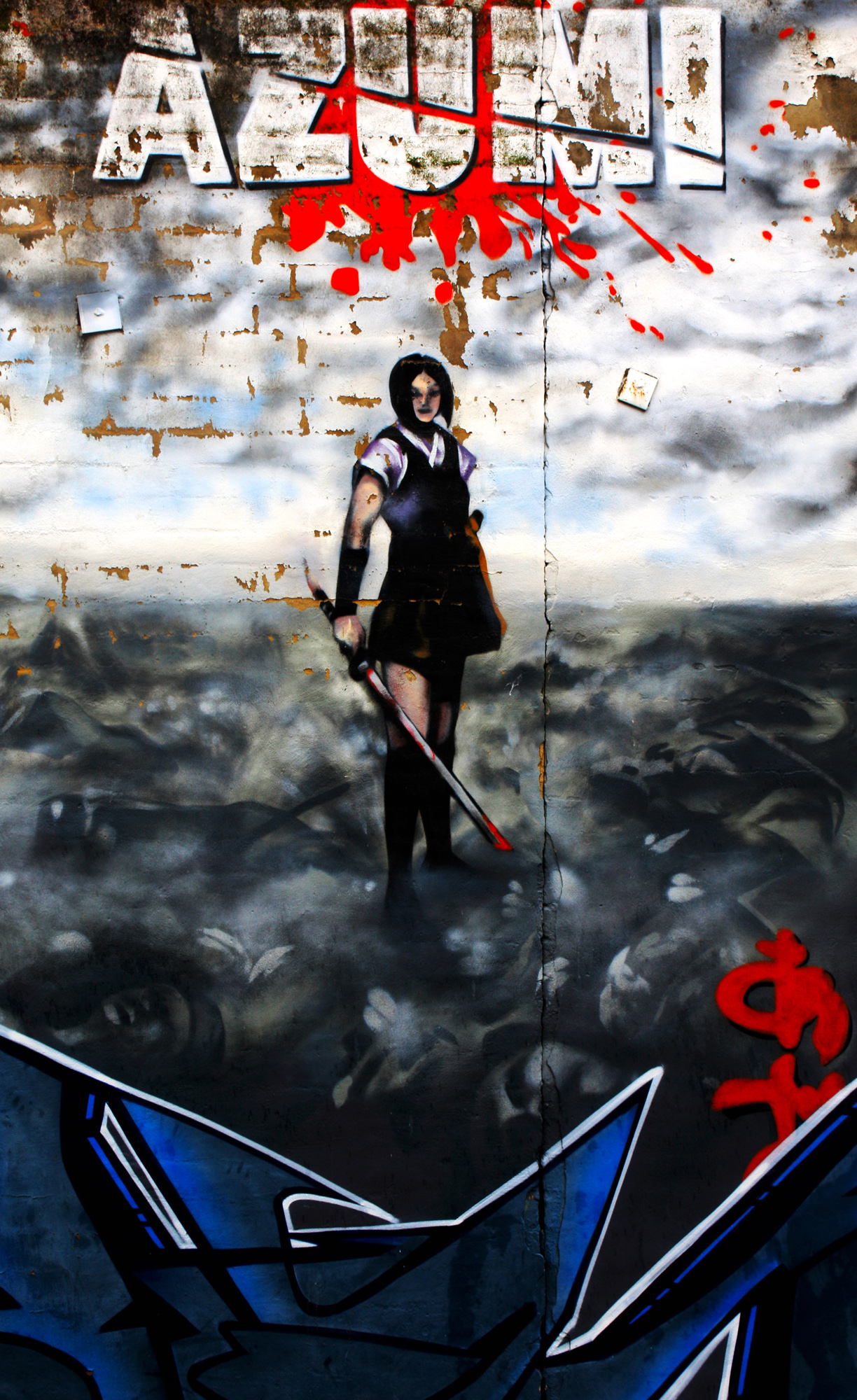
Graffito, Surry Hills

Strange palm insect

Curves 3

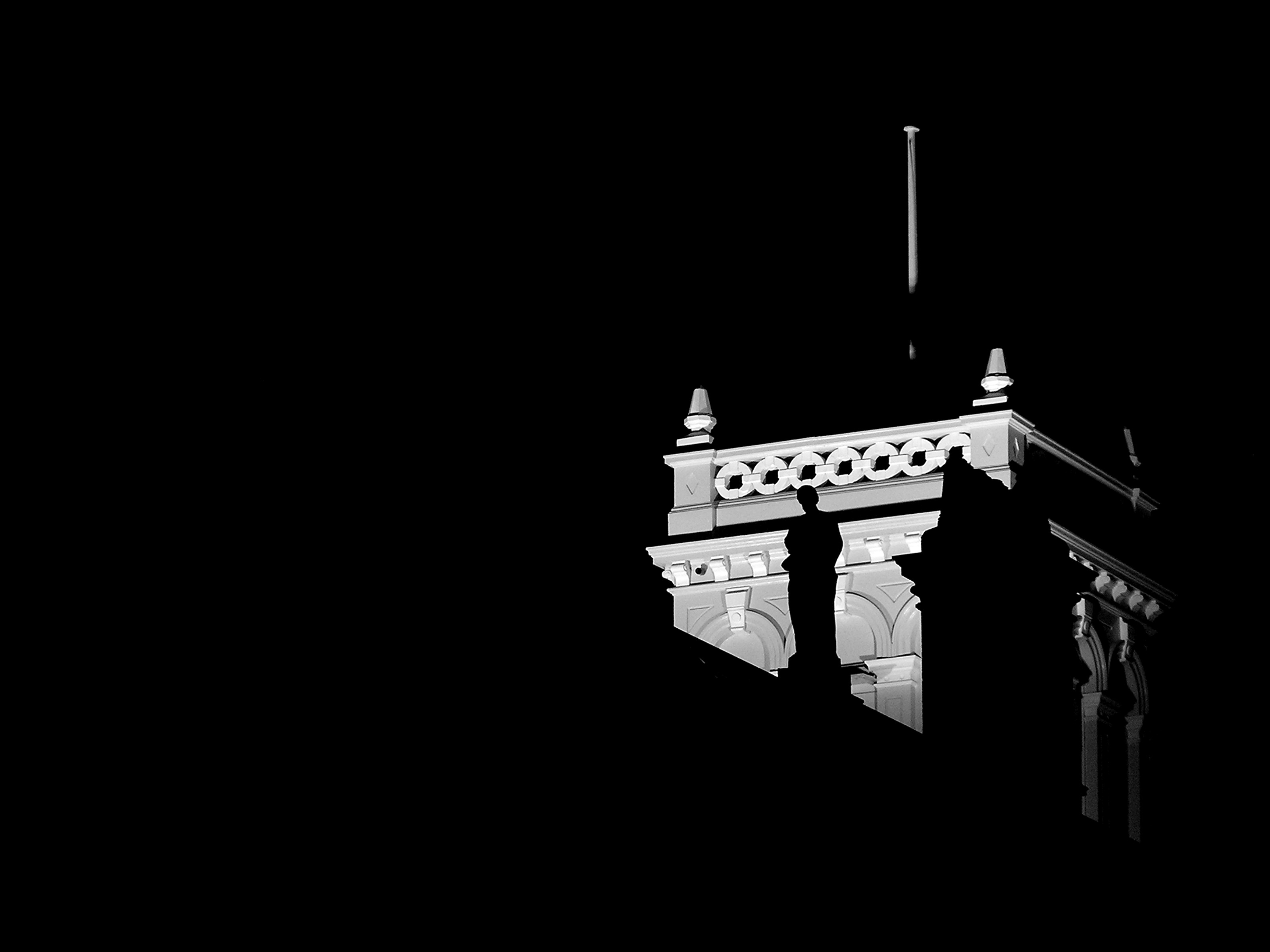
Central station clocktower

Carriageworks

Dead marines

Redfern station

Surry Hills

Newtown station selfie 2

Annandale

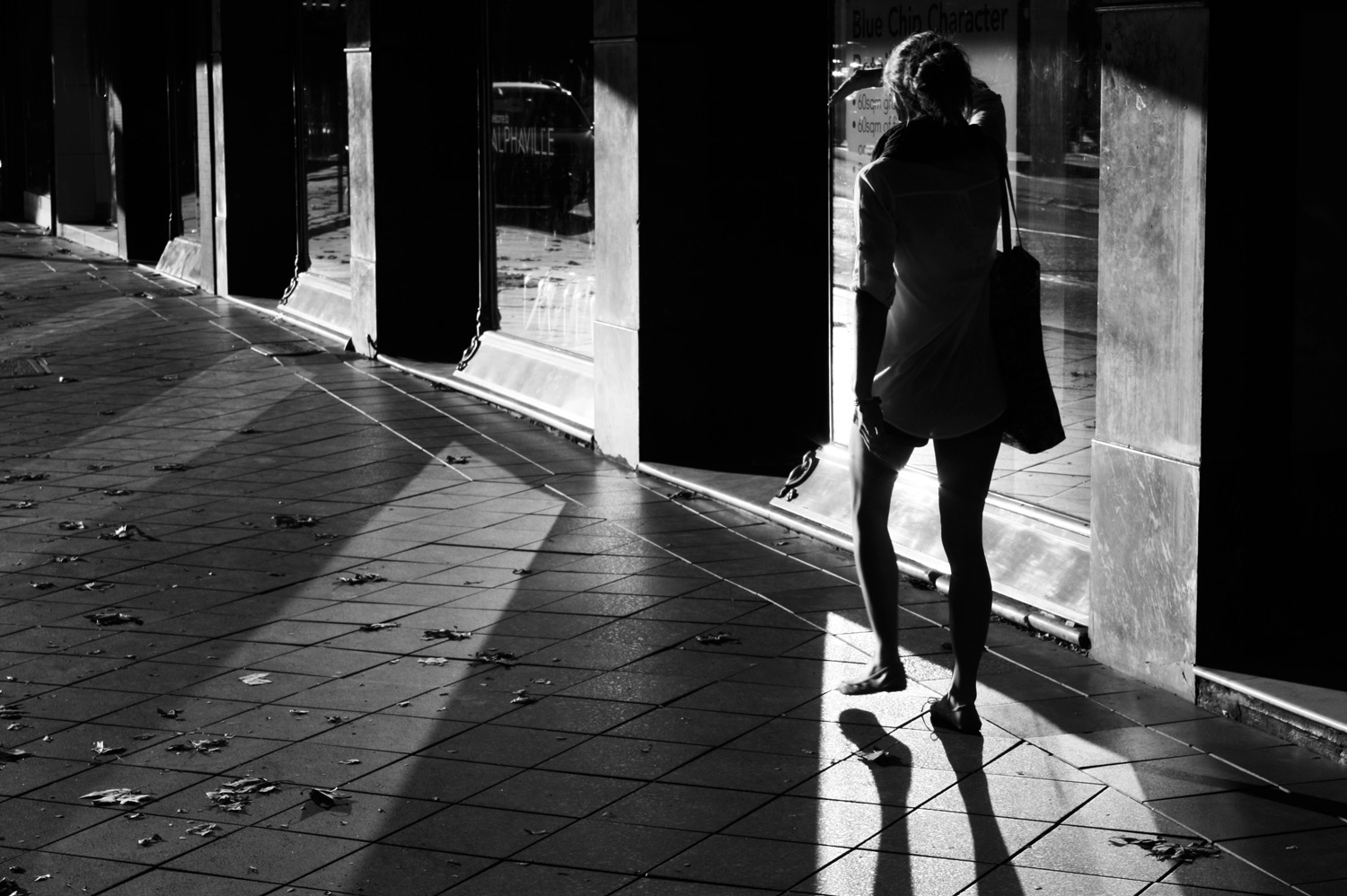
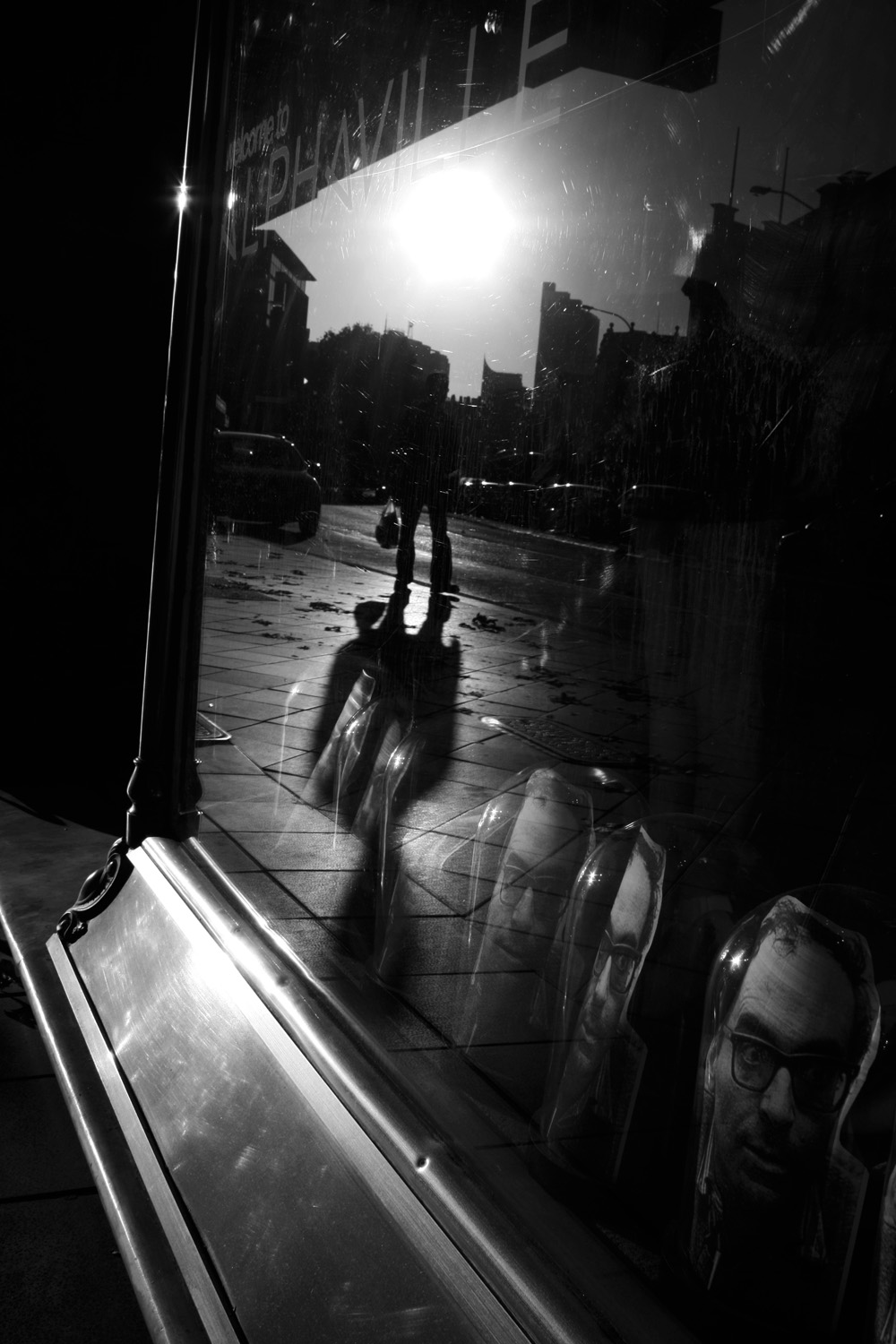
Alphaville

Train, Newtown

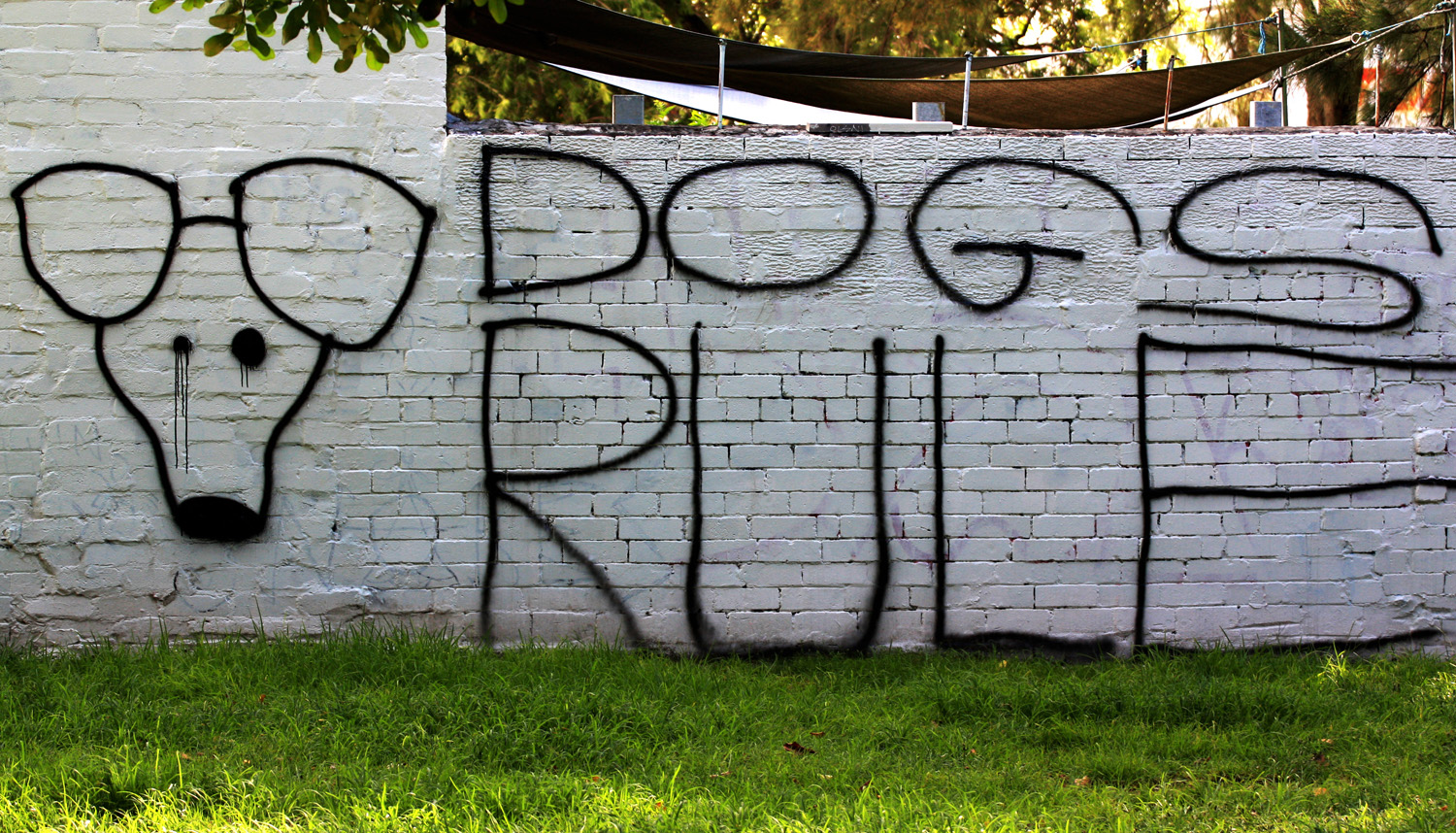
Pug rules

Floating rope

Read Full Post »

Wallpeople

Last Saturday, my buddy Paul (Dr Fantasy) and I did our first job together as the team Celebrius. Celebrius is the name of an event photography and video business we are in the process of forming. The plan is to cover any and all events – weddings, parties, anything as it were, providing tasteful, arty stills and innovative video editing. Paul and I have a lot of amateur experience and some small amount of professional experience in these areas, but either way we feel confident we have the capacity, without being cocky or arrogant, I hope : ) In this case we volunteered to work for free – it seemed like both a good cause and a practice project, though there was the slightly mercenary motivation in having our names attached and promoted.

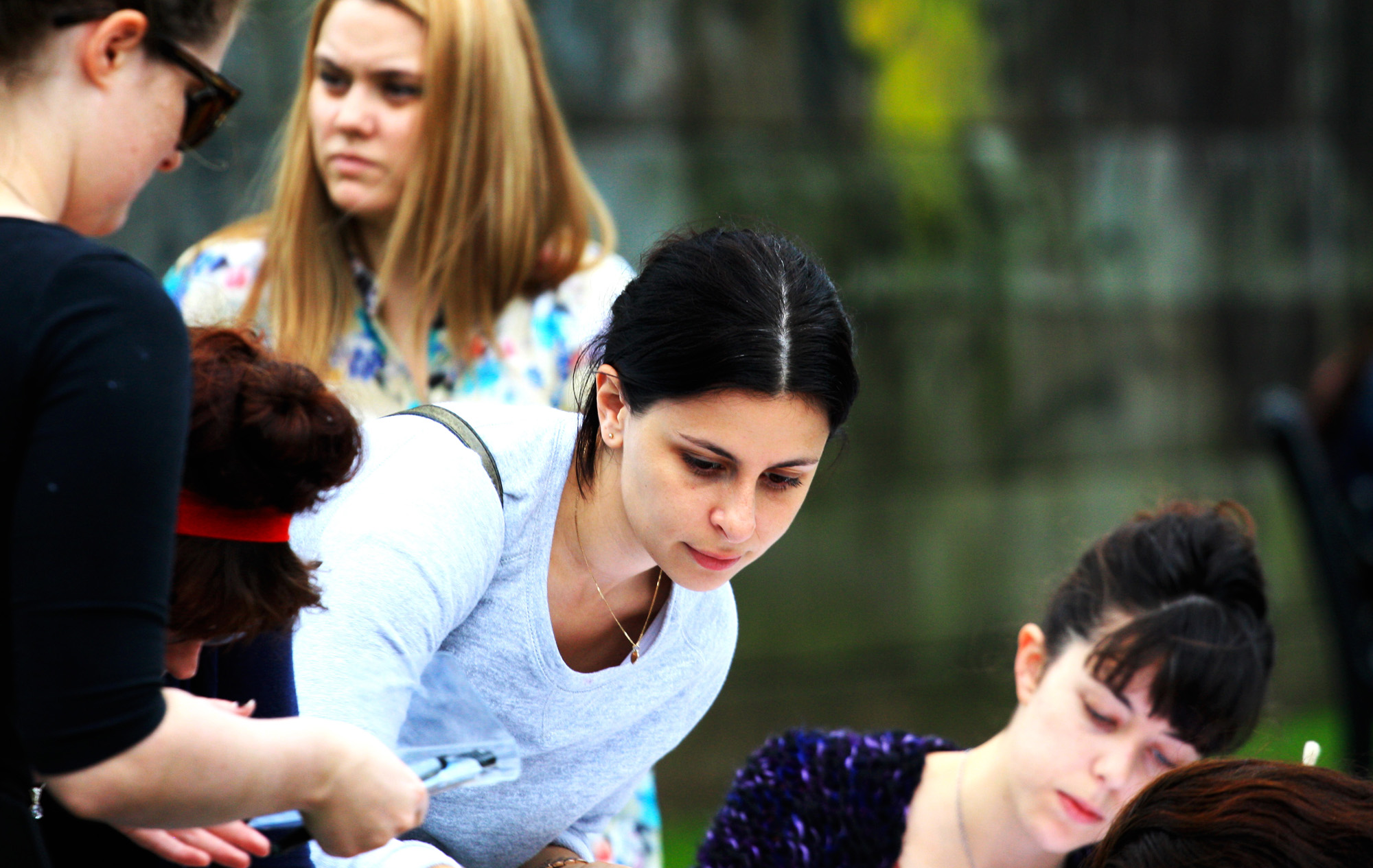
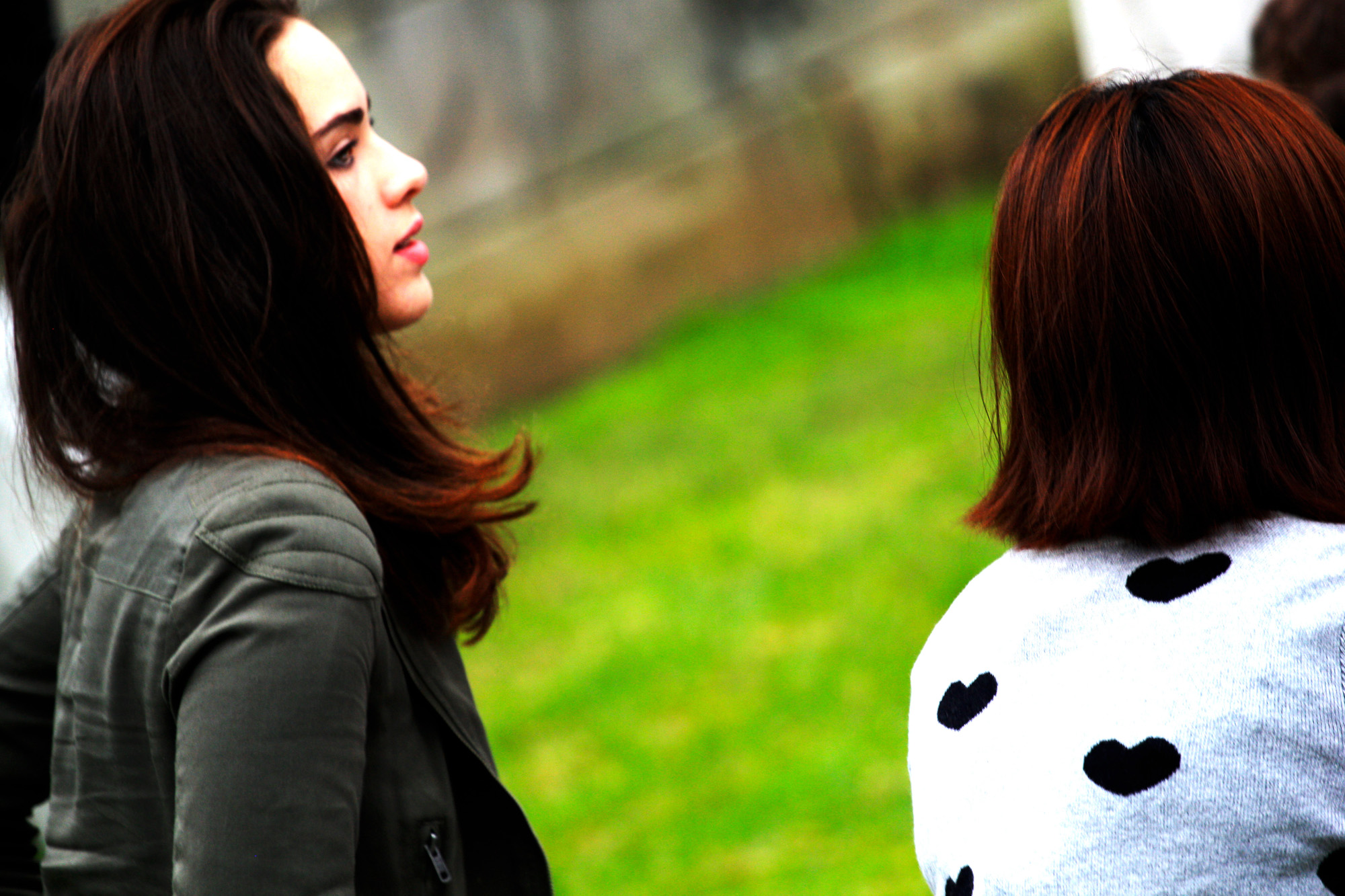
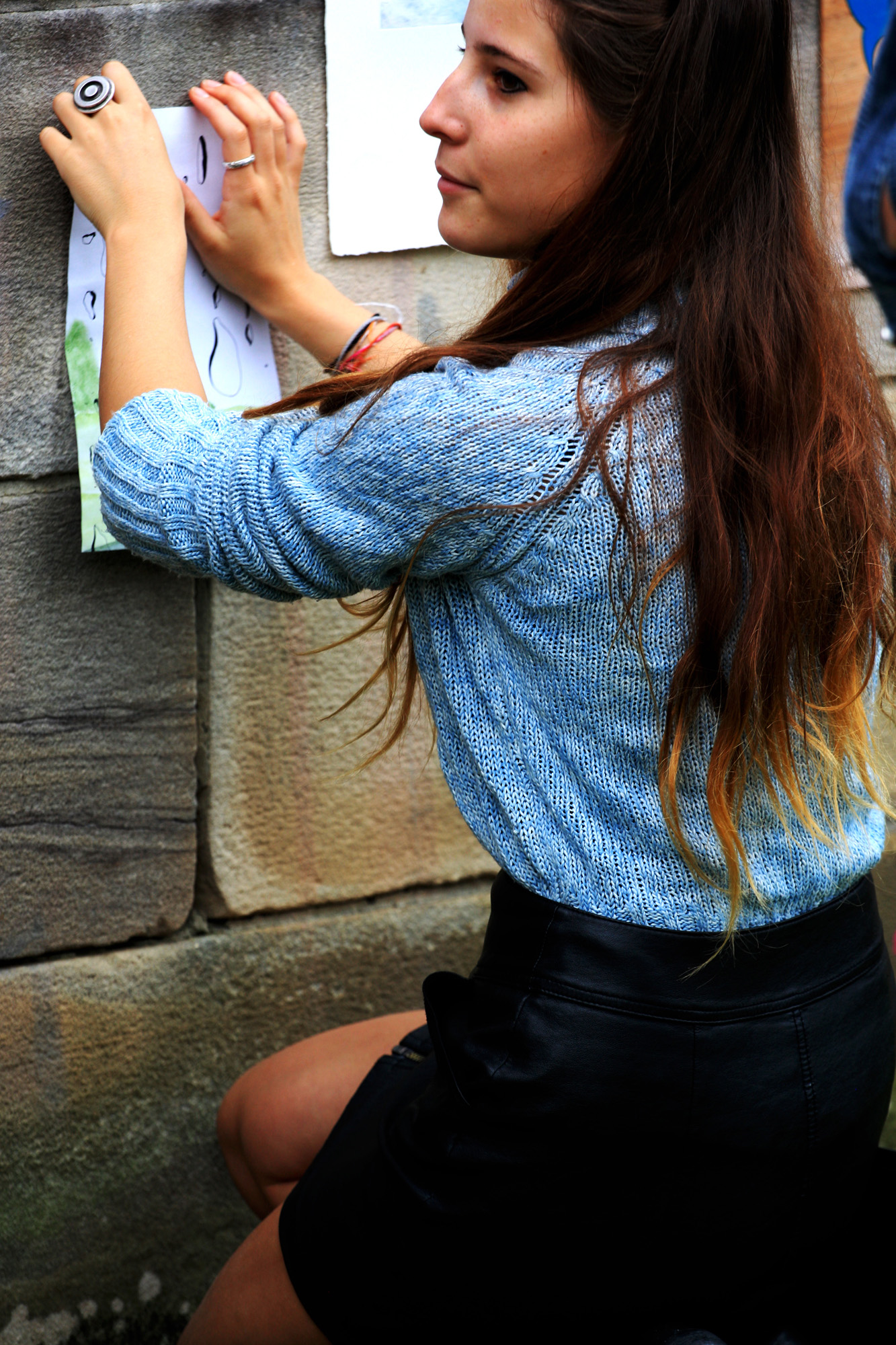
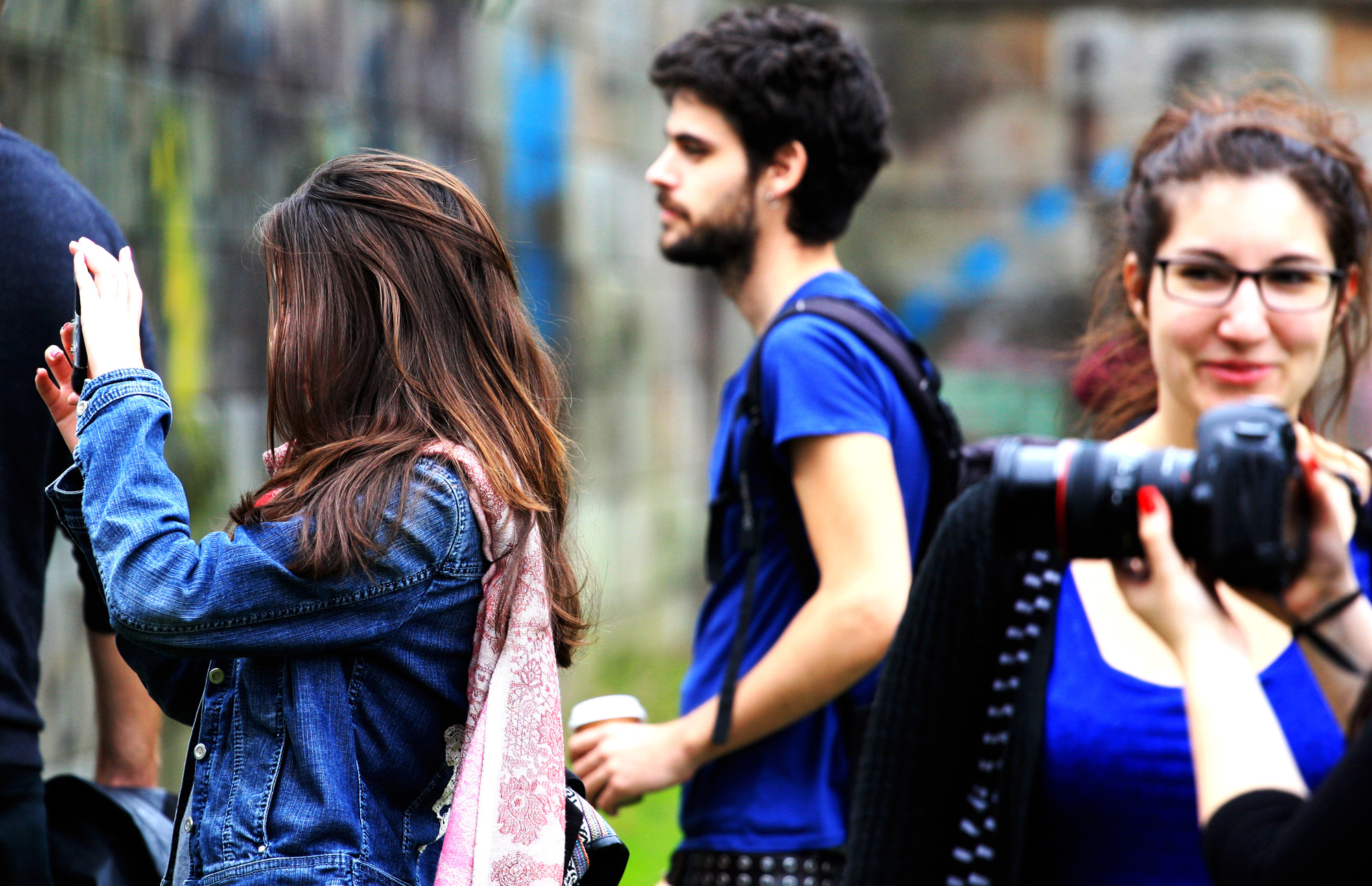
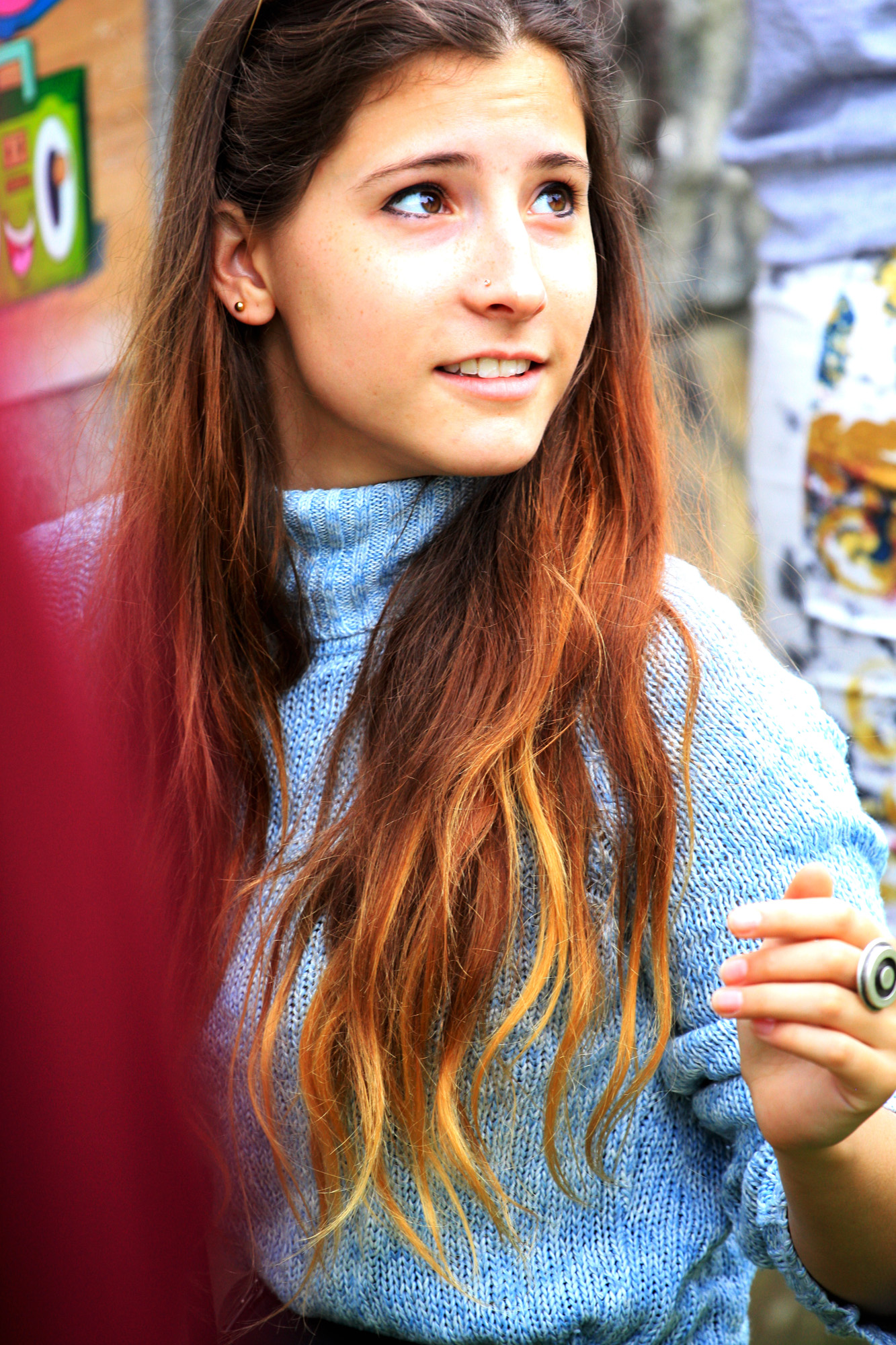
Anyways, this collection of photos is more a mood piece than anything else. I wanted to provide dreamy frames to use for montage and thus focussed more on emotive portraits and evident thought. We were at first somewhat disappointed that there weren’t more people, and that the sky was overcast. Indeed, for a while, at the beginning, there were more people photographing the event than participating in creating or affixing art to the wall. Yet, everybody was lovely and pleasant –  a good-natured and likeable bunch.

As to the event, it was the first Sydney incarnation of an international event called Wallpeople.

Have a look at the blurb below:

Wallpeople is a collaborative art event that happens in 45 cities around the world at the same time. A street wall will become a makeshift outdoor gallery where all participants may exhibit their own works and collaborate to create an improvised open-air museum.

This year, Sydney joins the global network of creatives for the first time and invites all city artists & creative enthusiasts alike to join us next 1st of June in Newtown.

Created in Barcelona in 2009, Wallpeople leads people to create, and be part of a unique moment in a certain urban place, with the intention to set up a unique and street work done by all.

Wallpeople 2013: Music Edition

The guiding theme for 2013 is MUSIC. We want everyone to express his unique relationship with music, no matter what genre or style. The participants have two possibilities:

1. Reinterpret a song in an artistic format of your choice: illustration, photography, text, painting, collage, canvas…
2. Create any work related to music in a general way: For example: a tribute to an artist, a concert, a musical moment of your life, your favourite style, musical origins…

0049 Wall people

0032 Wall people

0040 Wall people

0103 Wall people

0050 Wall people

0121 Wall people

0059 Wall people

0096 Wall people

0146 Wall people

0223 Wall People colour

0115 Wall people

0233 Wall People

0210 Wall People

0268 Wall People crop 2

0269 Wall People

0281 Wall People

0322 Wall People

0302 Wall People

0326 Wall People

0316 Wall People

0324 Wall People

0332 Wall People

0336 Wall People

0343 Wall People

0356 Wall People

0361 Wall People 2

0369 Wall People

0363 Wall People

0018 Wall people

0428 Wall People

0024 Wall people B&W

0391 Wall People

Read Full Post »

Just prior to going to India last December, I moved into an inner city suburb of Sydney called Camperdown. It’s very close to where I was living previously in Glebe, on the other side of that great dividing road, Parramatta. The nice side, in my opinion, for Glebe runs down to the inner harbour and is by far the prettier of the two suburbs. Camperdown, however, has many attractions, one of which, technically, is the University of Sydney.

Parramatta Rd, into the west

Campus aside, Camperdown is a curious mix of old light industrial – factories, warehouses and workshops, and residential – of the bungalow, flat and terrace kind. Indeed, like so much of Sydney, Camperdown has swathes of Victorian and Edwardian terraces and semi-detached Federation (turn of the 20th century) houses.

The ubiquitous Sydney terraces

The area was first named by Governor Bligh (1806-08) after the Battle of Camperdown between the English and Dutch in 1797. Bligh received a 240 acre grant of land, which also included parts of neighbouring Newtown. Early in the 19th century, Camperdown was established as a residential and farming area. Lying just four kilometres west of the city centre, it was only a matter of time before it became swallowed by the city.

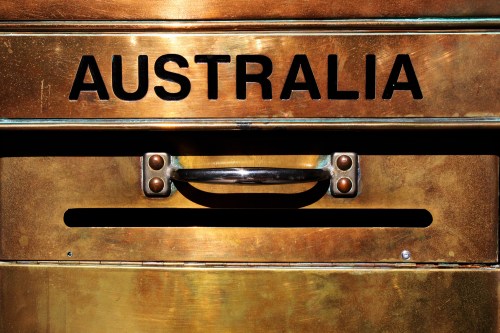
Australia Street

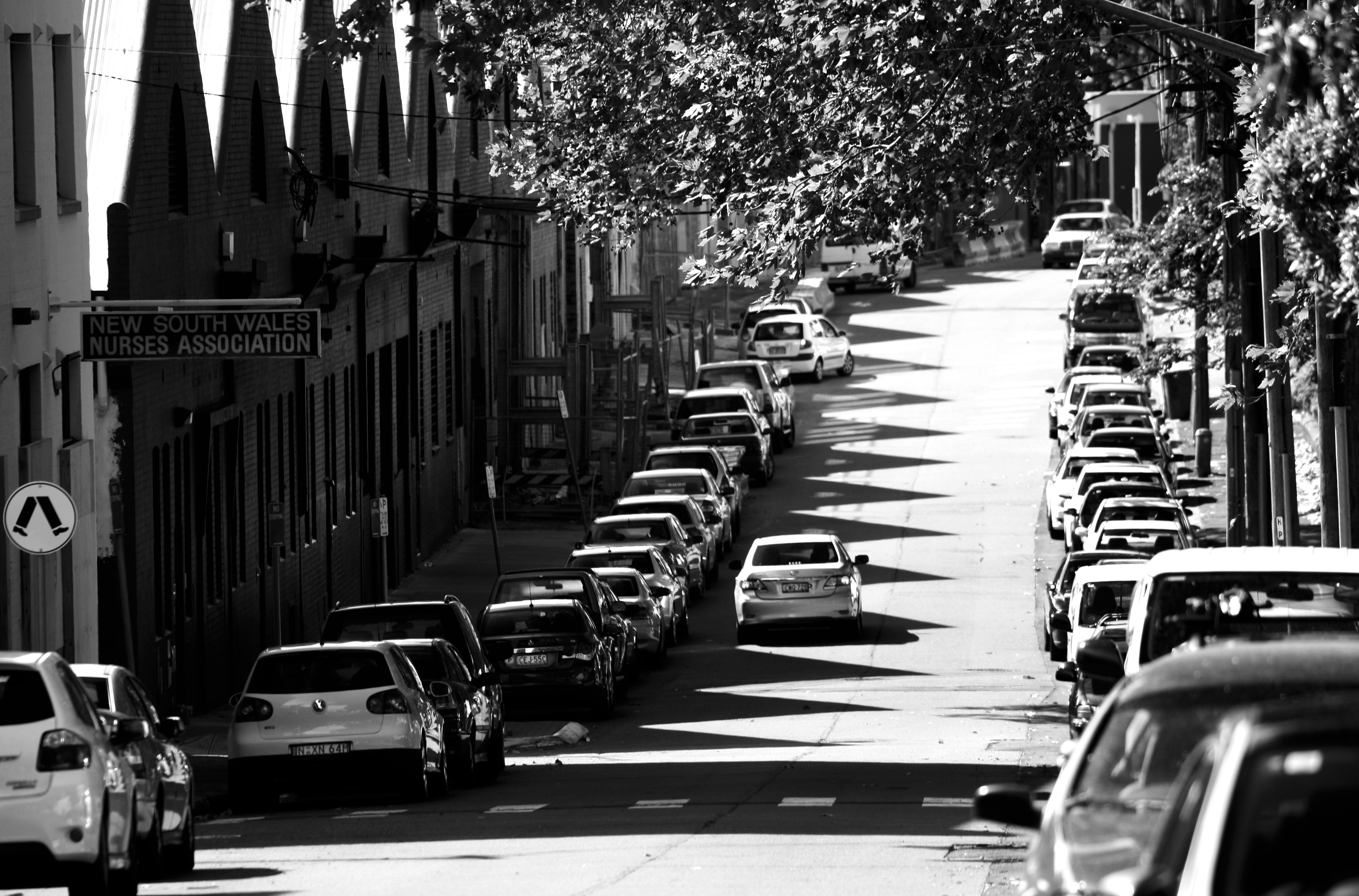
Camperdown is a small suburb, though this is in part an imposition of its division down the middle by Parramatta Road. It is a very built area, with a few good parks and small reserves, but nothing especially large – again, not including campus. Most of the houses are, however, one or two storeys, and, apart from the hospital, few of the reclaimed and gentrified warehouses and factories are especially tall. With streets and gardens full of trees and vegetation, it thus retains an old-town feel which adds to its appeal.

Camperdown

The Dutch houses

Denison street

We are fortunate to live in a tree-heavy cul de sac which fronts onto Camperdown oval. Our apartment block is a creaky old firetrap, which, from the back lane, looks awfully un-inspiring, but from the front seems well-disposed.

Cricket poetry

Penalty shot

Camperdown oval

Inside, the place takes on the curiously nostalgic complexion of an old, wide-corridored hotel in the Blue Mountains. The flats themselves have a pleasant vintage character to them and certainly scrub up nicely, with redundant fireplaces and tile features. It is hardly baroque, but rather an elegant sufficiency.

Rooftop garden, dying

Mantlepiece

Downstairs, in the base of the apartment block’s front are two cafés, Gather on the Green and Store, both of which are perfectly okay – the former good for coffee, the latter for food. Because of their proximity to the park and the dead-end nature of the street, customers regularly take their orders on the grass beside the oval. With the prevalence of youngish professional couples round these parts, the park and cafés are usually full of young families with a good number of children running about. This creates what my friend Paul calls a certain “prambience.”

The cafes downstairs

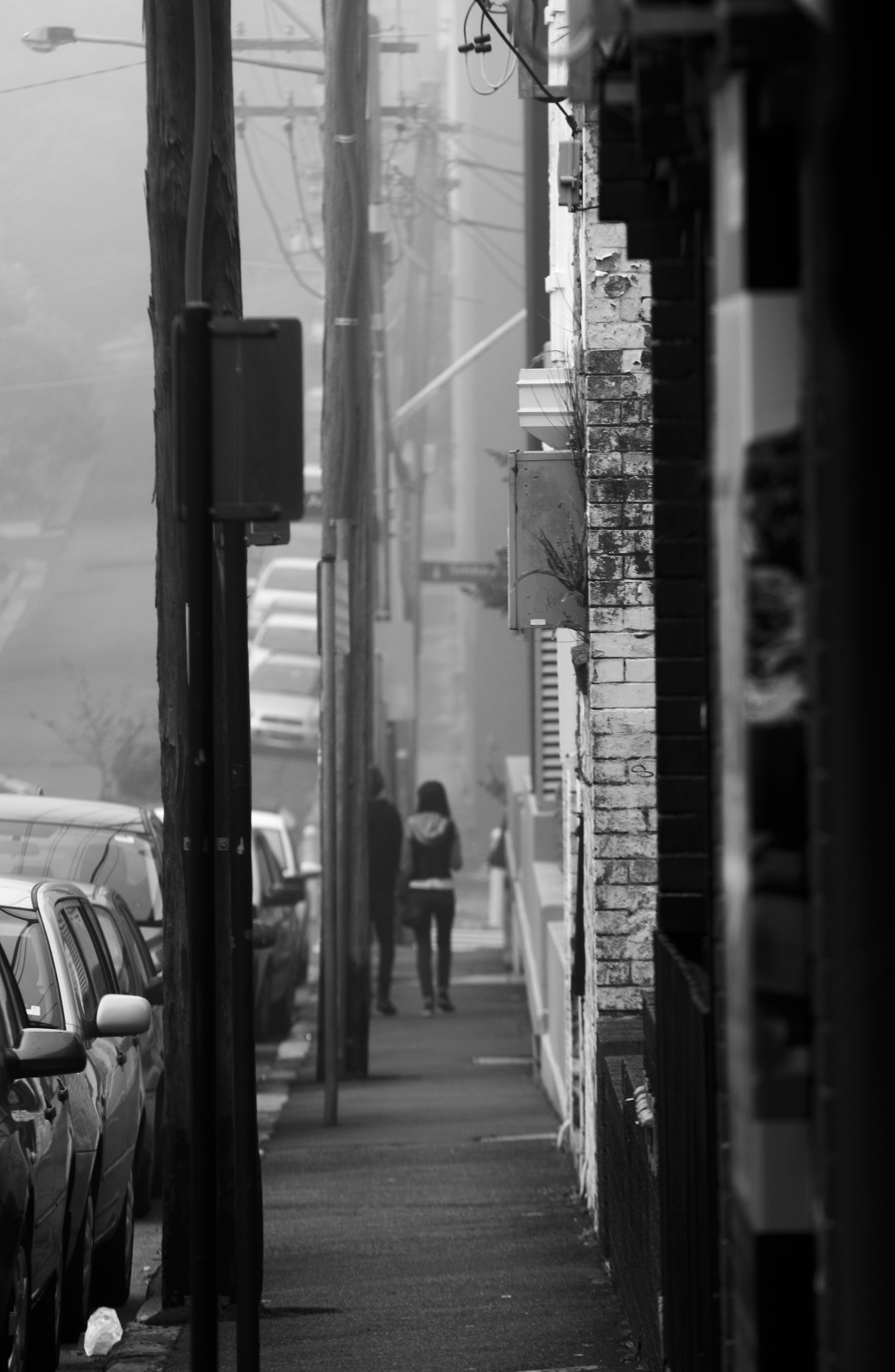
Foggy morning

Camperdown always struck me as an in-between sort of place. It is stuck between Parramatta Road and King Street in Newtown – then stuck between the university and hospital. In a sense, it just peters out into the west, hemmed in on the other sides. For this reason, I never felt comfortable about moving here, knowing that I was, to some degree, cut off from the water. To compensate for this I have extended my run considerably and now I cross Parramatta Road and follow the canal down to the water.

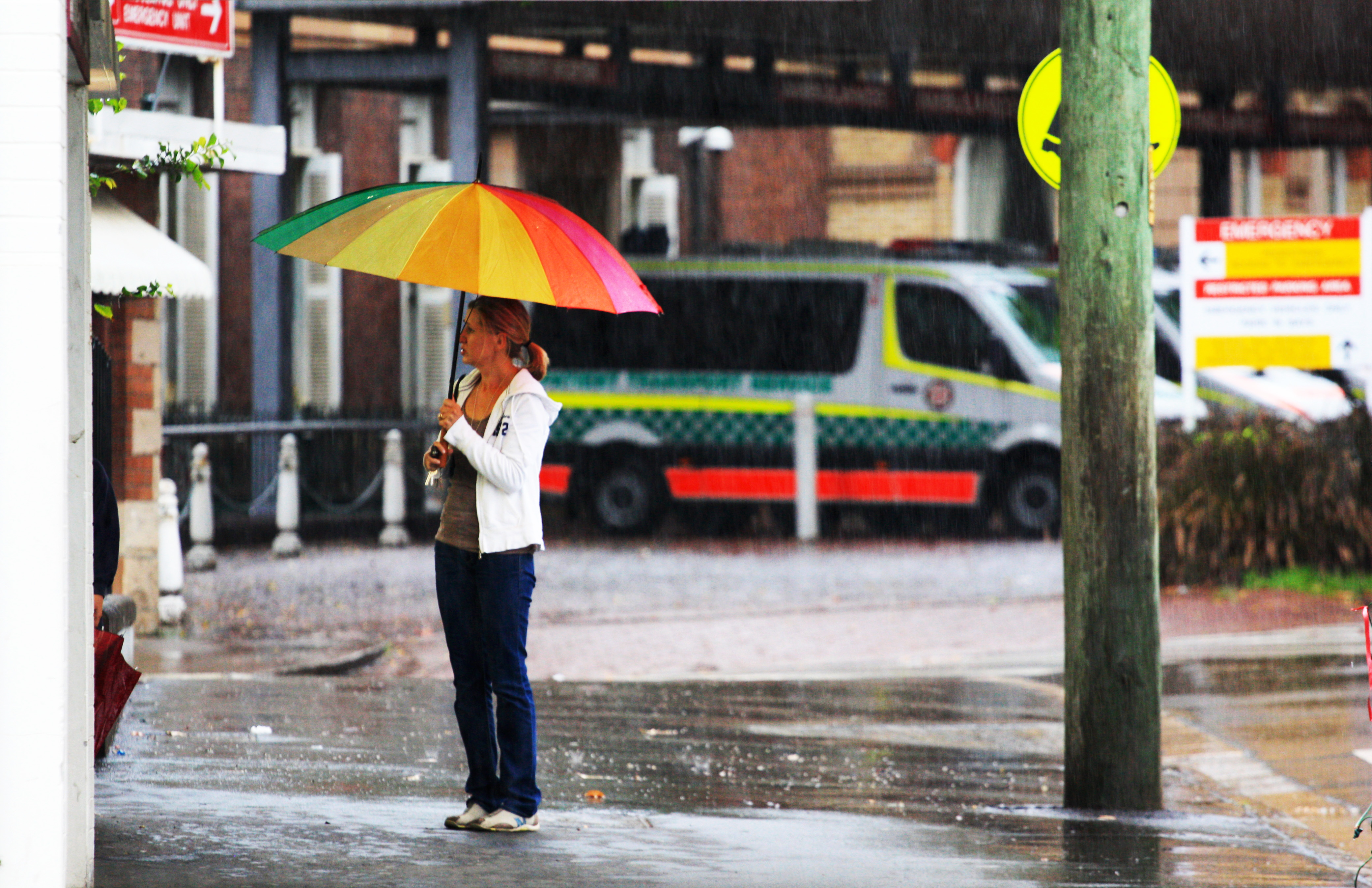
Wet Parramatta road

Glebe point sunset 2

Glebe, Rozelle Bay

It’s a lovely run once on the other side – under the aqueduct, through the canal-side parks, under the great curve of the Glebe railway viaduct, then along the promenade in Bicentennial Park. After cheering on the wind-turbine, I swing past views of the Glebe Island Bridge (now sadly renamed Anzac) and Sydney Harbour Bridge. My long ago established love for the Glebe area is such a powerful thing that I feel uplifted just running through it, but the sight of the water and bridges from the park takes things up another notch.

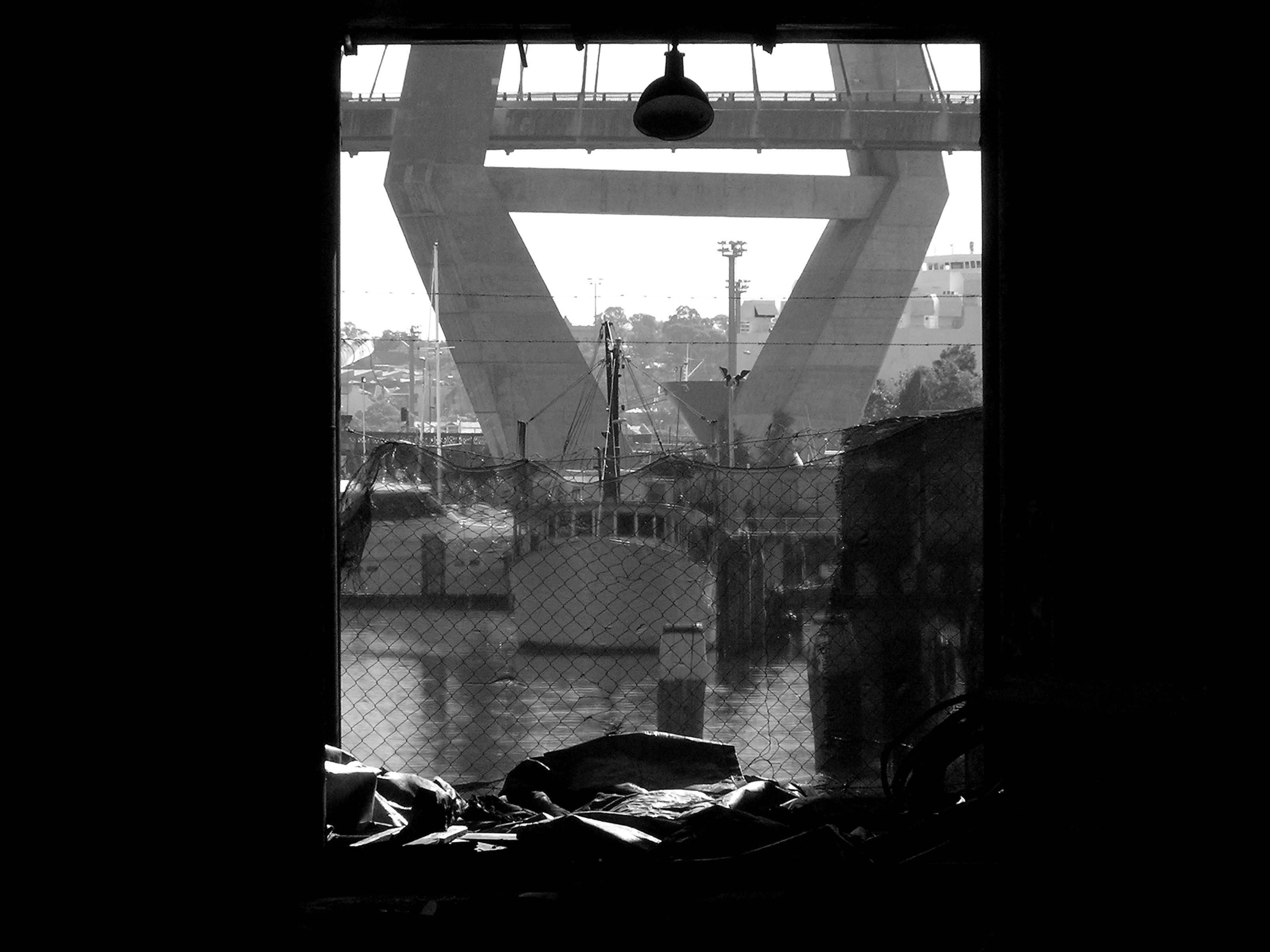
Glebe Island bridge

Glebe afternoon

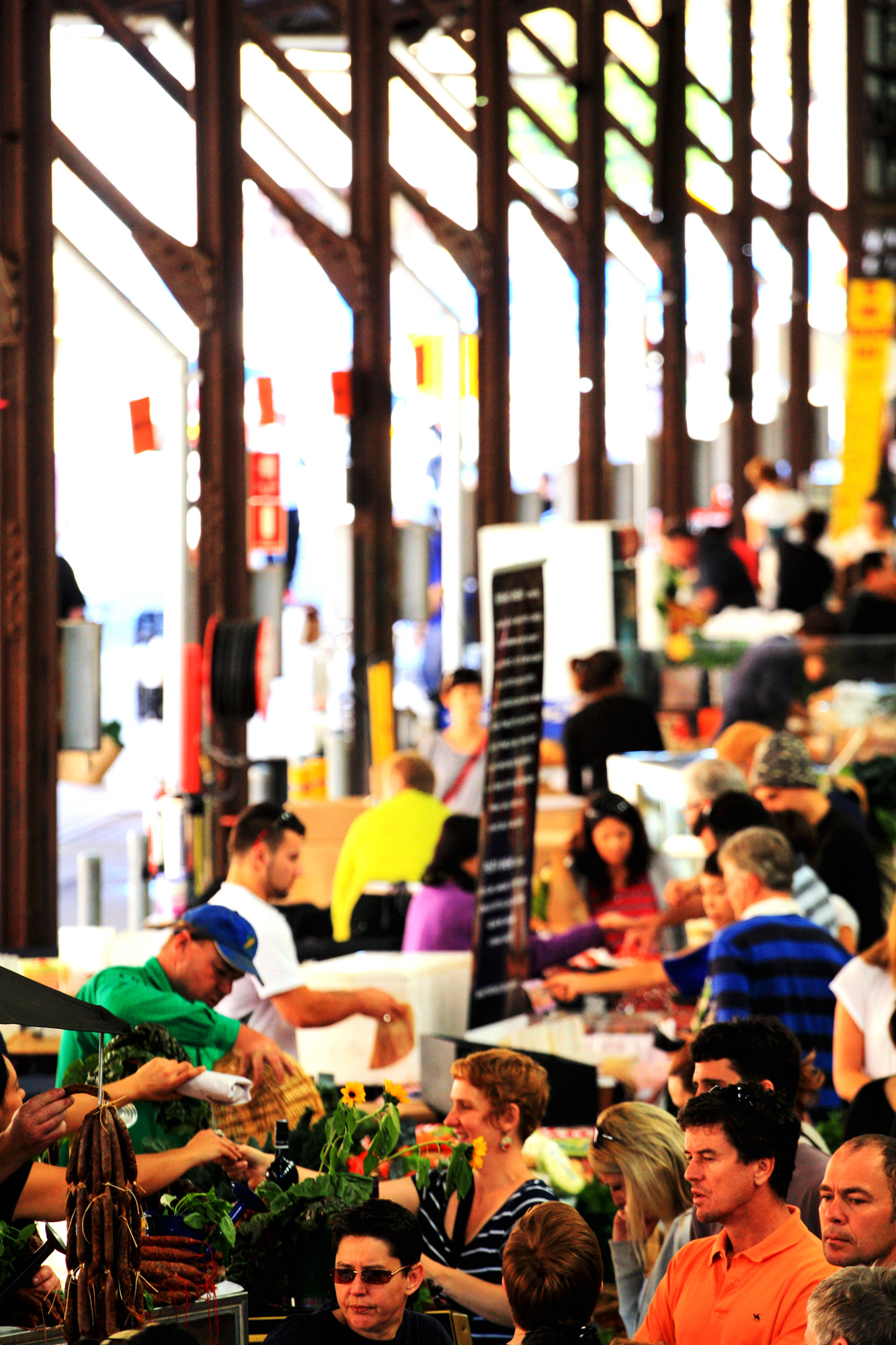
Back to Camperdown, the land of the in-between. It is a very handy place to live, pure and simple: King Street with all its attractions is a ten minute walk away and, most Saturdays, we head up to the markets at the old Eveleigh rail-yards.

Eveleigh markets

Carriageworks

The beautiful campus of Sydney University – V’s workplace – is just ten minutes walk to the east. Public transport is plentifully available for the price of a short walk – to Parramatta Rd for buses, King Street for trains – and it takes me fifteen to twenty minutes to get downtown.

Parramatta Rd

King street crossing

When we have access to a car, it takes us roughly twenty-five minutes to drive to Bronte Beach – every Saturday and Sunday – which is not such a big imposition. Camperdown also meets one of my toughest conditions when it comes to choosing a house – being within walking distance of an art-house cinema. It also helps that the locals all seem to be friendly, harmless, open-minded lefties and that rare breed of unpretentious hipsters. It all feels perfectly safe.

Camperdown

Amor Laura

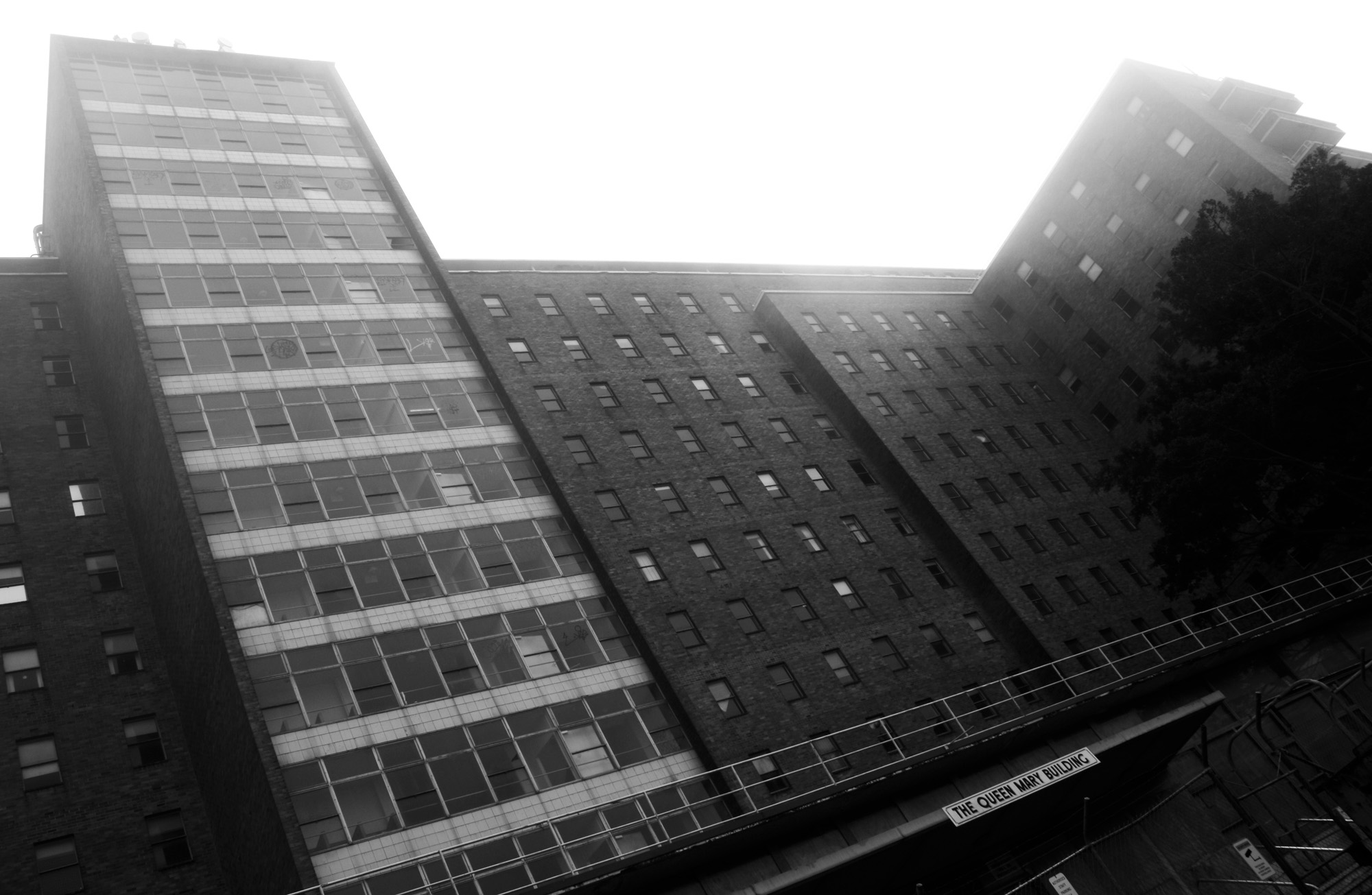
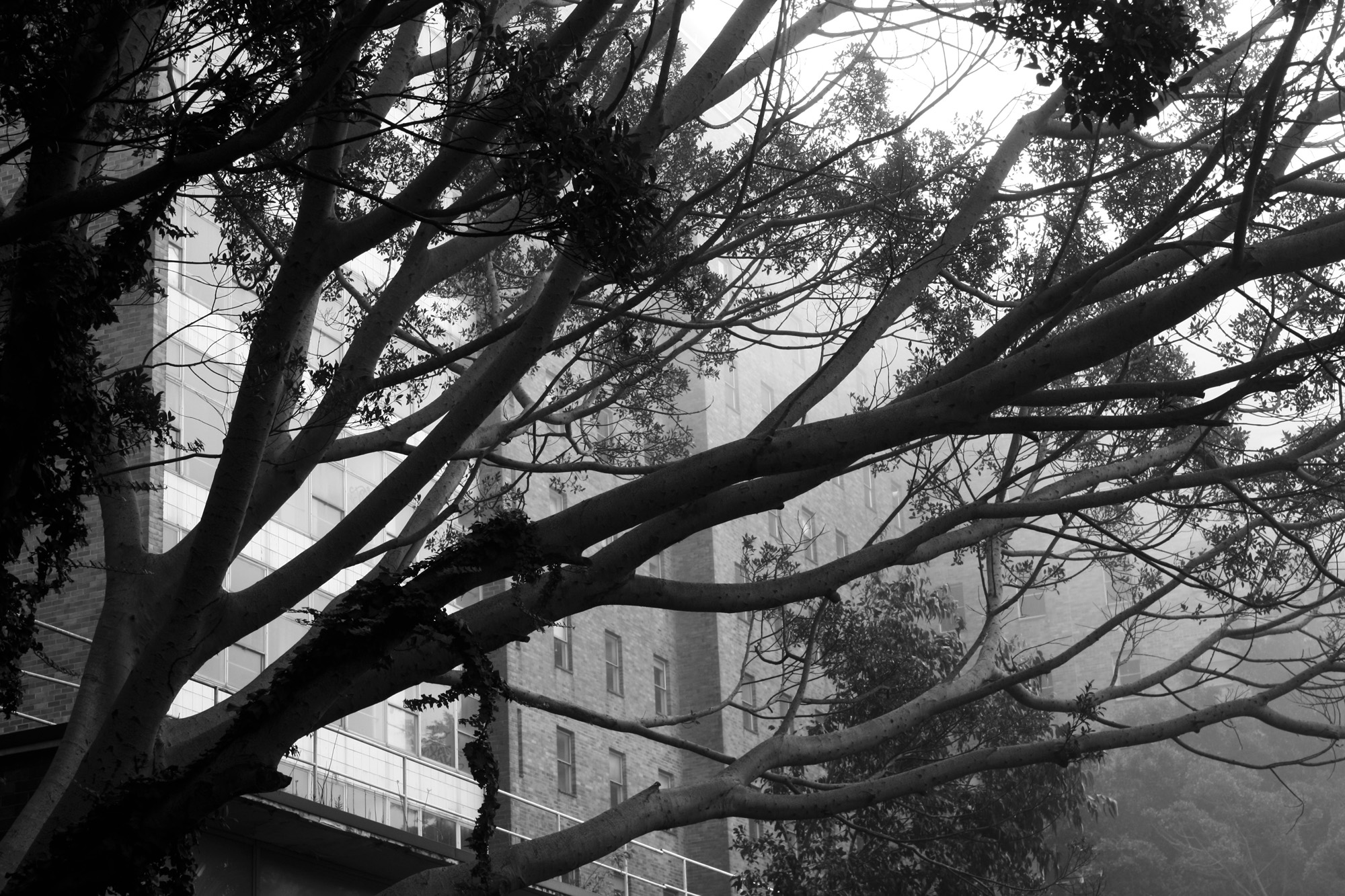
There are, inevitably, a couple of drawbacks: despite being mostly quiet, Camperdown is often the victim of flight path diversions and there are some eyesores. The huge slab of old hospital near the modernising Royal Prince Alfred is particularly unattractive. Surrounded by chain fence and barbed wire, it has a post-holocaust hollowness to it that is chilling and disquieting.

Dead hospital

Dead hospital

It is a monolith of arrant functionalism, yet, despite its ugliness, it often inspires enjoyably melancholic thoughts of the end of civilization. Now overgrown and toweringly glum, it invites one in with its brooding lassitude and I long to break in and explore the corridors. It is probably riddled with asbestos.

Parramatta Road doesn’t exactly leave a lot to be desired and I suppose there isn’t actually anything to do in Camperdown itself. Apart from a few dumpy sports pubs on the main road, there aren’t really any bars or cafés. This really ads to its in-between feel, because in order to do anything it is necessary either to walk to Newtown or Glebe, or bus and train the hell out of dodge. Still, nothing is really out of reach, so being sleepily stuck in the middle isn’t such a bad thing after all. Either way, it certainly has grown on me over the last few months.

Autumn, Camperdown

Camperdown

Victory

Australia street

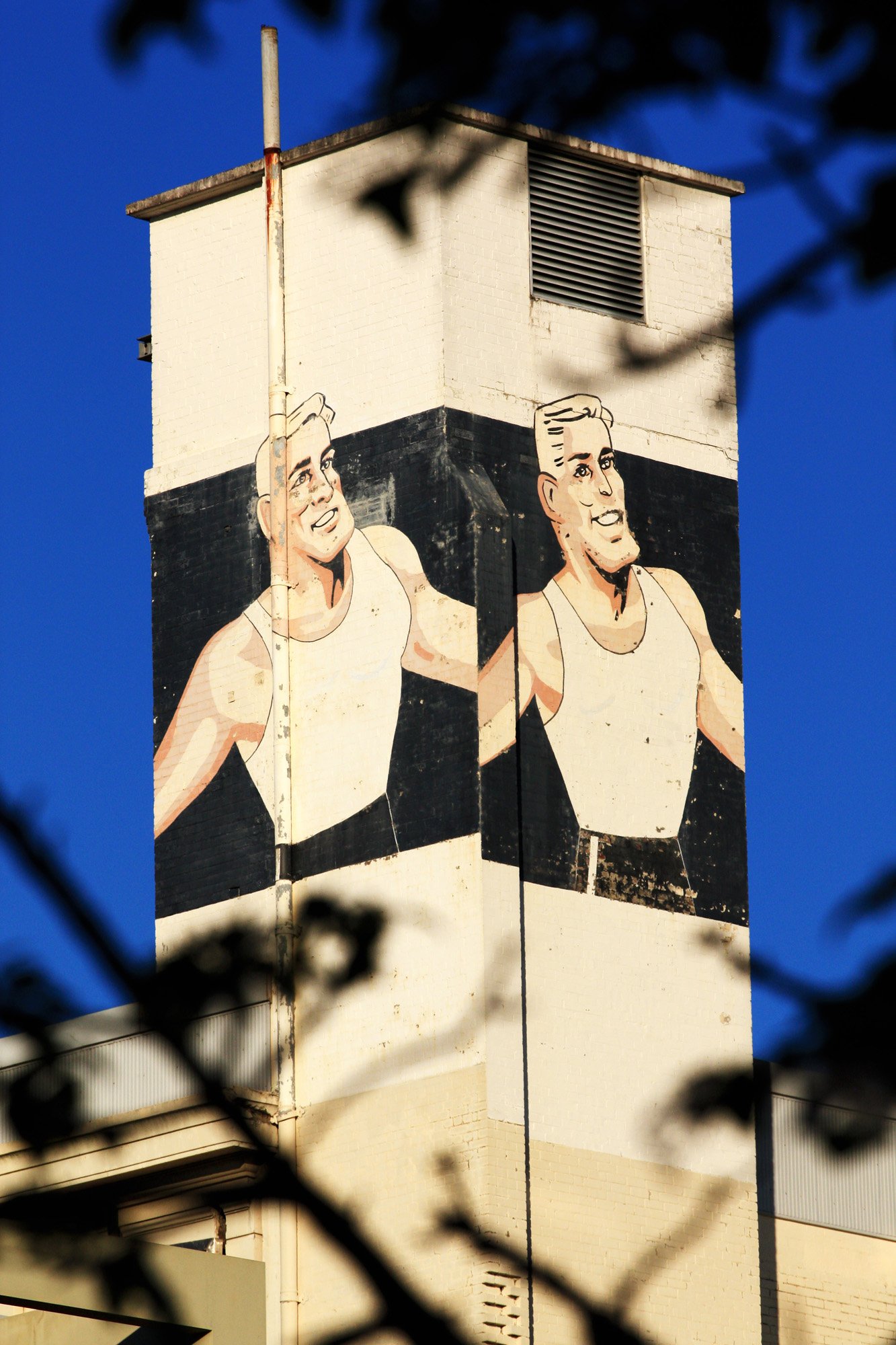
Chesty Bonds

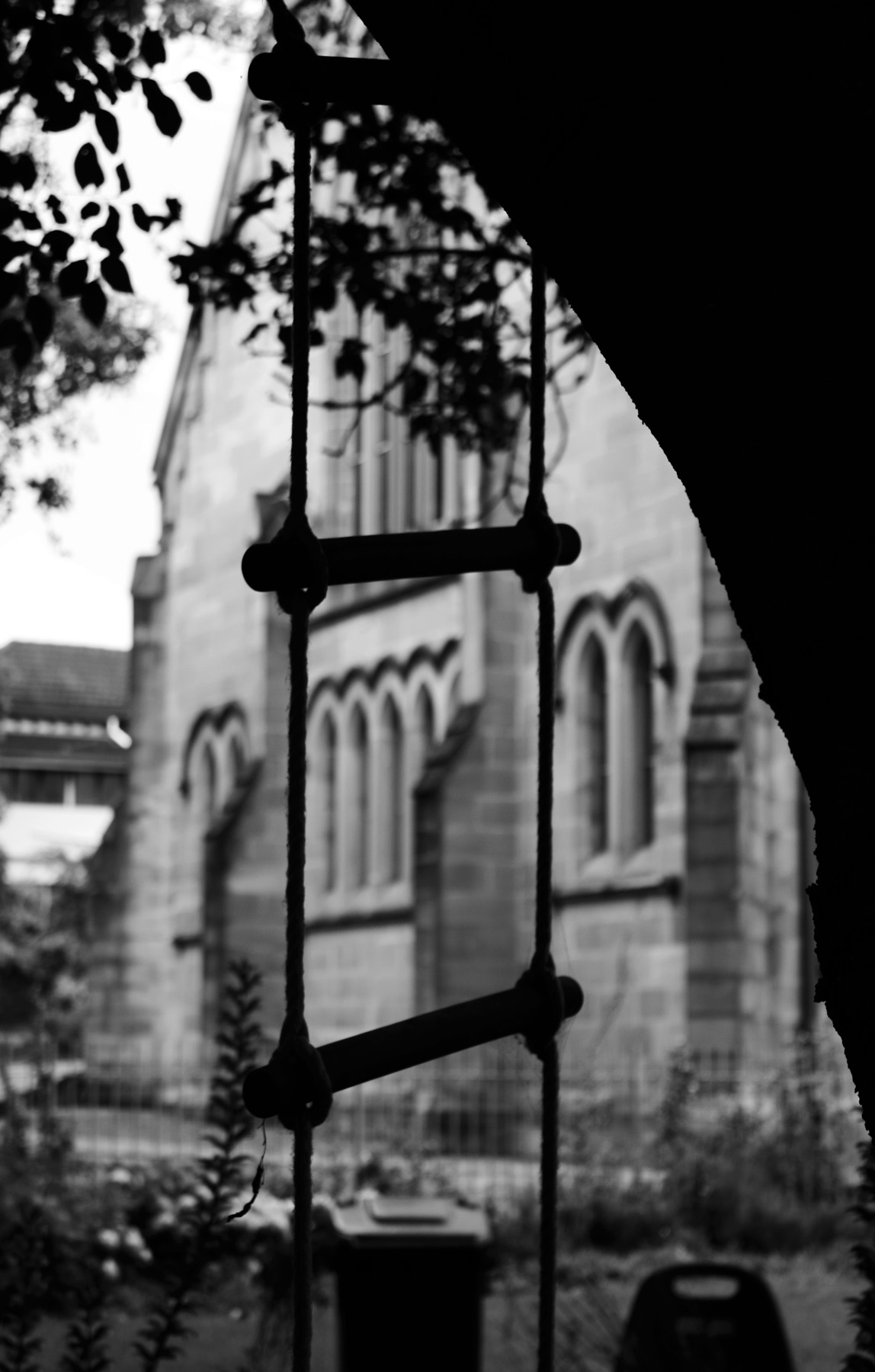
Glebe, rope ladder

Wet Pavilion, Camperdown

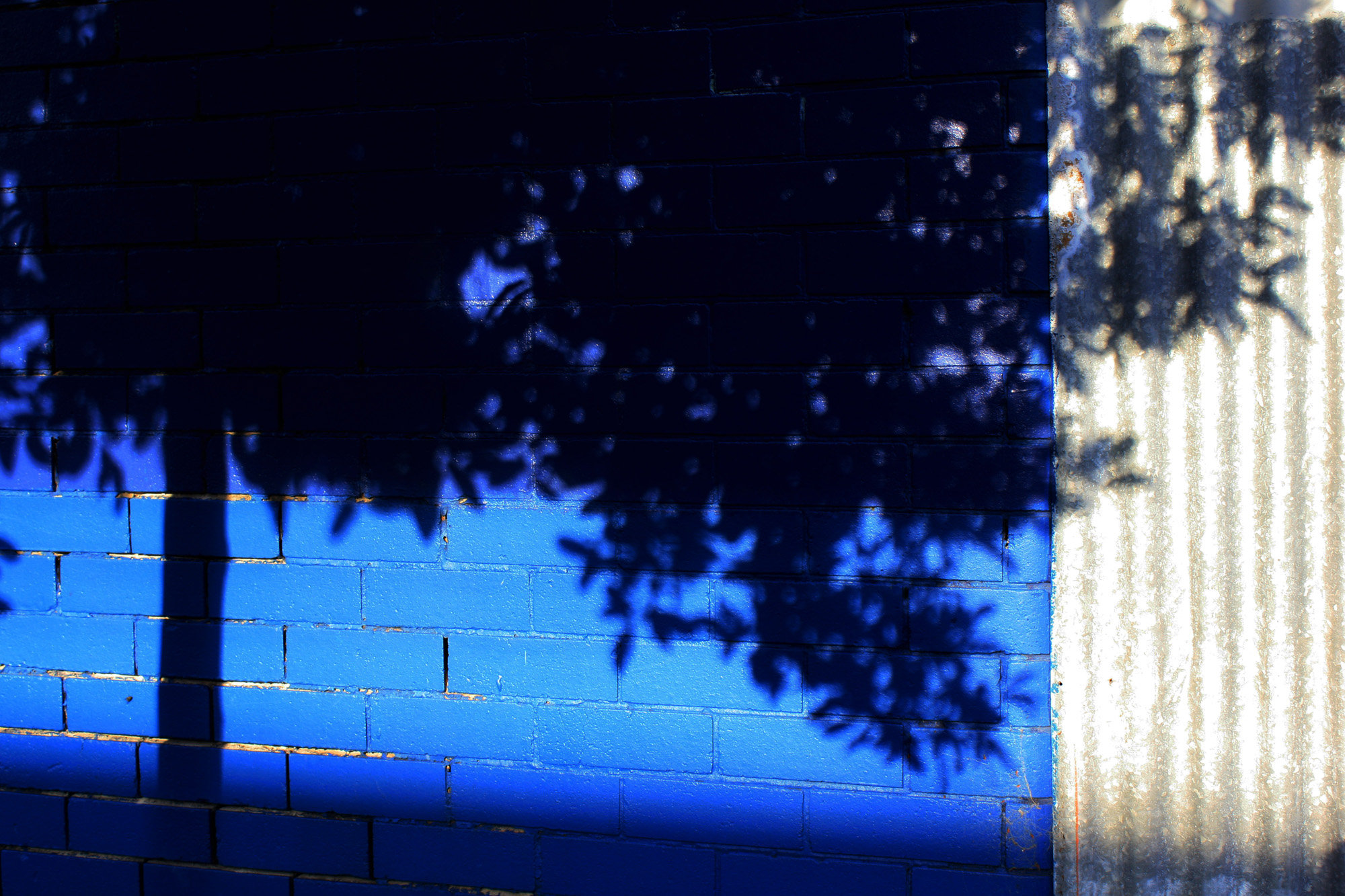
Camperdown tree shadow

Biblical Sky, Camperdown

Missenden rd


Read Full Post »

This collection of photos dates from 2004-5 and were all taken using my second digital camera – an Olympus of some description. It was hardly a very professional camera, clocking in at around 3.2 megapixels, but with a decent 10x manual zoom, it gave me a degree of flexibility I had never had with a camera before. Prior to this, my first digital camera had been purchased just a year before, in 2003, before a flight to Venice. It was a neat little Minolta with a 3x manual zoom, which I truly loved for its design and ease of use. Sadly, however, it died a sorry death when a Gatorade opened in my bag and drowned its circuit board.

I owe a great deal to both of those cameras for being just good enough to give me the confidence to take photography more seriously. The images seemed excitingly clear and impressively accessible and available. This was, of course, when digital cameras were in their early phase of expansion – going from a novelty item to a technology commodity that everyone owned. It was also before mobile phones could offer anything like the same level of quality as a compact.

Prior to this I’d used a range of compact film cameras, never having owned an SLR. I certainly enjoyed taking photographs, though I understood very little about the craft. It was, after all, difficult to experiment without access to a dark room or committing to the cost of developing regularly and immediately, so I mostly focussed on taking snaps of people. I did, however, have a strong yearning to record the many places I visited when I was first travelling around Europe and, later, doing the same whilst based at Cambridge. These photos, whilst ambitious insofar as what I hoped to achieve, were technically naïve and taken using cameras that weren’t quite up to scratch.

Getting my first digital camera, however, opened up the opportunity to experiment as much as possible and it wasn’t long before I grew in confidence. Another great leap forward for me came when I first printed a digital photograph using my own inkjet. I was absolutely astonished at how perfectly clear and glossy the reproduction was. I sat staring at it in wonder for some time, and kept going back to take another look. The capacity to shoot and print my own photos for so little cost and with such ease turned into an obsession, and soon my walls were covered in prints. This fuelled a strong desire to get out there and shoot as much as possible, and so I did, starting the habit I’ve had ever since of never leaving the house without a camera, and was often to be seen carting a tripod around in the hope of some good long exposures.

These photographs all date from that period of great enthusiasm, when I saw how I might tell stories just as easily through photography. Prior to this, I’d seen photography primarily as a means of recording, rather than a means of expression. I was, at the time, writing novels, poetry and short stories with a furious passion. Photography added the much needed colour and a pleasingly easy adjunct to what I considered those more difficult arts. I don’t mean to suggest that photography is easy,  especially not for those who agonise over setting up compositions and technical exactness, yet as someone whose photography has mostly been opportunistic, I’ve always seen it as a refreshingly easy and fun means of creating a vignette or narrative.

In retrospect, these photographs aren’t all great by any means and, coming back to them, they seem disappointingly low-res. Yet there are some here which I dearly love for their compositions and the memories they bring me both of how much I liked them at the time, and where and when I was in life when they were taken. Everything here is from Sydney, and many were taken near to where I was living at the time – Glebe. Either way, I hope you enjoy them!

City of shadows

John Howard's Australia

Derelicte 2

George V

Waiting for Guinness

Glebe Seminary 2

Harbour bridge fireworks 1

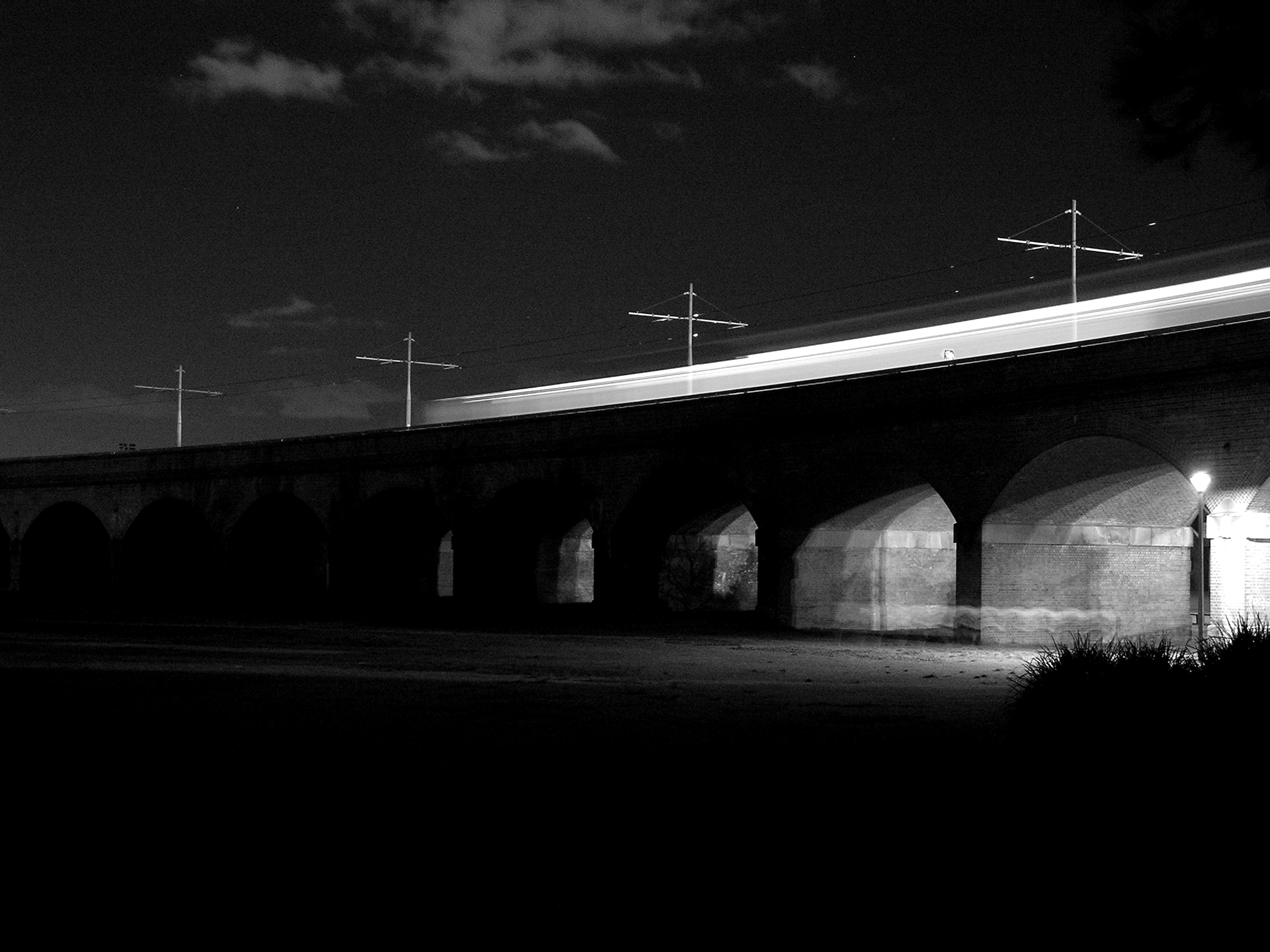
Night train 2

Jesus airlines 1

Light rail special 2

Four legs 1

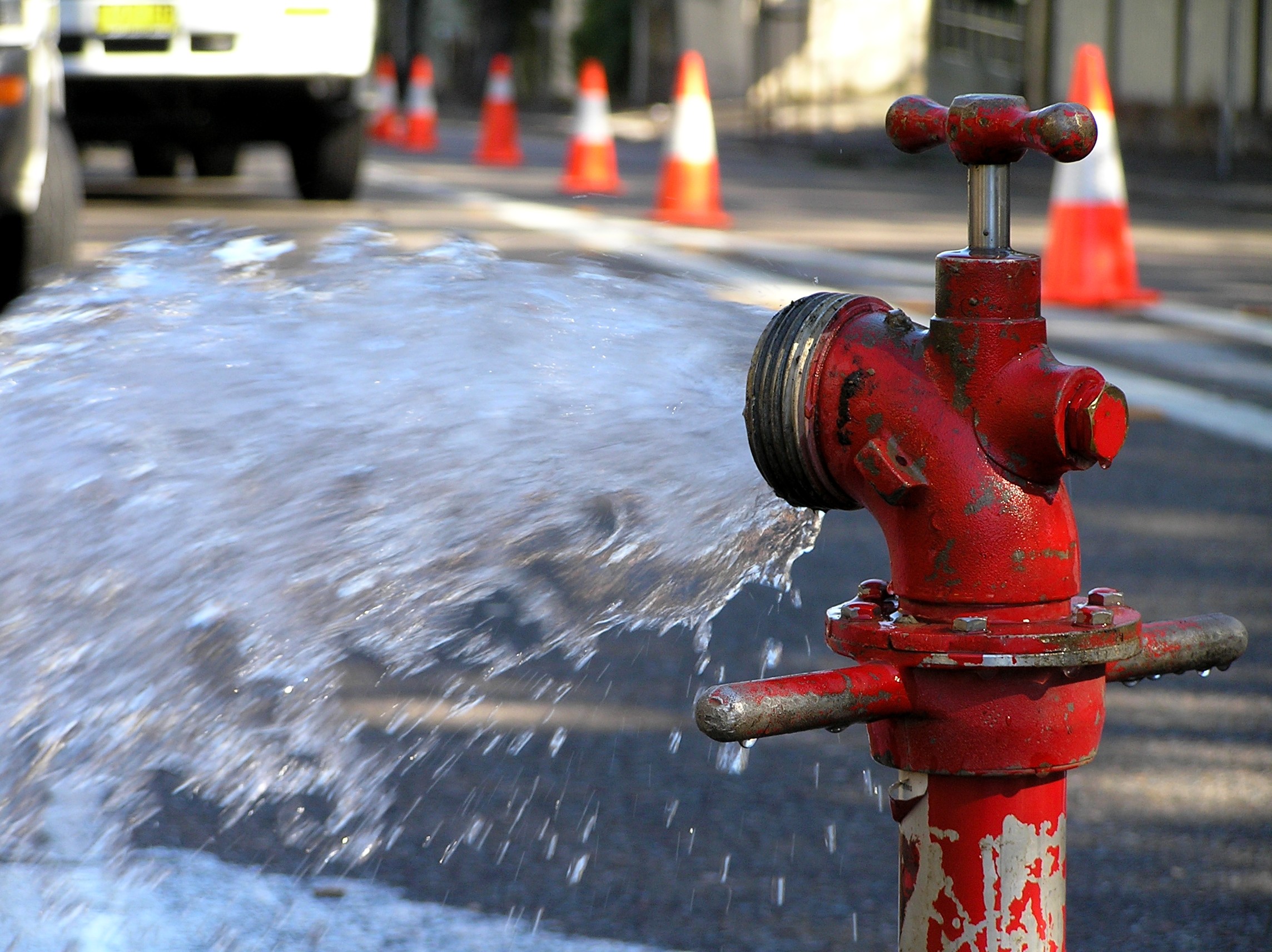
Hydrant

Grasshead 1

Glebe, Rozelle Bay

Leichhardt wires

Crane 3

Harry Tangiers

Help! 1    Lamp 4

Monorail 4

Palisade Hotel

Newtown Festival 3

Tea bag 1

Performance Anxiety

Night train 4

Reindeer 1

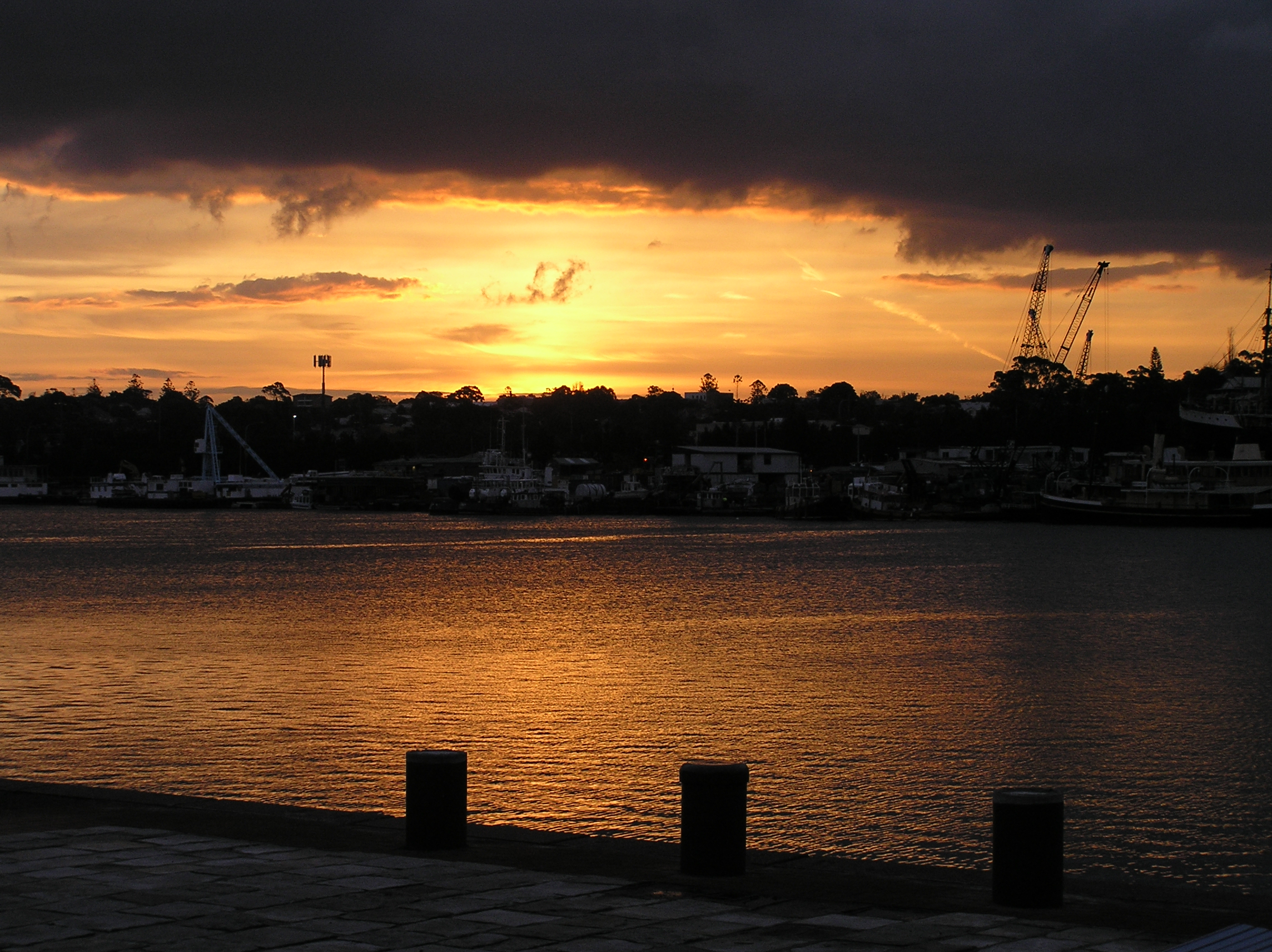
Parramatta Road sunset 1

Night city rain

Rainswept

Stink bug

Smoking dish rack

Sydney University lawnmower

Nightship

Storm telegraph

Silver Pathway 1

Carship window 1

Simon Tracey, garbo

Tree Wires

Glebe Sunset

Valhalla

Window-cleaning ballet

Used Cars

Windowsill glass

Sunset chimneys

Bronte surf

Bridge lights

Shane Warne, the one and only

Read Full Post »

Novice Wisdom

2850 Mussoorie


Novice Wisdom

1

An emotion one rarely knows

what to do with: beauty.

Once, reading Proust, being so overcome by the Vaseline

of his lyricism, (cornflower, umber,

hawthorn, yellows – few words remained, but the colours, Impression)

I wondered, after Morris, whether beauty should be

useful after all;

where else to deploy this ache, this disturbance?


My brother once helped an old lady

from a bus and was duly praised;

mother, father, driver, old lady. It struck home

in him and in me, from whence

he was saintly. I was

yet to show this

and sought old ladies.


“How old are you now, son?” my father asks.

Yes, I am ageing

and still not THERE.


2

I have a favoured myth that I uphold

(though it does me no immediate good

to instill, myself, the doubts in your appraisal)

that greater trust will come from honesty

about past indiscretions.


These are not the actions

of heroes, nor men

you’ll hope to love.


“Now your ships are burned…”


3

Yes, old friend, this line

will also lend to me subdued Athens;

long walls demolished, proud fleet scattered,

empire nipped and tucked. This line

will clang and scrape with the chairs

of room seventeen; the cold morning echo

of thin air, thinner, shriller sound,

and the meandering certitude

of Mr Jones. But earlier than that,


before then, when we started there and knew

but a little of each other and the world,

when we feared naively all the corrupting

we’d been warned to avoid, thinking we, as children,

had no say in it, then what was good

was obvious, uncomplicated. Or was it just

that our desires did not yet involve others?


Love was still to be conducted

honestly; ethics and morality were not

understood, they were known.


4

Twenty-one, balcony morning running

fast behind the night. Woke tired, wanting everything

but work. In the early hours we came out

to catch a glimpse

of Knowledge in the fanning light.

On a borrowed bicycle the bear

went over the mountain

to see what he could not see:

that as we expand, so the space expands.

Since growing was equated with knowing

so youth as a state of mind was fixed eternal.

“We’re learning,” you said

“and knowledge can only make us children. Hence Socrates,

wise and petulant.”


5

Took this naïve youth for a state of beauty,

off the main and down the slower

bronze and iron side streets

sat and smoked up pipes and durries

stared across the corrugations,

plaster, brick and concrete houses,

ached for women wanting nothing

more than a restless looking

for a place and mood alone

and not a thing.


Was that not better than knowing?

Was that not more pure than “purpose”?

A useful beauty?


Another all-night morning

off in the park with the chirping,

all-night affirmations primed a fancy,

going through the rising dew. That was love

most visceral, love like scent-stirred

recollections, only in it.

In it

in it.


In time it seemed she was merely there

to be broken.


6

“You have to be strong about things,” she

warned too late. “I ought to be a good thing,

like new bottles of shampoo, well-cooked

mushrooms and deep green fabric,

not the be all and end all. If you hold

something fragile too tightly…”


Perhaps it had been too hot, or we were too dizzy

after the ordeal of essays and exams


“It was two animals, scrapping, savaging each other”


Inside, the currency of our moments

remains unspent, for she never wronged me.

That our love was the Axis Mundi,

she did once know. Possessed by its dogma

I closed my grip; tightened

these smotherer’s hands.


She puts her hairbrush elsewhere now;

hangs her tartan scarves and leggy skirts,

her blouses, berets, bras – all likely

new and not the ones I’d sometimes choose –

I don’t know where.


7

Having lied and cheated, having done so again

how long must we wait to be trusted?

The prisoner serves sentence, the liar instead

depends on the mercy of friends, of himself.

Must we apologise for ourselves

to those we have

not yet wronged?

When can we again say we are good?


From tyranny to the rule of law

so Solon followed Draco


8

Yet still there came Peisistratus,


in the urgent days with another.

I’d refused the church

to join the lovers’ guild of thieves.


My brother shone like a silver lining;

through the storm he’d stuck it out

for a later, cleaner break.


“This dream girl must have been

quite a catch,” he said.

She was quite a wicket


for old butterfingers;

an ageing novice, surrounded

by the zip-lock bags


of shot-up beauty.

“Why must you always put beauty

up your arm – the highs are gone,


let beauty be

the active thing, and let yourself

be passive in its gaze. How like


those wild oil barons, those violent guzzlers,

how like a junkie you’ve sucked and sucked

(and wisdom may in time limit the range


of feeling, of enthusiastic hope –

experience lends a brevity to myth,

our passion for the novel loses heat)


Run with the beauty and be it,

run with it down to the river,

run with it up to the heavens, my sour old friend.”


5689 Cambridge

Read Full Post »

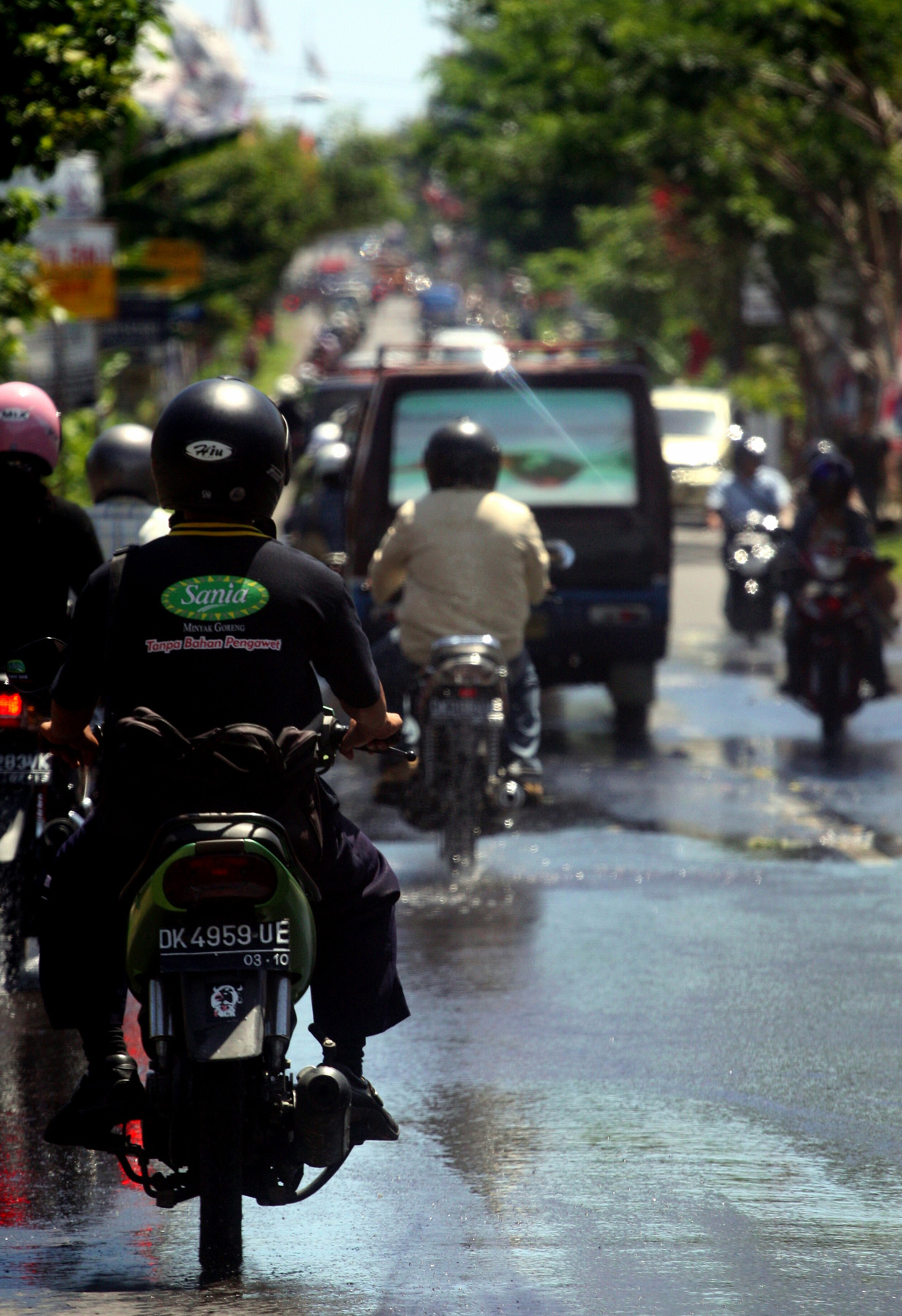
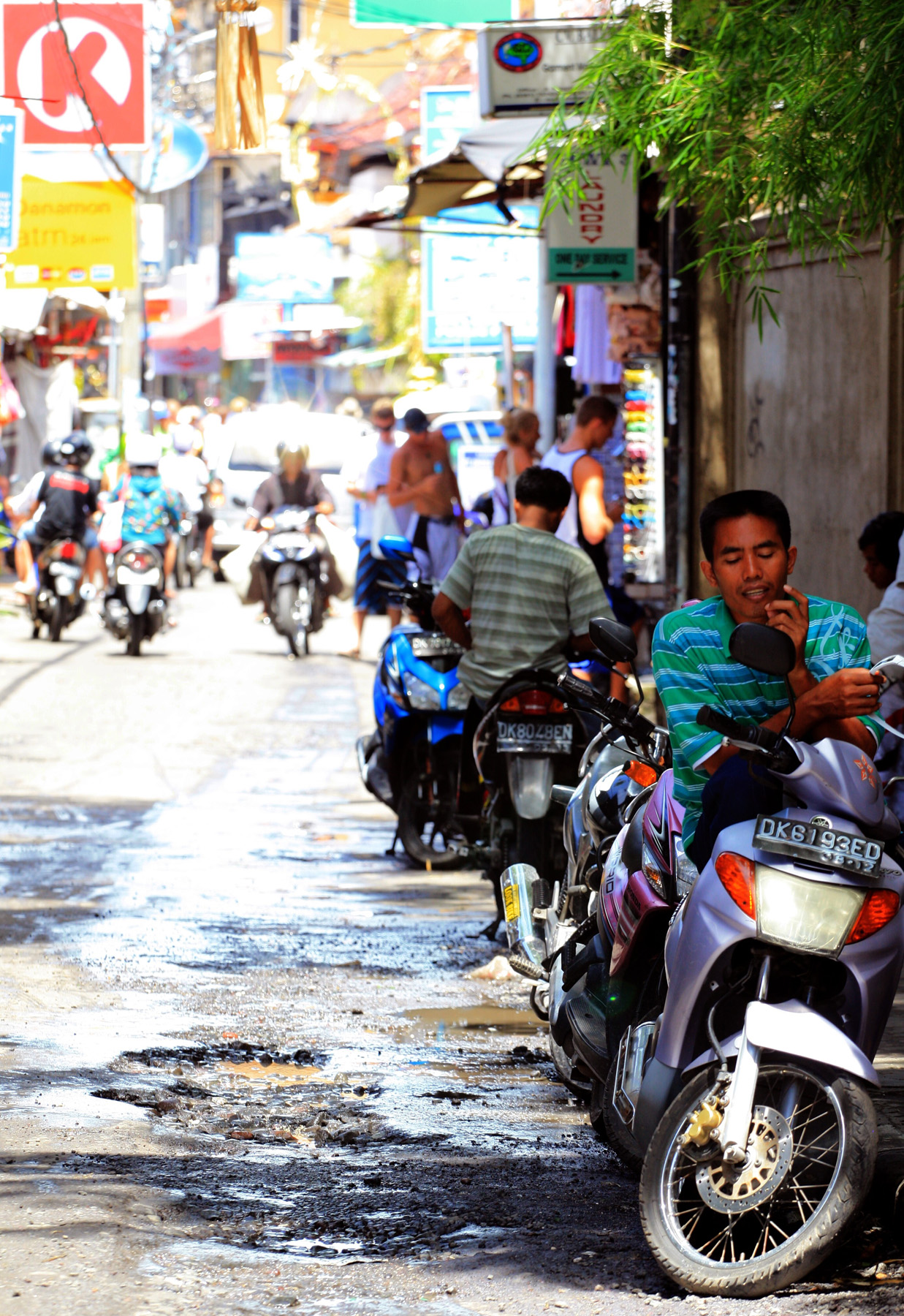
My first trip to Bali was with my brother in 2009. Apart from family trips as children and my visits to him in Brisbane and vice versa here in Sydney, it was the first dedicated holiday we’d taken together and the first time we’d hung out overseas. I was piggybacking this trip on top of five days in the Northern Territory with my then girlfriend and met my brother at Darwin airport late one afternoon.

To say we enjoyed those next five days in Bali would be a massive understatement. It was not only a great pleasure to have such an excellent trip, but also something of a surprise. Both of us had been deeply suspicious of Bali on account of its being the destination of choice for hordes of pissed-up Australians – people we snobbishly call “Bogans” and try to avoid. Once we’d booked the tickets, however, and I began to do my research, including some lengthy sessions on Google Earth, I was very excited about seeing this island.

Bali occupies quite a unique place in the region for being predominantly Hindu. Buddhism and Hinduism both took root here, most especially during the 9th and 10th centuries, with increased traffic from Javanese and subcontinental traders. The culture that developed from this period onwards is a mix of traditional Balinese culture and a local interpretation of Javanese and Hindu influences.

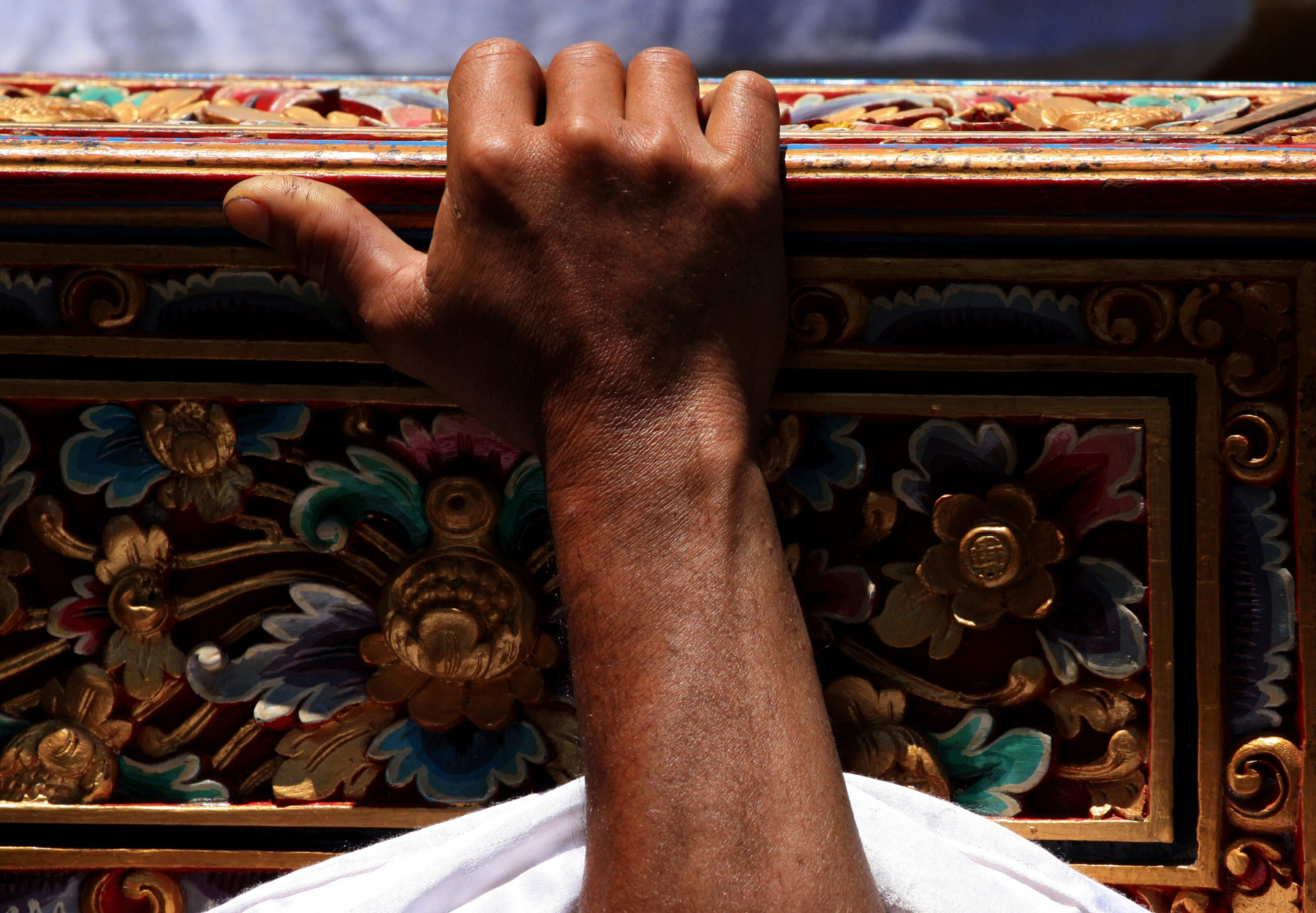
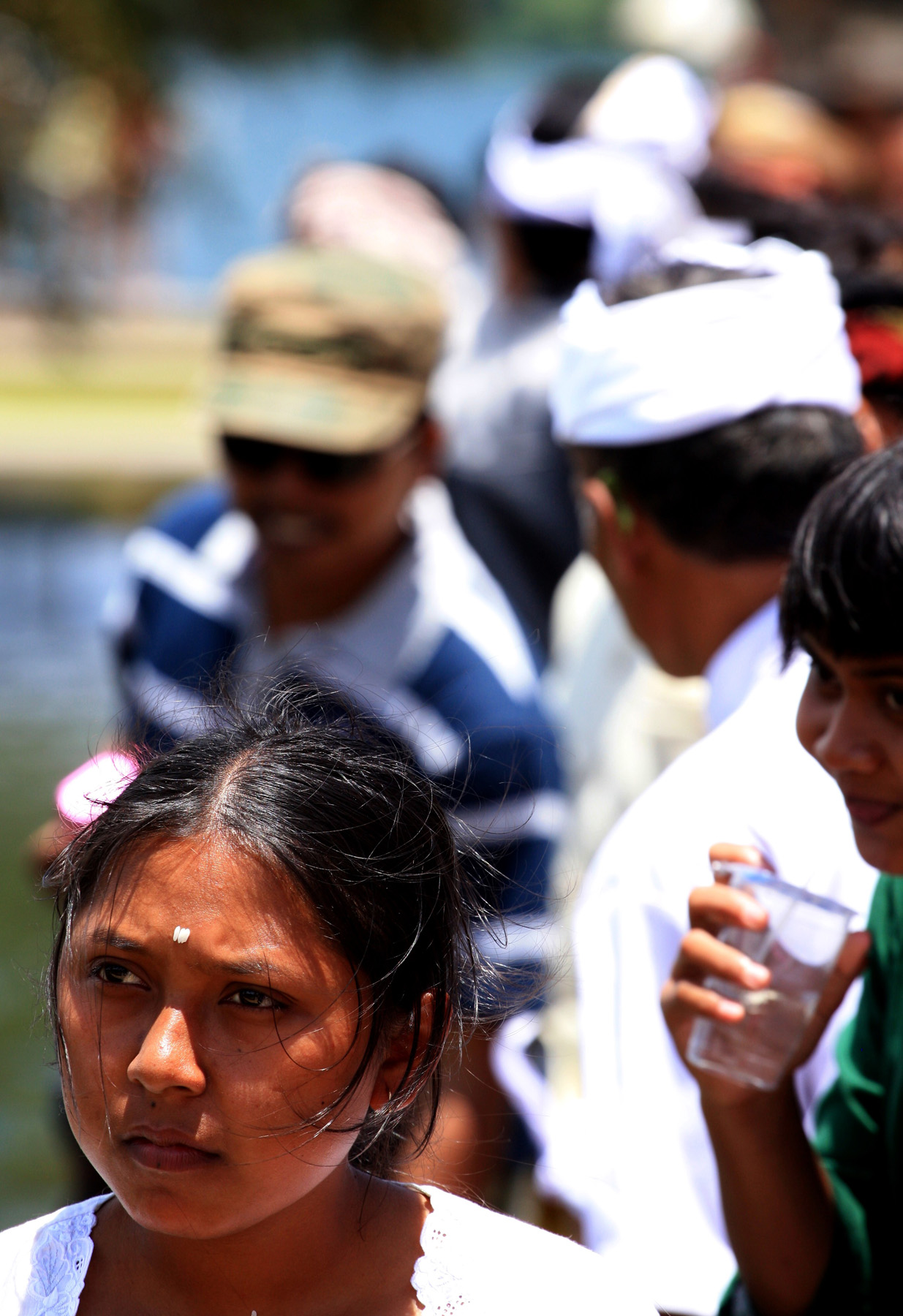
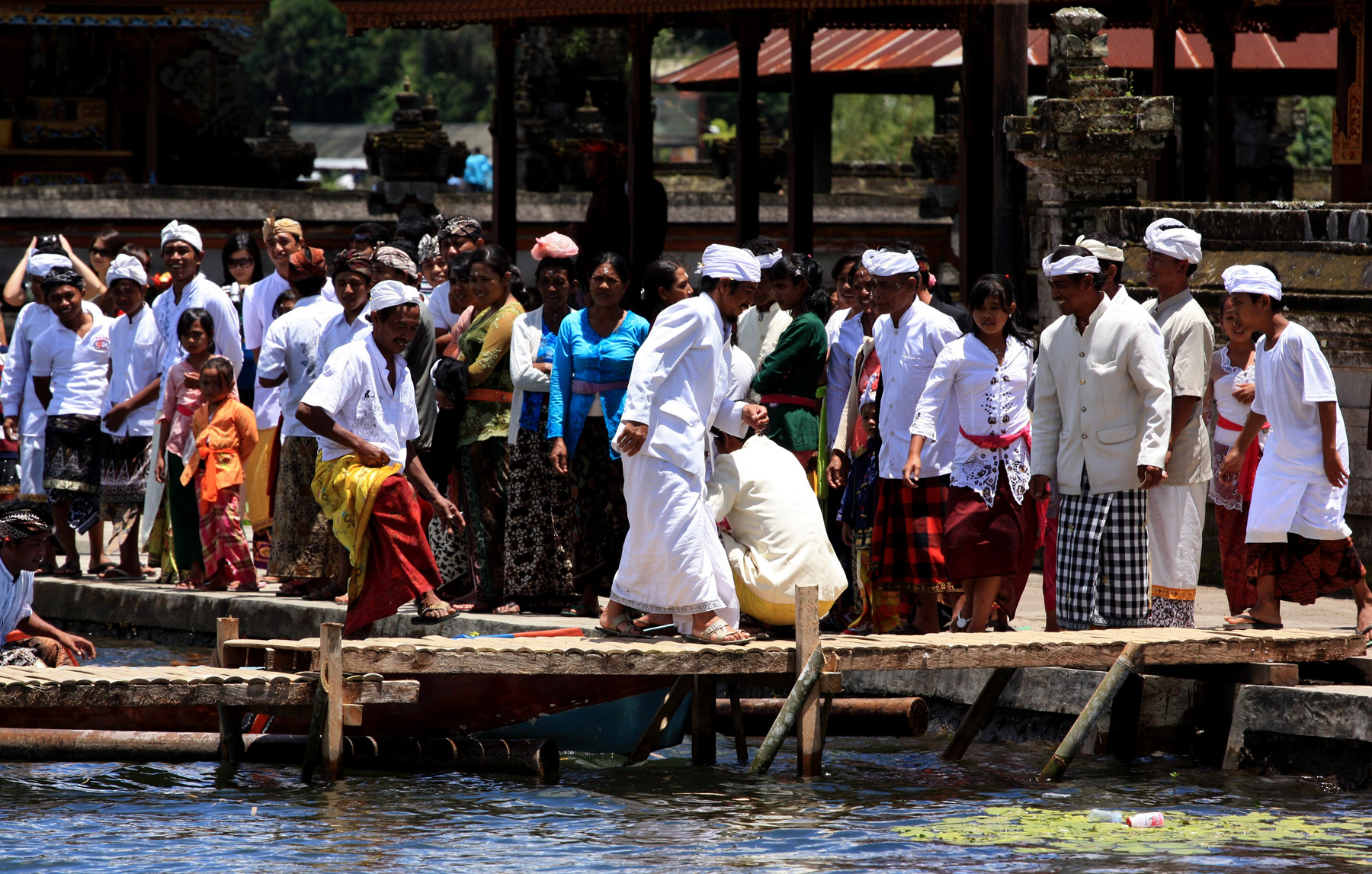
Ceremony

Ceremonial box

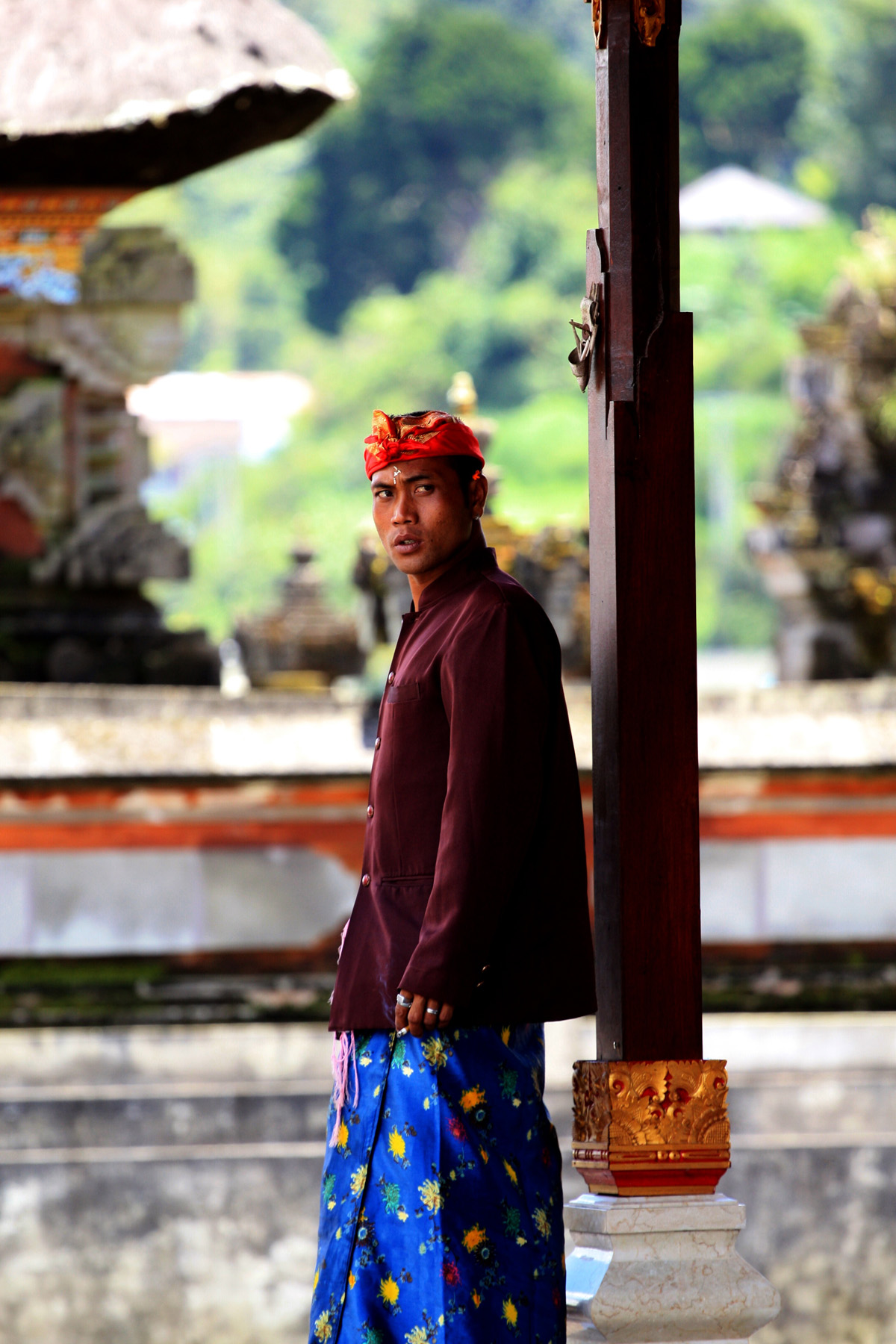
The structure and rhythms of this lifestyle have proven very enduring. Bali is a very religious island, yet the religion, despite its occasional ostentation, is a friendly and private affair. The observance of often quite simple religious ceremonies and practices is so intrinsic that people simply go to it with hardly a mention. All of which makes Bali stand out distinctly from the Islamic Republic of Indonesia of which it is a part.

Thus, by the time we met in the airport in Darwin, the two of us were very excited. I was especially enthusiastic about getting some good shots as I’d just been trying out my new L series 70-200mm lens in NT and was loving it.

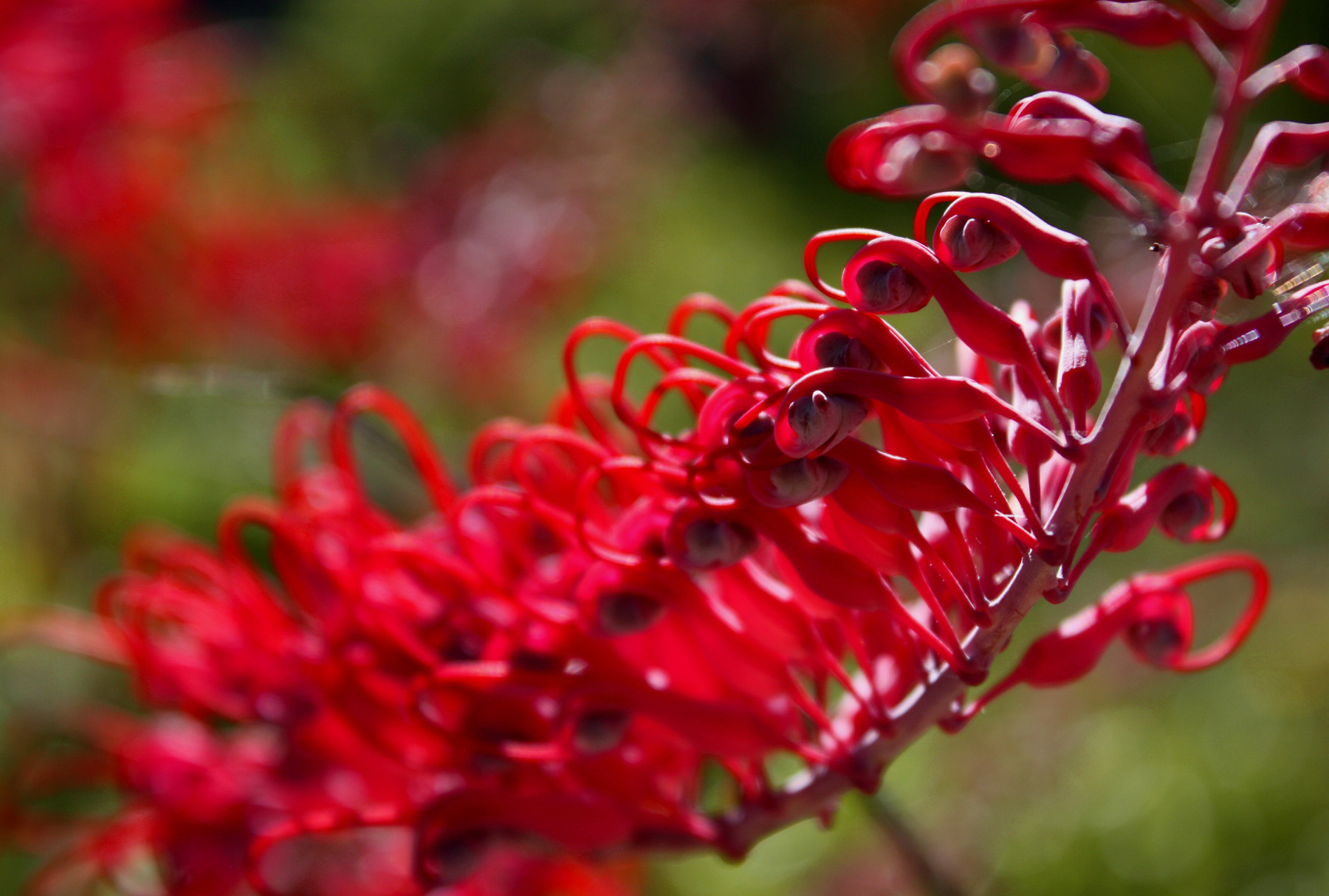
Green-Bottomed Ant

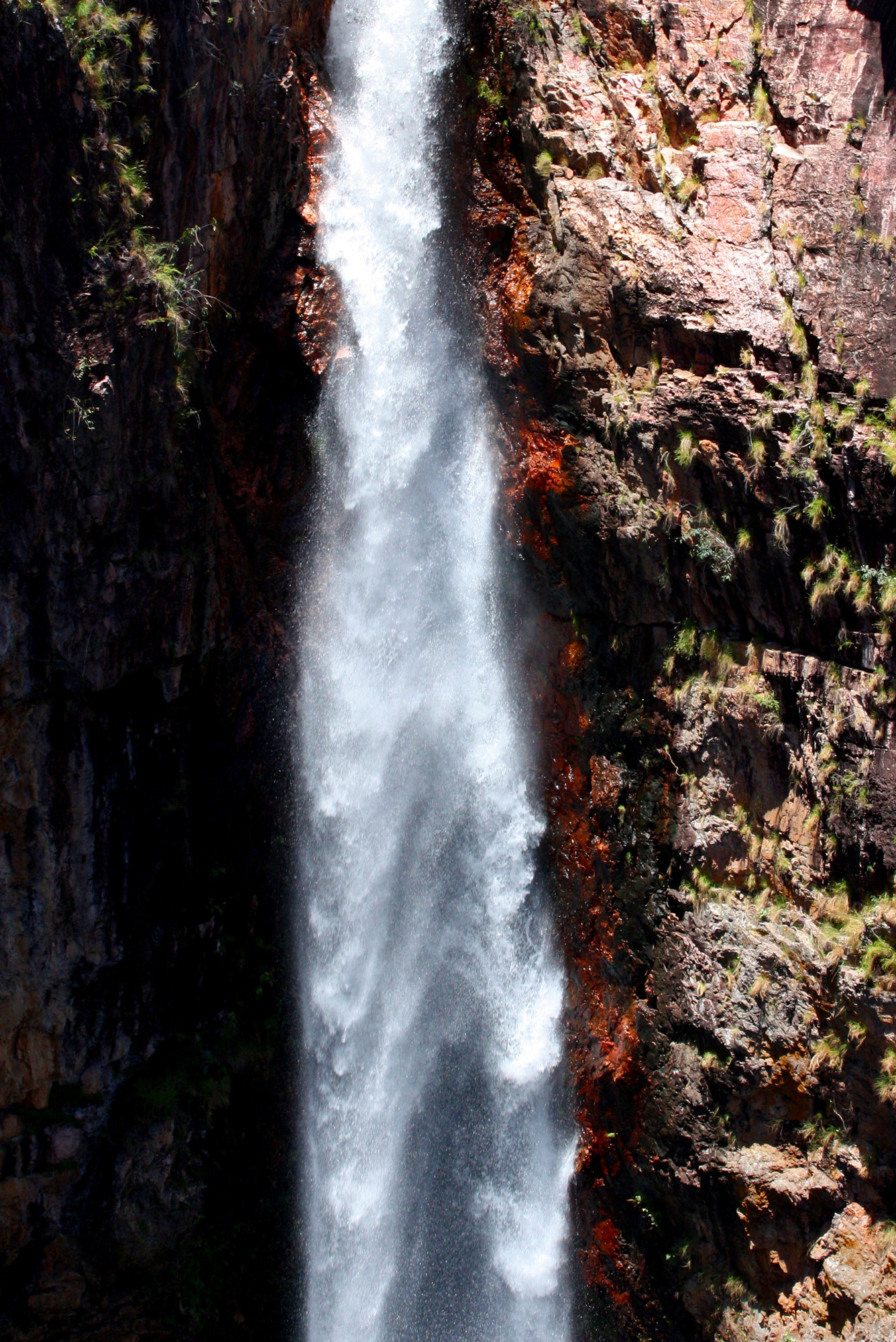
Florence Falls

Near Nourlangie

We arrived in Denpasar quite late, got a cab straight to our hotel and went out looking for a restaurant. My brother had actually booked us into Seminyak, right in the heart of the scene, but it was a Tuesday night and not especially busy. We found a nice place on the beach front, ate fresh fish, and that was that. The only incident of note was when my brother was approached by a very large and masculine transvestite who said “Mmmm, you big strong man,” in a trés seductive voice.

The following morning we hired a car and set off relatively early, keen to get out into the countryside and see more of the landscape. That first day was largely spent getting completely lost in the warren of lanes and villages that are woven into the rice-fields. We were attempting to reach a famous seaside temple, Pura Tanah Lot, then to find the town of Ubud itself. We found the temple after many picturesque wrong turns, but when we set off to reach Ubud, we really took getting lost to a whole new level. My brother, who was driving like an absolute champion, weaving in and out of the scooter-traffic, was struggling to retain his equilibrium as we repeatedly failed to orient. The lack of signage, the apparent sameness of so many villages, the absence of vantage points from which to make sense of the landscape, all meant it was almost stupidly difficult to be sure where we were. What made it all still a bloody great drive, however, was that everywhere we went was either fascinating or astonishingly beautiful.

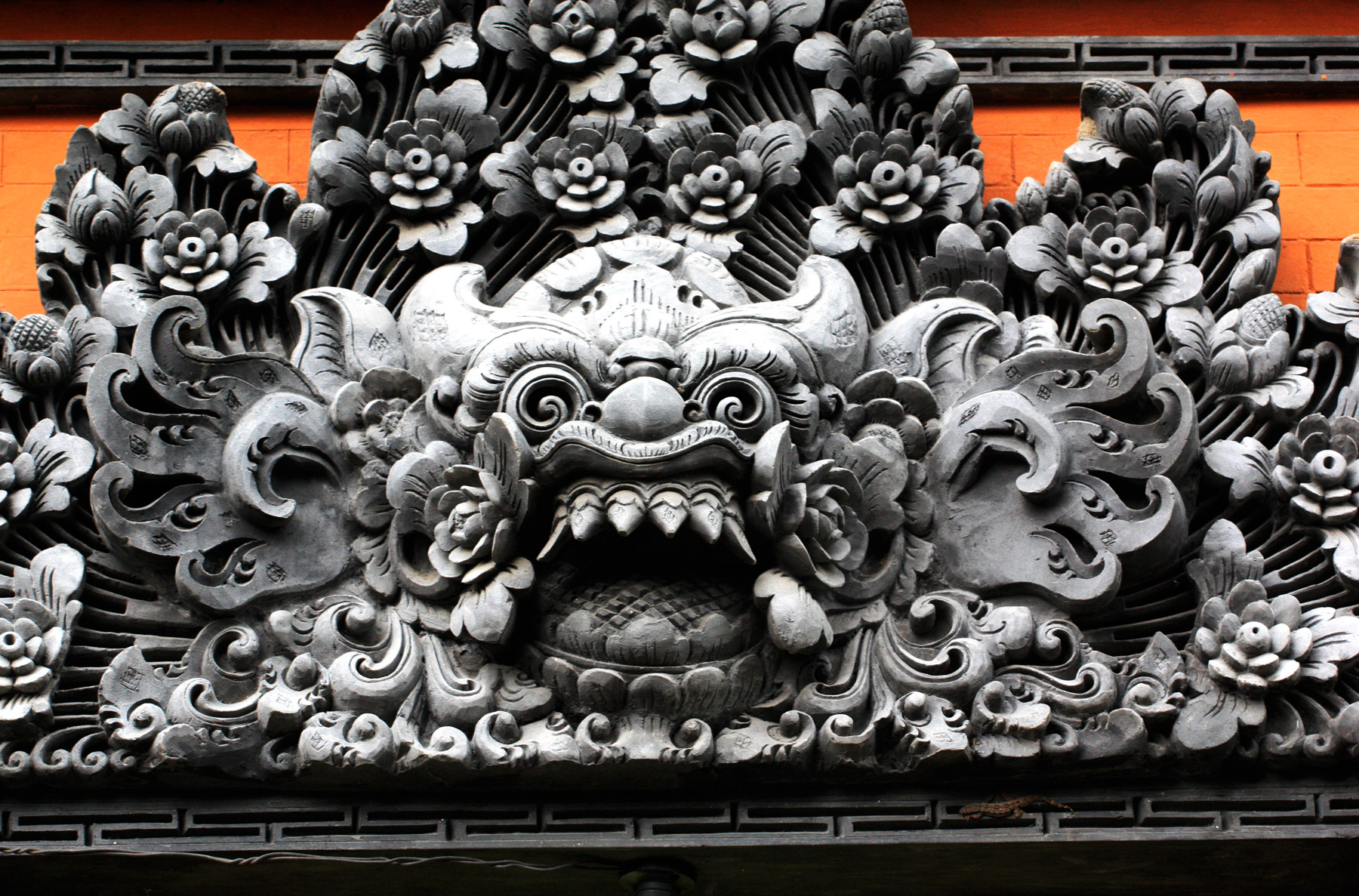
I was struck most of all by the lushness of the place and the wonderful traditional architecture. On that first day alone we must have passed through thirty-odd little villages, most of which consisted of a main street lined with elaborately-carved stone-fronted houses and temples, bristling with flowers and trees. The amount of quality masonry and the quaint, cosy beauty of the houses – which was almost universal – fascinated me, partly because they reminded me of the streets of stone houses I’d seen in Roman Pompeii and Herculaneum. I wondered how long these villages had looked like this – and felt I was visiting a living, ancient form of urbanisation.

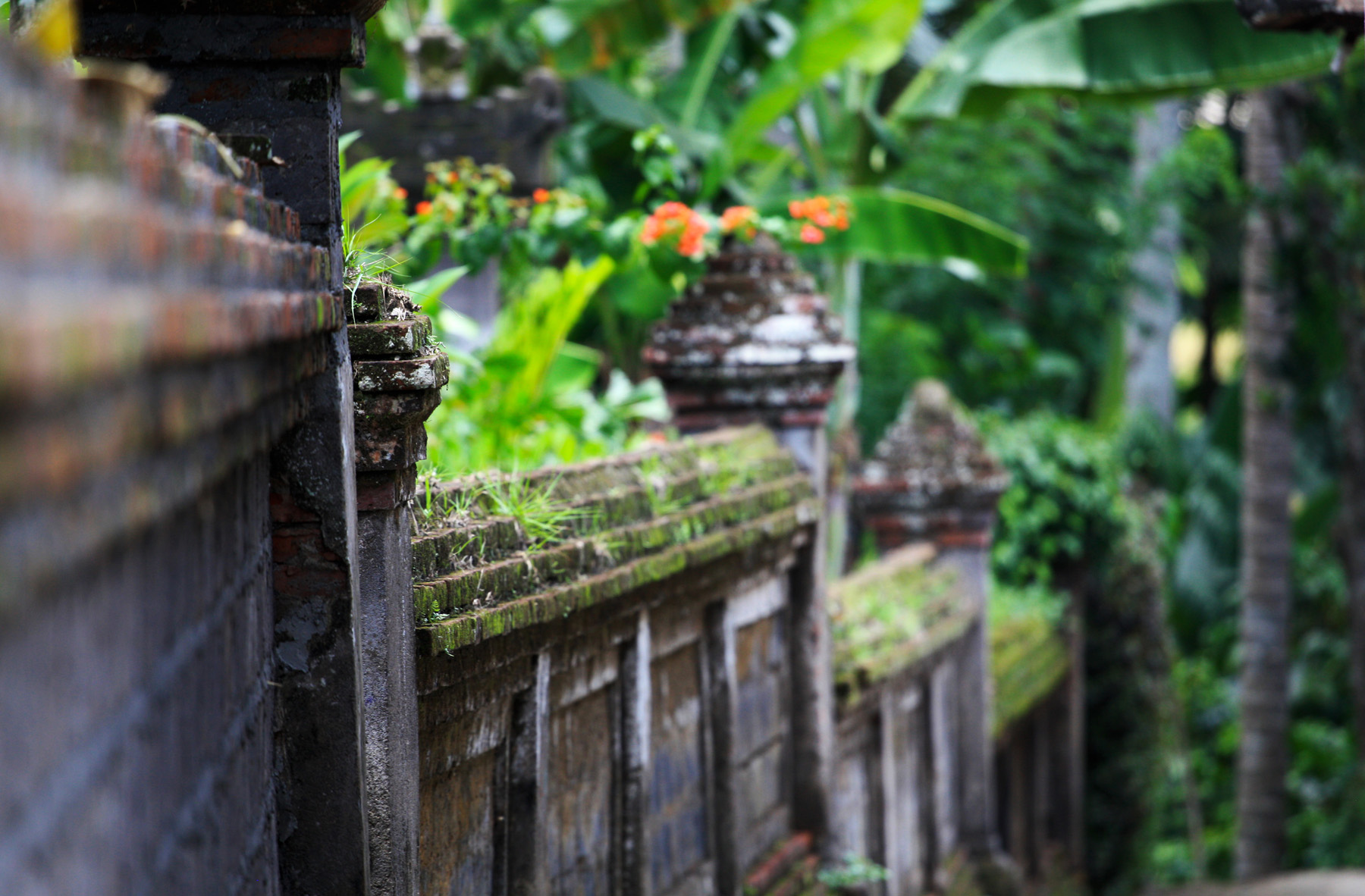
Balinese lane

Architectural detail 2

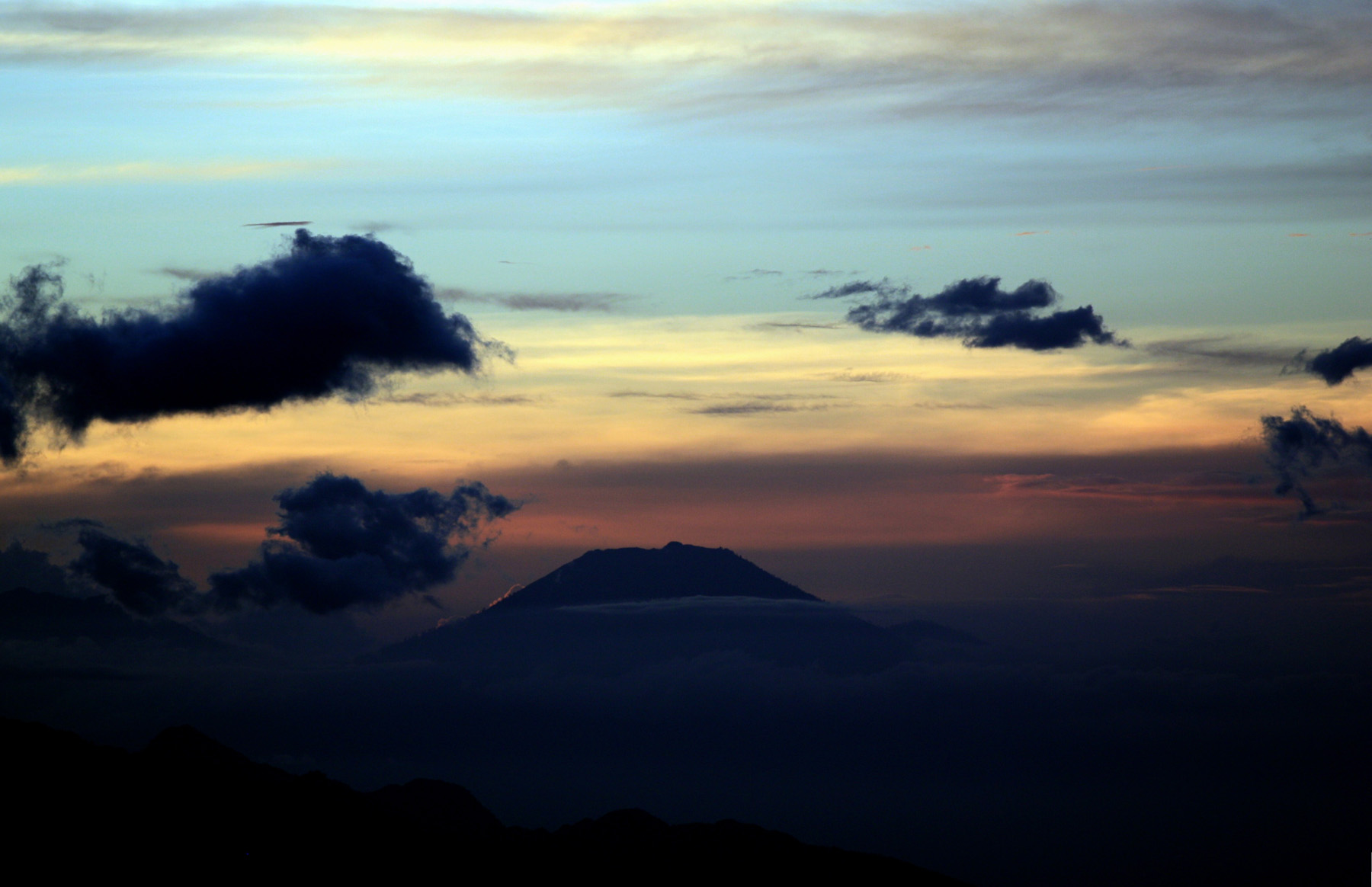
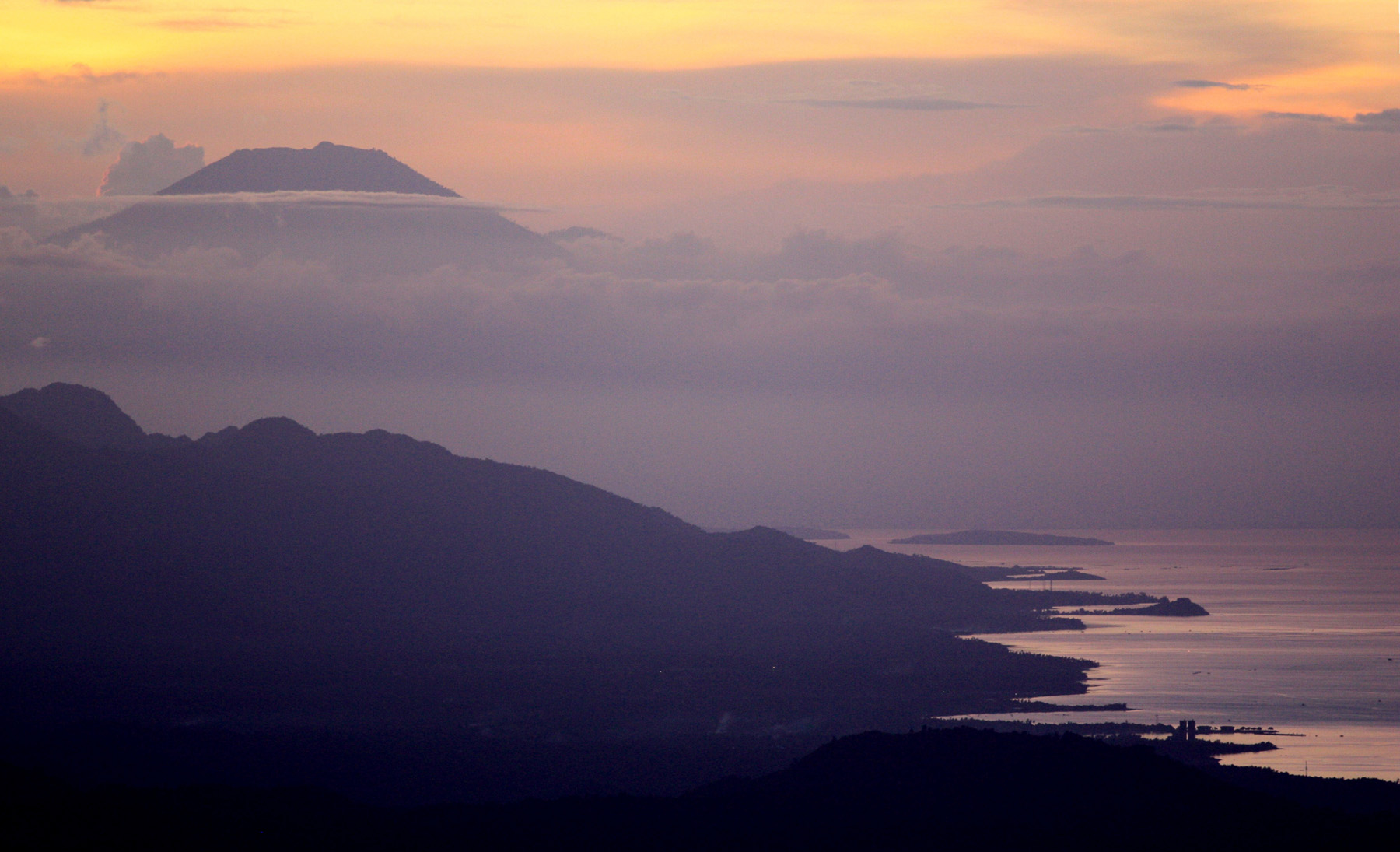
Over the next five days my brother and I made our way north, first to Ubud, where we spent a couple of nights, and then on into the mountains around Munduk with its amazing views across to the volcano, Gunung Raung, on the island of Java. Every day brought new surprises and pleasures. The food we ate was almost universally excellent; the people were outrageously nice; the landscape was breathtakingly beautiful. We drove high up into the misty hills, through foggy, wet farms of hydrangeas; looked down on wide, splendid vistas, visited waterfalls and lake-side temples, rode elephants through the jungle, and finally reached the north coast around Singaraja.

Men at Ceremony

Into the mountains

West Bali at sunset

Macaques!

Temple truck

Temple drummer

Solid gold elephants

Lovina Beach boats

Munduk Waterfall

West Bali, Java Sunset

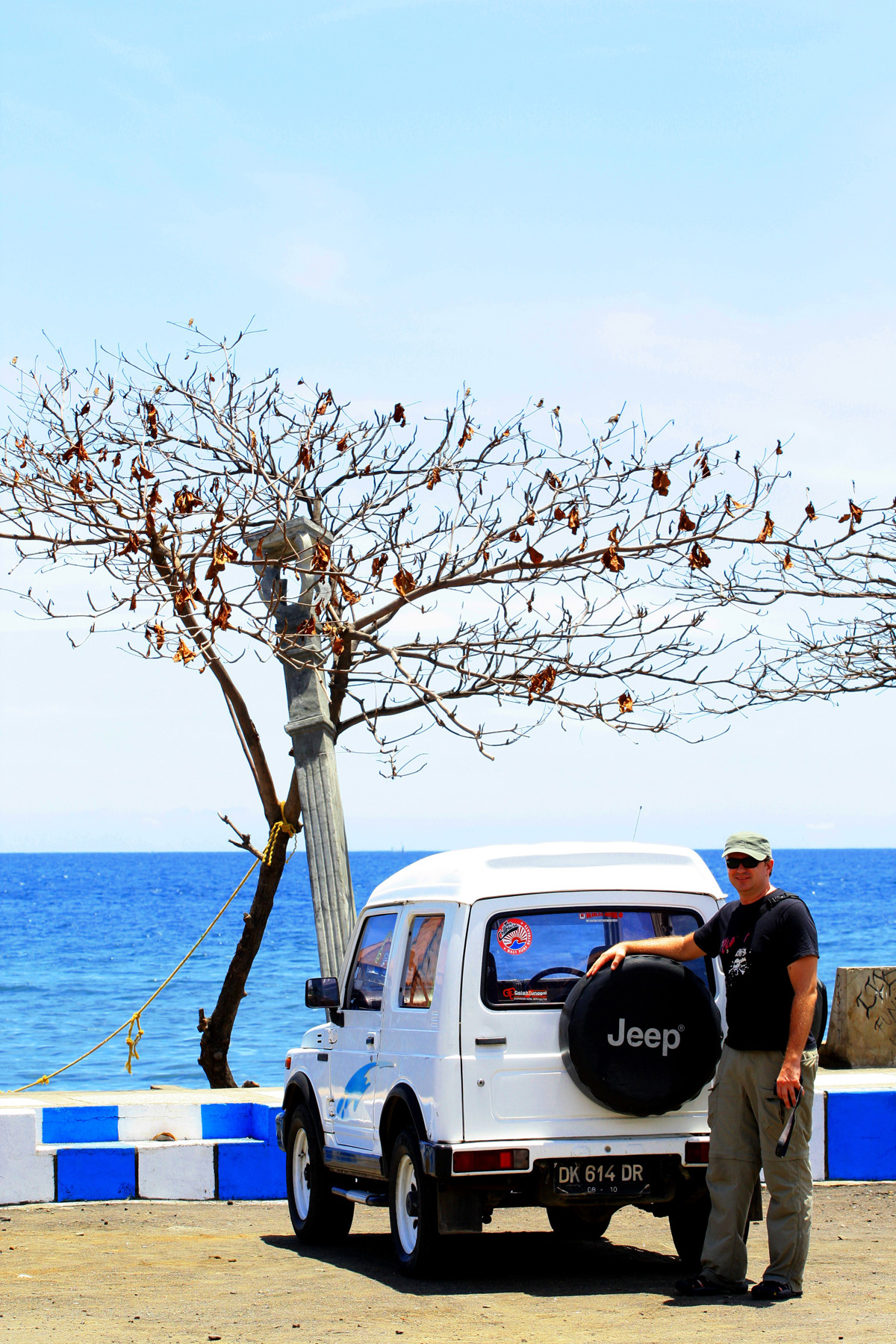
It was just a pity we did it all in a Suzuki Katana. This vehicle must have been named ironically on account of the great contrast with the refined workmanship of its Japanese sword namesake. It was a cramped and rattly piece of junk, with ill-fitting doors, ass-breaking seats and a dashboard that looked like it was a mock-up for kids to play at driving. The air-con was an epic fail and the leg-room negligible, so we sweated it out somewhat crampedly, the windows right down and the breeze blowing in more of the sticky air. Still, at a meagre cost of $92 for five days, it was indeed a bargain.

Katana at Singaraja

Without wishing to provide an exact chronology of our journey, two incidents stand out. After buying a proper Bali road map in Ubud, Matthew and I thought all our navigational troubles were behind us. Yet, as we tried to leave Ubud and make our way to an elephant sanctuary somewhere to the north, we struggled to find the road which we had decided was most appropriate on the map. The problem was that it simply wasn’t there, though at first we thought it was our mistake and that perhaps we needed to re-examine our expectations of what this road should look like. The nearest thing we found was a drive-way that ran past a boutique hotel and plunged sharply towards a gully. I became enthusiastic when we saw that it seemed to continue into the forest and urged my brother to drive down the steep hill. He did, and soon we found ourselves at a dead end on a little square terrace overlooking a steep drop into a river.

Ubud action

This might not have been such a problem if a) there had been enough room to turn the vehicle around and b) the Suzuki Katana had enough power to reverse up the hill. There wasn’t and it didn’t. Despite several attempts at backing up the very steep incline, the car just wouldn’t go. Not only was the engine pissweak, but there was no space for a run-up.

In a very short time, I was blanching with guilt and my brother was seething with frustration and rage. Feeling responsible, I looked desperately around for a solution. If we could create more turning space – perhaps by placing logs and stones along one edge of the little terrace, then we might just be able to swing the vehicle around and punch on up the hill. I set off into the forest and climbed down to the riverbank, yet there simply wasn’t the right sort of material to pull it off.

My brother tried reversing a few more times, but there was no room. He was convinced we had no choice but to get on the phone and organise a tow, which was likely going to be a lengthy and expensive process. It was at this point that I came up with the crazy idea of us pooling our strength and lifting the car to turn it. After all, we are both pretty big blokes and such a flimsy excuse for a tin biscuit box couldn’t possibly weigh that much. Matthew was keen to give it a go, and sure enough, when we braced and heaved a moment later, we got the back end off the ground and swung it around about a foot before having to drop it. A good start indeed.

It was as we heaved the thing up the second time that we heard the excited shouts from the road. Looking around, we saw three young Balinese guys running towards us waving excitedly. They had seen we were in trouble and come to offer help in that wonderful, eternally hospitable manner of seemingly all Balinese.

Friendly local chap

We laughed and shook hands and opened our arms and joked about the situation in gestures and broken English. Then the young men joined us in the heave and again we lifted and swung the vehicle. This time it turned around just enough to make the rest of the manoeuvre. Keen as ever to help, one of the men now jumped in the front and made this very tight turn, with barely an inch to spare. As soon as the car was facing the slope, he revved the engine and charged off with a screech and whiff of burning rubber. The Katana hit the hill at speed and shot on up the slope like an excited pup. After driving in the thing for a couple of days, we hadn’t exactly been confident. There was a great flood of relief as it zoomed back up the hill.

Afterwards we both felt a mix of thankfulness and embarrassment, so, unsure what to do, I pulled all the money out of my pocket and gave it to the guy who drove the car. I think he was quite surprised. As we drove off along the main road we’d hoped to avoid, we really had a very good laugh about it all.

The second incident I mention was of a less salutary nature, though with a similarly happy conclusion. Driving just north of Ubud, we passed a view of bright green rice terraces stacked across the other side of a valley. In the foreground were a few pockets of jungle with tall palm tree sentinels through which the wide curving decks of rice could be seen. The land sank deeply away from the road which lent our vantage point a taller scope. Both my brother and I had been eager to see and photograph such a picturesque scene and this stood out like a postcard.

Rice terraces

We cruised slowly until we found a wide gap and a place to pull over, then prepared to get out of the Katana. There were a few hawkers around along the roadside, and we figured it must be a popular viewing spot. One woman waved to us from the other side of the road, offering a large bunch of small, sugar bananas.

“Might get some bananas,” said Matthew, feeling peckish. Still sitting behind the wheel, he made a gesture and nodded to the woman, and she began to approach the car. As soon as she reached the window, the other hawkers, who seemed suddenly to have multiplied, made straight for the vehicle at pace. The speed with which they surrounded us was astonishing. I was still in the front passenger seat changing camera lenses when the wave struck.

In total, there must have been nine or ten people around us, roughly five on either side. The window was down and through this portal a flurry of hands was now thrust, offering a variety of artefacts. To say that these men were like seagulls fighting over chips seems undignified, and yet so it was – much pushing, shoving and shouting accompanied this keen offering of goods. A number of carved wooden objects were dropped in my lap as prices were yelled into my ear. Overwhelmed and amused, and yet slightly alarmed by this invasion of our space, I slapped the door lock and stuffed my camera into my bag at my feet.

On the other side, my brother now sat with a whole bunch of bananas in his lap and a porcupine of hands reaching in through his window. Both of us were too busy fending off the vendors to give each other much attention. Feeling the pressure and concerned that things might suddenly go very badly, I picked up one of the objects in my lap, one half of a set of carved wooden bookends, and said “Okay, okay, how much?”

The price was negligible – around five dollars – and I hoped that as soon as I’d given the guy the money I could justify closing the window and saying enough was enough. Yet, just as my brother’s interest in the bananas had sparked the initial frenzy, my apparent interest only intensified the efforts of the others and the pushing and shoving reached a new crescendo. I bent forward, feeling increasingly less comfortable with the whole business. I got the money for the bookends out of my wallet and pushed my bag as far under the seat as it would go. When I held up the notes they were promptly whisked from my hand. I smiled at the people who were all pressing in, smiling at me too, but with an odd sort of mania.

My brother, having finished his banana purchase and being similarly assaulted, turned to me and said, “Fuck it! Let’s roll.” He put his foot to the pedal and let the car jolt forward, just enough to get the message across. There was a collective gasp of alarm and a new flurry of activity as the hands collected the things they’d dumped in our laps. They were all very fast and accurate. My brother pressed the pedal again lightly, just enough for a quick lurch. Our assailants finally backed off.

“Let’s go!” I said, excited that we were all clear to make our getaway. Slowly at first, my brother got us going and the Katana, now our protector, rolled forward onto the road. A moment later we were sailing away from the scene.

It took about thirty seconds for the laughter to begin. At first it came on a great wave of relief, for both of us had felt slightly threatened by the insistent nature of the hawkers. But in a moment the sheer ridiculousness of it all became apparent as we looked to our laps and saw the big bunch of bananas and the wooden bookends. This set us off into fits of hysterics and we laughed until our eyes were flooded with tears. We laughed so hard we could barely breathe and my brother had to pull the car over again and stop a while.

I hadn’t laughed that hard in years and I haven’t laughed so hard since. It was intense, even painful – the gasping for air, the clench in the stomach – and every time I saw the bookends in my lap I just laughed harder and harder. We must have sat there for five minutes. The doors locked, the windows rolled up, emitting little gasps and piping hoots through the tears and spittle. Even once we’d finally gotten control of ourselves and started driving again, we continued to laugh. It just kept coming, bursts of laughter, eruptions of cackling, even further fits of hysterics. By the time we made it back to Ubud we were completely exhausted.

In a way these two incidents seemed to sum up the conflicting elements of Balinese life. Most people seemed relaxed and content with their lives, pleased with its rhythms and generally in good spirits. They were friendly, accommodating, polite and helpful. Yet that there were also people who were genuinely desperate was apparent, along with people who, perhaps inevitably, saw the wealth disparity between tourists and themselves and sought to tap it. It made me feel guilty that I might be a cause for envy or resentment, that perhaps in coming here at all we were destroying the balance. As it was, there was much to ponder on returning from this most excellent jaunt. And indeed, much to ponder when I returned to Bali three years later.

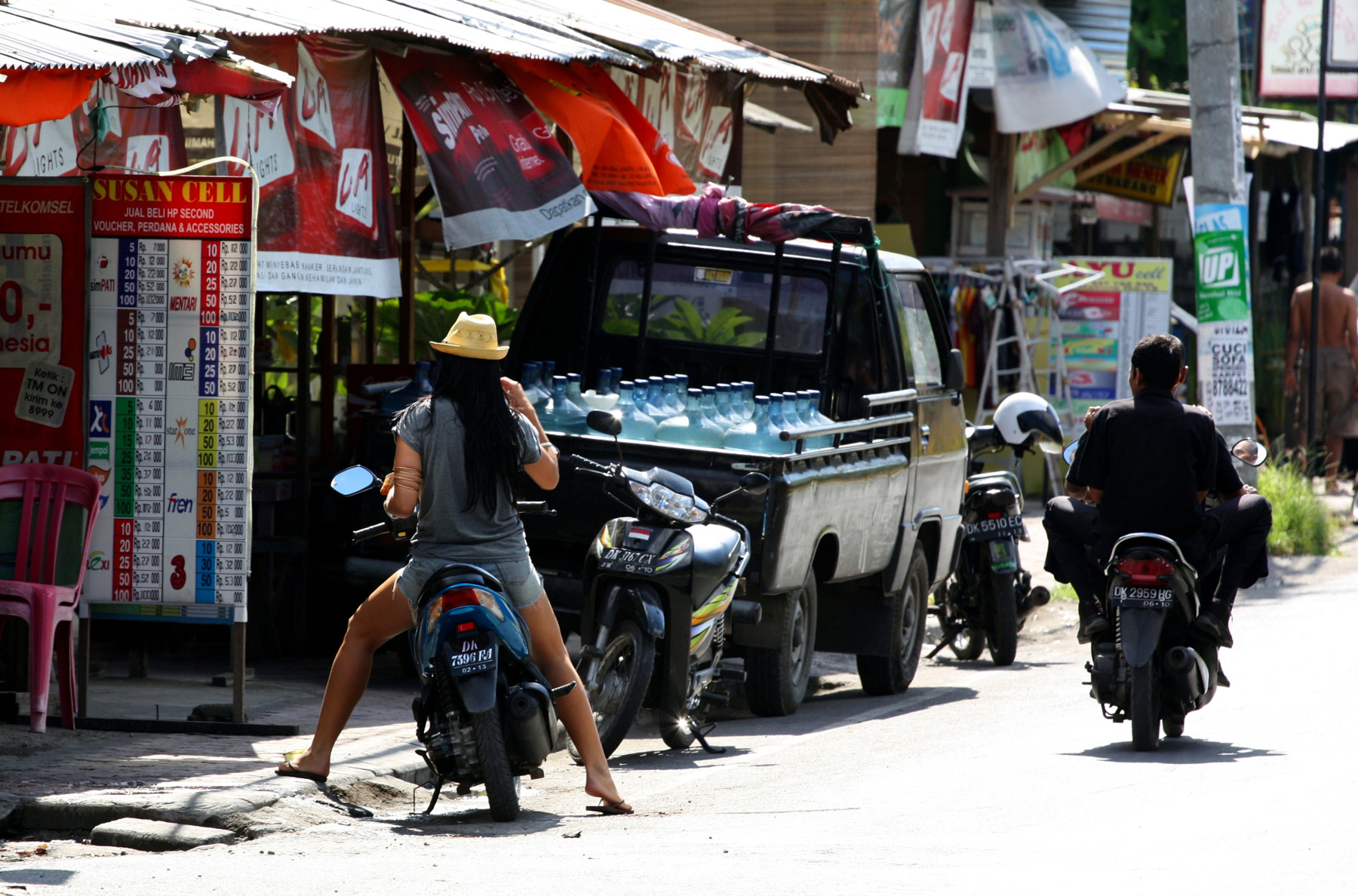
HatGirl, Seminyak

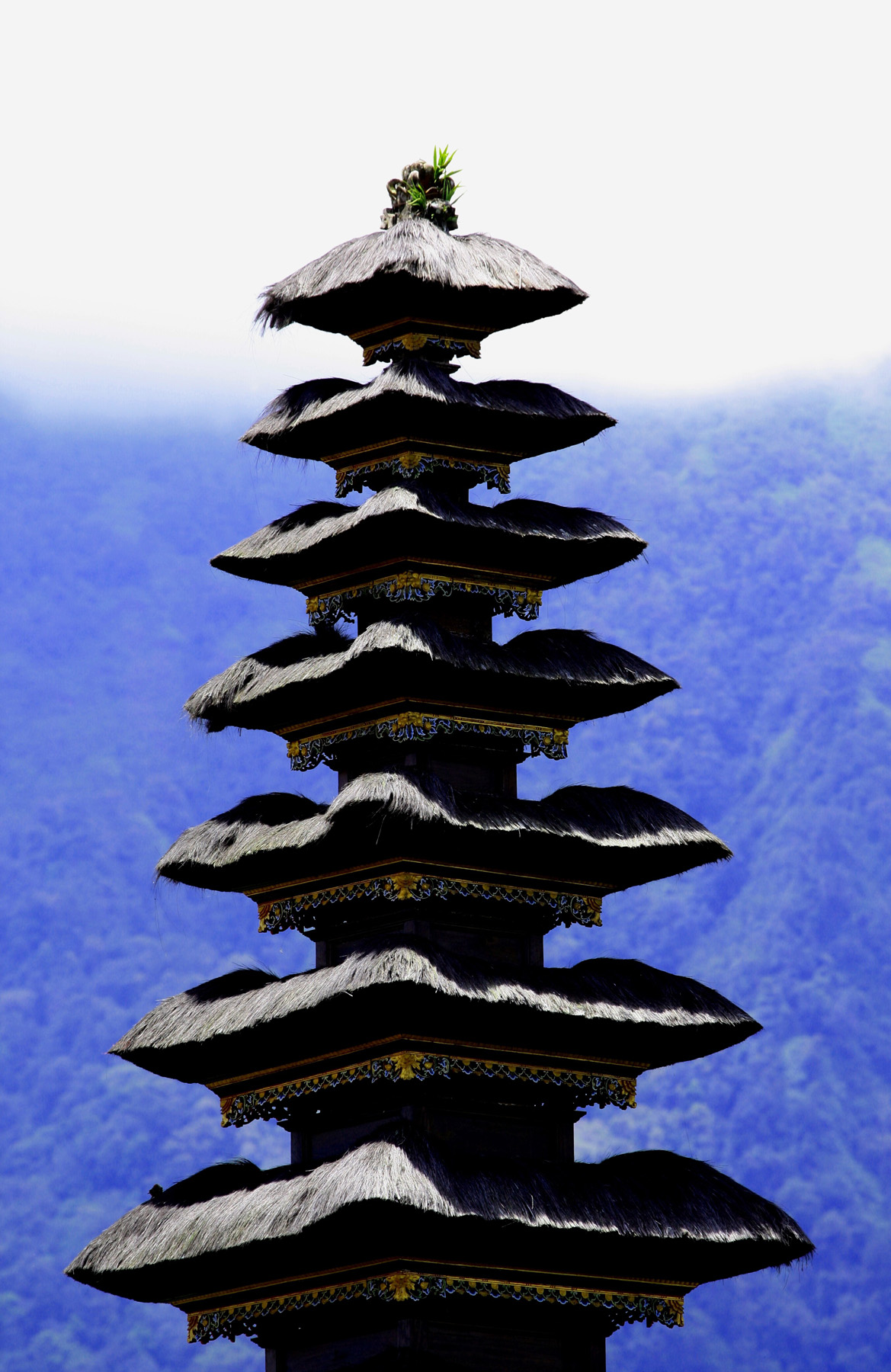
Temple

West Bali, Java Sunset 2

Man at Ceremony

Man at Ceremony

Self portrait, lost somewhere...

Ceremony

West Bali, Java Sunset

Tourist

Banana ladies

Ubud, ricefields

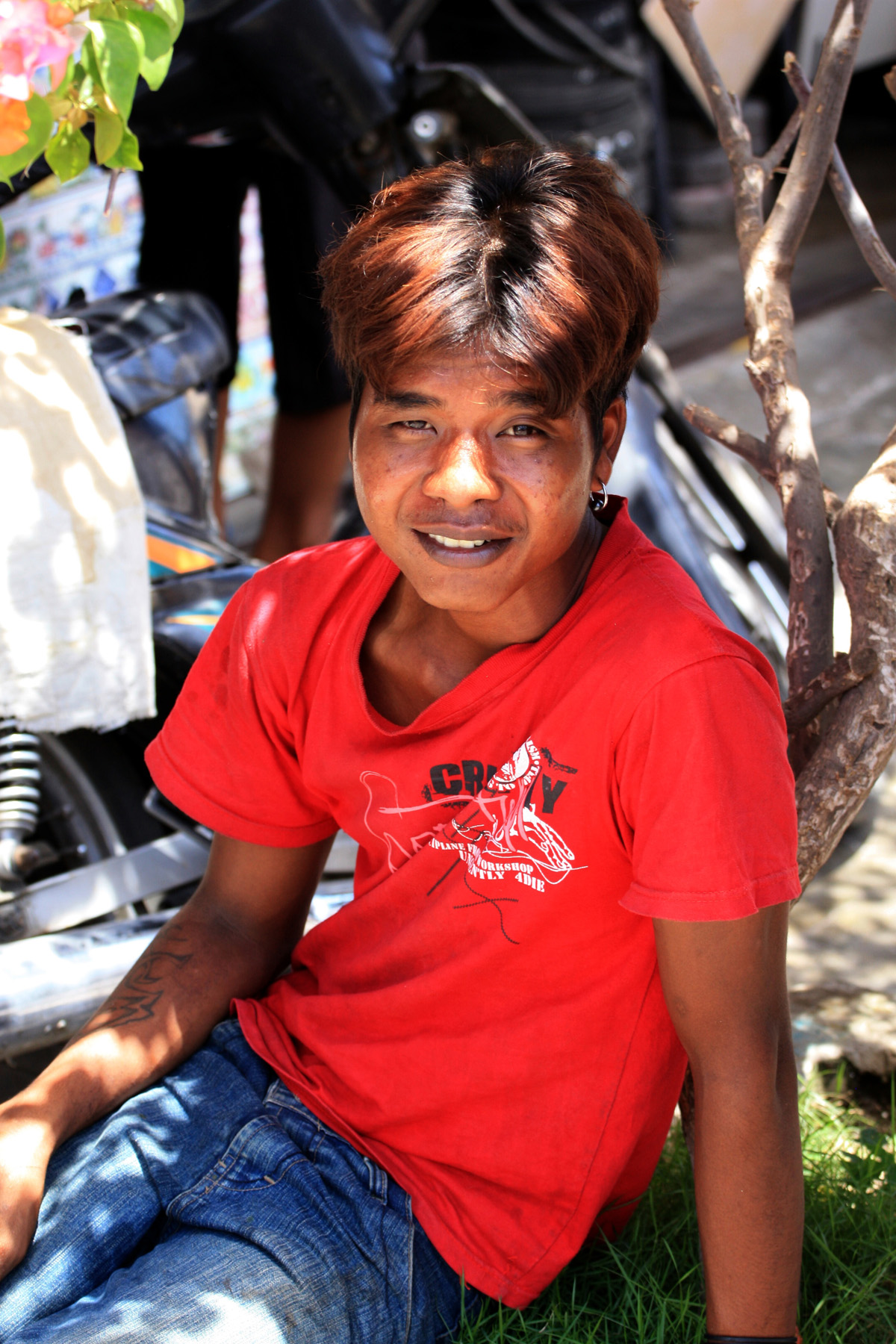
Balinese splendour!

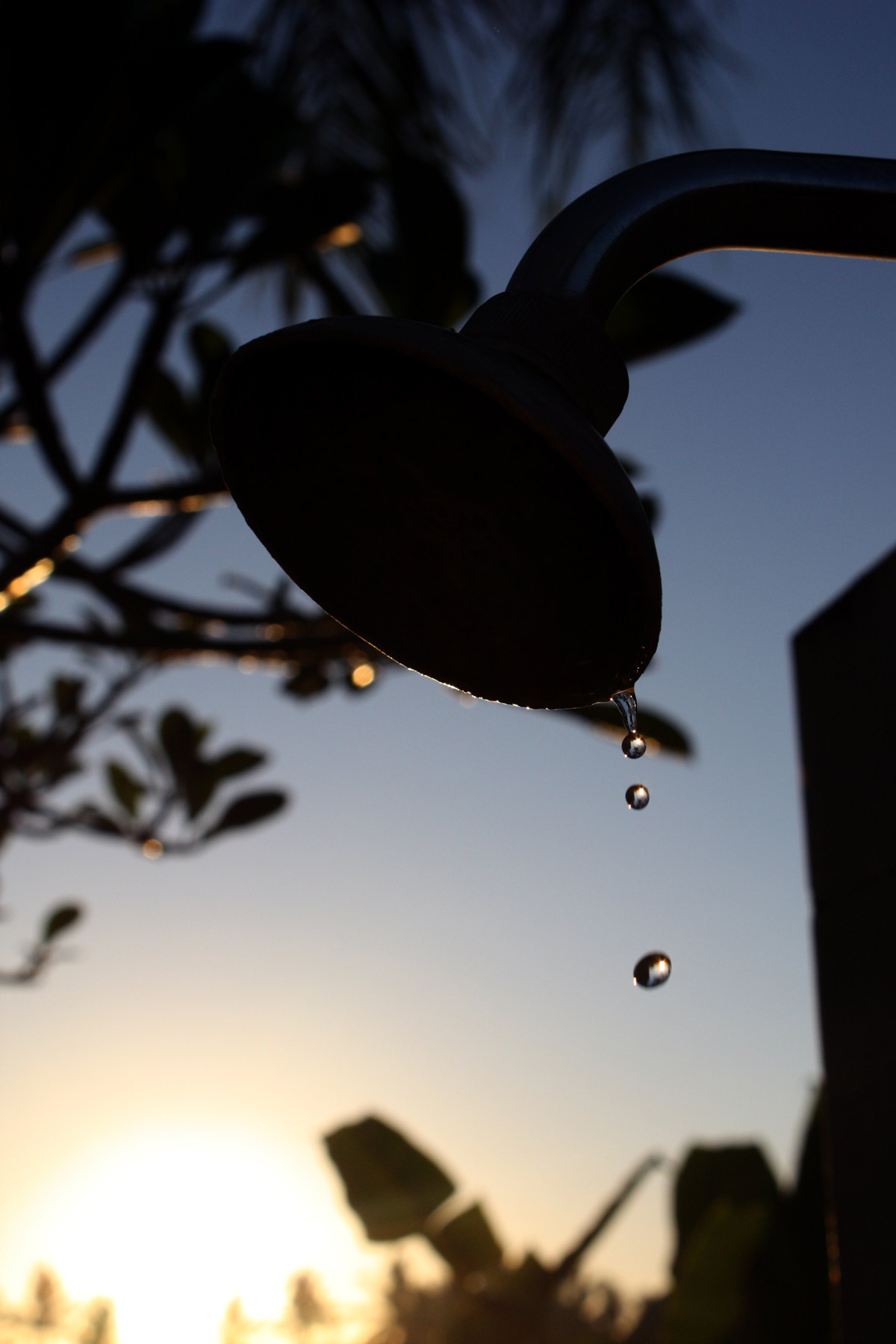
Ubud outdoor shower

Misty Mountain Hop

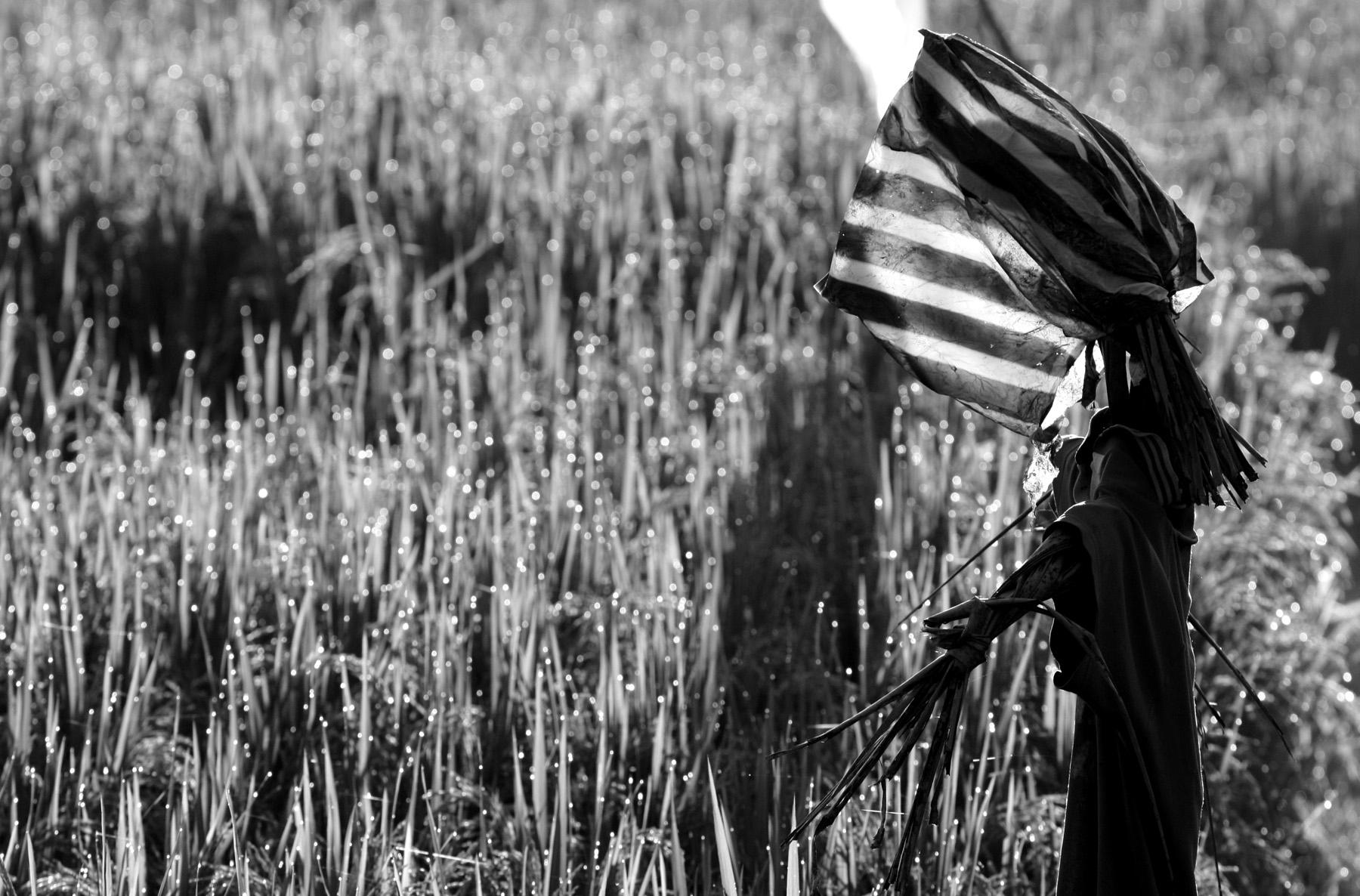
Scarecrow, Ubud

Macaques! 2

Breakfast flower arrangement

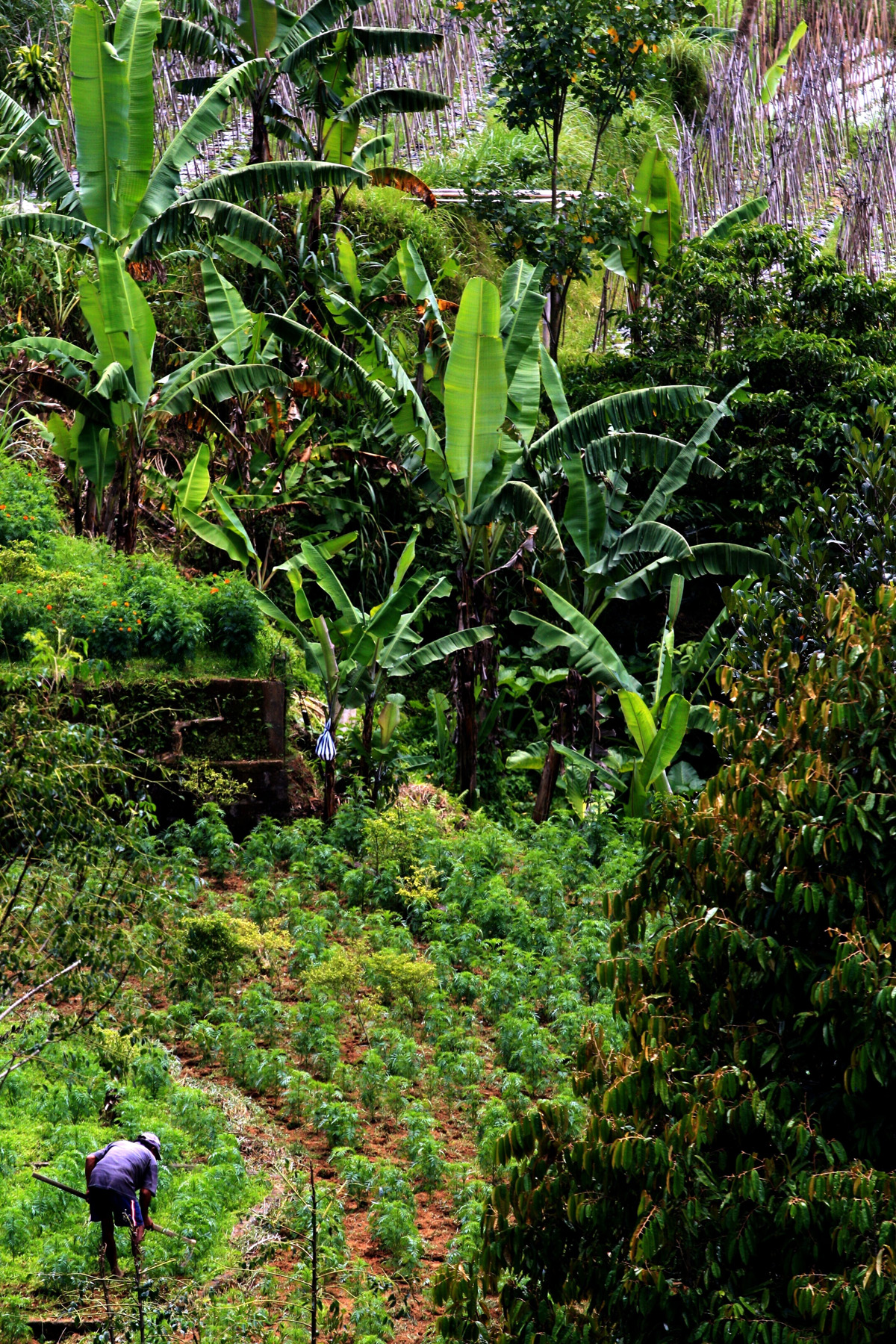
Farmer 1

Traffic between Lovina & Singaraja

Chilling on the balcony, Ubud

Kuta action

Legian Beach

Read Full Post »
Not quite, but almost

George street suits

Whitewash

Central station

4728 Bronte 3

3323 Glebe point road

3930 Chinatown 2

4016 City building

corinthian pilasters

5166 Escalator 3

fresh driftwood

Devonshire street

Graffertiti

4010 Six

9820 Bronte sand

Reminded me of Marvin, crashing into the sun

GPO

Toby's estate

Hilton side

6001 Railway 3

Grace Kelly

ben sherman 2

This collection of photographs comes from spending the last month mostly going through older folders and picking out things I might have missed. They’re all shots I either ignored or overlooked the first time around, and so, whilst I don’t consider them the cream of the crop, there are a good few I like all the same.

This is also likely the last post I’ll me making from Australia for seven weeks, as I’ll be heading to India with V, via Bali and Singapore. The first stop in India is Thiruvananthapuram, which took me a few days to learn to say correctly, and the last is Kolkata. As to what happens in between, we are really not sure.

Inevitably, I’m totally pumped about the photographic opportunities that will present themselves and, of course, the holiday itself. I’m don’t know how much I’ll blog while away, though I will certainly be taking my laptop – despite travelling light again with just a carry-on bag and a pair of thongs.

Finally, I’m moving house tomorrow. I’ve written about how much I love this place in the past and my deep affection for it has not diminished one whit. However, I am moving in with V, so I suppose that constitutes an upgrade : )

Read Full Post »

Venice

Many people complain about Venice – that it’s too crowded, too full of tourists, that it’s a rip-off, that it’s depressing, that it is, dare I say it, boring. These complaints seem to me rather tiresome and fill me with a deepening sense of despair about humanity. I should be more charitable, for Venice can’t be everyone’s cup of tea, yet the so-called Queen of the Adriatic does have some very attractive characteristics which I might be forgiven for thinking have universal appeal.

I first visited Venice in 1996 on a five-month trip across Europe and I fell in love with the place immediately. Well, almost immediately, for that first visit didn’t begin so well. I arrived after a hellish, fifteen-hour overnight bus ride from Avignon, in the days before they banned smoking on coaches. Apart from the lack of sleep, my girlfriend and I felt positively toxic and were not in the best of moods. We soon got lost on our way through the city and, in one of those typical courtyards from which two or three passages lead, the tensions flared into an ugly argument about which direction we ought to head in.

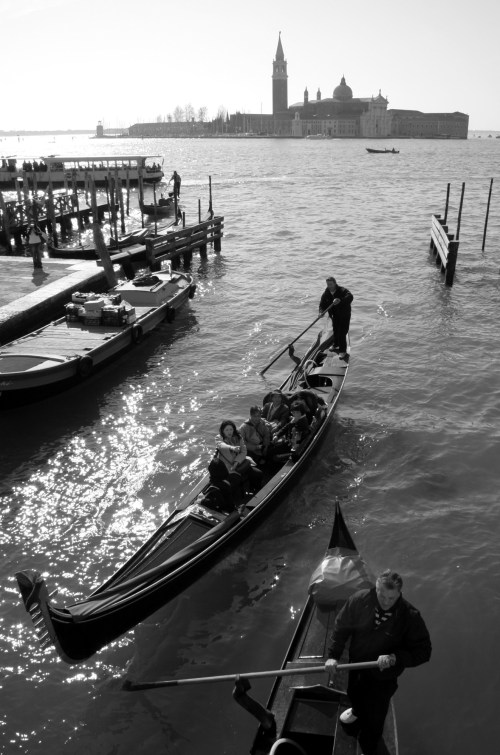
Fortunately we sorted things out and, once back at the grand canal and on a Vaporetto, began to indulge ourselves in what Venice had to offer. Perhaps inevitably, it is the sheer novelty of a city that is built on series of islands on a lagoon, with canals instead of streets through much of its urban centre which first arrests the visitor. The city’s architectural, artistic and engineering wonders, its unique panoramic and intimate views and its romantic opportunities for aimless wandering, flesh out the plus column.

On that first visit, we stayed in the youth hostel on the Isola della Guidecca, across the water from the core of the city. I would have preferred to stay in the centre, but this location had the important advantage of being cheaper. It also offered a painterly view across the lolling water to Venice in the salty haze and morning mist. I recall sitting on the embankment one morning, smoking a borrowed cigarette and, with a pencil, writing some rather florid descriptions in my notebook. Of all the places I’d visited so far on that first trip to Europe – in England, France and Spain, it was this sight across the water that most took my breath away. I had to remind myself that yes, I was here, in Venice, that it was real, and, again, yes, I was really here in Venice. Venice. THE Venice.

I’ve since visited the place on three other occasions, all at different times of year, and nothing has diminished my excitement about the city. With each successive visit, I’ve explored further the streets and canals, the islands around the lagoon, the museums, the churches the markets and cafés. I’ve been fortunate enough to be there during alta aqua – when the high tide floods the city and the locals are forced to get around in gumboots. I’ve been stoned in Venice, drunk in Venice, wet, cold, hot and tired and locked out of my hotel room in nothing but a towel for several hours, but I’ve never been bored or disappointed. Of course Venice has a lot of tourists – it’s Venice. Of course the place is more expensive – it’s much more logistically difficult to deliver supplies. None of these things have ever bothered me in the slightest, as they were all to be expected. Complaining about the crowds is like complaining about the weather in England – there’s nothing you can do about it, so let it go.

Venice can certainly seem claustrophobic – its narrow, confusing streets are difficult to navigate and if you don’t keep a tight grip on where you are going, it’s all too easy to get lost. Yet, provided one doesn’t care too much about getting anywhere in a hurry – probably a mistake in Venice – then being lost in the maze of streets, canals and bridges can be one of the city’s greatest sources of enjoyment. It’s not everywhere that you get to round a corner and find yourself faced with a cute arched bridge over a jade-green canal, down which stretch the tired and sagging, yet proudly defiant bricks of Renaissance apartments. Venice offers a mix of shimmering excitement and gob-smacking sights with a queer, disquieting, almost wrenching melancholy that speaks directly to the heart.

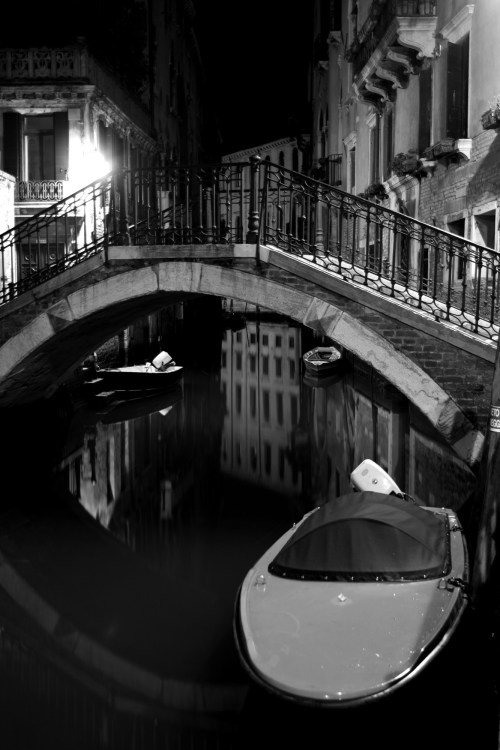
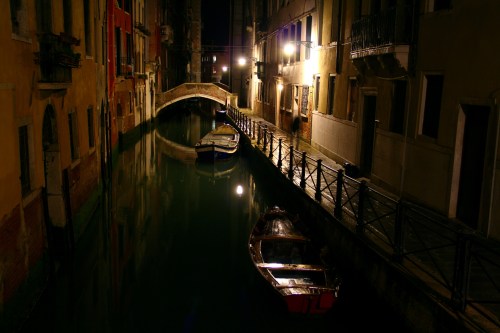
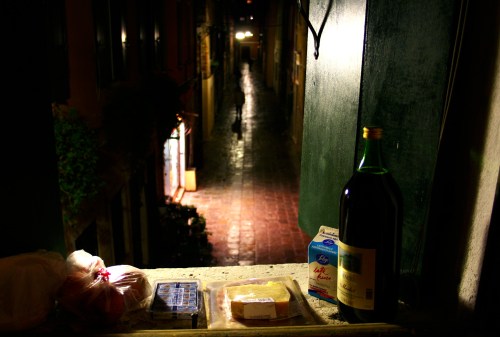
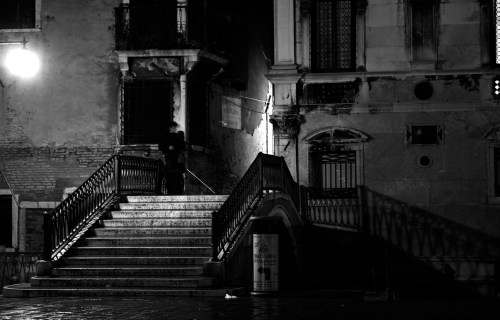
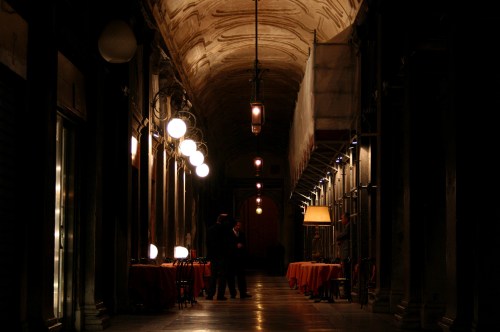
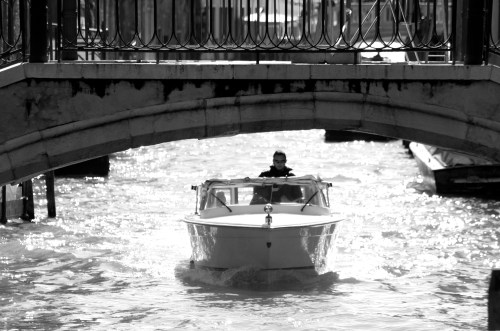
During my last visit it drizzled for two days and at night the streets were almost empty. I wandered for hours, having little idea of where I was, seeing everywhere a beautiful sadness and antiquity. The dim street lamps created pockets of light, etched by the thin, misty rain amidst bold shadows, strange shapes and architectural curiosities. The surreal sight of a boat gliding through what would otherwise be a street is even more captivating in the darkness of the Venetian night.

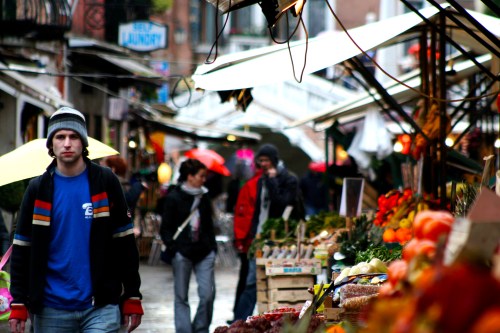
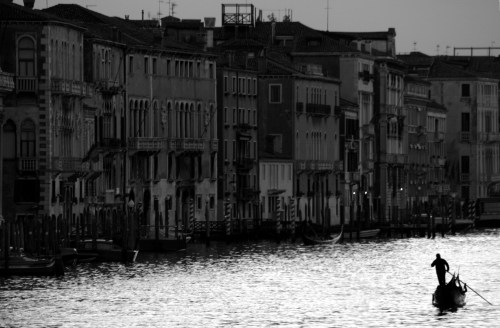
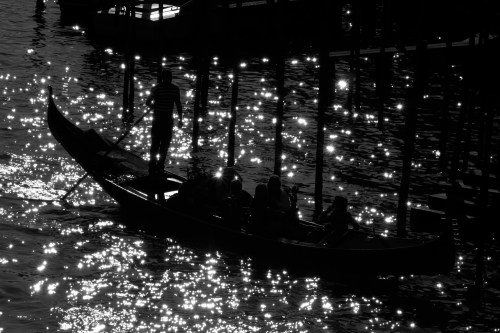
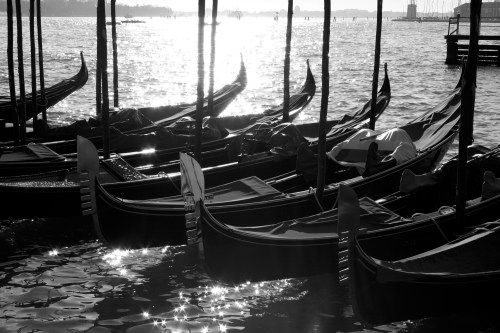
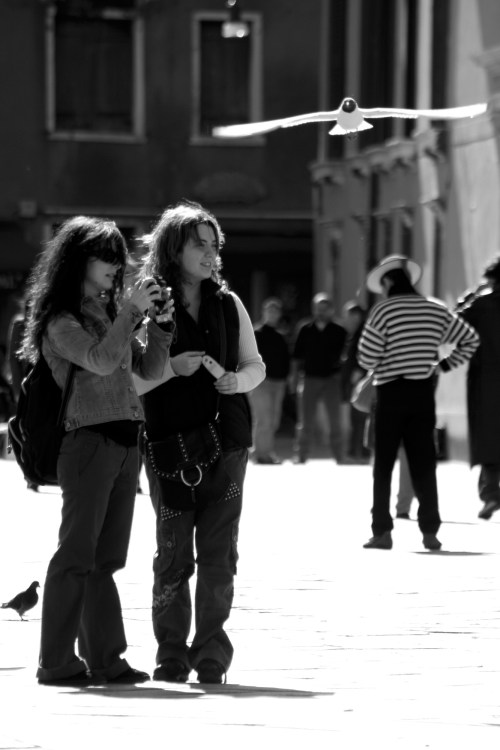
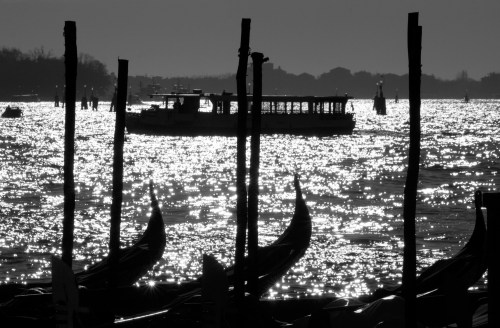
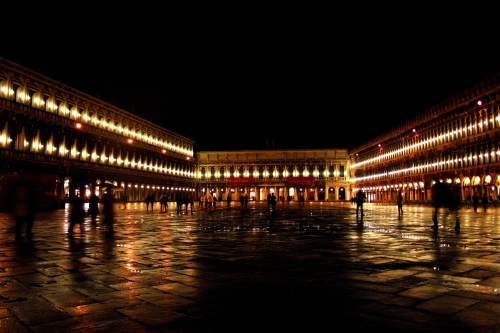
Venice has been photographed so often that it is difficult to do anything very original on that front. The Gondoliers and the Piazza di San Marco are the flagships of a whole host of clichés that have long been established in postcards, brochures and posters. Sure, any place offers more anonymous, less obvious subject matter, but to photograph the recognisable elements of Venice in an original way is probably beyond the capacity of most photographers. On my last trip to Venice in March 2007, I gave up trying to be original and focused on getting the cliché right. The photos included below are from that visit.

Read Full Post »

Cleaning up

Lately, I’ve been cleaning up. This might sound boastful, but really I mean it in the humdrum sense of organising my life. Not that my life isn’t organised, but my files need sorting. I want to have everything backed up and archived before I move house then head into Asia in December. There is a special type of phobia about the possible loss of digital files which I’m sure already has a name. Anyway, the important thing is that I have lots of work to do and am rather enjoying being busy.

Work has genuinely been enjoyable of late as I’ve been teaching Genre this term to year 10 high school students, and the last few weeks have focussed on military science fiction. It’s an odd early focal point for a study of genre, it makes a degree of sense in that it’s quite an easily classifiable genre, so far as its salient features are concerned. This subject was paralleled with a look at the “going native” narrative, prevalent in films such as Dances with Wolves, The Emerald Forest, The Last Samurai and The Mission. Winding up with a close look at the mixed genres of Avatar – military science fiction, going native, fantasy, western, romance etc. all rolled into one – made for a clean lead into the MSF material.

It was satisfying to find myself standing in front of a class showing clips from Aliens, having been such a fan of the movie as a teenager. It’s a testimony to the post-modern world we live in that we treat these popular works with the same intellectual rigour as high culture products. It is indeed satisfying to know that the cultural context in which I grew up has become a part of the global cultural and intellectual corpus. This week was a look at the parodic elements in Starship Troopers and its apparent subversion of the novel’s happily fascist narrative with a futility of war twist.

Right, definitely rambling now. Above are some photos. I’d like to think I’ve also been cleaning up with the camera as well, but judge for yourself.

Read Full Post »

Seasonal Ventures

The weather of late has been a titillating mix of dry heat and cool, crisp sunny days. There has been a lot of good eating and plenty of outdoors adventures, an especially indulgent start to spring. This last week also heralded the first two swims of the season. The first at what we like to call “the Resort”, which is the part of Bronte Beach immediately next to the ocean pool where the water from the pool spills down onto the rocks in a wide, continuous fan. It acts like a splendid water feature, and adds a certain luxuriousness to what is otherwise swimming in a large natural rockpool with abundant swaying seagrass.

So, a good start to the season on every level, with a lot of work to be done and plenty of things to look forward to. The good news is a coming holiday of seven weeks in Asia with V. We plan to fly via Bali and Singapore to India and spend the bulk of our time there. The local budget carriers make for a very surprisingly cheap round trip, which is, to say the least, very fortunate. Anyways, enough said, other than best wishes and an invitation to enjoy these photographs.

Read Full Post »
« Newer Posts - Older Posts »