Feeds:
Posts
Comments

Archive for the ‘Travelogues’ Category

I scabbed a smoke off a Japanese traveller at Charles de Gaulle airport. Lise was standing on the other side of the glass, but I had to wait for my luggage. She looked ecstatic and a little slimmer and seeing her, I felt rested after the flight from Sydney. We motioned and blew kisses through the glass and I sucked my cigarette with the force of an old habit regained after three weeks of parties. Back in Europe, en route to England, I felt like a conquering hero.

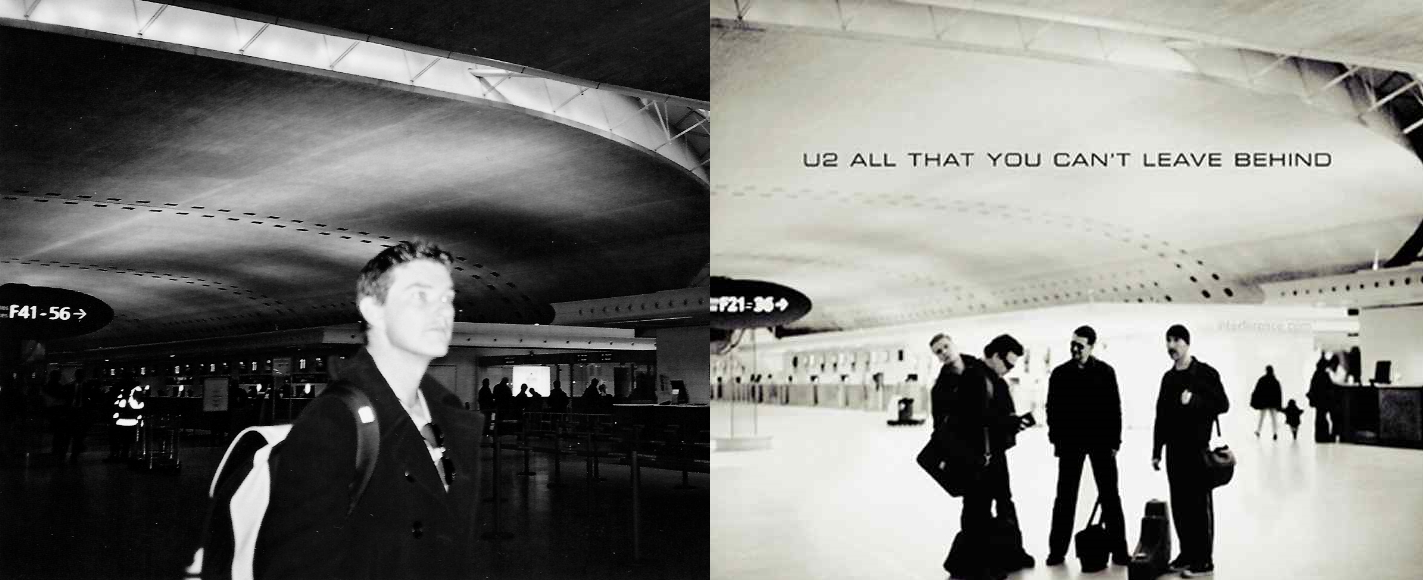
After many kisses the first thing I did was have Lise take my photo. Selecting a point in the bright concrete ring that provides, with such airy modernity, access to the gates, I wanted to look like Bono on the cover of All that you can’t leave behind. In the fever of travel and a tad self-conscious, I lingered just long enough for one take; the backdrop, uncannily, in near perfect alignment. The photo done, we moved to the transport and waited in glee for the bus.
I was on the final leg of an extraordinary four months of travel. In August I’d flown to Berlin, then hitched a ride many miles south into France to meet Lise in Strasbourg. From there we’d ventured around Alsace and into Switzerland, crossing into Germany via Freiberg and spending my birthday in Baden Baden. I finally returned to Cambridge via several drunken nights with old friends in Paris. In November I attended a medieval history conference in The Netherlands, then, the morning after returning, flew to Vienna and took a train to meet Lise and her parents in Budapest for a Nato conference. At the end of the month I flew to Northern Italy to see an exhibition of Lombard artefacts in Brescia and travelled on through Verona to Venice. In December, Lise and I flew to New York and then on to Toronto to spend Christmas with her family, returning to a Cambridge covered in snow. We made straight for London and spent a crazy new years high on piles of coke and champagne at Circus Bar in Soho and later at a party at Rolf Harris’ old house. A couple of days after that, I flew out to Australia for three weeks, whilst Lise moved into a friend’s apartment in Paris where she planned to conduct further research. Life had been unbelievably kind to me; to the both of us, in fact.

Lise’s Parisian flat was on Rue des Quatre Vents in the 6th arrondissement. It was a beautiful apartment, not far from the Odeon and within easy walking distance of Notre Dame or the Luxembourg Gardens. It was small, but very tasteful, with polished floorboards and simple, comfortable furniture. It had an aspect of the old and new. It was very quiet, being set back from the road, down a passage protected by old, dark green, wooden doors.

I was exhausted, but far too tired to go straight to sleep. And anyway, it had been a while since we’d seen each other, so the loft bed, up the ladder, was initially put to more energetic use. We hit the streets of Paris and wandered about. I smoked cigarettes and felt strung out, drank coffee and dreamed of being drunk. Paris can make anyone feel cool, unless you’re prone to status anxiety and feel oppressed by how effortlessly cool everyone else is. I was so full of confidence, fun and bravado at the time that I felt especially cool, even more so than the Parisians. Perhaps I genuinely was at that time; it was a rare window in life in which to feel magnificent.

That night we went out for an assiette grec, which was decidedly Turkish. We returned to drink a bottle of wine, and after that I was spent. There was no chance for me to stay awake any longer, and anyway, I’d already made it into the evening; a first step on resetting the circadian clock from the southern hemisphere. We climbed up the loft ladder and, mid conversation, I fell into a deep sleep.

At four o’clock in the morning, I was suddenly very wide, bruisingly awake. I felt a momentary disorientation and initially wondered where I was. Sydney, Cambridge? Ah, Paris. Beside me Lise slept and I had no wish to wake her, so I tried to remain still as possible. I lay in the loft staring at the close ceiling. I smiled, feeling the residual warmth of my close friends who had gone the distance in those last, frantic days. We had squeezed every drop for a final hoorah and, now, feeling fully rested, my emotions were at liberty to indulge in nostalgia.

Perhaps it was the inevitable comedown from the ecstasy I’d taken two nights before, or perhaps it was just the terminal distance, but, very suddenly I felt enormously sad and before I quite knew what was happening I began to cry. A yawning chasm had opened in my heart.

Only now did it dawn on me just how far away I was from Australia. For a year and a quarter I’d been living in England and at times my heart had burned. I had missed my friends and family and I had missed the climate, but most of all I had missed the history I had with people. I was fortunate to have established very deep friendships at Cambridge with people I knew would be my friends for life, yet in Sydney my relationships had an antiquity that lent itself so naturally to nostalgia, and I have always been cripplingly nostalgic.

Lying there in the loft, I realised how long it would be before I was back in Sydney again. A year, perhaps even two years, I couldn’t be sure. Oddly enough, it wasn’t that I didn’t want to be here. I loved Europe, was obsessed with it. The experience of going to Cambridge was the highpoint of my life. The year 2000 was the happiest of my life, and I knew it then and there. And this happiest year had occurred up here, in the northern hemisphere, in England, in Europe. I wanted to be here in Europe and had even begun to wonder if I shouldn’t stay here forever; albeit in the UK. The only problem was, I wanted to be in Australia as well.

I plunged wholly into sadness and reflection. The glint of the ocean, the broad camaraderie, the hugs and the handshakes, the dinners and drinks; cigarettes borrowed while shouting my tales. I confess that life had been working to tickle my ego. I was the centre of attention, I had all the yarns to spin, I had gone away and become somehow exotic. Sydney had been even more fun than I remembered because I was there this time as a tourist, and everyone came out of the woodwork. I revelled in my time and, high on pills, drunk on wine, smoked up to the clouds, I rolled through it all with a robust good humour. And then, I had to leave.

I also remembered the kisses to which I had almost succumbed. An old friend, with the unfortunate name of Beryl, a person I’d kissed before, loomed back into my life from a long obscurity. I watched those lips swell luscious before me, and in the throes of some rare, first-rate ecstasy, we sat close the luxurious staff lounges in an office behind the Martin Place clock-tower, full of desire. It was all born of a longing for everything. I had become so accustomed to things going my way that I could resist nothing, not even things my timidity might once have forsaken. With other friends gathered round, high as kites, we drank all the office beer and shot pool. At 0600 AM, I phoned the city council and spent ten minutes politely complaining to the nice man on the other end that the clock was two minutes slow, and could they please fix it.

In Tokyo, sleeping between flights in an airport hotel, I wrote a letter to Beryl on the hotel paper. At last I found a use for the Emperor’s yen that my old friend Marcus had given me five years before, and which had ridden my hip for so long. The note I posted was slightly dark with the oddness of flying; the introspection, the philosophy and the urgency of travel. I told her how strange it was that I was thinking of where I was leaving and not where I was going. That I should be looking forwards, not backwards, that I felt half in love, but wasn’t sure what the other half was up to. There was no question that I was in love with Lise, so what had I fallen for in Sydney? It was, in truth, the whole package; the city and its lights, the living postcard, the friends and stories, the emotional history, the scents, the water, all gleaming in the midst of a northern winter. Beryl had, rather unexpectedly, come to symbolise it all. She was the muse of Sydney just now, and so my heart went out to her as I felt the desperate loss in leaving.

I soon erupted in weeping. Another year at least would have to pass before I saw those faces again. A whole other year of waiting and missing things. I had already missed two weddings and the birth of my best friend’s daughter. It was as though people had waited for me to leave before taking these important steps. I lay there still, under that close ceiling, and the tears kept coming.

Soon, Lise was awake.

“What is it, Snail, what’s the matter?”

“I don’t know, it just hit me. I feel so far away.”

There was little she could do, though I wanted her there. She held me and I held her. There was nothing else for it but to seek comfort. Truly, I was very happy to be here, which made my sadness seem so oddly out of place; yet it was the consequence of coming out of such a deep immersion. My synapses hadn’t reconnected with Europe. Home had shifted back south in my head and I was severely disoriented.

I sat up as best as I could. I was wide awake and I felt awfully restless. What should I do? It was January in Paris and still dark. The dawn would not come until near eight o’clock. I needed to sit alone for a while; to compose myself with some sobering cold. Not even the central heating could keep the chill from the tiles. I hugged Lise and kissed her.

“I’m OK,” I said. “I’m just sad to leave my family and friends. I’m glad you’re here.”

I climbed down the ladder to go to the lounge. Little did I know that what I was about to do would have such far-reaching consequences.

There, sitting on the table, was Lise’s new laptop. I had gone with her to buy it in Toronto and it was, for the year 2001, a state of the art machine. Whilst in Sydney, my brother had flown down to visit, and during his stay he brought with him a computer game he wished to give me. It was called Baldur’s Gate; an epic-length role-playing game based on the 2nd Edition Dungeons & Dragons rules. My brother and I had grown up doing little else but gaming. Strategic board games, role-playing games, tabletop miniatures, naval warfare simulations, you name it. Between us we owned something like 31 different role-playing rules systems and I had even written my own role-playing system, consisting of more than 100 pages of rules, at the age of eleven. My brother owned around 30 Avalon Hill military strategy games; complex and involved board games and now much coveted in the first edition. Yet pride amongst all of these games was taken by Dungeons & Dragons. We had once locked ourselves in my room out of protest for being made to stop playing and go down to dinner. My father thought there was something dangerous in our obsession, whereas he should rather have marvelled at the exponential expansion of our vocabularies in learning these sophisticated rules systems.

Despite not playing the game for many years, I had never lost my love for D & D. The last sessions had been conducted between 1994 and ’95, when I was still an undergraduate and living in Darlington in Sydney. My old friend Cody created an excellent campaign; political intrigues in a small regional capital, replete with wear-rats in the sewers. I was a feisty 17 year-old female ranger by the name of Trissa Slondar, ably assisted by my friends Ventris and Faldor, aka, Mike and Malakai, and a very peculiar NPC wizard who chose to join us here and there. It was always fun. Has there even been a better reason to roll dice?

I reached into my bag and pulled out the discs of Baldur’s Gate. Computer games were still relatively primitive at the turn of the century, yet they had come a very long way from the text-based, 2D graphics and simple engines I had begun with. Baldur’s Gate was a multiple award-winning piece of work, both for its narrative qualities, its neat and functional engine and interface, and its incredibly epic scope. Not only did it boast up to 200 hours of playing time, but it was, within the bounds of commonsense, very replayable on account of the wide variety of characters on offer as potential henchmen.

My brother had raved to me about the game in Sydney, and I had been impressed immediately.

“Bro, it’s totally Dungeons and Dragons rules. It even simulates dice-rolls. It’s a TSR product. It’s the real deal.”

The strength of my nostalgia for the game cannot be taken for granted. It had been the great comfort of my childhood. I had stared every day into those lengthy rule books, reading descriptions of magic spells, ancient items, the lore and legends of different races and professions. The illustrations, the fantastic settings, the at times disturbingly adult nature of the content had awed me. Being thrust daily into dangerous situations, striving either for loot in an ancient temple or some desperate rescue; pitted against an incredible array of foes in deserts, jungles, snowy mountains, in quaint and corrupt medieval fantasy towns, was a rare privilege. To play through a quest could take several days and each had its own narrative, its own settings, its own heroes and villains. Solving all manner of problems, making moral, tactical and strategic choices, conducting interrogations, investigations; the variety and versatility of the role-play seemed boundless. Of course, it was often just good hack and slash dungeon-crawling, but this too had its merits as old-fashioned fun.

“Hey, Lise,” I said, walking back into the bedroom, before she had a chance to fall back to sleep. “Can I install this game on your computer? I’ll delete it later. I just need something to do.”

“Of course, Snail. Go for it.”

“Thanks a million.”

I ran up the ladder and kissed her sleepy face. Already I felt considerably better. Wasn’t I really happier in Europe anyway? Hadn’t the last year been the best of my life? For someone obsessed with history, there was simply nothing for me in Australia. It was an empty land, full of fat, rich, vapid people growing more conservative by the minute. Did I really want to be there when I could be here in Europe – in Paris, for god’s sake! There was more culture in Paris alone than in the whole of Australia. What had I been thinking? I smiled, trying to shut out my sense of loss by rationalising my good fortune in being where I was. It was working.

I slipped in the first of the six discs and began the installation of the game. I rubbed my hands together in the light of the lamp. I closed the door and put on the kettle, making a cup of tea. I could see nothing outside the frosted window, except a few muted stars. The cars were sparse enough that each had an individual tone. I checked the time. It was only 0430. The world was going to leave me alone for a good while yet. It was exactly how I wanted it.
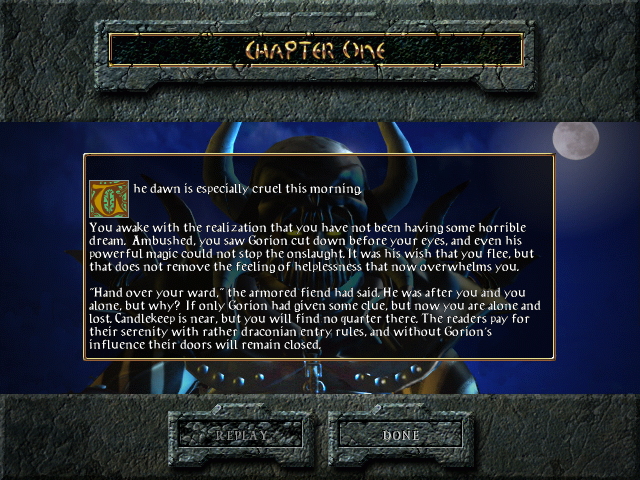
I put in my headphones and started the game. The title music was slow but insistent, bombastic and dramatic. I watched the opening animation of a man in armour being thrown from the top of a tall tower by some great brute with an evil voice. This brute must, ultimately, be my nemesis. The body struck the ground and the blood flowed between the cobbles, finding its way to the title, written on the medieval pavement. BALDURS GATE. I was excited to say the least, but far more so when I entered the character creation screen. Just as my brother had so enthusiastically assured me, in every way the game seemed true to the rules of Dungeons & Dragons. My troubles were behind me now as I basked in the rich colours of the interface.
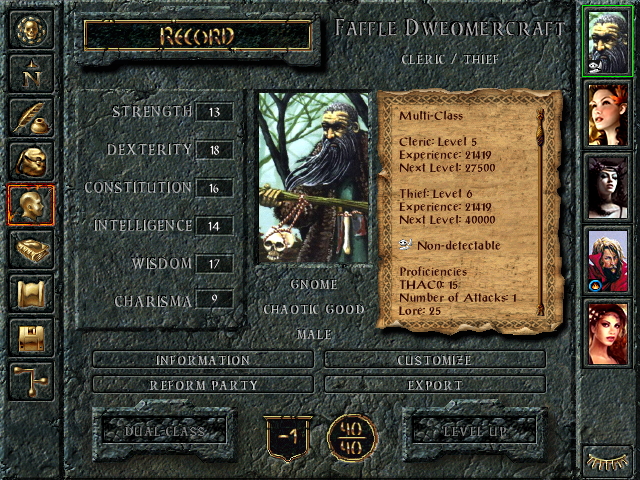
When, some three hours later, Lise finally arose and joined me in the lounge room, I was in another state of being altogether. I had rediscovered a happy place to which I thought I could never return. Baldur’s Gate was simply marvellous, it was enthralling, it was like cocaine. It was the computer game for which I had been crying out for many years, it was that good it was better than sex. I didn’t want to stop playing. I couldn’t bring myself to stop playing. I had to request special indulgence from Lise to let me go through until lunchtime. Everything about it tickled my nerdy fancy and my deep nostalgia for the game. The character classes, the potions, the magical items, the simulated dice-rolls, the sense of adventure, the mission, the quest. Sure, it could hardly replicate the freedom of movement within the pen and paper game, especially when it came to dialogue, but everything else was absolutely spot on. When, from a scroll I’d found, I cast my first Stinking Cloud spell for perhaps 12 years, I nearly wept afresh.

Such was my enthusiasm, that I managed to enlist some from Lise. She found the game cute at first, with its entertaining voices, its artwork and themes. In the days ahead, however, when I continued to wake up at four in the morning, and could not be easily pried away from the computer, my obsession with it became a burden to her.

And this obsession did not diminish upon my return to Cambridge. I continued to play the game, completing it, then restarting it and running it through again, and just when I had finally walked away from it, Baldur’s Gate 2 was released with its far greater complexity, detailed character work, lengthy dialogues and more engaging and coherent story. If Baldur’s Gate was cocaine, then the much lauded and still highly regarded Baldur’s Gate 2, was heroin.

There came a time, further down the track, when things between Lise and I became more strained. We were used to spending a lot of time apart, and when she moved back to Cambridge, we didn’t adapt so well to being together all the time. One day she turned to me, teary-eyed, after I had frustrated her once more with my apathy, and said. “It’s all gone wrong.” It was a dark joke we had often made to each other, that there would come a time when it would “all go wrong.” Then, as if to clarify, with, I’m afraid to say, deadly accuracy, she said, “It all went wrong with Baldur’s Gate.”

Though I don’t regret the beauty of those mornings in Paris, the truth is, it did all go wrong with Baldur’s Gate. And later, with others who were yet to come, it went wrong with many other games as well.

ps. Have you ever seen anything so universally well-reviewed in  your life?

http://www.metacritic.com/game/pc/baldurs-gate-ii-shadows-of-amn/critic-reviews

Read Full Post »

Travelling Light

Finally got around to editing and posting this. It was written in the last weeks of my travels, in Varanasi, around the 7th of May 2010. I had sunk into a deep melancholy and disciplinary dissolution in woebegone anticipation of my epic journey’s drawing to a close and sought solace in reflection and hashish.


Travelling Light

For seven weeks now I’ve been on the road in India, and the only luggage I have with me is a shoulder bag. A large, deep and wide shoulder bag, little more than a voluminous day pack. I would hasten to dismiss your fears for me having made terrible sacrifices, and be quick to add that on only a very few occasions have I found myself wanting. Very few.

One great advantage of having very few things is that there is less to be lost, and less to worry about. I can unpack my bag every time I enter a new hotel room and fit everything on a chair or small table. It is far easier to find things and keep track of them. I haven’t managed to lose anything yet and I certainly hope not to do so in my final weeks. Packing is also very quick. I have done it so many times I’m like an assassin stripping a gun blindfolded. I can be ready in a very short time, unencumbered because everything is on my back in an unobtrusive, ten kilogram bundle, though I usually choose to carry my camera.

Travelling light is an interesting experience, philosophically; a situation that demands contemplation of one’s relationship with one’s possessions. How much do you actually need on a day-to-day basis? How many clothes do you really need? How many pairs of shoes? How many gadgets? These are fundamental questions we often fail to ask ourselves. Why do we really buy things? What are we trying to fulfill? Is it purely acquisitiveness? If so, is that a desire we ought really to satisfy?

The love of possessing things also faces practical obstacles whilst on the road. If one has no space in which to carry anything, can one really afford to buy something, on account of the inconvenience? If you travel with the idea firmly in mind that you will buy nothing whatsoever, then you will feel less troubled about refusing offers and missing opportunities to buy souvenirs. I tell everyone that I will buy nothing and I mean it, so I am not troubled by desire. I must appear sincere because they rarely press the case very far at all. I don’t really feel I’m missing out at all, and anyway, is not a collection of photographs sufficient?

Not only is the absence of things beneficial to understanding that they are not necessary, but also the presence of certain possessions establishes very special relationships with them. The things that you shepherd with you everyday; the things you must look out for every time you pack your bag; the things you must remember having and must occasionally check upon; the things you have with you always, for security; the things you use all day; the things that are of most importance – the passport; the whereabouts of which you must always be aware of. These are rare relationships with things, capable of breeding great sentimentality and care.

If one combines the respect for and appreciation of one’s useful belongings with awareness of the minimalism with which one is able to live happily and comfortably, then we would have a much more environmentally friendly planet, inhabited by people with a natural distaste for greed and excess.

When you consider how many clothes you have in your closet and how many of them are actually worn, then consider the energy, water, labour and resulting pollution that went into their manufacture and distribution, it doesn’t take a lot of imagination to see that if everyone in the world bought half as many clothes, it would make a very significant impact on the environmental consequences of our overconsumption. I have very few clothes compared to most people I know, yet even still that extends to something like ten pairs of trousers and jeans combined, thirty-odd tee-shirts, twenty-odd collared shirts, perhaps ten pairs of shoes. Do I really, honestly, need that much? Most weeks I wear about three or four combinations at best, totalling around 12 staple items. Sure, keep something for a special occasion, but is the rest really necessary?

No one wants to live in a world, as predicted by so many awful old science fiction movies, where everyone wears the same type of robe. Yet we can still retain some individualism, look cool and own half as many clothes. The problem is that there is no sensible understanding of quotas or limits. How would one determine where to draw the line? I guess a simple rule of don’t buy it unless you actually need it might be a good starting point.

I have come to take great pride in all my possessions and look out for them at all times. The trusty notebook PC, the ever-reliable camcorder, the digital SLR, the clothes, the diary, the toothbrush, the guidebook, the heavy, A4 day-to-a-page diary. Some of these things I have come to know so intimately they have nicknames. My five tee-shirts have already been dubbed “The heroes” for enduring so many long, sweaty wears and being misshapen by my backpack. Two pairs of my already fatigued boxer shorts lost their elasticity, so I finally had the chance to make use of my miniature sewing kit. I folded the elasticated waist into a pleat and triple-stitched it to ensure it was sturdy. They have thus found a second life and I have obviated the need for replacing something on the road. A needless expense, and also, a needless early disposal of something still perfectly useful.

I know that travelling light is not everyone’s cup of tea. It’s certainly easier in hotter climates. I have one pair of shoes – a cheap pair of durable, Chinese flip-flops. I have one pair of long, light cotton pants and a short-sleeved collared shirt in case I have to look at least slightly less ragged. I can’t really hit the high end of town, but then, I didn’t come here for that and couldn’t afford it anyway. Whilst in the mountains, in Darjeeling, McLeod Ganj and Manali, I did at times feel cold and long for a warmer top – still, I was able to avoid discomfort by wearing three tee-shirts. Layers are the next best thing, but of course this wouldn’t suffice in wintry conditions.

Still, in any climate, I highly recommend travelling with as little as possible. I took the very same bag on many trips around Europe in winter, with an equally small number of possessions. Only once when a freak cold spell caught me in Belgium, did I suffer for lack of a sturdier coat. Even then, however, buying a new coat did not require changing the size or portability of my luggage. If everything can be fit into a carry-on sized bag, especially one you can carry on your back, then there are significant advantages. It never needs to be checked for flights and thus is never lost – you can march straight out of the airport and be on your way. It never needs to go in the belly of the bus, thus alleviating anxiety over its being stolen by another passenger when the bus unloads somewhere along the route. You can move unencumbered. You can walk all day with your baggage with relatively little discomfort. You can take your baggage to the bathroom if you are travelling alone and never need to leave it anywhere – on a train; in a restaurant; in a bar – it will always be with you, and, wherever you are, you will always be ready to get back on the road, where you belong.

Read Full Post »

“Do you want some books? Some English books?”

It was Sunil speaking, my auto-rickshaw driver for the last two days in Jaipur.

Jaipur - The Boss

“I have two books. You can take them with you.”

“What books?”

“Two English books. A girl gave them to me to read. She said they are very good books. She gave them to me to read them when I learn to read properly.”

“Oh, nice. What books are they?”

“I’ll get them.” He stood up in his chair and I rose halfway myself.

“No, it’s cool, man,” I said. “Don’t worry. It’s too much trouble.”

“No, it’s no trouble. I live across the road. I’ll get them.”

“Really, only if it’s no trouble.”

He laughed and smiled again. “It’s just across the road.”

“Okay, sure. If you want to, thanks.”

Sunil left in a flash and I eased back into my chair. I was sitting on the open rooftop of the hotel; drinking black tea and picking away at a paratha. For the last twenty-four hours I’d had stomach problems aplenty and had only just gotten through the day’s activities: a visit to the Jantar Mantar and Amber Fort; a test of endurance in forty degree heat.

Amber Fort, Jaipur
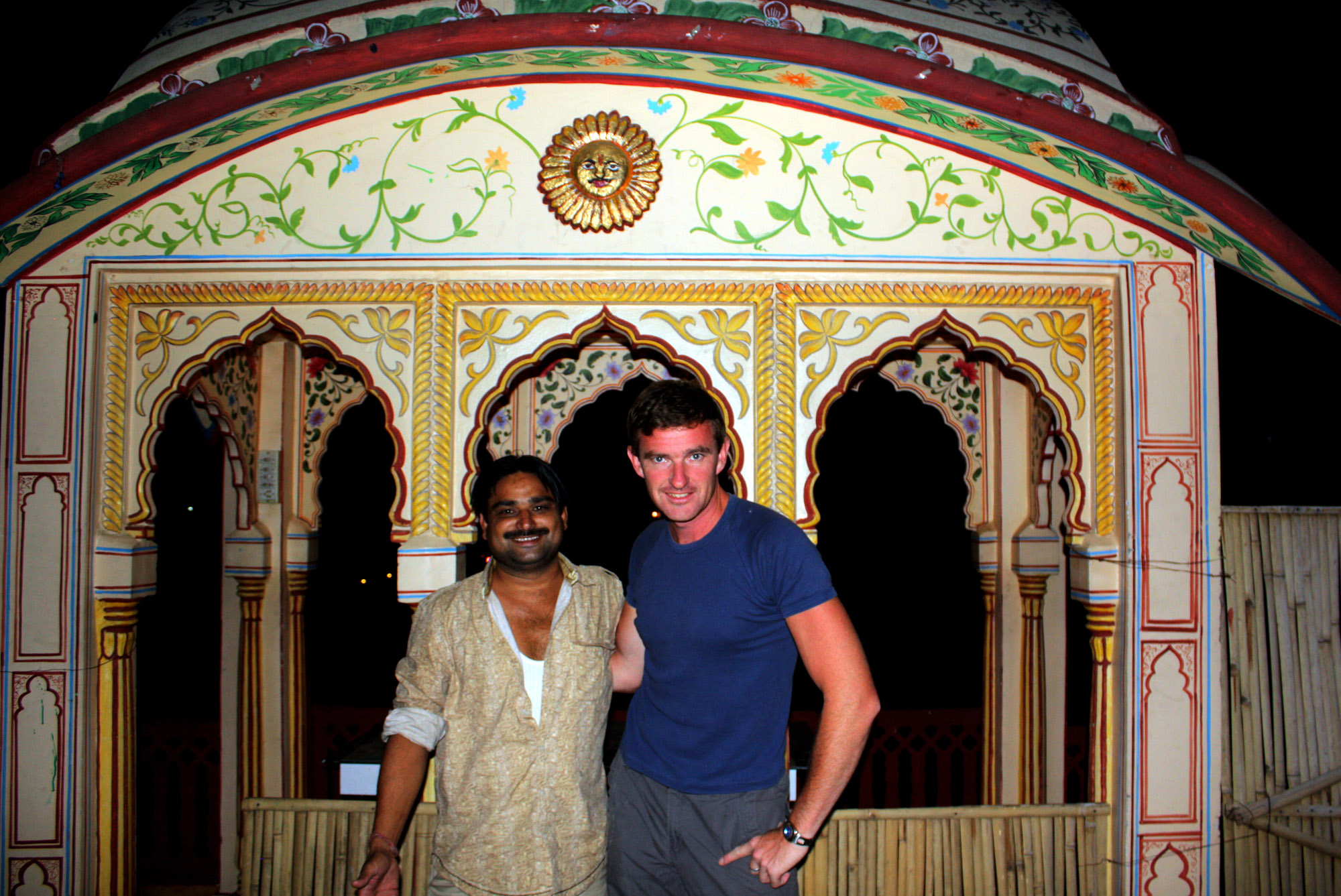
At the far end of the rooftop, before a painted arch, a two-man troupe were putting on a puppet show; stories of the Ramayana. At times the volume was too much, the cymbals too clanging. I was too fragile for much patience, but also a tad too weak to feel any annoyance. I was still acclimatising to India, to Rajasthan, and I guess getting sick was part of the trip.
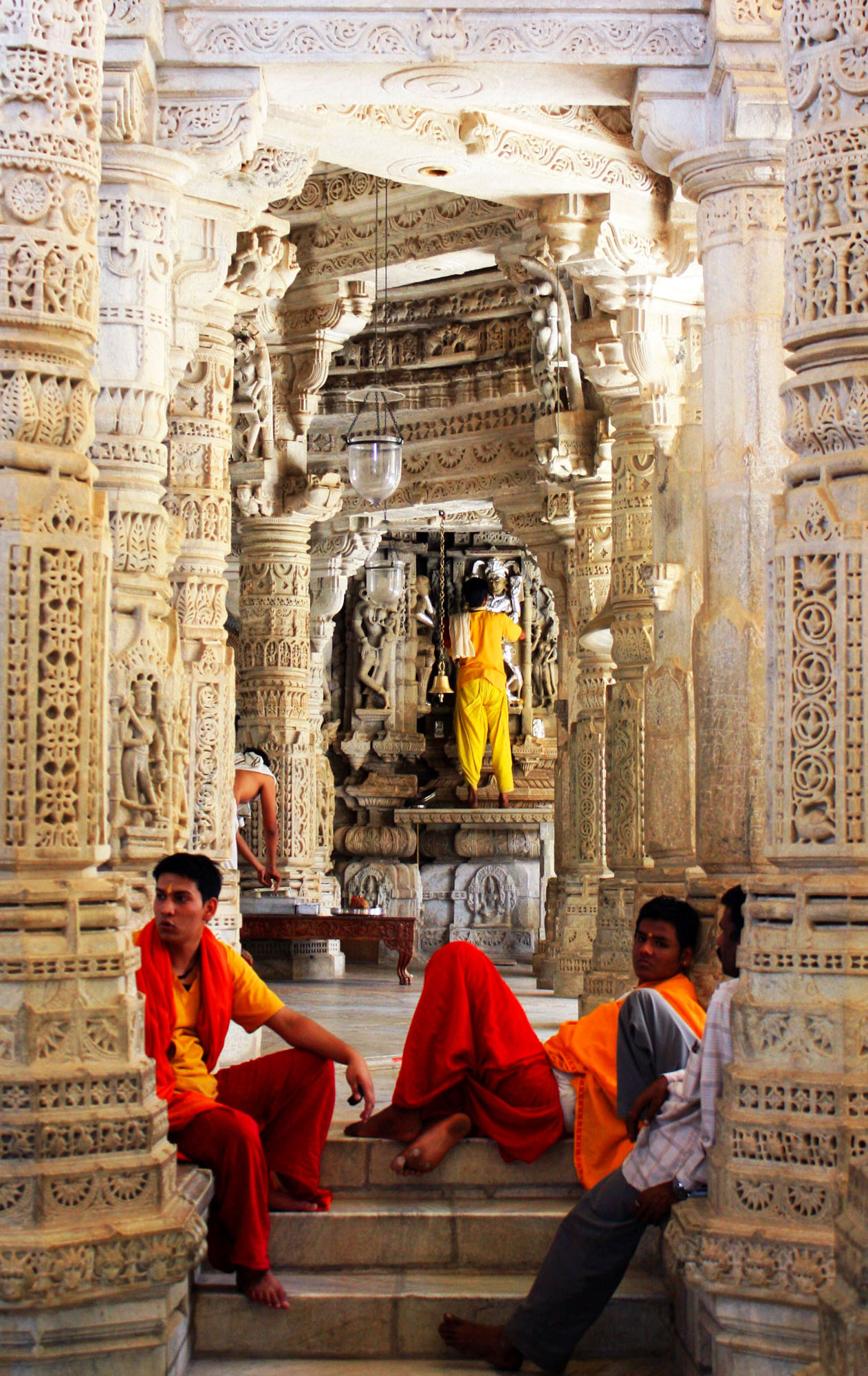
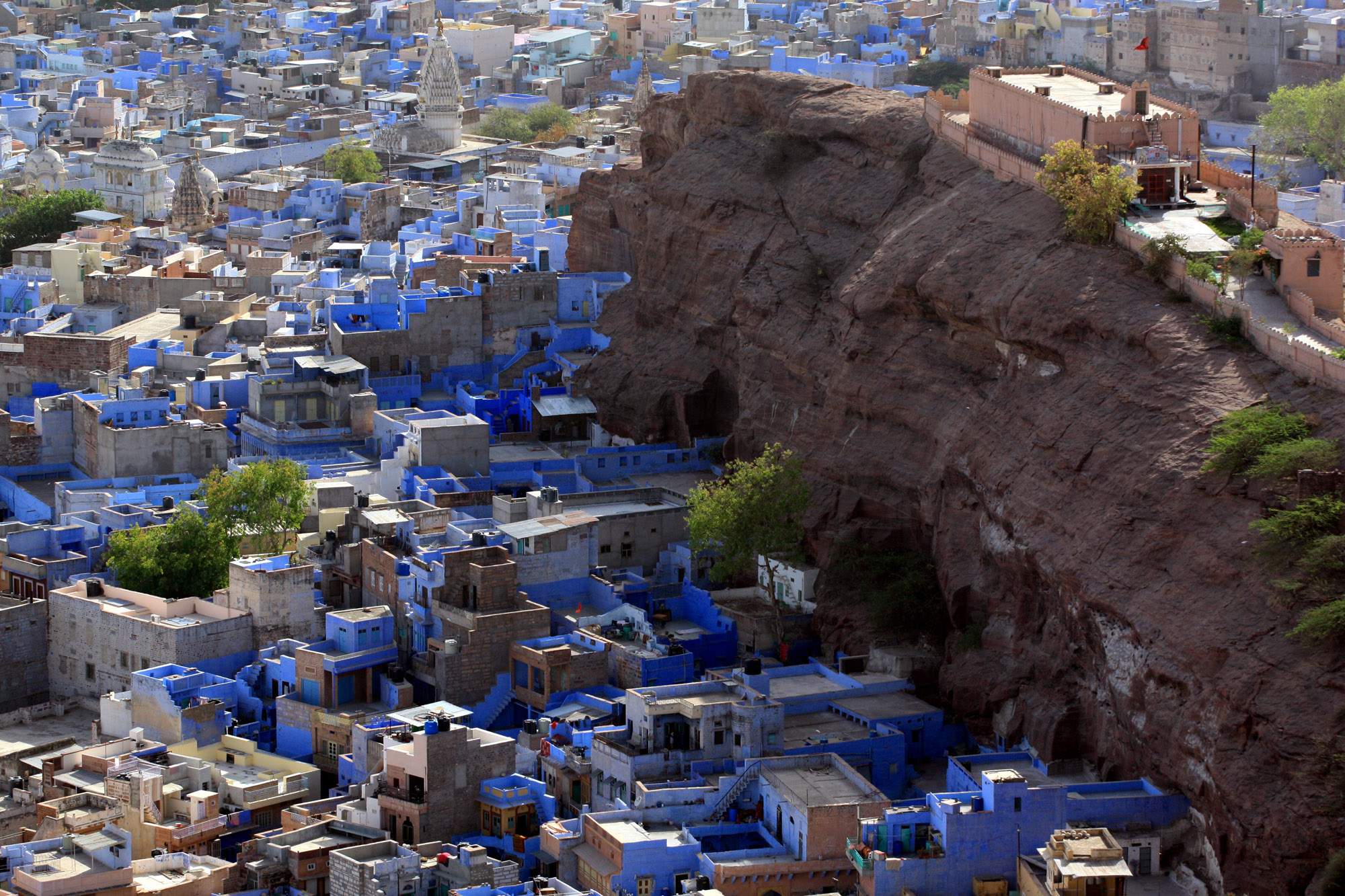
Sunil and I had just cut a deal. His uncle, Shyam, was to drive me around Rajasthan for the next ten days, starting the following morning. The price was fair and it seemed a far more convenient arrangement than taking my chances with the local buses and trains. It would also ensure I could see the more remote forts and temples, provided I was well enough.
I began to wonder about the books Sunil was bringing. What would they be? Rudyard Kipling, for heaven’s sake? I wasn’t terribly optimistic, though I wasn’t too pessimistic either. The worst case scenario would be a couple of airport potboilers, or some junk about spiritual enlightenment, though I most expected him to hand me some inoffensive, lightweight fiction.

Jaipur Hotel
Sunil returned after five minutes, wielding two books. One was a hardback, the other, a floppy paperback.

“Here they are!” he said.

He was slightly out of breath. A short, moustachioed, rotund and cheerful man in his mid-thirties, Sunil always had an air of abundant enthusiasm.
He placed the books on the table and as soon as I saw the titles, I was pleased and surprised.
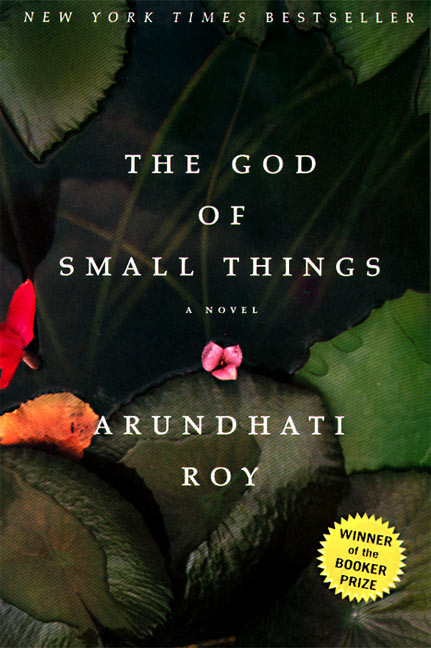
Summertime by J.M. Coetzee and The God of Small Things by Arundhati Roy.
I had read neither of them, but had wanted to do so, and now I was free to take them with me around Rajasthan.

“Oh, cool,” I said. “Excellent.” I picked up Summertime.

Summertime - Coetzee

“This guy, Coetzee, is a very famous author. Have you heard of him?”

“No.”

“He won the Booker prize, twice. It’s like the biggest prize in writing and only two or three people have won it twice. I’ve read about six of his books. Hell, I even taught his stuff once!”

“But that’s great,” said Sunil. “See, I knew these books would be good. The girl was very nice, very clever.”

“And have you heard of Arundhati Roy?”

He shook his head.

“She’s Indian, though I don’t know where from. This book also won the Booker prize. It’s supposed to be very, very good.”

“Very good then! And now, you can read them and tell me what you think. One day, I will read them too.”

We turned back to planning my route through Rajasthan over a large map of the region. I was very excited, though uneasy with stomach cramps. As we sat there over the next half hour, I kept glancing at the books and wondering whether or not these would really be the best place to start reading English literature. Coetzee might be just the thing, with his terse, laconic use of language and simple sentences, but I had no idea what to expect from Arundhati Roy. Still, as an Indian writing about India, the book could well be a lot more interesting and accessible for Sunil. There was only one way to find out: Read them.
The following morning I set off for Pushkar with Sunil’s uncle, Shyam. I had decided, on account of recurrent stomach problems, to hole up there for a couple of days in the hope of getting over my illness. The drive was easy, if disappointingly desolate, until the final stretch that is, when we turned off the main road. The land became more fertile, with many trees and patches of green growth; it was a yellow land, the colour of wheat heads, baking in the sun at the end of the long, hot dry, yet nourished by wells and tanks from the last monsoon.

Shyam!
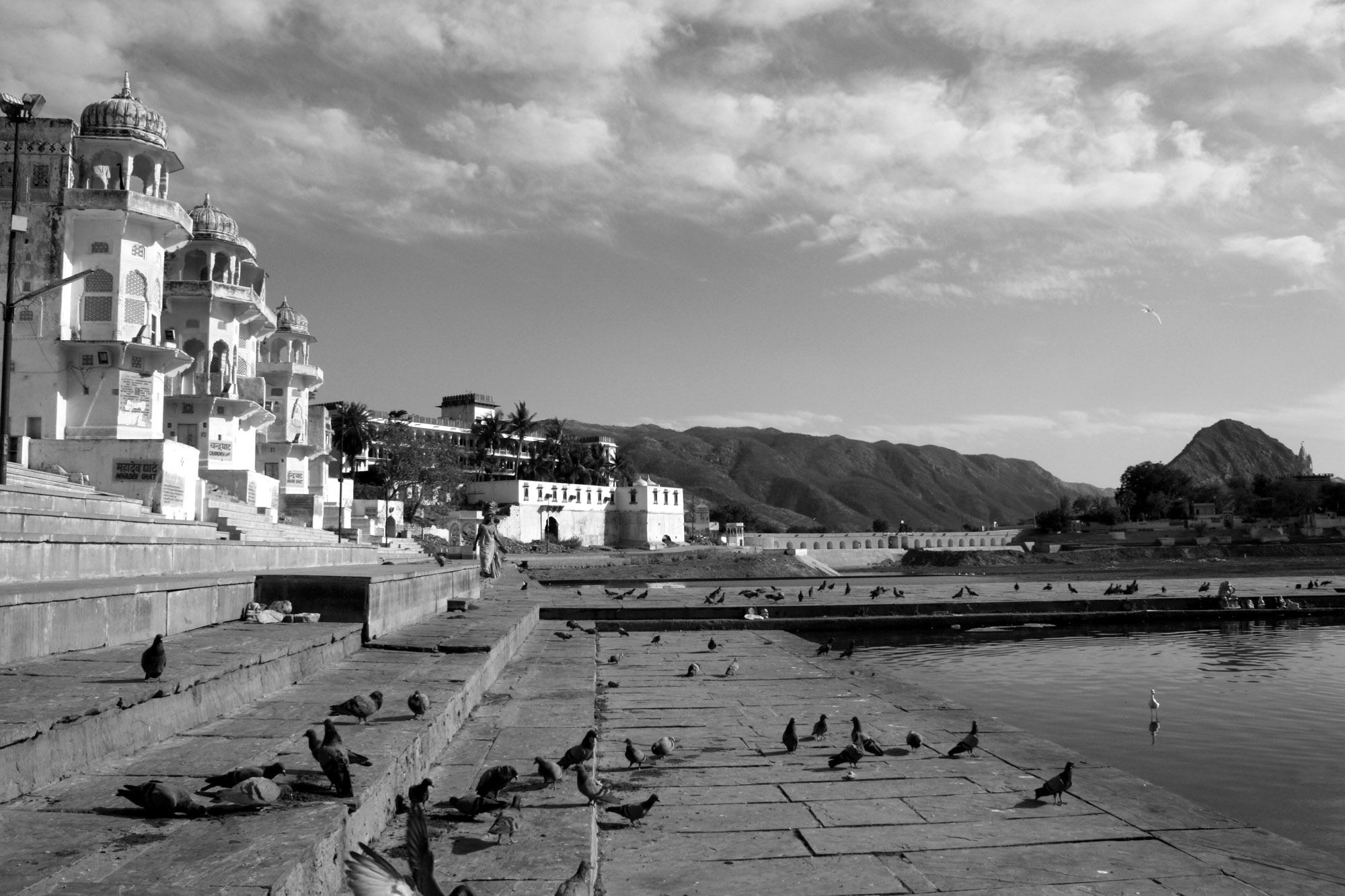
We arrived at just after one in the afternoon, and made straight for the hotel. It took some time to rouse reception, but once on hand, it wasn’t long before I had the keys. I had booked a somewhat luxurious room – white marble, high ceiling, fan, air-con, a king-sized bed – all subtly decorated with painted flowers and curlicues. The small balcony overlooked the swimming pool and surrounding countryside; framed by tall hills of scrub and martian rock, the low-land was bright with crops of flowers grown for Puja. It was stupidly cheap at twenty dollars a night.

Pushkar street
After a swim and a meal of dry garlic naan and black tea, I set off into town to explore. My fragile stomach rebelled at the powerful scents of dung and refuse, and, feeling physically exhausted, I was not in the mood for solicitations. I lasted only two hours before heading back to the hotel; tired, with a headache, wanting to have eaten, but having no appetite whatsoever. It was simply too hot, at thirty-six degrees and there was nothing for it but to read. I picked up The God of Small Things and lay down by the bright window. I was soon completely hooked.

God of small things
The following day, my guts had not improved and I again only managed a short visit to town. It was disappointing, but I made the most of the time and took some good photographs. I was quite content to stay in the hotel anyway, with my imperial view across the fields of flowers to the hills, the swimming pool and abundant natural light. I spent a couple of hours watching women in traditional clothes harvesting flowers in the fields, before returning to my room to read.
Late that afternoon, as the sun fell quickly behind the turrets, painting the sky a brief pink and purple, I finished the book. I felt immediately bereft, having gained and lost so much so quickly.

Pushkar

Pushkar
I was exhausted and weak. I’d eaten some bananas and half a pineapple that day, along with more dry bread and black tea, but it was nowhere near enough food and I had to force myself to eat it. I decided I needed antibiotics, but had left it rather late to get something.
Tired, yet restless, I forced myself to start reading Summertime, if only not to feel so hollow. It took me a while to get started, but slowly and surely, it drew me in and gave me sufficient solace to get through the evening.
The following morning, Shyam and I left early to head down through Chittorgarh, en route for Udaipur, where I finally got hold of some antibiotics. I left Summertime in the car by accident, but was not in any great hurry to finish it.

Ranakpur

Jodphur

Jaisalmer

Shekhawati Shyam

There was now the Indian Premier League Cricket to watch, and, with my recovery starting the moment I took the first pill, I wanted to spend the time seeing things and taking photographs.

It was thus more than a week later, at the end of the Rajasthani tour, driving from Jaisalmer to Bikaner, that I finished reading the book. It had had its moments, though I was left feeling a tad nonplussed. The organisation of the book seemed too arbitrary, too random, though the writing throughout was quality.

When Sunil and I finally sat down together again in Jaipur, eleven days after our last encounter, I brought the two books with me. Sunil produced a small bottle of rum and poured us both a glass.

Team Jaipur!

“Do you know what rum means?” he asked.

“No, I don’t. Does it mean something?”

“Yes,” said Sunil. “The letters. R.U.M – Regular Use Medicine.”

We laughed together and I took a slug of Sunil’s medicine. Soon the waiter came by and I ordered a vegetarian thali and a bottle of beer.

“Look, about these books. I’m not sure that either of them is a good place to start reading.”

“Why not?”

“Basically, I think you’ll find Summertime rather boring and too academic. It has some very simple and easily understood parts to it, but it also discusses literature, theory – university stuff. It’s not really going to be that easy, I think, if you don’t know half the words. And, you know, that’s kind of the problem with The God of Small Things. I loved this book, it’s a great read – yet the language is very idiosyncratic. I mean, she uses a lot of words in strange ways, in different ways, and here and there she adds new words. It also moves back and forth in time, and has some complicated scenes where it was at first difficult to work out who was who. I had to read the first chapter twice to work out who the people were. I think it’s going to be a hard place to start reading English novels!”

I was concerned that he might think I thought him stupid, whereas I knew from our conversations that he had a very agile mind. But I also knew how limited his writing and reading skills were, because he had asked me to compose and type text messages for him to his English-speaking French girlfriend, so uncomfortable was he with spelling and grammar. What he needed was a great novel with simple language and limited nuance, though not devoid of it.

“But you liked the books? They are good?”

“Yes, I liked the books a lot. This one in particular,” I pointed to The God of Small Things. “But maybe you’d be better off starting with something else. Something with easier language in it.”

I began to wonder if he wouldn’t just prefer to read a crime thriller or action story of some kind. In truth, I hardly knew the guy, and apart from his professed interest in women of all shapes and sizes, I didn’t have a handle on his tastes. Then, I had an idea.

“Hang on. I think I have a suggestion. I’ll write it down for you.” I felt in the front pocket of my bag. “Oh crap.”

“What?”

“I don’t have a pen.”

He turned and called out in Hindi. The waiter came over with a pen.

“Write on the napkin,” said the waiter.

“No, no,” said Sunil. “I want to keep it. A napkin is not good paper.”

“Hang on,” I said, taking the pen. I pulled a folded sheet with an old hotel booking from my bag, pressed the folds and tore off a quarter. The waiter moved away.

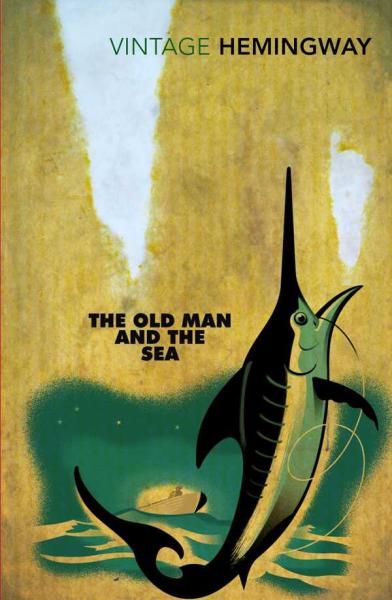
“The book is called The Old Man and the Sea, by Ernest Hemingway. It’s a great classic and you’ll be able to find it in India, no problem.”

The Old Man and the Sea - Ernest Hemingway

Not long afterwards we parted ways for the last time and I returned to my hotel room. I smoked a little hashish, watched the cricket and went to bed. Before sleeping, I thought more about my recommendation. The choice seemed sound enough, and I felt rather too smugly pleased with myself for having suggested it. I suppose, having read a lot of novels and studied literature at university for years, along with teaching English, I ought to be able to make a good recommendation for a first English novel, or at least reserve the right not to feel like a total fraud in doing so. Still, what troubled me was that I had only read The Old Man and the Sea once, more than twenty years ago, when still in high school. Did I really know what I was talking about?

Four days later, sitting in the German bakery overlooking the wire suspension bridge, Lakshman Jhula, in Rishikesh, I noticed that there was a bookstore next door. I had walked straight past it and missed it altogether, yet they had a side window that opened into the café; a window, I had, strangely mistaken for either a mirror or a poster. Precisely what it was supposed to be reflecting or advertising, I can’t say.
I finished my meal of fruit salad, banana pancake with honey and two bowel-shifting filter coffees, and walked inside. By coincidence, the first shelf I looked at contained a collection of Hemingway novels and short stories. Sure enough, there it was: The Old Man and the Sea. I pulled it out and flipped it over: one hundred and ten rupees, or two dollars fifty. I could hardly just leave it, especially as, with a mere hundred pages, it would be no burden to cart around with me.
That day I took it back to my room at the Jaipur Inn; an expensive place at almost thirty dollars a night, but all I had been able to find at this time of year. It wasn’t quite full season yet, but the Kumbh Mela, a once-every-four-year Hindu festival of epic proportions, indeed, the largest gathering of people on Earth, was on down in Haridwar, a mere ten miles from Rishikesh. I was lucky to have a room at all, for the town was jam-packed full of pilgrims, sadhus, nomads, middle and upper class Indians, and tourists who had come either to find or lose themselves.

Rishikesh

Rishikesh

Rishikesh

Rishikesh

I needed a break from the throng, and, after negotiating the ever-crowded Lakshman Jhula, I showered, lay down on my bed and began to read the book.

Oh dear, was my first thought, as the characters began to speak. I have never been entirely comfortable with Hemingway’s dialogue; at times it has a crisp and simple reality to it; his characters speak in no-nonsense, no-frills, laconic utterances; brutally factual, often quietly defensive, formidably stoic. At other times, the tone is lighter; a slight playfulness creeps in, if somewhat reluctant, hard-boiled, guarded. Yet all too often, Hemingway’s characters speak with an odd and awkward formality. One understands that, particularly in his Spanish-speaking characters, he is attempting to replicate the more formal qualities of the grammar and niceties of the language. Yet it feels inauthentic, staid and archaic. In an attempt to create something naturalistic, there is too much evident process. His characters sound more like people reading lines, uncomfortably; like people bent on finishing their sentences with peculiar completeness.
This was my response to The Old Man and the Sea. I pushed on through the first twenty pages, wondering how on earth I could have recommended this novel. It wasn’t that it was bad, in fact, I was very much enjoying the setting, the observational detail, the tone and mood. But it struck me as a very odd book to choose as one’s first novel to read in English. It was full of jargon peculiar to fishing; hooks, lines, hawsers, thwarts. Would my Rajasthani friend bother reaching for his dictionary to understand the anatomy of a boat, of the fisherman’s trade? I very much doubted it. Would the story interest him; this slow-starting yarn of physical and psychological endurance? This melancholy tale of struggle, victory, loss and quiet respect? I very much doubted it.

I finished the book in an hour and a half, then got up to go back outside. I was very much inside the story, and it was very much inside me. I relished the intensity of mood it had brought on; it truly was a great story, and very well told, but I couldn’t help feeling I had given my friend a bum steer.
After a couple of minutes, my embarrassment passed. I began to laugh to myself. Hadn’t Sunil, after all, given me a bum steer as well? Hadn’t he told me that the Kumbh Mela would in no way effect Rishikesh, for all the pilgrims and tourists stayed in Haridwar? Hadn’t he told me I’d have no trouble getting up to Gangotri, only to find on arrival in Rishikesh that the road was closed until opened by the army on May 15? Hadn’t he sent me to the wrong bus-station in Delhi? I smiled at the thought of him settling in with The Old Man and the Sea. Perhaps he would find a way in, just as I had made my way here and found a hotel room despite tribulations. Yet, somehow, I didn’t think English novels were for him.

Read Full Post »

New Delhi train station was a daunting sight. The air was a combination of acrid and flatulent scents. Human and animal excrement, raw exhaust from a variety of fuels; smog, wood-smoke, burning manure, charcoal fires, kerosene, refuse and sewage. The people did not seem threatening, but their poverty assailed me in a way I had not expected. I had seen very poor people in Cambodia and Vietnam, yet here they seemed far poorer and dirtier. Indeed, some men, some children, seemed as lank and undernourished as the hungry, mangy animals; the eczema dogs, the cataract cats. It was heart-breaking. In their midst I didn’t feel so much like a target as a brazen show of opulence, if only for being clean and well-fed; like the occupants of the billboards, who smiled down with success.

It was five in the morning and the floor of the station concourse was full of sleeping people. Either they slept here regularly or were awaiting early trains. Where was this fabled new middle class, I wondered? Perhaps they would arrive later in taxis.

Having been the unsuccessful target of several confidence tricks already, I was wary, but confident now that I would not be fooled; or, at least, not fooled in a way that was not to my advantage. I stepped through the people, who oddly enough paid no attention to me, until I was closer to the ticket window. A man spotted me and called.

“Ticket, ticket!”

“Yes sir.”

“Here, you must come here, fill in form.”

“What form?”

“Here, form for ticket.”

I followed him, expecting another scam of some sort. He took me to the far ticket window and picked up a form from the counter, handing it to me.

“Here fill in, then must come to office. Office is closed, so you go to emergency office. Come.”

He started to walk off. So perfunctory! I followed him. I had read that there was an office for foreigners upstairs that opened at eight. So far, he seemed to be telling the truth. I looked at the form, it was shabbily printed from and antiquated stencil, but it could well be legitimate. What would I know? I followed him back out of the station; through the jostling, belching auto-rickshaws, across the potholes and puddles, down a street full of rubbish. Again I saw an office with an official sounding name, this time up a steep and narrow staircase across a temporary bridge over an open sewer. The man motioned me to follow him up the stairs. I went up, head ducked against the low roof. Inside was a tired little office and a tired little man. His forehead was covered in sweat and his eyes were red. He looked half asleep and entirely exhausted. I thought he might be sick, and a moment later, he coughed as he tried to speak, then gave up.

The man who had brought me here spoke in Hindi. I heard the word Agra and figured he now knew my purpose. Immediately after speaking, my escort left.

“The six-fifteen,” I reiterated. “Please, thank you.”

The tired man turned on his computer and I began to despair. If this was the official, emergency tourist office, why was his computer off in the first place? I felt sure once again that I had been brought to another poser who would sooner have me in the back of his brother’s taxi than on the train to Agra.

His computer took forever to boot, and tired and nervous, I laughed. If his computer was as shit as this, then it likely was the official office! At least now I was near the train station and soon it would be light. If he couldn’t help me, someone nearby surely could. After a time, he had the website up on his screen. He looked. I looked. It was entirely different to the one I had seen earlier in the other conman’s office.

“No,” he said. “No tickets. But, you can go on the eleven-thirty train. No problems.”

It was a set-back, but I was pleased. I suddenly felt a strong inclination to trust him. He looked tired and bored enough not to be trying to sell me something. He had an air of exhausted honesty about him.

“That’s good,” I said. “But it is much later. Does the ticket office open at eight?”

“Yes, at eight o’clock.”

“Good. Then, I will go there at eight.”

I wanted to get away, though I wasn’t sure where. It never occurred to me to ask him about buses, and I walked out of the office with the idea in mind that I would go and find out about these. Where, exactly, I did not know, but I had seen many buses in the car park and figured the train station might also serve as a bus station.

I crossed the sewer, crossed the road, and walked to the ticket terrace at the front of the station. Now I was approached by another man. He was tall and lean, with hollow cheeks and a short, sparse beard. He had a laid-back wisdom in his eyes, and something about his expression suggested he was genuine.

“Where are you going?” he asked, as everyone had before.

“To Agra. But the train is full.”

“Do you have a piece of paper? A pen?”

“Yes.”

I pulled some paper from my pocket and handed it to him.

“Agra, yes?”

“Yes.”

He turned to the wall, and, leaning on it, proceeded to write some numbers down.

“This is the train you want. Number 2165. This is the time, 0615.”

“Yes, yes,” I said. “But I have no ticket. The train is full.”

“You need a ticket? Then come with me.”

I wondered why he seemed so genuinely concerned. Perhaps he hoped for a tip of some kind. Either way, he seemed to want to help me and I was grateful. The first three people I’d met had tried to con me. The next three had tried to help. The balance sheet was evening up and already I felt more hopeful about the next couple of months. It was, after all, only reasonable to expect rip-off artists in a big, poor city like Delhi. It was hardly any different in Naples.

He led me the same way that the first man had led me; through the crowd of people and rickshaws, through the mud and dogs and cows. I began to smile with bemusement as he showed me to the very same office to which the other man had showed me.

“Oh, yes, I have been here before.”

“Come,” he said, and led me up the stairs.

There, once again, was the tired, sick man behind his desk. He smiled at me, a little surprised to see me again. Or was it because he had been expecting me? I fumbled in my pocket for a small note, but I only had 500s. I wanted to tip the man who had brought me here. I apologised, but he waved it away. At last, a truly honest man!

The lean man spoke in Hindi, and again I heard the word Agra.

“I know, the train is full,” I said, over their conversation. “Is there a bus?”

“Yes, there is a bus at six thirty,” said the man behind the desk.

“Perfect, I’ll take the bus.”

The lean man left, and I stood before the desk.

“Why not sit down?”

“OK, I will sit down.”

I took off my bag and sat on the cushioned bench before his desk. His eyes were more alert and his face less pasty. He wiped his brow with a cloth.

“There is the normal bus, or the tourist bus. The normal bus takes six and a half hours, and the tourist bus four and a half. They are three hundred or seven hundred and fifty.”

“Definitely the tourist bus.”

“No problem.”

He tapped into his keyboard, then picked up his mobile phone.

“Just for one? You?”

“Yes.”

I looked at the time. It was five forty five. I was going to get to Agra after all, this very day. My plans were not to be thwarted.

When he had finished on the phone he smiled at me again.

“Relax. The bus will come here.”

“And it’s direct to Agra?”

“Yes direct. Tea?”

“Sorry?”

“Do you want some tea?”

“Umm, yes. Sure.”

He stood up and walked to the top of the stairs, calling out.

“They will bring,” he said, on returning to his desk.

I paid him the money and he printed the ticket, and a couple of minutes later, a man arrived with two cups of hot, sweet, milky tea. It seemed the largest hurdle was behind me; the size of which I had not foreseen.

I decided to introduce myself properly. His name was Sharad Kumar, a name I shan’t forget in a hurry for being so curiously hospitable. We talked about my further plans, the proposed trip around Rajasthan after Agra. Again he suggested taking a private taxi to tour around the region. His offer was not dissimilar to the first one I received, only it was a hundred dollars cheaper, and I promised that I would consider it. I took his card.

The tall lean man, my second helper, returned to the office. This time he brought two Asian girls with him. I quickly moved across to the other bench so they could sit in front of his desk. They too wanted to go to Agra.

Mr Kumar introduced himself, but before he could address their needs, his phone rang, so it was I who explained about the trains and buses. Julie was Chinese Canadian, whilst Naoko was from Japan. It wasn’t long before they were booked on the same bus as myself. Just in time for its arrival.

We sat waiting in the office and I chatted to the two girls. I was exhausted, but had passed my lowest point and felt stronger knowing I would have comrades on this journey. Julie had been travelling in India for a month already and would be a very useful ally. Naoko had just flown in that morning, and it was equally comforting to have another noob with which to share my general culture shock and astonishment.

When we stepped out into the street, dawn had already come. The sun hung under an overpass at the end of the street like a polished gong, its outline visibly distinct with the smog to cushion the glare. What it illuminated was even more chaotic than what had been visible in the dark, if less threatening with the addition of colour. Caravaggio’s  chiaroscuro often seemed stripped of menace, though we know that behind it lay swordplay and vendettas.

I was surprised to see a camel pulling a cart, cows grazing the rubbish heaps, men so lean and small beneath heavy burdens. The road was a mere remnant of itself, kept flat by the constant steamroller of traffic. I stopped to take a photograph and the girls got ahead of me, so I followed their backpacks up the street. We walked under the footbridge, past roadside stalls, beggars and rickshaws. Around the corner was a stretch of ruined buildings; like war damage. Walls had collapsed, roofs caved in, and the piles of bricks spilled down into the street. It seemed these tall, jagged, irregular buildings were still inhabited.

Everything was fascinating to me. I thought, having been to Cambodia and Vietnam, that I was prepared for anything India could offer; yet this seemed to go far beyond it somehow. It must be the scale, I thought; the sheer number of people, the great burden, the pressure on everything. How else could a city, not currently at war, be so derelict? Then again, I reminded myself, this was the train station, and major train stations the world over are often in pretty run-down locales. Was not Piazza Garibaldi in Naples something of a mess? Was not Kings Cross in London surrounded by bleak concrete grime? Yet nowhere, surely, that I could recall, was as battered and wasted as this.

We walked past the rubble, skipped over the potholes. People called on either side.

“Hey, Hello, sir!” but we were on a mission and nothing was going to slow me down. I nodded, smiled, waved.

A hundred metres down the street we reached the bus. It was a battered old thing with patched Perspex windows and the back bumper tied to the chassis. So long as it drove, I wasn’t too fussed. We stepped through the doors and were sent to the back, to a long, deep bench seat. It was dirty and sticky, but it looked very comfortable. I thought I was fortunate in getting a window seat in the corner, and opened it wide to look out at the rubble across the street.

At last! I was on a bus for Agra. Again, I reflected on my victory over the liars and cheats. My mission was still on track. I’d expected to be on a 0630 train, but a 0630 bus would do fine. The sunrise shone orange through the back window. I smiled into it and forced a positive frame of mind. Delhi was always going to be the worst, I told myself. Everything else will be easier, more cool, more shanti. I’ve never liked big cities; especially not polluted, heaving, overpopulated ones. India had given me a shock, but so had Rome when first I stepped out there; so had Bratislava; so had Sarajevo, so had Hanoi.

The bus began to drive, and I smiled across to the two girls who had come aboard with me.

“This is comfortable enough,” said Julie.

“Yes, I suppose so.”

After a few hundred metres the bus stopped in heavy traffic, and more people were brought on board. Three people, who looked European, were led to the very back bench on which we were sitting. It was, at a stretch, designed to seat five. They were crammed in between us. I pressed myself into the corner, my bag lifted up onto my lap. Now things were very far from being comfortable. Inwardly I groaned. Oh god, just get me there! Now the five hours struck me as being a very long time. I wondered if we would in fact arrive in five hours. Would there be delays?

I introduced myself to the chap next to me. He was a young, short, blonde guy with an angular face and pointed jaw.

“I am Alex,” he said. “Russian.”

“Aha!”

The bus, however, was going nowhere. We sat and grew increasingly uncomfortable on that back bench for the next half hour. I passed the time watching Indians at work through the window. One young man had been sleeping on top of his truck. He woke up and leaned over to chat to his friends or colleagues below. An old man walked by, carrying a staff and a small metal pail. Stretched above and hanging low, a jumble of wires. Behind it all, dirty shops with faded posters, roller doors, hand-painted advertisements, flaked and darkened with soot. All about, horns sounded, scooters, rickshaws, cars and buses wove in a slow mess.

Then, at last, we started to move through the traffic. I was already in great discomfort. Having had no sleep or food and being already physically and mentally exhausted made it difficult to marshal good spirits. I tried as best as I could, but my legs were stiff and cramped and the bag on my knees was very heavy.

On we drove, down the dirty road. Never in my life had I seen such poverty; people as black as soot, with matted hair, lying in dirt by the road, begging from hell knows who; children, naked in piles of refuse; men, lean and greased, dressed only in loin-cloths, working with rusty car parts. We drove past shanties, slums, past plastic-sheet and cardboard dwellings, cripples crawling to vehicles at the traffic lights.

Where was the fabled middle class? Where was all the new money? The whole length of the road, through the first four hours of driving, seemed lined only with the poor, rubbing shoulders with the desperately poor. How anyone made any money from the few things they had to offer, with so many seeming thousands offering exactly the same, was beyond me. And perhaps that was exactly it. No one wanted what they sold, and so they made no money, but there was nothing else for them at all. And those with the stalls were the lucky ones. Still, this was a major road leading out of town, not a fashionable new suburb, and it was likely offering a particular view; the lower caste, working class side of town. Perhaps soon my eyes would adjust and I would see things differently. The people did not all look unhappy, and many were impeccably groomed, if clearly not wealthy. And of course! The middle class were tucked away in the other cars on the road.

I realised what I should have realised earlier. That the poverty in India was far worse than I had ever imagined; that despite having heard often, and seen on television, stories of the poor and desperate, I had never in my life imagined it to be on such a grand scale. How could so many people be so utterly destitute? How could this road, which ran for mile after mile, be lined with such terrible despair? As yet I had not understood. I had been in shock, I had my own concerns. I was searching for an escape, for an exit, for a long ride away from the things that upset me, towards something more beautiful, more clean. But I realised now that my own concerns were terribly petty. There was nothing I had to face that came close to the abject nature of some of these people’s lives, nor would there ever be. I was Australian and even the worst-off and most neglected people in my country could seek help and redress; it was there for them in some form; and certainly more so than it seemed to be here. I could always escape, indeed, I was always escaping. But these people would never escape. They were trapped in poverty for ever; for some, it was on the cruellest, most persistent, most hellishly relentless scale.

I straightened up in my chair. I was awfully uncomfortable, exhausted. The young Russian’s head was banging against my shoulder. He’d fallen asleep again. So long as he did not drool, then I had no problem. I adjusted my nuts. I stretched my back and shoulders, then pushed up and re-seated myself. It did not matter that I was hot, sweaty, sticky, sore, stiff, hungry and needing the toilet. It did not matter that I must spend the next four hours stuck in this same cramped position, the underside of the footrest cutting into my leg, bottom aching. The truth was that in a few hours I’d be in a shower, in a hotel, with a clean bed to lie on and plenty of money to spend on food. I was rich. Richer than a hundred of these people put together. I was the raja, and so I should bloody well stop thinking about myself as though I were in some way unfortunate to be cramped in the back of this shabby bus. The truth was that I had it all, and the poor bloody Indians outside my window didn’t have a goddamned thing. How awful it was that I would soon try to put them from my mind and enjoy myself.

Read Full Post »

Pre-dawn Delhi

Delhi, 19th March, 2010.


Having come from Abu Dhabi, with its highly polished, if dusty infrastructure, I expected stark contrast once I stepped out into New Delhi. I did not, however, expect it to be so apparent as soon as I stepped inside the airport. It was not merely shabby, old and run down, but it was also very small and poorly designed. There were insufficient toilets, which were overrun and not especially clean, and two ATM machines, of which only one was functional, and both of which were hopelessly antiquated. There was no tourist information desk and only one café. I have seen regional airports in small cities in Italy which were far superior.

India is a vast and very poor country and one must take this into account in one’s expectations. Yet, having heard of the extraordinarily rapid economic growth rate of the last ten years, the widespread and rapid swelling of the middle class, and the increased investment in infrastructure, I had expected a modern airport and not a 1970s bus-shed. That this is the only major international airport in the city which is to host the 2010 Commonwealth Games is not encouraging.

I went to the pre-paid taxi desk and ordered a taxi for New Delhi train-station. I had booked a hotel in Agra and planned to take the 0615 express train there that morning and get straight out of Delhi. It was, undoubtedly, stupid and naïve of me not to have booked a ticket in advance, yet I have never in my life booked a train ticket in advance and never been inconvenienced by not doing so.

I stepped outside. There was a great crowd of people milling about. Old men with long, full white beards, children sleeping on the floor, families sitting on bags. It was, in essence, not unlike any other airport scene, except that it was much darker, dirtier and unwelcoming. Around the car-park before me, the air was a thick and hazy orange; smog.

A man approached me immediately. “Prepaid taxi, sir?”

“Yes.” I waved  my ticket.

“This way, sir. This way.”

He asked me where I was from and I told him New Zealand. After a spate of recent attacks on Indian students in Melbourne and the ensuing anger about it in India, I decided not to disclose my true nationality unless absolutely necessary.

We talked about cricket as he led me to a taxi; I enjoyed making fun of my supposed national team. Here I met the driver, a short, bearded young man who seemed pleasant enough. Fortunately he did not ask me where I was from until I was inside the taxi and out of earshot of the other man. I decided to tell him I was Australian, as, not having slept after a long day of walking in the sun with my pack on, sitting around an airport for five hours, with a three hour flight for dessert, I was too tired to sustain a complicated lie. Again we talked about cricket. This time, the IPL. I’m a Rajasthan Royals man, whilst he supports the Mumbai team. He asked me where I was going. Did I have a train ticket? No, I told him, I did not.

I had read about many of the more common scams in India. They are, to a degree universal in poorer countries. The gem scam, where tourists are tricked into paying to carry worthless “gems” back home to be sold to an agent for a large fee, when of course, the agent does not exist, is a true classic. Most taxi drivers receive some sort of commission for bringing people to hotels or shops, so they will do everything possible to get you to a place that will pay them said commission. This is often backed up by some very brazen lies. The hotel the tourist wants to go to has burned down; there are riots; the road is blocked and there is no other route; a recent earthquake caused major damage; the hotel was closed for health reasons; it is a bad hotel, where customers have been drugged and robbed etc. They will do anything to divert you from your purpose.

The same applies for travel arrangements. If you do not have a ticket, they will ensure that you obtain the ticket or other means of transport through their preferred agent. This agent will usually pose as an official of the national tourist board or some such organization, even going so far as to have fake official-looking signs complete with appropriate acronym made and placed on the wall behind their desk. That said, they are often able to provide the service one desires, albeit it at an increased cost. It was to one such place that I was about to be taken.

The driver made a phone call, conducted in Hindi, then we continued our conversation. The road was heaving with trucks, which are only allowed to use the roads at night. They swung across our bow and stern with great noise and bustle, and we swept through them like a small fish amongst whales. All around, horns sounded and engines groaned.

I had no means of determining where I was and hence had little choice but to trust the driver. Soon we stopped in a dark street with a few lit shop entrances, and he said “come with me.”

Warily, I stepped out into the warm night. I had fallen quiet for a while and was not thinking as clearly as I ought. He had not told me where we were going, but I suspected he was going to get a friend to arrange my ticket. I rather liked the idea and figured that paying a slightly inflated price would be worth avoiding the hustle of the train station.

The driver led me into what purported to be an office of the INTB, the so-called Indian National Tourist Board. I was immediately on my guard, and determined not to be won over to something about which I was doubtful. The word “official” appeared too many times on the signage to be trustworthy. It was clearly buttressing a lie.

The gentleman behind the desk greeted me. He spoke well-educated English and seemed genuinely affable. He was clearly a northerner, and looked more Pakistani than Indian. I wanted to trust him, but could not bring myself to do so.

“You want to go to Agra?” he asked, and I told him yes, I did.

He searched online for train tickets, then, shaking his head, turned the screen towards me. What he showed me was, allegedly, the ticket availability from the official website of the India railways. The trains for Agra were booked out for the next seven days, both at 0615 and 1130. That much I could see. I looked at the web address, but was not wearing my glasses and, sadly, could not read the URL. I felt little inclined to trust him. Partly because I had been warned of just how elaborate some ruses could be, but mostly because he now attempted to steer me towards his preferred suggestion: that I hire a taxi for twelve days to travel around Rajasthan, which is where I intended to go next. It would cost around 700 hundred US, all expenses included, and be far more comfortable and flexible.

I was tempted by the offer; it struck me as quite an affordable and sensible option. Yet, I did not trust the man. I was sure he had lied to me about the trains and didn’t want him to be rewarded for being a con-man. If I could arrange such a deal with him, I could likely arrange it with someone else; someone else who had not tried to trick me into accepting it. I stood my ground through all his friendly explanations and cajoling, through his lengthy sermon on the difficulty of travelling through Rajasthan by train and bus, saying that I appreciated the suggestion, but was too tired to make a decision. My plan was simply to get to Agra, and if a train could not be had, then I would find a bus or somesuch to get me there.

I now grew tired of sitting there and wanted to be away. I changed the tone of my voice.

“Look, I want the taxi driver to take me to the train station and I will see what can be done from there.”

He tried once again to convince me that this would result in nothing, the taxi driver now chiming in to reiterate this. Again, I refused to believe them.

“I paid for a taxi to the train station and that is where I wish to be taken.”

And so, my driver now with a rather hangdog expression, reluctantly led me back to his taxi. This was not, however, the end of the scam. First he tried further to convince me to accept the deal. Then, as we drove to the station entrance, he assured me that I would not be able to get inside without a ticket, and that the ticket office was closed.

“There was a recent bomb-blast and no one is allowed near the station without a ticket.”

This sounded like precisely the sort of horse-shit I had been warned to be wary of, and told him I wanted to go anyway. He drove me to a closed gate with a big neon sign above it. It was clearly genuine, and was in fact an official body involved in train-tickets, and it was indeed closed and locked.

“See,” he said, “you can’t go inside.”

“Where is the front entrance to the train station?” I said.

“That is it, it is locked.” I did not believe him. It was clearly not the front entrance to a train station. For one, the street was deserted, and I knew from long experience of train stations the world over that there were always people around and outside them through the whole night.

“Take me to the entrance of the train station,” I insisted.

“That is it, sir. It is locked.”

Though I did not believe him, I did not know exactly how I could prove him wrong. Tiredness was catching up with me. I started to feel despair.

“So, what are you going to do?” he asked.

“Look,” I said. “I am going to Agra, and I am going to get there by my own means. If you won’t take me to the train station, then I shall go by bus. If I have to fly, I will fly. If I have to go by taxi, I will take a taxi.”

“I can drive you there, sir. I can drive you.”

He pulled away from the closed gate and began to drive, I knew not where. I did not know how to counter him. It was all very well not to trust or believe him, yet what did I know about Delhi?

We entered an open public square, and I saw a wide, marble neo-classical façade.

“What is this?” I asked. “Where are we?”

I feared I was sounding desperate, and his response held a tone of disrespect, as though I were some madman in his vehicle.

“It is the centre of Delhi, sir. Where do you want to go?”

“I want to get to Agra. How much for you to drive me?”

I had reached a new low. The tiredness was like a drug, though I did not feel sleepy. I felt edgy, anxious, fatigued, strung out.

He picked up his phone and made a call, presumably to his boss.

After some negotiation, he turned to me.

“To go to Agra will cost 5690 rupees.”

I thought for a moment, it was roughly 42 to the dollar. Should I just say yes to solve this problem and be on my way? I did not want to pay so much, but it would make life so much easier.

“No,” I said. “It is too much.”

“But, sir, it is a fair price.”

“It might be a fair price, but it is too much for me. I don’t wish to pay so much.”

“But you can afford it, sir, surely?”

“No, truth is, I can’t. I am travelling for a month or two, I will have many expenses.”

I wondered why on earth I was explaining this to him at all. He was, after all, the taxi driver I had paid to take to the train station, and he still hadn’t taken me to the damned train station! I grew angry now, flooded with a new and bitter resolve.

“Look, I don’t care. I’m not paying that much money to go to Agra. You won’t take me to the train station, so you can take me to the bus station. I don’t care, no more arguments. Take me to a bus station and I will find a bus for Agra. I know there are many.”

He groaned and protested, but he started driving.

“To the bus station!” I said. I just wanted out of his damned, infernal taxi.

“But nothing is open, sir, it is too early. You are tired. Don’t you want a hotel?”

Christ, did I ever want a hotel. But not here, not in Delhi, and not from him.

“No, no, no. How many times do I have to tell you. My plan is to go to Agra, I don’t care about anything else, I am going to Agra, and you will take me to the bus station now.”

At this, his shoulders slumped. He could see at last that I was not going to do as he wanted. I was considerably larger and more physical than he, and without back up, he had not other recourse to extract money from me. The game was up, and, thus defeated, he drove me a couple of blocks from where we were, en route, I hoped, for the bus station.

Suddenly, all about were people, lights, offices, shops, life. It was filthy – open sewers, tuk-tuks, rickshaws, cows, rubble, dung, horses, naked children, smoke from fires and hundreds and hundreds of poor, dirty people. I knew at last that I was where I needed to be.

“This is the bus station,” he said.

I opened the door as soon as the car stopped, and stepped out of the taxi.

He too stepped out.

“Here,” he said. “But you must not trust anyone. That man before, he was an honest man. You should have listened to him. Here people will lie to you. You are tired, you are not thinking.”

“I am thinking,” I said. “I am thinking many things. I am thinking I should trust no one. I am thinking I should not accept a deal from someone at five in the morning who tells me I have no other choice.”

“But you must be careful,” he said. “Many people will tell lies.”

“I know,” I laughed.

“Use your eyes,” he said. “Be careful. Use your eyes.”

Then, he seemed deeply sad of a sudden. He had not only lost a chance of commission, but had lost the chance of earning over one hundred dollars. So much for his hour and a half-long detour. He put his head down and moved back to his car, beaten. I wondered if he felt ashamed, that I was soon to discover what a liar he was.

“Goodbye then,” he said.

“Hey,” I called. “Here, I will give you something.”

I pulled out some small change and handed it to him. He might be a liar and a cheat, but either way, he was clearly quite poor and I felt sorry for him. I also felt I had won quite a complicated battle, and was inclined to generous in my moment of glory.

“Thankyou,” he said, without much conviction. I turned my back on him and walked away.

I walked alongside the sewer, past pissing men and pooing children. Faces loomed out of the dim orange smog light. To my left, on the other side of the road, stretched a row of shabby offices and shops. So nothing was open, huh! I walked between two cows, tiptoed across puddles, and came to a huge set of swinging iron gates. I felt scared, but hopeful. Perhaps I would meet an honest man here. I looked across the crowded space to the illuminated building at the back of the square. Imagine my surprise when I realised that before me was the once-grand façade of the New Delhi train station.

Read Full Post »

In Search of Celtic Gold

It’s odd that after so many years spent travelling around Europe, I never before made it to Ireland. It wasn’t a lack of curiosity about the place, though, that said, Ireland did not rank highly in my list of destinations; somewhere between Norway and Estonia to be honest. I’m not sure why I gave Ireland such low priority as I always suspected it to be a beautiful place, in both the countryside and the towns. My perceptions of Ireland were a mixture of images and shabby history gleaned from literature, films, television, newspapers and the occasional mention in university lectures. When I thought of Ireland I thought of a place with an air of mystery about it; a place that was somehow distant, peripheral, a frontier of sorts; a place that had been ignored, neglected or abused for centuries. Ireland seemed to have remained outside of history until Lindisfarne and the Book of Kells. It seemed to be a place that had rarely had a chance to assert itself or impose itself on history except through tragedy or doggedness; a place that had, until the twentieth century, largely exported its talent and suffered for this at home. Ireland had always fought its own wars and steered clear of those that ravaged the continent and the British Isles. In a way it was outside of Europe; too far for an invasion from the continent and insufficiently resource rich to offer much incentive for imperialism. Even the British presence seemed more an a assertion of local overlordship than a genuine desire for Ireland as another jewel in its crown. In my lifetime it had been the land of “The Troubles”; I had first seen Ireland as a violent, sectarian place; a place that was still getting up off its knees, with the double burden of a cancerous conflict and a moribund economy. Ireland had always seemed quaint, but sad, and yet full of a sort of ragamuffin optimism.

Of course Ireland has always had a rich and unique culture – its contribution to early medieval scholarship was pivotal; the literary contributions Ireland has made punch far about its size and weight; its famed friendliness, pubs, bars, the green fields, its towns and villages, its music, both traditional and modern; and last but not least, the significance of its diaspora in the new world. All of these things fuelled a genuine curiosity about the place, yet still I did not go. Perhaps it seemed insufficiently exotic; perhaps it still seemed too peripheral; perhaps, like Scotland, despite all its difference, I expected it to be little more than England seen through a slight twist of the Kaleidoscope. The more I thought about it, the more I wondered exactly why it was I had never come to Ireland.

Then it struck me. There were no visible Roman remains. It was, of course, Roman history that had first brought me to Europe, or, rather, despite my passion for the history and culture of Europe in all historical periods, the classical world was what fascinated me the most and it was, in effect, the core of my curiosity and my studies. When I first travelled to Europe in 1996, I went from Holland to the UK, to France, Spain, Italy, Greece and Turkey, overland and over sea. It was designed to be a tour of the Roman Empire, or, at least, as much of it as I could afford to see in six months. When I returned to Europe two and a half years later to do a PhD in history at Cambridge, it was more often than not the chance to visit Roman sites or museums dedicated to Roman history that gave me the excuse for another holiday. Even when, for instance I set off to Samothraki for a five day trance party, you can be sure that I was taking in Roman, Greek and Minoan sites on the way there and back. Perhaps it was the absence of the Romans that had put me off.

Whatever the case, here I was at last in Ireland. As with my recent trip to Austria and Slovakia, I almost didn’t make it. I booked the flights three months ago when Ryanair was having one of its free seat giveaways, and paid a grand total of one Euro cent per ticket, taxes, everything included. I had booked the time off work and was particularly enthusiastic about finally seeing Ireland after the booking was made, yet as the date approached, having just had a holiday throughout which I was plagued with dreadful weather, I began to doubt my commitment. In fact, last week, as I eagerly watched and waited for the federal election in Australia (hoorah!) I came to the conclusion that I definitely was not going to go. I would instead stay home, do a lot of running and weights, and go see every single film about which  I was curious, and, of course, write up a storm.

I changed my mind at nine thirty the night before I was due to fly. I had just been to see Brick Lane and came away with a weight of sadness and some confusion about love; the question of how one determined which country one ought to live in – and mixed emotions about a film which seemed to work well on so many levels, but was lacking on others. What I felt, primarily, was restlessness. Over the previous months, but more particularly, the last week, I had been obsessed with following the election in Australia and this had distracted me very greatly from my writing. I wasn’t sure that if I stayed home I would have the focus and concentration to get enough writing done to justify not going. If I was as restless over the next few days as I felt on Sunday evening, then how could I expect to sit in my chair and finish the two short stories I am currently working on – Everyday Parables and The Final Playlist ?

7323 Cork

It struck me that there could be no better cure for restlessness than travel. And what the hell – I even had the tickets booked – why not simply go? Wouldn’t I regret it enormously if I didn’t? I pictured myself the following day, sitting at my computer, knees hopping up and down, wondering why I could not concentrate and turning instead to timewasting; Facebook, Neverwinter Nights… No! It would be inexcusable.

I went straight online, planned my route, booked a couple of hotels, printed up maps, purchased a coach ticket, then packed. At midnight my Irish housemate Garret returned from Cork, his home town and my first destination. He was just in time to give me some very hand tips about what to see and do. Now I was properly excited. I sorted everything, set my alarm for two thirty and lay down for an hour’s sleep. At five past three I found myself marching down the street in the damp early morning, wondering how all this had come to be…

7355 Cork

And so, at seven thirty, in a heavy fog, I flew into Cork. The forecast had been for “sunny intervals”, and were it not for this positive outlook, I should almost certainly have stayed at home. I watched the sky closely from the bus stop outside arrivals. There were positive signs of a breakthrough on the horizon, where the cloud was thinner and seemed to be dissipating as the sun reached it. If there was fog and sunshine, dark rain cloud and bold, silver light, then it might prove to be just the right conditions for “Gold”

7336 Cork

It is worthwhile digressing at this point to mention that I have a number of classifications for the quality of the photographs I take. Gold is the highest ranking that can be awarded and it is very, very rare. Out of two hundred shots I might only get one gold photograph. On my recent trip to Austria I managed only two gold out of about eighteen hundred. Gold essentially denotes a photograph in which not only is the composition perfect and captivating – either through spectacular symmetry or idiosyncratic asymmetry – but the light and colour must also be absolutely first rate. Without a doubt my strength is shooting directly into the sun in black and white. I was always fond of socialist realism and the stark silhouettes of workers at toil in their blocky rhythms. This interest has translated to photography, though with a much greater tendency towards more fluid movements in figures. My attempts to find gold in Austria were largely hampered by a lack of direct sunlight. I can still get shots that I consider okay in poor lighting conditions, though I prefer then to wait until dark and shoot with a tripod to obtain a similar level of contrast between light and darkness, as opposed to the greys of dull daylight.

7394 Cork

7402 Cork 1

7395 Cork

So, I came to Ireland looking for Celtic gold, and upon arrival in Cork, I had high hopes that I might strike a rich vein should the climate play its part. Sadly, however, the fog had long cleared from the town and the sunlight was to break through only infrequently. I did not let this get me down and, as soon I as arrived in the centre of town, I climbed straight up St Patrick’s hill; a very steep incline that affords lovely views. I hovered about up here toying with angles, then made my way down the dip towards the other rise on which stood Shandon Steeple. As I descended upon a vast Heineken brewery, I was briefly handed gold conditions; yet the subject matter did not lend itself so easily to great compositions and in the brief time I had, I was forced to make do with a few silver and bronze.

7351 Cork

Ever since reading Moby Dick ten years ago, I have been a big fan of digressions, and I will indulge myself once again here on the subject of systems of classifications. In my first month of my post-doc at the British School at Rome, January 2003, I was fortunate to have a group of graduate students from the University of Melbourne staying there for a course on Renaissance and Baroque Rome. Three of the students who were staying there, Con, Dom and Willie, (no pun intended) developed a system for classifying the many beautiful women to be found walking the streets of bella Roma. This system was based on the general attractiveness of women in artworks by the great painters of the Renaissance. I can only remember the basic outline and have thus made some adjustments based on subsequent research, but it remains broadly the same. I thought I might throw it in here as it will likely be out of place wherever I put it. I have also included links to some fine examples of their craft.

10. Botticelli

Botticelli

9. Raffaele

Raffaele

8. Filippino Lippi

Filippino Lippi 2

Filippino Lippi

7. Bronzino

Bronzino

6. Caravaggio

Caravaggio

5. Da Vinci

Da Vinci

4. Massacio

Massaccio

3. Michelangelo

Michelangelo

Much as I love him, my old pal Buonarotti comes last on account of the fact that his women all have male bodies and the sort of biceps that could gather up all the pieces of the True Cross and rebuild Noah’s Ark. It has to be said that Mother Mary in the Pieta is seriously fit – however, we are talking about painting here. Ranking anyone below Michelangelo and Masaccio seemed ungentlemanly and unnecessarily cruel. Though he did not originally appear in the list, I have promoted Lippi as a personal favourite. There are many others who belong here, perhaps as half points between the big men. For instance, Lukas Cranach could be worthy of an appearance if only for the pokey little smirks so many of his women wear.

Lucas Cranach

It is worth mentioning that it is also possible to qualify a ranking by identifying a mix of styles. For instance, one might spot on the streets of Rome a Lippi with Bronzino tendencies, which would constitute, in my book, about as good as it gets. Indeed, it was not long before “Bronzino tendencies” became a byword for cool. Please feel at liberty to use this system of classification with any amendments you might feel are necessary. I’m sure that a similar system of classification could equally be devised for men. It’s probably a good idea to stick to the Renaissance as they all become a tad more paunchy, poncy and somewhat less roguish by the time the Baroque rolls around. Although, that said, Caravaggio could provide a handsome bridge there I’m sure; if you like effeminate men with clumsily oversized hands, that is.

So, there I was in Ireland! I marched about Cork, snapped some a few silvers, some bronzes and a whole swag of also-rans amidst a sea of worthless pap. I liked Cork; it had a northern English working-class uniformity to it; the boxy houses lay across the hills like Lego bricks, but their serried ranks were reminiscent of the patterns one sees in vineyards. I was left thinking of the corn-crop hair style, oddly enough. Here the spires all had the greyness of lamb fat, yet the colourful houses did not restrict themselves to pastel.

7439 Cork

I walked to the campus of the college, where I drifted around spotting Bronzinos. Garret had recommended the Glucksmann Gallery, which was impressively designed, but unfortunately closed. I wandered some more then made a decision to head for the bus station and take a trip out to Blarney Castle. I had been warned that it was a tourist trap, but likely worth the trip anyway. Once at the bus station, owing to an alertness deficit brought on by mounting exhaustion, I promptly missed the bus to Blarney Castle. As it was, I then found myself with three hours to kill before the bus left for Kilkenny, so, in a desperate attempt to keep myself alive and interested , I decided to walk up the hill again, but this time, go all the way to the very top of the town.

The walk took just under an hour and afforded me ever better panoramas of Cork. From the top of the rise my lens dropped and fired down the gully streets; foregrounding people and junk against the blurred background of a staggered town. I descended slowly, windingly, prospecting, as it were. The results were mixed, though they shall likely make nice enough snaps.

Down below again, the river at low tide was a mere dirty canal full of muddied, blackened discards. The sun stayed behind the clouds and, out of frustration with the prevailing dull light, I photographed two dumped and muddy shopping trolleys lying back to back, the way dogs stand when they mate and get locked in a tie. I gave it the title “dirty love”. Though I knew the photo to be utter rubbish, it amounted to perhaps the most original thought I had all day.

At three o’clock I got the bus and set off for Kilkenny. In the warmth of the coach I was soon assailed by sleep and drifted off for the first hour of the ride. When I woke up, I felt annoyed with myself for not taking the chance to view the landscape. After all, I had a strong suspicion that I was missing out on this trip by not having allowed for any chance to get into the famous countryside of Ireland. I slapped some water on my face, washed my eyes awake and fixed a stare through the window to the struggling sunset.

7516 Kilkenny

With my eyes resting on the low, cloud-crowded hills behind the fields before me, we sped along into evening. As it sank lower, the sun began to break through behind the hills and a bright glare flared from one pyramidal mound, whose western slope was slewed with such a rich, white smoke as to appear smoothly snow-capped. It was as I gazed on this gorgeous light that I very suddenly felt the weight of history.

I have often failed, when looking at ruins, to see my way into the past quite as well as I can when looking at geography. For, while the dusty, broken structures might make plain the nature of ancient habitation, they are also very clearly dead sites. Yet, should one see a geographical feature – the outline of a mountain or hill, the misty damp of a forest – and consider that it has likely not changed since ancient times and that the light shining upon or around it is just as it must have been at the same time of day in a winter two thousand years ago, if one is in the right frame of mind this vision can bring home the past more strongly than anything else. I have had such moments in Italy, Greece, Croatia – many places, though it comes quite rarely – the true, gut-wrenching, melancholy tug of the past. Once more I found myself taken by it in Ireland. I knew that I was looking at history in the outline of the hills; other men and women had seen these same shapes – had been seeing these shapes for centuries. Yet, oddly enough, what got me the most when looking into the sunset was the thought that for all those four hundred years the Romans were in Britain making it a going concern, they had never bothered to come over and conquer Ireland. Why on earth was that? Why, oh why, did they not complete the picture?

7562 Kilkenny

It is worth pointing out at this stage that as a historian of the late Roman Empire, my mind turns all the more readily to this period. Now, as I turned again, I was suddenly struck by the most unexpected and jolting thought. For the first time ever, I was in a European country that had never been a part of the Roman Empire. Despite years of continental exploration, I had not yet made it north of Germany or north of the Danube. This was my first time outside of Roman Europe. It seemed so odd, so strange, that right there and then I could not, for the life of me, conceive of Ireland as a part of Europe at all. It became in my mind in that instant, something else; more akin to Scandinavia, to Iceland, or even Greenland – so peripheral as almost not to qualify as European. It was then that I realised just how much my perception of Europe was intrinsically tied to the map of the Roman Empire, which likely explains why I’ve always felt that north Africa and the Levant ought to be included in the European Union. I do believe this will be one of Europe’s ultimate goals, though certainly not for at least two decades if ever. But, once again, I digress.

7511 Kilkenny 2

7496 Kilkenny

So, back to Ireland, why had the Romans not come? Obviously some must have done. It is difficult to believe that in all the time they were in Britain, Roman traders never crossed to Ireland. We know that Irish raiders crossed to Britain, and it seems difficult to believe they were left unchastised. The problem is the paucity of written evidence about Roman Britain. Tacitus’ Agricola, c. AD 98, is the best source we have for the early period. The only mention of Ireland is the following, where Tacitus is discussing events c. AD 82:

“In the fifth year of the war, Agricola, himself in the leading ship, crossed the Clota, and subdued in a series of victories tribes hitherto unknown. In that part of Britain which looks toward Ireland, he posted some troops, hoping for fresh conquests rather than fearing attack, inasmuch as Ireland, being between Britain and Spain and conveniently situated for the seas round Gaul, might have been the means of connecting with great mutual benefit the most powerful parts of the empire. Its extent is small when compared with Britain, but exceeds the islands of our seas. In soil and climate, in the disposition, temper, and habits of its population, it differs but little from Britain. We know most of its harbours and approaches, and that through the intercourse of commerce. One of the petty kings of the nation, driven out by internal faction, had been received by Agricola, who detained him under the semblance of friendship till he could make use of him. I have often heard him say that a single legion with a few auxiliaries could conquer and occupy Ireland, and that it would have a salutary effect on Britain for the Roman arms to be seen everywhere, and for freedom, so to speak, to be banished from its sight.”[1]

Richard Warner has argued that the Irish myth of the return from Britain to Ireland of the exiled Irish prince Tuathal Techtmar is in fact a folk memory of a Roman-backed invasion. [2] Tuathal Techtmar is alleged to have returned to Ireland backed by foreign forces called the “Goidels”. Warner and others have pointed to increasingly convincing archaeological evidence for a possible Roman settlement at Drumanagh, around fifteen miles north of Dublin. The presence of artifacts could just as easily be evidence of trade, which must have been frequent owing to the proximity and location of Drumanagh, facing towards Britain as it does. Scholars have also pointed to the coincidence of the following line from Juvenal’s Satires:

“Indeed, we have sent forces beyond the shores of Ireland, to the recently conquered Orkneys Islands, and to Britain with its short nights.”[3]

Juvenal may well have served in Britain under Agricola, which certainly does lend weight to the suggestion that this legend of the return to Ireland of an exiled prince refers to a Roman-backed invasion by the same prince mentioned in the Agricola.[4] The evidence is scanty, and we must also consider the fact that the mytho-historical figure of Tuathal Techtmar might not have been an exiled Irish prince after all; it is a commonplace enough historical phenomenon to fabricate ancestry in order to enhance the rightfulness of conquest. Incidentally, I’ve always thought of this practice as indigenuity – a bullshit little term I cooked up one rainy day.

So, did the Romans have a client king relationship with a Romanised dynasty they had backed? If so, then for precisely how long did this continue? Was it for this reason that they never conquered Ireland and directly administered it themselves? And why not Scotland for that matter, in order to complete the set, as it were? They were certainly capable of doing so militarily. Was it a concern over having then to guard so much coastline? Yet contrast this with the increased chances for piratical activity if they did not control the coastline. Was it because they believed it to be easier to filter and channel the externals through Hadrianic and Antonine walls? Was it a strategic concern over the power that might be wielded by provincial governors in charge of such a large area? For, surely, the British isles would have come to constitute a single prefecture or unit of administration. Perhaps it was simply that these regions were deemed too resource poor – that they could see no economic advantage from ownership. All the same, one has to wonder what stopped them and what caused them to resist the temptations which must have cropped up. Through recent historical and archaeological research we now have a much better picture of Roman Britain as a thriving, prosperous, resource-rich province. Constantine was first proclaimed Emperor in York (Eboracum) in AD 306 and his father, Constantius, had based himself there very successfully. Was there not pressure from wealthy merchants and traders to ensure Roman monopolies around the whole of the British Isles, Ireland included? Dare I say it, and no offence to Ireland, but perhaps they just thought it was crap.

7565 Kilkenny

This question will continue to mystify me now, I suppose. Short of the discovery of the foundations of a long-buried Roman settlement, we are unlikely to have a definitive answer to the question of why the Romans failed to conquer Ireland. I guess I’ll just have to keep my eyes and ears open for any developments.

And so, there I was in Ireland, on a bus to Kilkenny, watching the creamy slopes of the hills in the rain-grey glare and thinking of the past. Soon it would be night and day one of my three day jaunt would be drawing to a close. Would I push on and go to a pub looking for action, or would I simply lie down and fall into a deep and welcome sleep?

Either way, all this thinking was making me very hungry indeed…

7483 Kilkenny

7747 Dublin

7684 Dublin

7662 Dublin

7767 Dublin


[1] Tacitus, Agricola 24, (trans.) Alfred John Church and William Jackson Brodribb.

[2] Warner, R. ‘Tuathal Techmar: a Myth or Ancient Literary Evidence for a Roman Invasion?’ Emania, 13, 1996.

[3] Juvenal, Satires, 2, 159-60.

[4] See also, Vittorio di Martino, Roman Ireland, The Collins Press, 2006

Read Full Post »

December 2006

There was a Spaniard, a German, an Australian and an Irishman in a house with only one toilet. Sound like a joke? Welcome to 8 Primrose Street, Cambridge.

Yes, the Sturton Street years have ended and the Primrose Street years have begun. Well, they began a while ago now, at the start of December. I have been slack in keeping in touch of late. Happy holidays and all that. Brace yourselves for a bit of an extended update. Much of what follows might be old news for some of you, but for the sake of the uninformed I shall hop, skip and jump over some old ground. For all your sakes, I shall try to keep it brief, and clean.

Firstly. Do any of you remember Leif Garret? Things didn’t really work out for him in the end once he got into the gear and on the bottle.

http://en.wikipedia.org/wiki/Leif_Garrett

Anyway, it so happens that my German housemate is called Leif, and our resident Irishman goes by the name of Garrett. No kidding.

So, news. The curtain was closing on the Sturton street years and I spent a week inspecting rooms, then ended up taking the first one I’d looked at. I saw some of the most bizarre living arrangements in the process. All these poor little postgrads tucked in together in tiny houses. One house I inspected, courtesy of a Frenchman by the name of Antoine, was a tiny, triangular building with a bar downstairs which the owner had bought from a pub and installed himself. The room itself had been advertised as a “nice double room”, but it was smaller than a coach toilet, had a built-in “double” bed that was not as long as the average fully grown male, had one square foot of floorspace, and was currently occupied by a Chilean Catholic fanatic who had crucifixes, bibles, saints and virgins strewn all about the place. Yes, nice if you are a Dwarven monk perhaps, though not at three hundred and fifty quid a month…

So, it turned out I’d already struck gold without realising it, for the first house I’d inspected was Primrose street, and as my search went on, it grew more and more attractive. When I saw it the second time, I was amazed at my initial reticence. It is a lovely room with French doors opening into the backyard, built-in bookshelves and sturdy, if functional furniture. Perfect for someone who likes living like a monk, only not as a dwarf and without all the religious bollocks.

My housemates are cool – Leif is a material scientist from Karlsruhe who is into punk and rock and rides a skateboard to the lab. Garrett is a champion who is doing something or other seriously technical with plastics, and as for Ignasi the Spaniard, he’s busily working at translating help menus into Spanish for a computing firm. It must be tough because he seems to need to watch a lot of soccer.

The winter has been particularly mild. It waved a few threatening fists in December, but then grew shy and we had the mildest January on record. “Mild” is one of those special English euphemisms for weather which is not particularly menacing and essentially means “unhostile”. We had a morning of snow about six weeks ago, but that was that.

Over Christmas I had the pleasure of minding a rabbit (a fine French Lop for all you rabbit enthusiasts), the darling of someone I met in a book club I have recently joined (first up, Knut Hamsum – “Mysteries”, then Hemingway – “For whom the Bell Tolls”, next is J.M. Coetzee – “The Master of Petersburg”). Many of you will be familiar with my obsession with giant rabbits, yet Milo was, I’m sorry to say, of normal size. The one advantage was that he costs a whole lot less in carrots.

More news: A couple of months ago I also extended my visa for another five years. The home office have recently made a few changes to the visa renewal system. You no longer have to turn up at five in the morning and stand for six hours in a rainswept queue with a thousand other applicants and asylum seekers at Lunar House in East Croydon, which is, incidentally, the most sublunary building ever constructed. Instead, you phone them up, make an appointment, join a much shorter and faster moving queue at Lunar House in East Croydon, still the most sublunary building ever constructed, and pay five hundred pounds for the privilege, whether they accept your application or not.

Fortunately, they did accept my application and I emerged clutching a passport stamped with leave to remain and work until 2012, by which time, of course, we’ll all be working on orbital space platforms. So, as I said to my colleagues at work, I’m practically a Pom.

In order to celebrate, I planned a couple of holidays, or, campaigns, as it were. First was the Benelux countries plus France. I’d been away too long, so flew into Amsterdam about a month ago, stocked up on fresh air-sealed, Venezuelan magic mushrooms and other Dutch delicacies, then went off to look at great art and windmills. First, to Haarlem, home of the Frans Hals Museum, but also home to some very nice weather. I was thus inclined to drift along the canals and soak up the sun. Australians living in England during the winter become like reptiles the moment the sun is out… Time to bake bod, as Clive James said. Anyway, to cut a long story short, I went down to Delft (home of Vermeer, as in Girl with a Pearl Earring, and no, Simon Tracey, not Girl with a Pearl Necklace), to Rotterdam, to Breda, to Roosendaal, and then on into Belgium, through Antwerp, and from there direct to Bruges, where I had some great hallucinations and nearly froze to death in this splendid hub of the high medieval cloth trade. I then nearly froze to death in Ghent, walking around with permanent ice-cream headache – didn’t bring a coat, see. The problem with having a bulky camera, spare lenses, laptop, adaptors, cables, mouse, power leads… something’s gotta give, and this time it was clothing. Still, I made it to Brussels, at which point it began snowing heavily. I put on four tee-shirts, a long-sleeved cotton top, and a hooded, fleecy-cotton track top, but by Christ, it was still not enough. Thankfully when I arrived in Paris I met up with Kathy who had kindly brought me a coat from home. So, things worked out in the end, and, as you can see, I lived to tell the tale. Paris was as great as ever, although I have come to the conclusion that the coffee there is way overpriced and utter shite as well. It’s almost as bad as English coffee, in fact, sacré bleu!, I think it’s worse. Dan Chez, you’ll be pleased to know that Rue Mouffetard is still there and still swinging.

So, this brings us perilously close to the present. Last night I flew back from Venice after another campaign, this time across northern Italy. It was a madly ambitious itinerary, but I managed it with style and aplomb. I flew into Bergamo last Sunday morning on a 0630 flight and arrived at nine-ish. I checked out the town, ah, the sun! It was seventeen degrees – have you any idea how amazing seventeen degrees can be given the right circumstances? I was sweating as I ascended to the high, old town, shooting like a madman in the high-contrast blaze. I hung about for a few hours, then split to Como, on Lake Como, funnily enough. Como is a nice resort town in the northern lakes region of Italy – it’s only a bit over an hour north of Milan on the local trains, which, incidentally, are dirt cheap and highly efficient. I’ve always found public transport to be exceptionally good in Italy, just in case you needed to know. I also find that a modicum of snuff can be most efficacious.

So, from there to Milan the next morning, straight to the Duomo and straight back out. Milan looked like a big, grinding, stinkhole overrun with far too many cars and people. I didn’t see any models, unfortunately, except maybe one, but she was German. It was your typical big Italian city – dirty, loud, chaotic, and – why, oh god, why, can no one in Italy do neat concrete formwork? Even the Workers’ Socialist Democratic Republic Paradise of 6 Furber Road puts them to shame.

I fled to Verona, via Brescia, where I bolted into town with shouts of “move it soldier!” and “go, marine, go!” to see an eighth-century rotunda. Had a tight train connection, see. Verona, by contrast to Milan, feels like it was briefly run by the Swiss. It is not only beautiful but it has the third largest Roman arena in western Europe. It also has a lovely Roman bridge and a whole swag of fourth to eighth-century churches, which is just the sort of thing to float my boat. I also had the good fortune of accidentally booking the same hotel I booked when I last stayed here in  2001, which is cheap and slap bang in the heart of the old town. Locanda Catullo, take it from me – it might be one star, but it’s one hell of a star. Plus, any hotel named after a Roman poet has already got a head start. That’s Catullus, mind you.

From Verona to Mantua – nice, but dull; I dug it for two hours then took the train to Bologna, which was big, dirty, smelly, chaotic, (poor concrete formwork), but also totally entrancing. Bologna’s one of those places you get in Italy where everyone has had a go at decorating it, but what is most noticeable is how grandiose the projects there were once the papacy got their hands on it. That said, the main basilica, of San Petronio, is the fifth largest church in the world, and would be larger still if the papacy had not decreed that it should not be larger than St Peters. Consequently, after beginning construction in 1392, it was never finished – the façade is only half clad with marble and the top half shows bare brick. From the sides protrude the vestigial beginnings of apses which were never added. The papacy decided that the land should instead be used for the university – hear hear! Bologna also has over forty kilometres of arcades and porticos. It also has a marvellous fifth-century church which has been joined to two Romanesque churches to make a conglomerate maze of chapels, apses, rotundas and cloisters. I nearly shot my bolt at that point. Bologna is a very interesting place, and, of course, home of the famous hot sauce. Sadly, I could not bring myself to order it, though I did not weep for this.

Next stop was Ravenna, which in the early fifth century became the capital of the western Roman Empire. It was hopping around a bit at that stage according to expedients: Milan, Arles, Trier, but for a good long while it was in Ravenna and, accordingly, the town was splendidly adorned. Ravenna has the greatest collection of late Roman mosaics in situ that you can find. The sixth-century church of San Vitale has to be seen to be believed. It is a riot of colour – mosaics, being comprised of tiles of glass and glazed clay, do not fade, and consequently, none of the original impact has been lost despite fifteen-hundred odd years having gone by. There are several baptisteries, mausoleums, first to fourth-century houses etc, which still retain their entire mosaic adornment. Anyway, just bloody well go to Ravenna and check it out yourselves, although, be careful, because, the following morning, on my way back from a sunrise bolt to Rimini to photograph a Roman bridge and Arch of Augustus down the sun-struck decumanus, I was arrested at the train station when a sniffer dog took an interest in my bag!

Yes, it seems he detected evidence of my trip to the Netherlands, so I had the curious privilege of going off with some Italian policemen for half an hour while they searched me and my sack. Fortunately, unlike several other famous expeditions of Benny the Mule, I was not carrying anything at all. They were very polite about it, even apologetic, and we found the time to swap a few jokes, although I didn’t tell them the ones about the Carabinieri, who are notoriously thick as pigshit.

So, from Ravenna, to the piece de resistance… Venice. Ah, what a dream… The sun blazed, the accordions played, the gondoliers gondoliered, the waters glinted, and for two and a half days I was back in my favourite dream. I took fifteen hundred photos (recently passed the 10000 mark since leaving Australia), drank a few litres of wine, ate a big hunk of cheese, inhaled a few pizzas, knocked off a few hundred cakes, smoked a pack of cigarettes, and had the requisite ball one has in Venice. It was all too good and I even got a bit of a farmer’s tan, but yesterday afternoon I had to leave. Flew out of Treviso at ten thirty and got home just after one last night, and that’s about that. So, there you go, that’s me in a nutshell. I’m still working for the Cambridge City Council selling tickets for the Corn Exchange. If you’re curious:

http://www.cornex.co.uk

Finishing my sixth novel – been on the final chapter for a month now, too many distractions… and otherwise, just hangin’ out. When should I expect you?

Adios amigos, kiss kiss,

Benji.

Read Full Post »

Apples and Pears

26/09/06


Comrades!

Now, where was I? Back at the end of July, sleeping on the floor in W8 Lawn Bowls court… Ah, the Pembroke years, how long ago that all seems…

So, the interview went well and International Programs at Pembroke gave me the golden handshake. I was back in the system. In twenty-four hours I went from sleeping on the floor on the sly in college and dodging the bedders in the morning to having the right to demand a room at a moment’s notice. Marvellous. But there was one thing. The job. I had to learn to co-lecture a third-year university course on South African fiction, including four novels, two short stories and ten poems I’d never read, in a week. Needless to say, I was packing death.

On the 25th of July, Chris and I left behind our room in Lawn Bowls court. No more would I wake to the roar of two cement trucks parked in the street at the back of college; no more would I emerge from the shower to gaze across the contrastingly quiet lushness of Pembroke college’s overgrown quads. We moved into 5 All Saints Passage – a run-down old four-storey flat above Ray Newman’s Gentlemen’s Hairdresser. It was a strange place, tall and thin. It began in darkness, towards the back of the passage behind the shop, where one musty door led to the cellar (with a note to the effect that two of the stairs had gone) and another, up towards the light. Up the first flight were my room and the bathroom with the pigeons living in the skylight. My room looked out through a ten-foot high arched window onto the narrow passage, with Trinity College on the other side and the carved faces of saints all down its length. It was a dark room, but high-ceilinged and comfortable, and it was also free.

Upstairs from there was the small lounge and kitchen, and at last, the view opened up. For, once above my level, the rear of the flat rose above all the neighbouring buildings and looked right out across the roofs to Castle Hill and the Saint John’s chapel tower. It was a splendid view, which improved further as one ventured up to the top level where the master bedroom and study were located. Naturally Chris took the best rooms. We moved in in a flurry one afternoon and immediately established the ritual of sitting in the tiny cast iron balcony overlooking the passage, drinking. The third floor provided an enviable vantage point and came quickly to be a favourite spot.

Thus began the All Saint’s Passage years. They were busy times. I was working full time at the pub for that final week of July and in my spare time, getting stuck into reading King Solomon’s Mines while trying to finish my novel. Thankfully I finally got there and sent it off… now, the waiting game… Finding it difficult to prep myself for teaching without an active internet connection in the flat, I decided to get a room from Pembroke after all and they came good, though the room left a lot to be desired. It was on the top floor of a complete warren of a college house on Pembroke Street, directly opposite Pembroke, which afforded views of the mossy ceramic tiles opposite and the spires of the college buildings, but not much else. Another two feet and it would have been spectacular. It was so small that only Harry Potter might have found it expansive, yet it did have a live broadband internet connection and, like everything in this town, it wasn’t at all far from home. It was also free. My “office” soon became a second home.
The next step was to sort out my finances and get some transport. Barclays Bank love Cambridge students, whatever vintage, and without even blinking they gave me a five hundred pound interest-free overdraft. At last I was solvent. In pounds! It all seemed to be falling into place. Pembroke handed me a meal card with two hundred and fifty quid on it and told me to stuff myself as often and as much as I liked at their expense. I bought myself a sturdy, fast, reconditioned second-hand mountain bike and before you knew it, the kid was back. As Sacha Coles once famously said, “Ich bin hell on wheels.”

So, July 31, the teaching began. I thought I might vomit my innards out from nerves during my first class, especially when, having hoped for a tutorial-style discussion, it became clear that my seven Californians had arrived only two days before and were half dead with jet-lag and I was forced to give a lecture. Thankfully the one thing I’ve always had up my sleeve is the ability to talk seemingly without pause for hours on end, and, once I got going, all was well. Our first week was hellishly busy and we soared through South African history, poetry, foundation myths, post-colonialism, a deconstruction of imperialism, critical theory, the kitchen sink… and wound up with a relaxed class fuelled by Western Cape Pinotage and Billtong, during which we watched a documentary on Sofia Town.

Our teaching all took place in Downing College – new by Cambridge standards, being only a couple of hundred years old, but gloriously spacious with the largest court of all, bordered by simple, neo-classical buildings and thus having the aspect of an enormous, grassy agora. Once our students warmed up and got into the swing of it, they proved to be an excellent bunch – one of whom was called Randy, haw haw. Chris and I relished the opportunity both to bash Apartheid and to use glaring examples of imperial rape and pillage by genocidal megalomaniacs such as Cecil Rhodes (when you think Rhodes scholarship, imagine there being such a thing as a Hitler scholarship…), to give our Americans clear examples of precisely how America behaves these days, without ever even mentioning America! Ah, the subtlety of education… That said, I got the impression that our students didn’t lean towards Bush in the last election, assuming they were old enough to vote then, that is, and if they had leaned that way, it was likely only because they were drunk.

So teaching was a great buzz – the environment, the students, the material (if you haven’t read Alan Paton’s Cry the Beloved Country or J. M. Coetzee’s Life and Times of Michael K. then I can’t recommend them highly enough), the free dinners… and since they were sorting me out rather nicely and I wasn’t paying rent, I cut down to about fifteen hours a week at the pub, which became more a social occasion than anything else. Indeed, I turned up Saturday night for a “celebrity shift”.

So, eventually things wound up with a great formal dinner and rapturous applause which brought tears to my eyes – naturally culminating in the sort of laid on, pissed-up binge the colleges always responsibly encourage. The following day Chris flew back to South Africa for a month. Within two days all the American students, who had been such great drinking buddies, were gone. I finished at the Anchor. I had no mates. I had to turn in the keys to my “office.” It was heartrending. Then one day my college meal card stopped working. The system had tossed me kicking and screaming back into the streets.

Then my bike got stolen – sheered clean from the fence with bolt cutters. A word of advice – don’t park next to a construction site. Naturally I was pissed and was forced to storm from one place to the next, glaring at every red bike with a keen eye for mischief. Then it dawned on me as I was steaming through the market square one morning that every step I took just rubbed salt into the wound, so I went and bought another bike. To warp slightly an old adage, if your bike gets nicked, get straight back up and go buy a new one. Or a new second hand one, that is. Plus the biggest, most fuck off lock ever invented. This time around I bought a twenty-year old Raleigh. It’s built like a tank and goes like a frolicking filly in a harvest-time pasture. The kid was back, again…

Then I got the flu, but it was a blessing in disguise. Having no job at the time I lay in bed on the top floor for a week with my lap-top, writing like mad and reading up a storm; staring here and there across the pigeon-soiled roofs. It was a golden age, if brief. Cook, eat, shower, read, cook, eat, shower, write, sleep, wake up, go for run, duck out for a sly beer hoping my sensible side won’t notice, sleep… I was enjoying myself so much in this great old musty flat that I hung on for an extra weekend and finally moved out late on a Sunday afternoon in early September.

It was dark in the passage. The gun was heavy in my pocket…

Oh, sorry, wrong story…

I stood outside Ray Newman’s, pondering his forty-six years of service, pondering the paradox of his sign which read “Modern Hairdresser” and had done for the same forty-six years, pondering his worn-through linoleum floor, thinking hard on how I’d miss all my pigeon buddies who cooed, shat and shagged shamelessly outside our windows on the rooftops and chimneys, thinking of the good times and the bad, the camembert, sauerkraut stench from the Polish cheese shop next to Ray’s, wondering what the next episode had in store for me, wondering how long I could go without having a conversation with someone, wondering how I’d get by without any mates at all…

It was bliss.

Throughout August, on many days and nights in the “office”, I had searched like a bastard to find a place to live, written countless e-mails in response to ads and gone to inspections. I was fortunate in striking gold on my second visit. In order to sew things up and stop fretting about where I would wind up, I accepted the offer there and then and agreed to move into a lovely house with two other people roughly my age.

And hence we come to the start of the famous Sturton Street years, which ought to be ongoing for at least the next three or four months. The people I moved in with are lovely, or so it would appear from brief acquaintance: Sonia, who owns the house, is a clinical psychologist and Pete, the other housemate is an ecologist. Both are very bright and cool and, it seems, never here. Sonia left two days after I moved in to go to Philadelphia for a month where she is working on a joint research project, and Pete who, in my first three weeks here was away six days out of seven doing wildlife surveys for environmental impact studies, (“Off to do another bat survey”, he says… “off to watch badgers and water voles in Lancashire…”) has just set off on holiday and won’t be back until the second week of October. So essentially I’ve had the house to myself, and since it took my new employer ages to sort out confirming the start date for my next job (Cambridge Corn Exchange, box office, customer service, shit-kicking), which is in fact, tomorrow, Monday, the 24th or whatever it is, I’ve been living here entirely by myself, having no obligations, writing and reading in the sun all day and going out for increasingly epic cycles and runs, soothed here and there by the odd puff of “zorl”.

And it’s a very nice house. The backyard is long and grassy and full of interesting plants. There is a fine young apple tree which has just this month produced its best fruit ever (apparently) and hence I’ve been stuffing myself full of apples. And pears, for there is also a towering great pear tree in the middle of the yard which rains down pears like you wouldn’t believe; ten to fifteen a day. Many that I find are hapless, bruised, cracked, already spoiled things, and many others get got by the squirrels before I can save them. Yet the sheer number has ensured a steady oversupply. To avoid having to throw them out, and also taking into consideration that many are rather too small and bitter, I’ve taken to stewing them en masse. Now I have to eat them with every meal just to get through them. Pears on my cereal, a bowl of pears after lunch, a bowl of pears and cream after dinner, a bowl here and there just for the hell of it. So much for my fear that things might go pear-shaped, boom boom.

I had long feared that living this side of Parker’s Piece meant living on the wrong side of the tracks, as it were. Yet this end of town holds the Anglia Ruskin University, which is “the other” university in Cambridge. The cool thing about that is that the students aren’t all complete toffs and nerds and are more like your regular university undergrads; dreadlocks, smoking pot, doing coke, dodging lectures and hanging out in cafes, hanging around street corners, making films about each other, chain smoking in the local cemetery, trying to work out how the hell they’re going to pay off their student loans to cover increasingly exorbitant tuition fees… they’re also mostly foreign which makes Mill Road – the local version of King Street, Newtown, a regular Babel. Throw in all the awesome Indian, Pakistani, Bangladeshi, Malaysian and Chinese shops around here, and you get a pretty good result all round. So it’s a cool area, and oddly enough, feels a lot more like a student area than the centre of town, which is dominated by the University of Cambridge. It also has quaint old pubs and houses – row after row of the bastards.

So, as yet the Sturton Street years have been good years. Unfortunately, however, all things must pass, as George Harrison said (and did, for that matter). Come tomorrow I’ll be back at work in a dull job. Still, worse things happen at sea, and what the hell, there’s novels and poetry and photography to keep me going and the money has to come from somewhere… Plus, there is the exciting fact that next week a Cuban student will be arriving here who needs somewhere to stay and will be living for a couple of weeks in the study. Gus – any tips on how best to entertain him?

Orright, Comrades, I’ve chewed your ears long enough, be off with you, and best wishes in all endeavours.

Read Full Post »

No Fixed Address

Comrades!


Firstly, I hope this finds you all well and happy into the bargain.

I’ve been living rather a nomadic life for the last few weeks, but things are about to settle down into a more regular rhythm. After returning from The Sausagelands, I had a week before my friend Chris’ lease expired on his flat which had been my base camp since arriving at the end of May. It was a strange place to live in, with possibly the most poorly designed kitchen in the world, low ceilings, no access to the back courtyard from the flat, an oven that only occasionally worked, a washing machine / dryer that murdered clothes and was entirely uncooperative, a shower so small you banged your elbows continually whilst washing, and no ventilation since all the windows were designed not to open properly. The bit that really kills me is that this pokey little dive is also the chosen retirement home of the Dean of (insert Cambridge College here). Ahhh, the Poms!

That flat faces directly onto a park (Frisbee lawn) and has a small front yard which can be accessed by climbing out the one window that did open fully – a space about three or four feet wide and ten long, full of shrubs and bark. It was better than nothing under the circumstances, and proved quite useful for drinking in the afternoon sun while people walked and rode past immediately beside us.

Owing to the proximity to the park, it made both us and any passers by into an endless spectacle. Having spent many hours watching pikies and plebs suck back cans of Tennants Super Strength Lager, guarded by the ubiquitous dog-on-a-rope, I was gutted to learn that I missed the very best spectacle of all whilst in Czech, namely, two proper Newmarket race-goers in three-piece suit and frock, going for it no holds barred under the tree immediately outside the window.

It had been rather cramped in the flat with Lucy and Liz, but we all got on OK and muddled through. Naturally things improved as soon as we got rid of the women ; )

After a final disposable BBQ of Boerewors and beers aplenty, Chris and I farewelled the flat and I went down to London on Saturday to stay with Liz. She was holed up in a flat belonging to old friends of her family, at which we used to stay years ago to get a break from Cambridge. Liz was busy researching in the British Library and I am currently racing like the devil to finish my novel in the hope of reaching a July 31 deadline for a competition entry, so I stayed in, set up in the kitchen and hammered the keyboard all day Sunday and Monday. As a consequence, I will now reach my deadline.

Whilst in London, I received some extremely good news from Chris, namely that our cunning plan had come to full fruition. See, one afternoon around ten days ago, we were dining in Kings College (for reasons too boring to explain) when he hit me with the proposal that he hire me as his teaching assistant for his summer school course on the South African novel, commencing at the start of August. I agreed to do it immediately and the following day we sent my CV off to the director of studies for the international programs at Pembroke College, from which these summer schools are run. On Monday the good news came through that the job was mine at the rate of 70 pounds per hour. Essentially I shall be taking all the tutorials whilst Chris does the lectures. Yes, I have a lot of reading to do, and needless to say, there was much rejoicing.
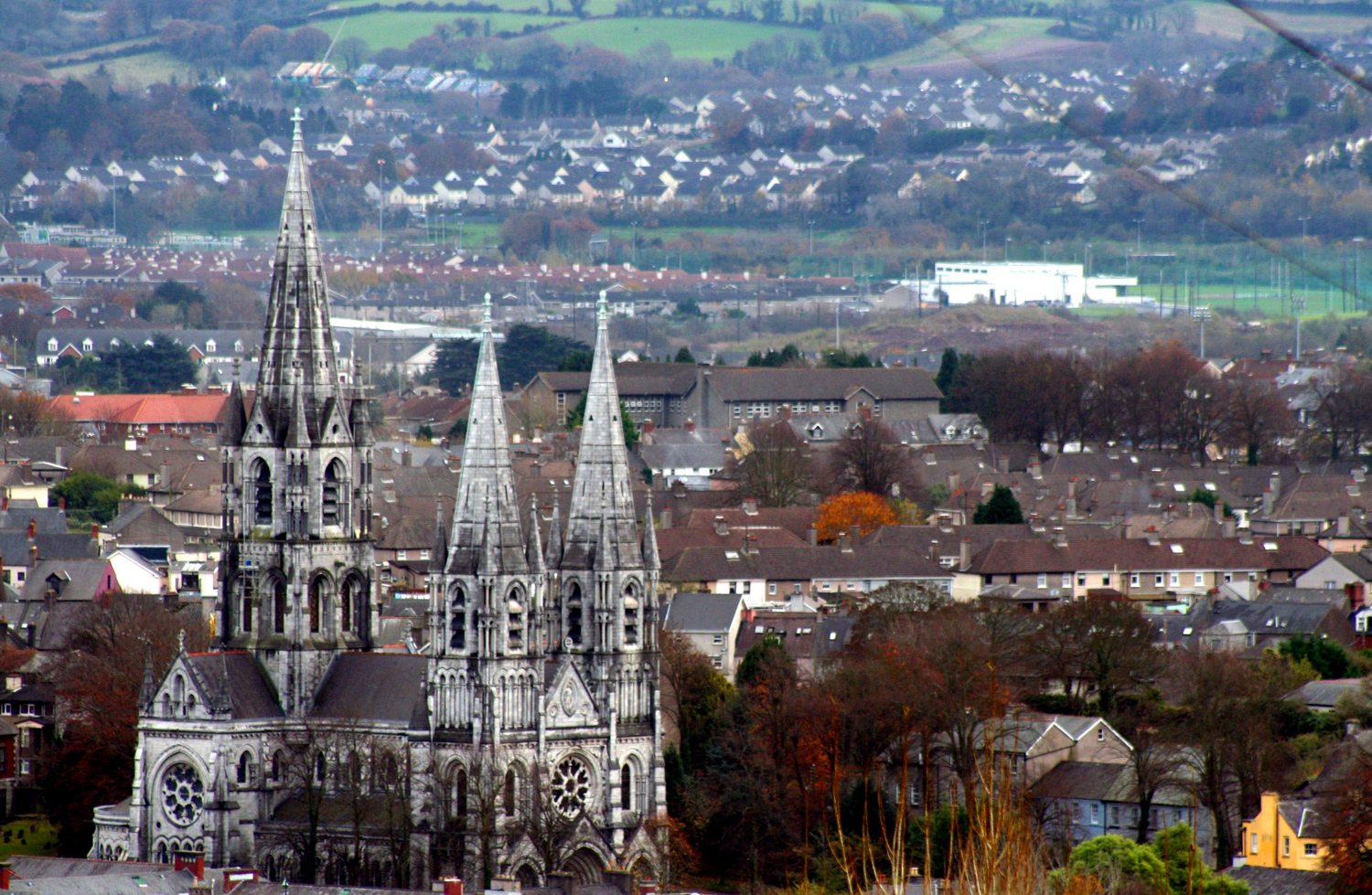
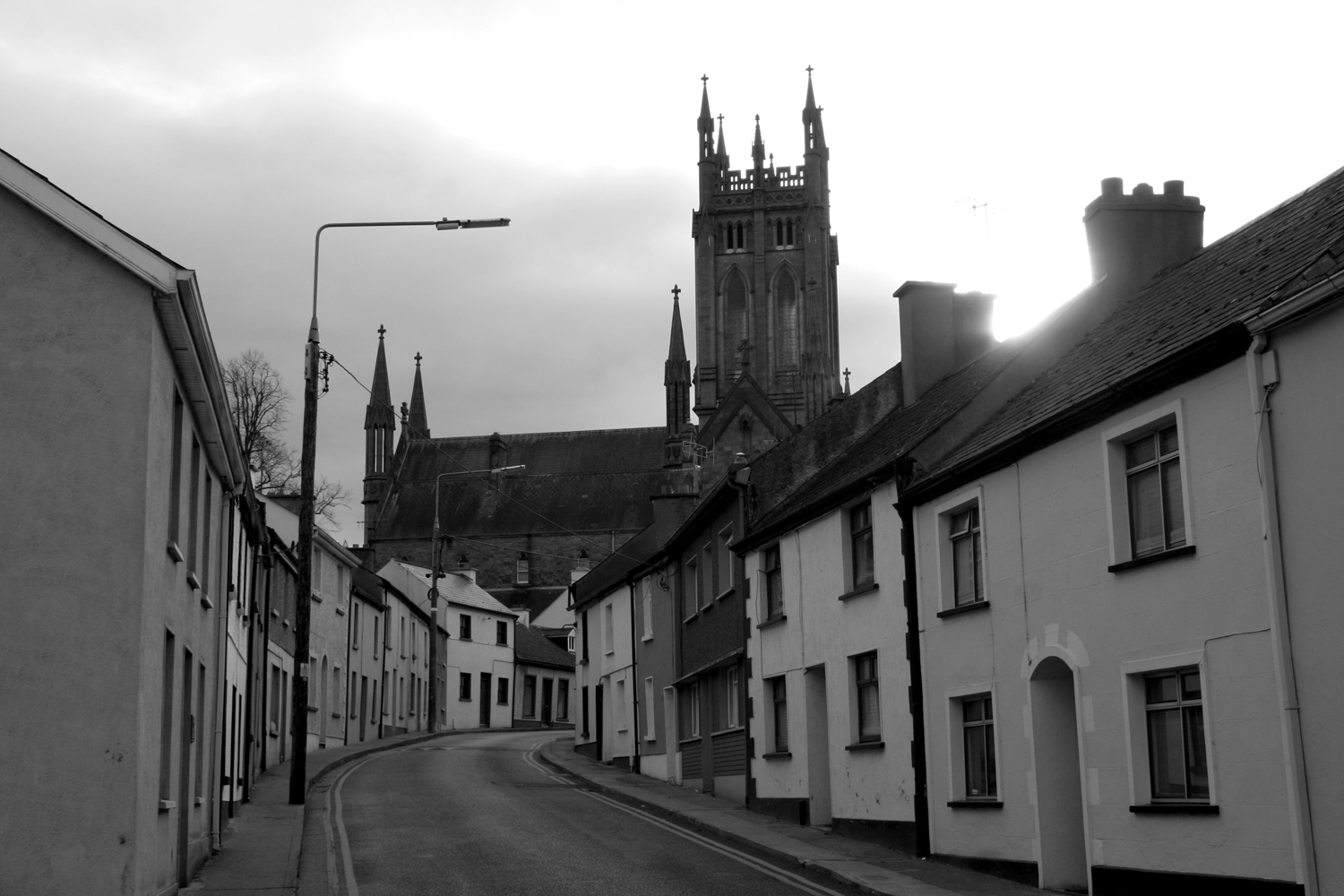
Monday evening Liz very kindly took me up the London Eye. We reached the peak at around 2100, which chimed in perfectly with the setting of the sun. London was hung with gold dust in an umber haze, but however romantic the light, it’s still an ugly town.

On Tuesday Liz and I parted ways and I took the train back to Cambridge, unsure of where I would be staying. Chris had assured me I was welcome to the floor of the room in Pembroke into which he has moved temporarily, but I was concerned about imposing upon him further.

For about five hours I felt like my entire plan of relocating to the UK was going to fall through and I’d be flying back to Sydney with my tail between my legs, ungodly broke, especially when it became clear that the cheapest bed and breakfast I could find was thirty pounds a night. After a very sweaty search (over thirty all week and Wednesday hit 38 degrees) I bit the bullet and took a garret room at 30 quid, then went straight into town to a job interview with the Cambridge University Temporary Employment service. Having been told there would be nothing available until the start of September and needing some readies in the meantime, I walked straight around the corner to my old pub, The Anchor, which is still run by the same landlords for whom I worked back in 2003.

The following day, I moved my stuff into Chris’ room and that evening, like a dog returning to his own sick, I worked my first shift at the Anchor for three years. It was alarming how familiar it was and I had no trouble in slotting straight back into being a piss merchant, as it were. I expect to be doing around twenty to thirty hours a week to tide me over as I won’t be paid by Pembroke until the end of August. There is a cool crowd so far as the staff are concerned, with three Poles, two Frenchmen, an Italian girl and a side order of Poms. Do drop by!

So, here I am, sleeping on a futon mattress on the parquet floor of W8, “Lawn Bowls Court”, Pembroke College, and things are looking up. I now have two jobs, hope of another with the city council commencing at the start of September (working for the local theatre / gig venue) and, as of Tuesday, I will have a new place to live. For, in another stroke of extraordinarily good fortune, Chris, whose lectureship is now permanent, was successful in applying to become a fellow of St John’s College (where we both did our PhDs). John’s, who may take their time but do things properly, have kindly offered him a house at peppercorn rent into which we shall be moving shortly. This arrangement will only last until the end of August, at which point John’s will give him his permanent rooms and by which time I should be loaded with Sterling from my teaching work and have had the time to organise a room here in town…

So, that’s me in a nutshell, writing by day and drinking by night with the Young Americans, soon to be my students. I’d forgotten what a nice place Cambridge is when you’re on the right side of tracks, so do drop in – good show, what! – Pimms and Lemonade all round…

Read Full Post »

The Sausagelands

This is a copy of an e-mail sent out to friends and family after a brief trip through Czech Republic and Germany in July 2006.

Comrades!

I’ve just returned from Czech Republic and Germany which was a nice little holiday from my holiday. I needed to clear out on one last jaunt before I am forced to take life seriously over here (whether that will ever happen remains in doubt) so off I went on the Sunday before last and flew into a town called Brno, about two hundred clicks southeast of Prague. The name is pronounced not entirely unlike “Bruno”, which had me chuckling to myself repeatedly. Travelling alone can be dangerous, I warn you…

Yeah, got into Bruno and took a train up to Prague, keen to feast on Kafka and Mucha and quench my thirst with some fine local pilsners, only, I arrived at around eleven in the evening and my first stop was therefore the twenty-four seven train station sausage joint. After recently travelling through the Balkans, I have come to conclude that they ought to rename mitteleuropa “the Sausage Lands”, which has a certain ring to it. There really is nothing finer than the sight of twenty kranskeh boiling away in front of you, or the lightly sizzling bratwurst, or the dusky aromas of the long, red, spicy… okay… yep, sure.

Basically Prague is beautiful and the six hundred and fifty-two odd people who had told me so previously were not lying in the slightest. It has been scrubbed down, spruced up, buffed and polished, given a few licks of paint, de-loused and thoroughly velvet revolutionised. It has also become considerably more expensive than it once was, or than anything else in Czech Republic for that matter, the upshot of which is that it is increasingly geared towards tourism – now making up sixty percent of the city’s total income. But, then again, it does look very nice, so why shouldn’t they make a few bucks off us into the bargain?

I spent the next three days wandering about town in dry, 32 degree sunshine, shooting around a thousand photos, talking to myself, singing along to my iPod and basically looking like a typical dickhead tourist who was totally full of himself. Then, to really rub it in, I went and sat right under a rather imposing saint on the smashingly grand Charles Bridge and got slowly drunk smoking cigarettes and sniping people with my “perving lens”. I enjoyed this so much – drinking through the late afternoon until dark (c.2200) – that I did precisely the same thing the following evening. After two nights of this on the trot I’d already told myself all my best anecdotes, so I slunk back to my hostel room feeling the weight of a diet of cabbage, beer, dumplings, sausages and smoked pork, and made the decision to leave town first thing Wednesday morning.

What followed was a day of mixed pleasures and an evening of harrowing tribulation. I took a train through the Sudetenland via the town of Bad Schandau (sounds like a westy haircut, methinks) and on into Germany where I disembarked at Dresden. Rejoicing at still being in The Sausagelands, I immediately downed a bratwurst and walked on into town to see what remained.

Dresden had had the double fortune of being almost entirely destroyed during the Second World War and then being occupied by the Russians. The town was hit by unprecedentedly heavy incendiary bombing raids on February 13, 1945 which led to a horrific firestorm that not only burned most of the city down, but blasted, roasted and suffocated to death possibly as many as 150,000 people.

No one knows how many people were in Dresden at the time, but the population had swollen to roughly double its then 650,000, owing to the number of German refugees fleeing the advance of the Red Army. To quote Kurt Vonnegut in Slaughterhouse Five: “You guys burnt the place down, turned it into a single column of flame. More people died there in the firestorm, in that one big flame, than died in Hiroshima and Nagasaki combined.”

What I liked about Dresden was that contrary to the usual soulless, brutalist architecture of socialist realist idealism, Dresden looked rather more like the shining visions of the future dreamed up by the less addled Soviet social architects. Indeed, the stretch from the train station leading to the old town would not look out of place in Tarkovsky’s Solaris. I walked about for a few hours before doing as the locals did, which was to recline with my feet in a public fountain. One sausage later and I was off to take the train to Leipzig.

It was here that the trouble began. I was, admittedly, somewhat culpable since I was travelling without a guide book, and though I almost always do have a guide book, it’s never been too difficult to find a hotel without one. I figured, sure, I’ll find a place, no worries. I took the time to admire the vast train station whilst looking for a tourist information office, a search that ultimately proved fruitless. I then found a couple of guys on the street welcoming people to Leipzig and thought, hello, here’s a map. All good. I asked them if there was a hostel in town, but it was an uphill battle – ein bischen Deutsch meets kein Englisch… so I figured I’d wing it.

I walked into town, la did da, and it seemed nice enough – typical central European city, nothing too spectacular, some grimy old churches, trams, prefab concrete tower blocks, an occasional loggia, soccer madness in the air, beautiful women on bicycles and sausages cooking on stalls, only, there was something missing. Hotels.

It was six in the evening when I arrived and by about six forty I had given up and was asking a French girl and a fruity man from Saxony if they knew where I might find a room. They gave me another map and sent me off south to a part of town which they assured me was practically thronging with cheap hotels and pensions. So, I set off confidently, figuring I’d be showered and having a beer in about half an hour. Forty minutes later, I reached the end of this street having gone past a grand total of two pensions, both of which had no one at reception and signs informing me that there would not be anyone at reception again until tomorrow. This sort of thing happens the day after Germany loses in the world cup, I guess.

I started to branch out into the side streets where I found a three star hotel which would, knocking off breakfast, cost a mere fifty euros. It felt rather like being shot in the wallet, so I politely declined and walked all the way back into town, figuring that since in every other city in Europe there are several homely dives right next to the train station, I’d find one there.

Forty minutes later, I discovered otherwise. Now I was seriously pissed off. It was eight and I was exhausted and sweating like a you know what (Not a pig, incidentally, as they don’t really have sweat glands). I realised what a fool I had been not to cop the hit and pay the fifty, so I slogged it on down that road again, looking for an autobank on the way. There didn’t seem to be any, but I recalled seeing one close to the hotel, so I thought it would not be a problem. When I reached it, I discovered that it did not accept foreign bank cards at all. I walked around for fifteen minutes trying to find another one, before giving up and going to the hotel in the hope that I could pay after I’d been shown to my room, left my passport or other form of security and at least had a shower and change of clothes before going all the goddamned way back into town.

I presented this idea to the man with the comedy accent behind the counter, but despite his amazing affability and quite incredible facial expressions, it was not an option. They did want to help me, however, and said they would accept British pounds. From this there proceeded an almost unfathomably idiotic passage wherein they tried to get the internet to work to find a currency converter, which took five minutes – then, having worked out the rate, everyone, including myself, was too shit at maths to work out how to do the conversion.

In the end, he happily presented me with the exchange rate of seventy-two pounds nineteen, for fifty euros, which struck me as rather odd considering the Pound is worth a good deal more than the Euro. “Okay, okay,” I said, grimacing with astonishment that I had not as yet fallen over and wept, “I’ll go to the bank.” So, I walked back into town and all the way back – this time, however, in record time (around fifty minutes round trip).

Being ten o’clock and dying of dehydration, sausage-starvation and a general lack of stimulants, I did not dally in my hard-won shower, but rather was back out the door in five minutes time and over the road watching the last ten minutes of the France v. Portugal game for which I had hoped to be half-drunk at kick off.

I downed several beers, sucked in a few fags, and then marched back into town to see what the scene was like. There I encountered the tail end of a free concert in a public square wherein some local band were banging out covers such as “I was made for loving you.” I put on a brave face and saw it out, then walked back to my local bar. By this time it was after midnight, but I was determined to have a good time since I was paying so much to be here. I sat at the bar with no intention of going anywhere for a few more hours.

It was at this point that I was approached by an elderly gentleman, if sprightly, originally from New York, who had officially changed his name to One Zero Six Nine. He was not afraid to show me his passport to prove it either. This guy was at least two thirds of the way off his trolley and after enjoying his initial inquisition, I endured several hours of his telling me that as a writer I was “the weaver”. The elaborate spiels which followed across the froth of many cold pilsners are too esoteric to recount here, suffice to say there were a lot of hand-gestures.

Relief came at around two in the morning when he introduced me to an Australian linguist who was lecturing at the local university and who had been here ten years. He too could not understand why people kept voting for John Howard, even though he was originally from Pymble. We still had no answers when at around four I staggered home and went to sleep to have a long, long dream about my alarm going off.

I woke up drunk just before the dream had a chance to turn into a nightmare and bolted with barely sufficient time to get back to the train station. I made it, thankfully, and took the train out to Altenburg, roughly an hour outside of Leipzig, from where my flight was departing.

– Handy hint, incidentally, if flying with Ryan Air, often two one-way tickets are cheaper than booking a return flight, so it’s a good idea to fly into one place and out another. Just pick a spot nearby on the map…

Right, looks like part two of my Balkans narrative will have to wait…

P.S. – was it just me, or was Roger Federer pointing north immediately after championship point in the Wimbledon final? I think that’s why he went and sat down for a while with his head in his hands before getting up to bask in the applause.

Read Full Post »

« Newer Posts - Older Posts »