Feeds:
Posts
Comments

This piece describes events which took place back in 1996, during a five and a half month trip across Europe. It began as a long poem, then, thinking it too prosaic and feeling it was far better suited to a short story, I expanded it a few years ago. After a number of more recent revisions and rewrites, here it is.


I first saw Mikhailis on the wide balcony of a hostel in Rethymnon. He sat in the corner on a plastic chair, beneath a mop of tufted, wiry hair. He did not look like a traveller and surveyed the space darkly, with the eyes of a bandit reproached.

Kirstin and I had arrived from two damp and cloudy days in Iraklion; a city that seemed to disappoint us the more we sought its merits. Until, that is, on our final evening, when we visited the grave of Nikos Kazantzakis. From there, high up by the fortifications, late sun broke through the storm clouds to jewel the clutching trees in amber light.

Rethymnon’s appeal was immediate. It was the colour of palm trees, petunias and sandstone; tawny, olive, red, purple and pink. The weightless blue sky made these colours sing. We entered the town on foot through the Venetian Great Gate. Though unimpressive in scale and divorced from its once bold walls, this structure aroused in me a strong sympathy for the parochial sentimentality with which it must have been named.

Our guidebook recommended a hostel that was promisingly cheap. It was a warm eighteen degrees and we took our time finding it. The hostel owner, (a Londoner, I guessed) who looked like Andrew Lloyd Webber, introduced himself as Nick.

“I’ve got plenty of room,” he said. “For you and anyone else you can find. Stay as long as you like.”

“And breakfast?” I asked.

“Not included, but cheap and cheerful. Fried eggs, omelettes, toast, cereal, bacon, whatever.”

He was effusive and gentle. He showed us to our room. There were no double rooms to be had, but, a mere eight days before Christmas, business was quiet and he gave us a dorm to ourselves. It was a basic place; the room as narrow as a corridor. We dumped our bags under the battered wooden bunks and Nick, having taken our passports and handed over the keys, made his way back downstairs.

“This’ll be fine,” said Kirstin.

We had been on the road for four months. Having worked our way over land and sea from Britain, we were used to welcoming necessities as luxuries. After the desolate, dusty, cold-water hostel in Iraklion, this at least felt more like a school holiday camp than a prison. Perhaps it was simply that the sun was shining, or the ramshackle charm of the panelled wooden walls, but Rethymnon had lifted us. Already I was fond of its ancient streets.

We showered, changed our clothes and toured the hostel. There was a spacious balcony at the back overlooking a sunny, paved courtyard. A weathered sandstone minaret stood tall across gardens bright with bougainvillea. It was here that I first spotted the mop-topped, bearded man in the corner. He was looking at us intently. I nodded to him and he nodded back. I looked away quickly and turned my eyes to the English newspaper on the table. It was over a week old and I knew all the headlines.

“I’m hungry,” said Kirstin. “Maybe they’re still serving food.”

“I’ll find out,” I replied.

I went inside. It was just after lunch and I wanted more eggs. Money went a lot further at this end of the Mediterranean. The cruel austerity of my travel budget was finally paying dividends. After four weeks of tinned sardines in Italy, I was beginning to put back some weight.

Nick gave me the thumbs up and I ordered two helpings of fried eggs.

When I came back outside, the bearded man in the corner was still studying us. Though his eyes were kept low, he was not making any effort to conceal his interest. I detected a hunger in his brooding curiosity, inviting us to lift him from the torpor of his sulk. It was then that I remembered the boldness I’d acquired through months of strangers and, offering a little wave, I said, “Kalimera!”

“Yiassou,” he said, gruffly, if not rudely. He did not smile.

I turned my eyes back to the newspaper. I could sense that he was still looking at us and guessed it was Kirstin who drew his attention. She had been sized up by many local men over the last few months; her disappointment at this being roughly commensurate with the keenness of their interest. Still, if occasionally the cause of unwanted attention, I guess it was her good fortune as well as mine that she was such a beauty.

Turning my eyes to the minaret, smiling into the wide sky, I felt the gravity of the bandit’s stare – so I had come to think of him – and, looking his way our eyes met again. This time his face spread with a cunning smile.

“You play chess?” he asked, with a strong accent.

“Yes,” I replied. “I love chess.”

“Good,” he said, standing up. “We will play chess.”

I stood up too and a moment later, Kirstin also stood up. It was as though some forgotten formality was hurriedly being addressed.

“I am Mikhailas,” said the bandit, walking over and offering me his hand. “I am from here. From Kriti.”

“I am Ben,” I said, “and I am from Australia.”

We shook hands.

“I am Kirstin, also from Australia.”

“Hello,” said Kirstin, skipping around to stand beside me.

“You are Australian?” said Mikhailas. “Then you like to drink.”

“Ummm, yes, yes we do,” I said, laughing. “Day and night, you can count on us.”

“We love to drink,” said Kirstin.

“Good,” said Mikhailas, looking squarely at me. “Later we play chess, and drink raki.”

“Sounds good to me.”

He offered me his hand again.

___________________________________________________

Kirstin and I spent the afternoon walking around the Venetian fortress, soaking up the sun. The sea was Irish moss, the sand a mustard yellow, polka-dotted with smooth white and grey stones. The fortress was an ancient seabed, chiselled into jutting chins over which the guns once poked. Inside was dry and grassy, yet the stems were vivid green. One tall palm presided.

As winter progressed in Europe we had moved gradually east and south and thus avoided the onset of the cold. After a quick swim and double helpings of pork yeeros, we returned to the hostel with two bottles of wine.

I found Mikhailas drinking in the common room. The chessboard was already set up and he was waiting for someone to play him. The only others present were two couples, one Dutch and one French, who were, for the moment, keeping to themselves. No one had given him satisfaction.

“Ah,” he said when he saw us come in. “You play chess now?”

“Definitely,” I said.

I had never been much good at chess until this trip. Kirstin’s foresight in bringing a portable set had provided us with hours of enjoyment and allowed me to hone my skills. Most hostels have a functioning chess set and, where possible, we played on larger boards. In Athens, at the Thisseos Inn, it so happened that the manager had once held a world ranking. When I’d asked him whether or not the hostel had a chess set, he’d replied “no, we don’t. But do you play blind?”

“Blind?”

“Yes, you know, without the board. You say the moves and remember where the pieces are.”

“You’re joking?”

“No, I’m not. It is common for professional chess players.”

“Jesus. Well, I’m no pro.”

In the end, we played four games; my heart beating furiously and my hand trembling over the tiny board. Of course I did not win, but my chess fitness served me well enough to avoid humiliation, even allowing me to salvage a draw from an exhausting stalemate. Such was the state of my chess when I sat down opposite Mikhailas.

Mikhailas had a satchel beside him from which he produced a bag of olives and feta cheese. He placed these on the table with a quiet gesture of offering.

“Have you had raki?” he asked. “Proper raki?”

I shook my head. “Not that I know of.”

“Then you must have raki.”

He produced an old plastic water bottle and nodded to my glass of wine. I picked it up and drank it down, then placed the glass on the table in readiness.

“First, wash.”

Mikhailas poured a small amount of raki into the glass and I swished it around until the wine had blended, then tipped it quickly back. It was sharp and acrid, though it flowed more like a breath than a draught. I placed the glass back on the table. It was quickly filled by Mikhailas who then filled his own. He raised the glass and I raised mine, and then he simply said “raki”, and down they went. It was liquid fire, like loza or grappa, but it was pure and brought with its fumes an instant high. On its reaching my stomach I felt such an surge of energy that I sat up straight in my chair.

Kirstin watched all this with a bemused smirk. Mikhailas had not offered her raki and I wondered if it was supposed to be a drink for men only. Yet, when, a moment later, she asked if she too could have one, Mikhailas raised no objection. She gulped it down without blinking and Mikhailas grinned.

“Ha, you like raki too?”

“Yes,” said Kirstin. “It’s good and strong.”

“Good. Yes. And now,” said Mikhailas, withdrawing his hungry eyes from her breasts and sicking them on the board, “we play chess.” He clapped his hands together in an assertion of readiness then picked up two pieces. I drew white and the game was on.

For the first few moves my glowering opponent proved little different from others I had played in my travels. He spoke little, kept his focus and maintained an air of reverence for the game. Yet, it was not long before he showed his true colours. When capturing his first piece, one of my pawns, he swept it from the board and onto the floor with the heavy base of his knight. I chuckled nervously and looked up to see his vicious smile. Yes, Mikhailas was a fighting man and right away I knew he liked to fire a gun.

“Your move,” was all he said, as I bent to pick the pawn up off the floor.

Clearly this was a contest between “men”. With the stakes tacitly raised to a test of masculinity, I felt a rush of strength from the presence of my well-endowed girlfriend and placed my hand on her knee. If she wasn’t considered proof enough, I would have no choice but to dash his king to the floor before the game was out.

The match continued for forty minutes. At one stage I captured Mikhailas’ queen, which he disputed on the grounds that a queen should be treated like a king in check and that a warning was required. I’d never heard of such a rule and though it frustrated me greatly, I accepted it for the sake of diplomacy, figuring that what goes around comes around.

Immediately after this, Mikhailas poured me another raki, perhaps feeling guilty about my disappointment and embarrassed by his indignation. From here the shots of raki came regularly and he was generous with his feta and olives. The alcohol was raw and exhilarating and, with the olives, it cut through the cloying paste of the cheese. I wondered if he was trying to addle or distract me, but my concentration was intense and I sweated not to let it waver.

In the end I had his measure and was secretly delighted to have beaten him. Mikhailas was too proud not to show his dissatisfaction, though he refrained from being churlish just as I refrained from gloating. After all, we were men, weren’t we? I sat back in my chair and looked around. We had become the centre of attention; the couples were watching from their tables and a blond, long-haired Englishman, whom I had spotted earlier sweeping the stairs, took advantage of the break to greet Mikhailas and join us at the table. He introduced himself as Simon and I soon found out he was both living in and working at the hostel.

Mikhailas suggested another game. I wanted to walk away from the tension of it all, but could not refuse him a return match.

“Raki?” he asked us quietly, and we were quick to answer yes.

The second game did not go well for me. I blew it from the start with an overambitious attack. I should have known better, having always been a defensive player in strategy games, but the raki and masculine intensity of Mikhailas drew me out. I felt stung by the loss, especially now that I had an audience, but I was also becoming increasingly drunk. Mikhailas was smiling now, a true bandit grin across his curly chops. With the atmosphere growing boisterous around us, I knew I would not retain my focus in a third game, but accepted the challenge nonetheless.

Despite doing my utmost to play a safe hand, I found it harder and harder to think ahead and calculate the consequences of moves. When I realised my game had gone to the dogs, the only recourse was to pretend indifference. I laughed as the tragedy entered its final act. Mikhailas, having trapped my king in a corner, slew me with his trademark flourish by clubbing the piece to the floor.

The end of the contest came as a great relief, for my head was reeling with booze. As my king fell the volume of the voices shot up. I sat back and stretched and the conversation expanded across the room.

Kirstin called for more beers, while I, sweaty and thinking of other refreshments, suggested we all go swimming the following day. Simon, who had shown himself to be both affable and amusing, with occasional asides throughout, agreed to come.

“I’ll be well up for a swim,” he said. “Weather permitting of course.”

“Swim?” said Mikhailas. “In winter? You are mad.”

“But it’s not even cold. And the water is warm.”

“For Crete it is cold. Too cold for Crete. And the water is not warm. It is cold.”

“Huh!” I said, with a light-heartedly cruel smile. “Real men don’t feel the cold, Mikhailas.”

___________________________________________________

The following day began slowly. We ate a big breakfast and talked to Simon on the balcony. The sun was blazing. An old, white-haired Australian veteran who looked uncannily like a Koala wandered into the hostel and spoke with us at length. I soon learned that he was a regular feature here, having retired to Rethymnon several years ago. He told us he had been captured on Crete during the war and taken into the heart of Germany as a POW. He was charming and entertaining until he began telling us about his plans to bottle and sell the water flowing from the thaws in the White Mountains.

“It’s a travesty,” he shouted. “They just let it run into the sea! All that water going to waste.”

Despite its initial novelty this conversation was destined to grow tedious, so I brought forward our own appointment with the ocean.

Simon led us to a beach a mile and a half out of town. It was rough sand adrift with stones, but the water was not as cold as I feared. I relished the horizontal pleasure of leisurely swimming and emerged feeling clean and salt-stung.

Upon returning to the hostel we found Mikhailas in the common room. He was having an afternoon beer, waiting for something to happen.

“Look,” he said, leading me over to a wall-map of the Aegean.

“What is it?”

“Look,” he said again.

“I’m going upstairs,” said Kirstin, and left me alone with our bandit friend.

“Here,” said Mikhailas. “Look.”

Urging me closer with rough gestures, he planted his forefinger firmly on the Bosphorus.

“Constantinopolis,” he said, his voice becoming more guttural. “Constantinopolis belong to Greek people. To Greeks.”

His features were weighty and serious, yet there was an energy in him that seemed almost playful; a cutthroat joviality.

He fingered Istanbul again and murmured with gruff affection. “Constantinopolis belong to Greek people. Not to Turks. All over Greece, we are ready. There are men waiting to take it back, all across the islands.”

“Well,” I said, not really sure where to take things, “I’ve always felt it was a bit of a pity that the Turks took it. I mean, if the Byzantines had hung around for another five hundred years there’d still be a Roman Emperor, I guess.”

“Constantinopolis does not belong to the Turks,” said Mikhailas. “How can it be Turkish, it was built by Greeks?”

I began to wonder if he was trying to sign me up to something. Of a sudden he had become so fierce, so Cretan, so tribal, that I pictured him now in traditional costume; the vraka – baggy bloomers; yileki – a shortened waistcoat; zounari – the binding sash; stivalia – high, traditional boots, and the basilis – a Cretan knife – tucked into his belt. He was just like a character from a Kazantzakis novel; from Freedom and Death.

“One day, Constantinopolis will be Greek again,” said Mikhailas.

I was still standing in front of the map when Kirstin came back into the room.

“We’re talking about Constantinople,” I said. “Planning a reconquest.”

Mikhailas stood staring at Kirstin.

“Constantinopolis should be Greek,” he said. “One day, it will be Greek again.”

“Well,” she said, “let’s hope so.”

Mikhailas stepped away from the map. Perhaps this plotting was men’s business and he did not feel comfortable invoking such subjects before her. As if to confirm this, he switched tack altogether.

“Why are you not married?” he said to Kirstin. “A girl like you? Here you would be married.”

“But I’m not from here, am I? I’m only visiting.”

“Still, you are ready now. Look at you, you should be married.”

I leaned against Europe, my shoulder on the Mediterranean. I knew Kirstin would be offended by these queries, but as a counter to the presumption of his masculine narrative, she must answer Mikhailas herself.

“I’m not ready to be married,” said Kirstin, “I’m only twenty-four. I don’t want to be married yet.”

“But what about children? It is not good for a woman to leave this too late.”

“Nor is it smart for a woman to burden herself with children too soon.”

Now Mikhailas looked at me. “Why don’t you marry her? Do you want her to get away?”

I exhaled a short laugh; more amused than derisive.

“I don’t see how marriage would change that. If she wants to leave, she’ll leave. Anyway,” I said, with deliberate finality, “we’re too young to be married.” Things were more complicated than that, but for the moment our travels had, through the need to co-operate, held our problems at bay.

“You play chess again tonight?” asked Mikhailas.

“Yes,” I said, “I’ll happily play chess tonight.”

“Then it is fixed,” he replied.

That evening, with more onlookers than the previous night, over beers, olives, feta and raki, in a reversal of form, I lost the first game and won the final two. The scores were now level and I determined not to play him again; content at least with having had the final word.

___________________________________________________

The following afternoon, having taken the bus to the beach at Georgioupoli to swim in the mouths of three rivers, we returned to the hostel for beers. On the way through we collected Simon, who bought a beer and joined us. As we walked onto the balcony a tanned, dark-haired man stood up and addressed us. “Simon!” he said, “who are your friends today?”

“‘Allo, Kostas,” said Simon. “Alright? These are two Australians who are staying here, Ben and Kirstin.”

“Hello,” we said in unison.

“Ah,” said Kostas. “Then these are the Australians I have heard about from Mikhailas.”

“Yeah,” said Kirstin, with a chuckle, “that’s us.”

“And you are having a drink now?” asked Kostas.

“Yes, yes, we are.”

“Yes, yes, good,” he said. “If you don’t mind, I will drink with you too.”

“Of course not,” I said. “Join us!”

Kostas bought a beer and sat with us. His hair was unkempt and his face unshaven, but he had about him the confident air of an operator. Less sullen and brooding, he seemed a more charismatic bandit than Mikhailas.

“I am from Cyprus, originally,” he said. “Though I have lived here now for many years. I came here to escape all the troubles in Cyprus. You could say I am a sort of refugee.”

He did not, for the moment, explain further. I wondered if he was in some way political. It was difficult to determine his age, which might have been anywhere between twenty-five and thirty-five.

“I have a flat here in town,” he said. “But I often stay with Mikhailas in the village.”

Ever since reading a Hemingway short story in which he derided the practice as condescending, I’d been wary of speaking too slowly to non-native English speakers. The fearsome weight of Hemingway’s opinion had gradually dissipated in the face of many travelling miscommunications and, with Mikhailas, I’d been speaking like an elocution teacher. This was not necessary with Kostas, for his English was considerably better than that of Mikhailas; it was refreshing to return to speaking at my natural pace.

I felt an instant liking for Kostas on account of his vibrant spirit. My first impression was of a hearty and generous person unable to restrain his passion and excitement. There was something enchanting and unpretentious in his obvious, trusting delight at having company, and, over months of sudden alliances, I had come to like the readiest people best of all. He poured out good cheer and, thus warmed, we poured it back in equal measure.

Two hours later we were still sitting and chatting on the wide balcony; sun streaming through. It was four o’clock on a Saturday afternoon and Kostas was in the mood for some fun.

“Have you eaten?” he asked. “I am starving. Why don’t we all have a feast?”

“Where? How?” asked Kirstin.

“Why, at my place of course. I have plenty of food: Olives, cheese, wine, chicken. If you can get some potatoes and bread, then I can make a great meal for us all.”

“I don’t know,” I said. “I mean, if you’re sure it’s alright.”

“Of course it’s alright. I am the host!” He tipped his head back and laughed aloud, dispelling all questions of propriety.

“Okay,” said Simon, “count me in.”

“And me,” said Kirstin.

“So,” said Kostas, “we will go now and feast, for I am hungry and it will be some time cooking. You,” he said, pointing to Kirstin and I, “go buy bread and potatoes. And get some beer, or some wine, though already I have plenty. I have raki from the mountains, wine from the village, plenty of wine from the village.”

He stood up from his chair and clapped his hands together loudly. “I will try to find Mikhailas. We meet here in twenty minutes.”

___________________________________________________

Half an hour later, Kostas let us into his flat. He had been unable to find Mikhailas and we’d decided to go ahead without him. The flat was small and tiled, with a narrow kitchen. It was cluttered but negotiable, its walls and tiles reflecting a pale, grey-blue light. Outside was a wrap-around balcony and a hint of a view between the unit blocks.

“Sit down, sit down!” said Kostas, indicating the large, laminated dining table. “I’ll start the food.”

The beers were cold so we shared these around and put the rest on ice. Curious, we all stayed on our feet. Kostas carried the groceries through to the kitchen, calling to us: “Make yourselves at home. Relax! There will be enough food for everyone.”

He returned from the kitchen clutching jars and crockery. He set a deep bowl on the table and tipped in a great splash of Kalamata olives; the loaves he placed on a board. My mouth was watering at the sight of it all. Simple, peasant meals have always stirred my emotions and, since coming to Greece, they felt all the more poignant as a connection with the ancient world. There was a long knife to cut the bread and a decanter of olive oil; salt and pepper, fresh basil from a pot at his window, and Kostas, smiling benevolently.

“I am hungry, hungry,” he said, clapping his hands together. He liked to punctuate with bold gestures. “Now we must have our first raki!”

Simon, Kirstin and I all stood back while Kostas plunged about, stretching and reaching. He ducked down and picked up a tall plastic bottle; the bootleg appearance made the raki seem all the more exciting. Next he produced four sturdy tumblers and banged these on the table. “First we have a raki, then maybe another raki, and then, we think about another one while we are cooking.”

“This raki is come from the villages,” he said as he poured. “Everything I have comes from the village. Up there in the hills there is good soil and plenty of rain; good sunshine in spring and summer; the land is rich and the produce is good. You can feel it swelling inside you; you can taste the village. Here,” he said, distributing the half-full glasses. “A toast to the village.”

We raised our glasses and Simon said, “Alright then, to the village.”

“To the village!” replied Kostas, and all of us drank.

“What is raki made from?” asked Kirstin, once the glasses were back on the table.

“Aha,” smiled Kostas. “Raki is made from the fire of dragons, from the breath of the mountains, from the sting of the sea.” He laughed as he spoke, making it up as he went along.

“No, truly, it is made from the grapes left over from the pressing. Everything not going in the wine is pressed again, harder, like they want the blood from a stone. That is where raki comes from.”

We resumed our beers and Kostas went through to the kitchen. Kirstin and Simon wandered onto the balcony to lean on the railing. I followed Kostas and found him once again in a flurry of organisation. He was cleaning off surfaces, moving pots, pans and plates. He lay down a board and produced the potatoes for peeling.

“What are we eating?” I asked.

“You will see, you will see. It will be a great feast.”

He peeled the potatoes and put them aside, then lined up the tomatoes and three large onions. Once all these were chopped into rings, he opened his freezer and, with some wrestling, pulled out a great cairn of frozen chicken pieces. It was a ghastly sight – wings, thighs and legs, iced awkwardly together like a pile of corpses. He placed it on the bench and began to pull them apart. As the pieces came free he flung them into a huge oven pan, eventually giving up on the frozen core and placing it whole in the middle. Around the chicken he arranged the potatoes, onions and tomatoes, throwing in whole cloves of garlic and olives, then sprinkling the lot with herbs. Once this was done he took a great tin of olive oil and drowned the lot.

Kirstin and Simon had also come to stand in the doorway and watch proceedings. When Kostas was done and the food was in the oven, he ushered us out and made straight for the raki.

“The feast is on,” he said. “In an hour or two we can eat. Now, of course, it’s raki time!”

He picked up the bottle and poured another raki for us all.

“This time we should toast Kostas,” said Kirstin. “For his hospitality.”

“Yes, here’s to Kostas!”

“Here’s then to me,” said Kostas.

Once again we all drank.

“And now another,” said Kostas, “because I cannot really drink to myself.”

He poured another measure and before anyone else could claim the toast, I cried, “Here’s to Greece!”

“Here’s to Greece!” and we all drank again.

Two in a row went straight to our heads and the conversation turned boisterous. We sat at the table, speaking of home and of travels. I had a cassette with me of traditional Greek music from the islands – tales of villages and the sea; ancient laments and dirges – which I had been carrying about all trip. Handing this to Kostas, he put it on. From here the conversation was interspersed with bursts of singing from Kostas when he encountered a familiar dance or dirge. I added my deep and tuneless voice in a phonetic attempt to sing along.

Kostas found one song particularly enjoyable. In Greek the name is Τσιβαέρι and, despite my knowing nothing of the words or their meaning, the slow, mournful chorus of “sigonah, sigonah” had long held me in its thrall. It was a tearful, seaside melancholy. Arm in arm, Kostas and I sang along to this, me rather more fraudulently, and I liked him all the more for so gladly relishing sadness. More rakis ensued. Within an hour, as Kostas checked on the food and the scent flooded through from the opened oven, we were all quite drunk. I was stuffing myself with olives and bread doused in olive oil, to keep from swooning with the booze.

“Now,” said Kostas, clapping with his trademark showmanship, “we will try a village wine. You will find this tastes especially of Crete.”

He plucked a four-litre plastic bottle from the floor, half filled with an umber liquid. From this he poured four measures, straight into the raki tumblers. The wine was thick and syrupy with a sweet and nutty nose. I raised my glass and held it against my upper lip. I was certainly no connoisseur, being the cheapest of the cheap, but was curious to inhale this local vintage. It smelled wonderful – of almonds and chestnuts – and when I tasted it the flavour lay halfway between oak and walnut.

“This wine is delicious,” said Kirstin. “I want to buy a whole barrel.”

We were all in agreement. We drank two glasses while Kostas looked on, beaming with satisfaction.

“Yes, you like it, don’t you?” he said.

My initial impression of Mikhailas had been of one of Nikos Kazantzakis’ characters, and so it was with Kostas. He was as lively and visceral as the author’s robust prose, and equally capable of an uncanny, spiritual subtlety. He would smirk and pout his sweetly curled lips, narrow them in a cunning grin, then fling them wide in a toothy smile. He created a mood of joyous conspiracy.

“Now,” said Kostas, clapping once more, “the food will be ready. At last we can eat!”

Despite all the bread and olives I was ravenous. We all were; hungry with drunken desperation. I felt a vast, leering and lascivious appetite, and as Kostas carried the sizzling, steaming tray through, with its hot wafts of mouth-watering meat scent, we clapped and cheered then stood with our ovation. As it came to rest on the table and I saw the roasted chicken, the oil and fat-stewed potatoes and tomatoes, I felt a surge of love for life.

“And now we feast!” said Kostas.

What followed was a free-for-all of duelling, cautious fingers; plucking the burning chicken from the tray. With a plastic spatula, Kostas dished out the oily slices of potato, the shrivelled, browned, crisp tomato and the softened garlic cloves. Not wishing to miss the rich and boiling stock, we dipped our bread in the base of the pan to soak up this greasy mana.

There was more than enough food and, after the initial orgy of feasting we slowed our pace. Ahead lay the long, slow satisfaction of smoking, drinking and picking our teeth. Having finished the village wine, Kostas poured more measures of raki. Kirstin was tottering on the brink of a very great drunkenness and waved her glass away. Then she drank it anyway, and sank down in her chair looking woozy.

Over the next half hour we talked almost exclusively of food. Kostas, having detected the reticence of the others to drink more, began nudging me under the table. “Secret raki,” he whispered in my ear. He seemed to be implying a certain duty; that to protect the others from harm, us men had best drink up the booze. Kostas did not offer any more raki to Simon, and I felt guilty about this favouritism. All the same, feeling gung-ho and bullet proof, I drank all three of his “secret rakis” while Kirstin and Simon chatted away oblivious.

Then of a sudden Kirstin stood up. The moment I caught her eyes I knew she was in trouble. They were slacked with a haze of worry; sliding about in search of focus. Her face had grown white and pasty, while a thin sweat pricked her forehead. She held the back of her chair, unable to stand unassisted, and we all stood with her.

“I’m going to be sick,” was all she managed, before making her way to the bathroom. I waved back the others and ran in her tottering wake. She had caught herself just early enough and made the toilet in time. There, sure enough, she emptied the contents of her stomach.

“Is she alright?” asked Simon and Kostas, when I emerged five minutes later.

“Yes, yes, she will be fine,” I said. I based my judgement on the understanding that there are two basic ways in which one is sick. The first is the worst, the long night of constant retching; the second is the easiest by far; a quick and complete evacuation, then a restful aftermath of shock.

Kirstin was sick for ten minutes, after which she began to feel safe. She washed her face and cooled her forehead then emerged from the bathroom. “I need fresh air,” she said, so we made our way to the balcony. Kostas put down a thin, rubber mat and gave her a pillow and a glass of water. Kirstin was certainly no lightweight, and I knew she would pull through soon enough. The whole episode had left me worrying about exactly how much I had drunk.

And yet, Kostas persisted with his secret rakis. He was now fabulously drunk; waving his arms and singing and dancing. He stood on his chair and balanced on one leg, jumped to the floor and clapped his hands. He spread his arms wide as though, having performed some famous trick, he expected applause. I stood and danced with him in incoherent steps. Simon was a more phlegmatic character and sat back chuckling and smiling. Not an actor but a theatre-goer, he was content to let others do the work. He sipped his way through a last bottle of beer.

“Crete is my home now,” shouted Kostas, before bursting into strains of a chorus. Finished with singing, he continued, as though never having dropped his thread. “But I will never forget my true home. My true home is Cyprus – wrecked by the fucking Turks. Cyprus has been raped by everyone! They should have joined with Greece –  Enosis – the joining together of the Greeks. Then the Turks would not have dared with their sacrilege and filth. They would never have dared to take on Greece in a war.”

Once again, as with Mikhailas, I found myself not knowing how to behave in the face this passionate nationalism. Afraid of saying anything fickle or falsely sentimental, I said.

“Yes, I hope all Cyprus’s problems can be resolved one day.”

“The only way to resolve it now,” said Kostas, “is to get rid of all the Turks. They should not be there, they must not be there. They are a cancer on the island and they have ruined Cyrus. Ruined it!”

I should have said nothing. What Kostas had begun he now felt he had a right to continue, in order to explain himself properly.

“The Cypriot Greeks won’t take it much longer, but it is not them who should have to fix it. It is not because of the Greeks that Cyprus is like it is. It is the fucking English who are responsible. It is the English who ruined Cyprus. It is because of them that Cyprus did not join Greece in the first place. It was because they listened too much to the Turks. It is because of them that Cyprus is now on its knees.”

He had become very suddenly enraged; red-faced and brimming with fierceness. He was shaking his fists and marching up and down the room.

“Yes, Simon,” he said, turning on Simon who had remained completely silent in the face of these last remarks, “It is the English whose fault is Cyprus. It is the fault of the English alone.”

Simon, with his easy-going, quiet nature, spread his arms in disassociation.

“I know nothing about it, mate. I wouldn’t have a clue.”

“But you are still responsible! How could you not know about it? A disgrace like that?”

“I dunno, man. I don’t know anything much about politics. It’s nothing to do with me.”

“But you are English. It is to do with you.”

“Come on, Kostas,” I said. “It’s no point having a go at Simon. Maybe the English were responsible, but not…”

“The English are responsible!” he shouted. “There is no doubt!”

“Yes but Simon is not responsible. It’s got nothing to do with him.”

“All the English are responsible. You cannot deny responsibility. If you are English, then that is enough. What difference does it make?”

It was only now that I realised we had a real situation on our hands. When Kostas had so suddenly began his tirade, I figured he would drop it just as quickly.

“It’s no good yelling at me, mate,” said Simon. “Come on Kostas, you know me. I don’t have a thing against Cyprus. I didn’t even know you were from Cyprus until today. I thought you were from Crete.”

“What difference does it make where I am from? It’s you who are English!”

Kirstin, who had come back to life at the sound of the heated voices, walked back through from the balcony just as Kostas struck a new peak.

“Do you want to make me a terrorist?” he screamed. “Do you want me to get a machinegun and kill people? Bombs and grenades, is that what you want? Do you want to make me a terrorist?”

He hurled his tumbler to the floor with such force that, striking the ground on the side of its base, it leapt back into the air and bounced away across the linoleum. It was a comic emasculation of his anger and the situation ought to have dissolved into laughter, yet it only fuelled Kostas the more.

“It is the English who ruined Cyprus, the English! You!” he shouted, pointing at Simon. “You! How can you not know that?”

“I don’t know anything about Cyprus, mate,” said Simon.

I couldn’t work out where all this had come from. Did Kostas have something against Simon that he had been holding back? Was he so drunk that he did not know what he was saying, could not see how unreasonable he was being? Hardly knowing him at all made it difficult to judge. It must be frustration, I thought, an immense and dreadful frustration born of his years in exile. Strange how often it is those no longer at the front lines who bear the most malice. I was open to being sympathetic and would have tolerated him venting his anger were it not directed so cruelly at one of our party.

“Do you want me to fight?” he asked. “To become a terrorist? Is that it?”

“No, Kostas, no,” I said. “Why would we want that?”

Simon just shook his head again.

“Come on, Kostas,” said Kirstin, “leave Simon out of it. He is here as your guest.”

Then Kostas exploded once more, this time with a piercing scream.

“Do you want me to be a terrorist!” he shouted.

He mimicked firing a machine gun and throwing a grenade. It was vivid play-acting, done with all the craft and zest of a child who believes he has nailed the repeating bat of a gun, only Kostas looked positively murderous.

“Kostas,” said Kirstin, “we came here to have a good time and for you to have a good time as well. Even after just today we’ve come to think of you as a friend because you have been so hospitable. We would happily listen and learn about Cyprus, but none of us knows anything about it.”

“How can you not know? How can you turn a blind eye? Ah, but I am not angry with you, I am angry with everyone. With everyone and the English! They let Cyprus down when it should have been Greek. They laid the plans for the future and the future is war. If Cyprus was Greek as it should be, then I could live in my home.”

He poured himself another raki and despite it clearly not being a good idea, no one was about to stop him drinking it. I did not feel physically threatened by Kostas – his eyes were hot and lurching and his sharper gestures were softened into arcs as he swayed – yet I was also terribly drunk and fed up with his ranting. It was no way to spend an evening.

“Just give Simon a break, man,” I said. “Can’t you see that he’s not directly responsible just because he’s English. He doesn’t even know the first thing about it.”

“It doesn’t matter! It is the English – you,” he said pointing at Simon, “Your people who are responsible for all the troubles of Cyprus.”

He had gone on for far, far too long, yet the heated conversation was not to stop for another hour. Kirstin lacked the energy after having been ill and Simon seemed only to infuriate Kostas every time he tried to placate him, so in the end it was left to me to drag him from his mood. I tried every trick in the book – I humoured, flattered, begged and prayed, persuaded, cajoled and insisted and, just when I was moving into my second phase of despairing that nothing could salvage the evening, Kostas suddenly fell silent. He sat down in his chair and his shoulders slumped. Having bashed his head against the wall so hard and for so long, he was at last ready to sink in an interminable sulk.

In the quiet, Simon and Kirstin stood up. “I think I’d better go home,” said Kirstin. “I’m still not feeling great.” She looked much recovered; the slack and puffy pallor that hung like a mask on her beauty had passed. The colour was back in her cheeks, yet I could see she was exhausted. Simon too was exhausted and, I guessed, upset. I felt very sorry for him, particularly since he and Kostas appeared to have previously been friends.

“Kostas,” said Simon, “I’m off, mate. Thanks for the feed.”

I looked at Kostas with his head sunk onto his chest. He had pursed his lips and was nodding a path through his thoughts.

“Kostas,” I said, “say goodnight and then let’s go out for a beer.”

Recalling some of his previous energy, Kostas sprang to his feet and rubbed his chin with his hand. He snapped his hands to his side and wiped them on his jeans, then thrust one out and offered it to Simon. There was no shift of reconciliation in his face; no smile or softening of sympathy, but rather a drunken preoccupation as though all his thought and energy had gone into these simple and exaggerated movements.

“Good night,” he said, with all the zest of a man who was already dead, but yet to stop moving.

___________________________________________________

Twenty minutes and two more secret rakis later, Kostas and I left his flat. We walked arm in arm, singing “sigonah, sigonah” in a low and mournful moan, bound for a bar called The Lemon Tree; one of only a few in the old quarter of Rethymnon. I was seriously intoxicated but my mind felt clear and sharp after negotiating such a heavy dialogue. Friends had told me that I became more eloquent the more I drank, though I often had occasion to wonder if the contrast was caused by them growing increasingly less so.

Walking down the flowering white street, I recognised Mikhailas immediately. He was leaning against the wall of the taverna, one foot planted on the front step. It was a tough-guy stance, casually angled; puffs of smoke rolled from his short-bearded lips. Kostas opened his arms as he approached, in greeting and announcement, and Mikhailas, strong and silent, merely nodded.

“Mikhailas,” said Kostas. “At last I have found you.”

“You were looking?” said Mikhailas.

“Of course. We had a feast. You missed the food.”

“I have been drinking.” He looked at me. “No chess tonight.”

“No, I guess not.”

We went inside to buy beers. Kostas and Mikhailas walked to the end of the bar and stood. I pulled up a stool and planted my elbows on the counter. I had no intention of moving for a while. I felt that I was back in charge of my evening at last.

The barman was a middle-aged Englishman, thin and greying. He looked askance at my Cretan companions and served me with a raised eyebrow. “What did you have bring them here for?” he asked.

“They brought me.”

Beside me sat an Australian and an American. I had seen them arrive at the hostel that afternoon and turned to them now in the hope of some lighter relief. I introduced myself and we struck up a conversation. Within a couple of minutes of arriving it seemed I had lost Kostas and Mikhailas to themselves. I heard them speaking in Greek. I was happy to let Mikhailas take up Kostas’ reins, for I was tired of worrying about him; tired of the required concentration. Talking easily with the American and Australian, I realised just how much energy I’d put into bringing Kostas out of his rant.

It was half an hour before we spoke again, and then only because Mikhailas was leaving. He was tired and drunk, though he did not let it show. I looked at my watch – it was just after ten. I suddenly felt completely fed up with both of them and wished they would leave altogether so I could lose myself in thought. The Australian and the American were boring me – the sort of people who find common ground by talking about sport or asserting national stereotypes. The barman, who had a sharp, sarcastic tongue, scowled at me as I ordered my third beer. I was feeling fed up with everything; everything except sitting and drinking.

I knew that if Mikhailas went I’d be stuck with looking after Kostas again; an idea that I did not at all relish.

Mikhailas offered his hand around and said a simple “goodnight.” Then he left, and, sure enough, I was stuck with Kostas.

He had at least risen to a different, more buoyant drunk and for a while he became entertaining. In a loud and singsong manner he tried to engage the American and Australian beside me. They found him amusing at first, but soon showed their true colours and rejected him with unsubtle body language as an undesirable local. My heart went out once more to Kostas. It was just he and I – a pair of ranting drunks – and the world was ranged against us.

The Australian and the American now left. The barman looked at me and shook his head. “See, I told you, you’re driving away my customers.”

“Rubbish,” I said. “And anyway, they were boring.”

“I like boring customers,” he replied. “They keep their mouths shut and drink.”

“Another beer, Kostas?” I asked, keeping my eyes locked with the barman’s.

“Please, my friend, yes.”

“I better have another myself. To make up for the shortfall.”

I bought two beers. The barman smiled. He was a tough nut, but he seemed alright to me. We now we had an understanding, based on mutual displeasure.

“All we need is the women,” said Kostas, slurring.

“You may recall that I already have a woman.”

“Yes, yes, you have a beautiful woman,” said Kostas. “I, myself, have no woman.”

“Well, don’t feel too bad about it. Right now, I don’t want a damn thing.”

Kostas’ hung his head low, saddened to remember his loneliness, and I wondered if the real reason he was so angry was because he wasn’t getting any. It didn’t take me long to figure out that the reason he wasn’t getting any was likely because he was so angry.

“I am tired,” he said; a rich note of despair in his voice. A second later all the strength had gone from him and he slumped onto the bar. “I am very tired.”

Mikhailas would never have shown such a sign of weakness, which was perhaps why he left when he did. They both differed greatly in their wildness; Kostas spent himself like a wastrel, Mikhailas waited like a snake.

It was midnight when Kostas finally left. He had stayed with me the whole time, leaning closer and closer to the counter til he could drift no more. For a while we had spoken of simple things, but it was only when he finally left that I realised how little I knew of him; neither what he did nor what he hoped to do, how old he was or where he was headed with his life.

There was a lot to digest and I stayed behind at the bar, swapping insults with the barman. Once Kostas was gone his sarcasm rose to a new level. I was blessed that night with unerring stamina and stepped up to this new challenge. Here was a man with whom I could quip; a man after my own heart – a little too bitter, a little too lippy, jaded and probably a prick. It was just how I saw myself turning out. We went on like this for hours, and I was still there at three o’clock when he told me he was closing up.

“I guess I’d better go then,” I said.

“Yeah, and not a moment too soon. You sure cleared the place out.”

“I did nothing of the sort.”

“Whatever you reckon,” he said, squinting at me whilst polishing a glass. “Well, thanks for coming, Bruce, now clear off home.”

I’m not sure exactly what it was that set me off. Perhaps it was inevitable with the cumulative insult-swapping, the boiling mire of secret rakis, the sweet, nutty syrup of the wooded local wine, the shortened fuses and the countless beers since arriving here. Our edgy banter had indeed been a risky thing and, without even seeing it coming myself, I suddenly blew my top.

“Fuck you!” I shouted, banging my fist on the bar as I stood from my stool. “I’m sick of your shit – you’ve been at me all night, for nothing!”

“Go on, get out,” he said, pointing to the door.

I picked up a glass and hurled it to the floor. “Do you want to make me a terrorist?” I screamed. Unbelievably, just as had happened with Kostas, the glass bounced, and, just as had happened with Kostas, it only helped to fuel my anger.

“Screw you all,” I shouted. “I hope you all goddamned well die,” and, a moment later, I stumbled out onto the street.

I stormed off around the streets of Rethymnon, so enraged that I did not know where I was going. I stormed up and stormed down, around the Venetian harbour, under the Great Gate, cursing and frothing, shaking my fists. The old quarter was, however, mercifully small, and as soon as I turned my mind to it, I found my way to the hostel.

Once inside, I woke up Kirstin. I was in a rage and needed an audience. I swore through spittle that I was going to go and kill the barman, that I would find some way to revenge myself upon him. I don’t know what made her choose that moment to tell me, but just as I was beginning to slow down in my violence, she told me that when had returned to the hostel, the Dutch man had propositioned her out on the patio. She should never have mentioned it. My rage boiled up again, greater than before.

“I’ll fucking kill him as well, then!” I shouted.

“Shssh, shssh,” urged Kirstin.

“No, fuck it, I’ll kill everyone!”

Now I knew just exactly how drunk I was, but I was fired up and didn’t care a hoot. The world was juddering with my drunkenness; spots floated before my hot eyes.

“You can’t do that,” said Kirstin, “just come to bed now.”

I stormed up and down the room; stormed to the bathroom and plunged my face under the cold tap. I looked up and tried to focus on myself in the mirror.

What was in me? A great, seething, bellowing, boiling madness. Me, a liar and a cheat; me who had betrayed Kirstin before and was destined to do so again, fuming and kicking against the pricks. I knew there and then that really it was me I was kicking against; the me I saw in everyone that I did not like; the me I saw in all life’s frustrations; the me I kept trying so hard to forgive.

___________________________________________________

The following evening we returned to Kostas’ flat. He had invited us to join him and Mikhailas to smoke some hashish, and, unwilling to appear discourteous, on we went; weary and wary, hungover and low on juice. It was a maudlin night that ended early. Kostas and Mikhailas were in ebullient moods. They sat on the floor in bandannas, pretending to shoot things with imaginary guns.

“When the Greeks throw the Turks out of Cyprus, there will be bloodshed!” yelled Kostas, smiling and firing.

“When all the Greeks rise up and take back what’s theirs, then we can live without humiliation.”

Neither Kirstin nor I were in the mood for this bullshit. It was a tired and dull act, the high point of which had been the ping of a rebounding tumbler. I only wanted to get stoned, but the hashish had next to no effect on me. As soon as it was clear that this hope would not be realised, I grew doubly bored with our hosts.

There was something distinctly perverse in Kostas’ mood that evening. Perhaps he felt that in re-iterating his national passion he would show how committed he was and thus cast his prior performance in a more sincere light. Either way, neither Kirstin nor I were buying it. Kostas and Mikhailas were kidding themselves about Cyprus and Constantinopolis. Frustrated with a historical reality that had long gone beyond any chance of such a violent and comprehensive resolution, they clung to naïve and childish dreams. It was only lunatics who wanted a war with Turkey, for, apart from the awful consequences of such a conflict, surely Greece would lose.

I looked at Kirstin and her eyes said it all: once was enough, please can we go.

“I’m afraid I’ve had it,” I said. “I’m going to have to go back and get some sleep.”

“But you will still be here tomorrow?” they asked.

“Yes, we should still be in town tomorrow.”

“Good,” said Mikhailas. “We can finish the chess. To see who is the winner.”

“Yes,” I said. “Perhaps tomorrow night we can play chess again.”

“Then we will say goodnight for now.”

“Okay then. Kostas, Mikhailas. Good night.”

When we checked out and left town the following morning at six thirty, it was with a mixture of guilt and relief. We had told Simon we would take an early bus and he got up to see us off.

“Do you know what the funny thing is?” he said, as we stood out the front shaking hands. “I mean with Kostas blowing off like that the other night. The funny thing is that my dad was in the R.A.F. and he was based in Cyprus after the war. But he never told me nothing about Cyprus, and I swear I never told Kostas he was there either.”

“Fancy that,” said Kirstin. “Goodness me.”

“God, that really is a gem,” I said.

“So you are responsible after all,” said Kirstin, giggling.

“Yeah, that’s right,” said Simon with a smile. “Me and me dad fucked over Cyprus.”

___________________________________________________

In Istanbul several weeks later, in the new year of 1997, speaking with a young English pastor’s son whose precocious wisdom impressed me greatly, I described to him Kostas’ treatment of Simon.

The young man said:

“It’s typical of people who believe strongly in nationalism. They can’t divorce themselves from a national identity, or the state itself, and they are unforgiving in judging people as guilty by association. It is precisely why nationalism of any kind is so dangerous and such a liability for people who have no interest in reducing their identity to a set of conventions and symbols. Like a flag, for instance.”

He was absolutely right. That afternoon, I tore the Australian flag from where it was stitched on my backpack. I have been unable to bear the sight of it, or any other nation’s flag, ever since.
This piece was written just prior to my arrival in India on December 24, 2012, but remained incomplete. After a quick edit and polish, I present it here in its original tense, despite just having returned from India.

I got the shakes just before leaving Singapore. It was two and a half years since my last visit to India and I had forgotten how hardcore it can be. On the whole, India is a pretty safe place to travel – it’s not exactly a warzone and whilst violence and crime certainly occur, most foreigners get away with being ripped off a few times and suffering some health issues. Yet, travelling in India takes a lot of effort and can be at times quite harrowing. It is not, despite its reputation as a centre for meditation and religious retreat, a very relaxing country.

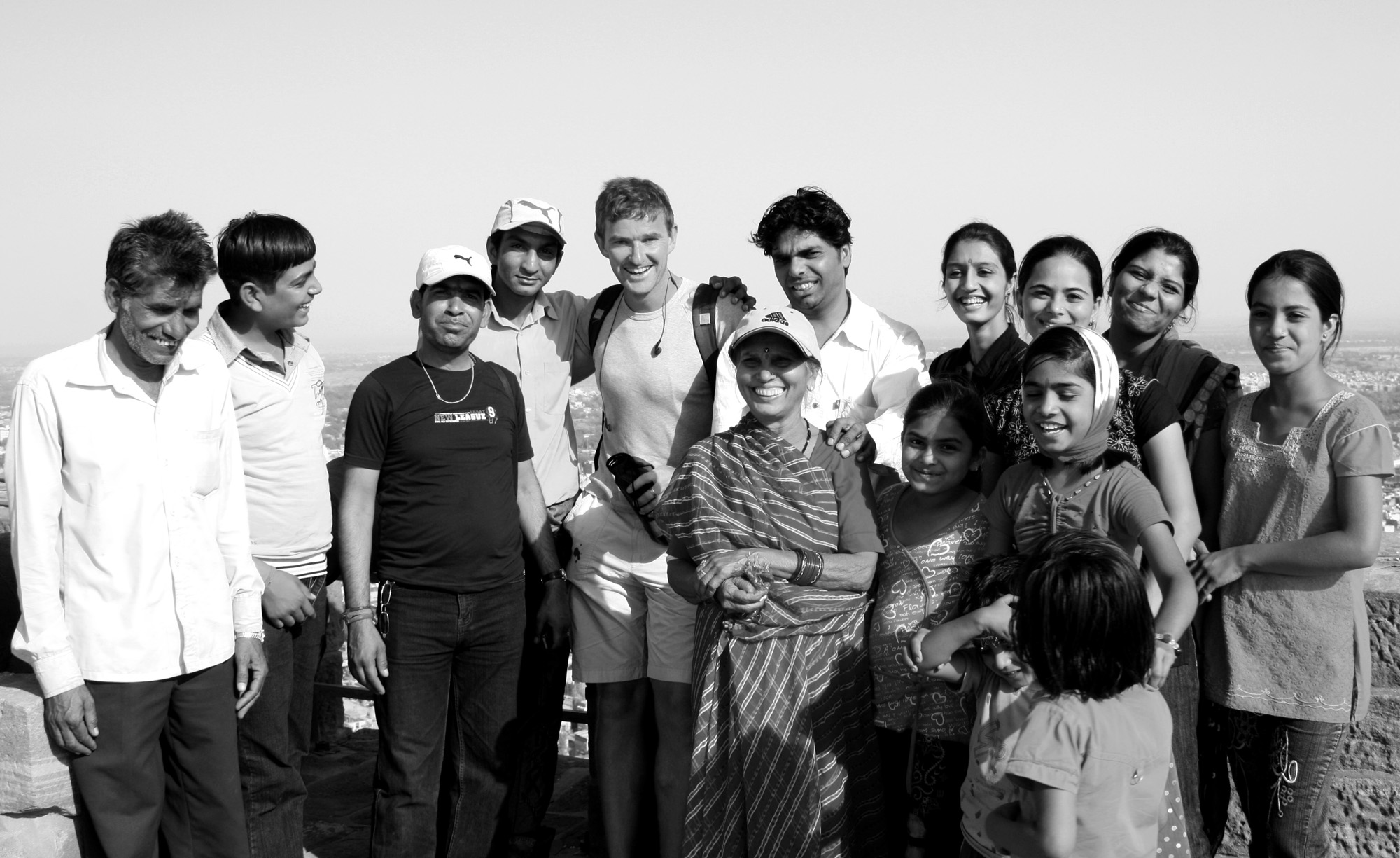
Jodphur B&W

I’ve written several stories about my first trip to India and some of the various experiences I had there. Some fictionalised, others as memoir, and it is not an easy place to which to do justice. It can be breathtaking and amazing, restful and beautiful, yet it can also be utterly exhausting and very frustrating. It also has its attendant, inherent difficulties – such as the heat and dust, the discomfort, the chaos, the noise, the touts, the lying and cheating that goes hand in hand with incredible hospitality, and the inconvenience of not being able to drink the tap water in a country that is often unrelentingly hot and humid.

Taj from Agra Fort

In my first few days in India in March 2010 I struggled to make sense of the place and learn to negotiate it. Rather like being thrown in at the deep end, I learned to swim soon enough, yet not before having a number of difficult and challenging experiences and getting sick. The illness in itself wasn’t so bad – stomach cramps and diarrhoea – but after a few days it made me feel very weak. For two days in Pushkar I did almost nothing but lie in my hotel room and read, with occasional ventures outside.

Bikaner

After four days, travelling further into Rajasthan, I arrived in Udaipur dehydrated and exhausted. The weakness of not eating much for three days made me paranoid and, sitting alone in my hotel room watching the cricket that night I got the crazy idea that I might genuinely die. I force-fed myself a vegetable biriani and fruit salad and the following morning went straight to the chemist to get some antibiotics. Within twelve hours of taking them, the illness vanished and I cursed myself for not having done so sooner. Take my advice – most gastric illness in India is bacterial and over-the-counter antibiotics are readily available at any medical shop.

Udaipur

As soon as I got better, that first trip in India really got underway. With my strength returned, I was able to put in the hard yards and see and do the things I wanted to. The more I saw of India, the more I loved it – but this love came with serious reservations about why I felt the way I did. It was all very well to see charm and romance and the exotic, yet alongside that was terrible poverty, failing infrastructure, appalling hygiene in public places, rubbish dumped and burned everywhere on the streets, including plastics and excrement, and such a harrowing welter of noise pollution, overcrowding and almost non-stop inquisitions from people I passed that it was equally depressing and demoralising. It was, of course, a photographers’ paradise, but my joy at the subject matter was tainted by a feeling of intrusion and exploitation and terms like “poverty porn” lingered in my mind. I tried very hard on that trip to remain friendly and positive. For the first few weeks I answered every query, shook hands with a hundred strangers and stopped for the ubiquitous “just one photo, sir”, but after a time India’s constant assault forced me to retreat inside myself. I turned to my headphones and sunglasses and started ignoring people.

Onkar!

A better solution, however, came when I arrived in Darjeeling. Perhaps it was the prevalence of Buddhism, the cool calm of the mountains or just the friendly, peaceful nature of the Ghorka people, but in Darjeeling people left me alone. When people did greet me or make an inquiry, it was not merely preliminary to an attempted transaction.

Darjeeling

In the rest of India there seems to be an automatic reflex whereupon, seeing a tourist, if staring is insufficient, then belting out the question “which country?” is the next step. This was sometimes done in the nicest possible way, but often it was thrown at me with such urgency that it felt impolite. What really surprised me was how often the inquirers accepted the answer without further ado, at times seeming almost uninterested, which left me wondering why they had needed to ask in the first place. It was like being a display, which, to be fair, was probably not much different from how people felt when I was photographing them – though I do try to shoot as surreptitiously as possible.

The solution, it seemed, to avoiding the hustle of India, was to be in the mountains, which wasn’t exactly India after all. Once I’d discovered the relative calm of the mountains, I did my best to stay there.

Amritsar

From Darjeeling I flew across to Amritsar where I lasted one day before taking a bus across Punjab into the mountains around Dharamsala.

Vashisht

I was so reluctant to return to the heat, dust and general hubbub hat I stayed another three weeks in Himachal Pradesh before finally venturing down again via Shimla.

McLeod Ganj

By the end of that journey, just shy of two months, I felt like an old veteran after a long campaign. Yet my energy was also pretty well spent and I had fallen into a state of relative dissipation. Tired and world-weary, I wandered around Varanasi in a daze, wiped out by heat and hash. I made sure I took the photographs I wanted to get, yet the subject that had so fascinated me for the first two months – namely India – had become a little less appealing.

Varanasi

I could no longer stomach the scent of excrement, urine and decomposition. I had no more patience for beggars, priests, touts or even genuinely curious Indians. I literally just wanted to shoot the place and avoid any interactions. When anyone spoke to me I shook my head, pointed to the headphones, raised my hands as though to say, “Sorry, dude, I can’t hear you,” and walked away. It was not how I wanted to be at all, and I hid out in my hotel room at times, simply indulging in privacy and regretting the feelings of displeasure I had with the world at large. I guess introverts should travel in Scandinavia instead.

Varanasi

It was for these reasons that, just prior to my flight into Thiruvananthapuram for a second visit to India, I started to have reservations about where I was going. I should be looking forward to the challenge, but perhaps I am too effete and western for the grit and grime of it all.  Still, despite the above introduction, my last trip was one of the greatest experiences of my life and I came away from it feeling very inspired. This time is also bound to be different for a number of reasons. Firstly, I’ll be starting in the south instead of the north and travelling in regions I’ve not visited before. Secondly, I’m not travelling alone this time around. V is coming with me, or I with her if you will, and the dynamic will be very different indeed. It will certainly be a lot easier with someone to share the highs and lows, and I hope it will be more enjoyable as a consequence. Hopefully I will come away both appreciating what I have discovered anew and having been reminded of what is important and good in life. I also hope to shoot a hell of a lot of good photographs. Wish me luck.

George street suits

Whitewash

Central station

4728 Bronte 3

3323 Glebe point road

3930 Chinatown 2

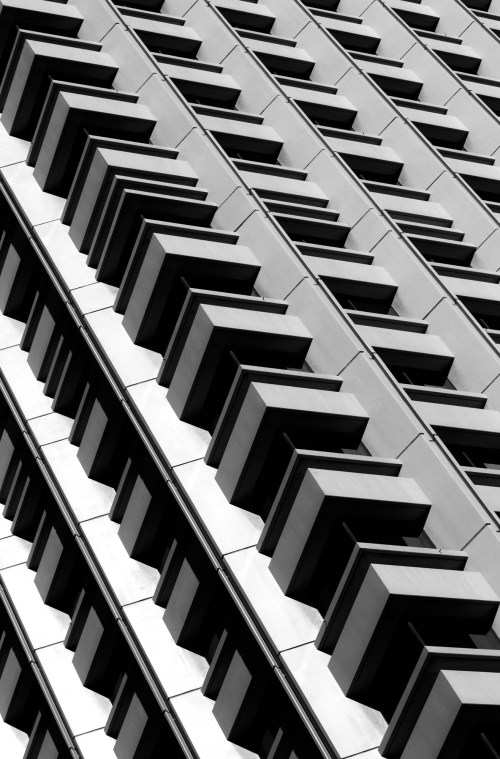
4016 City building

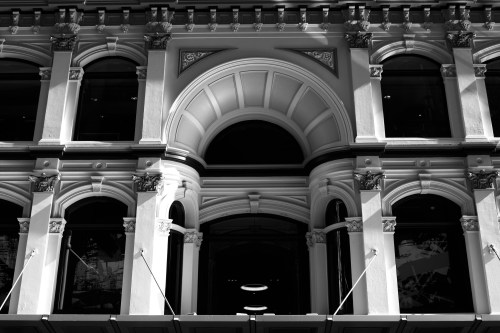
corinthian pilasters

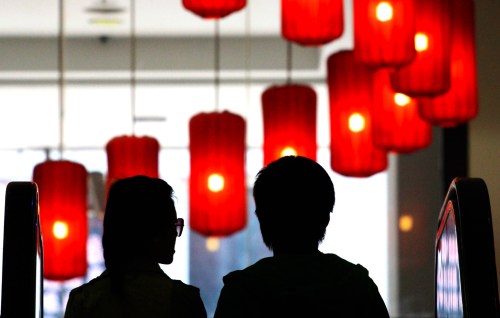
5166 Escalator 3

fresh driftwood

Devonshire street

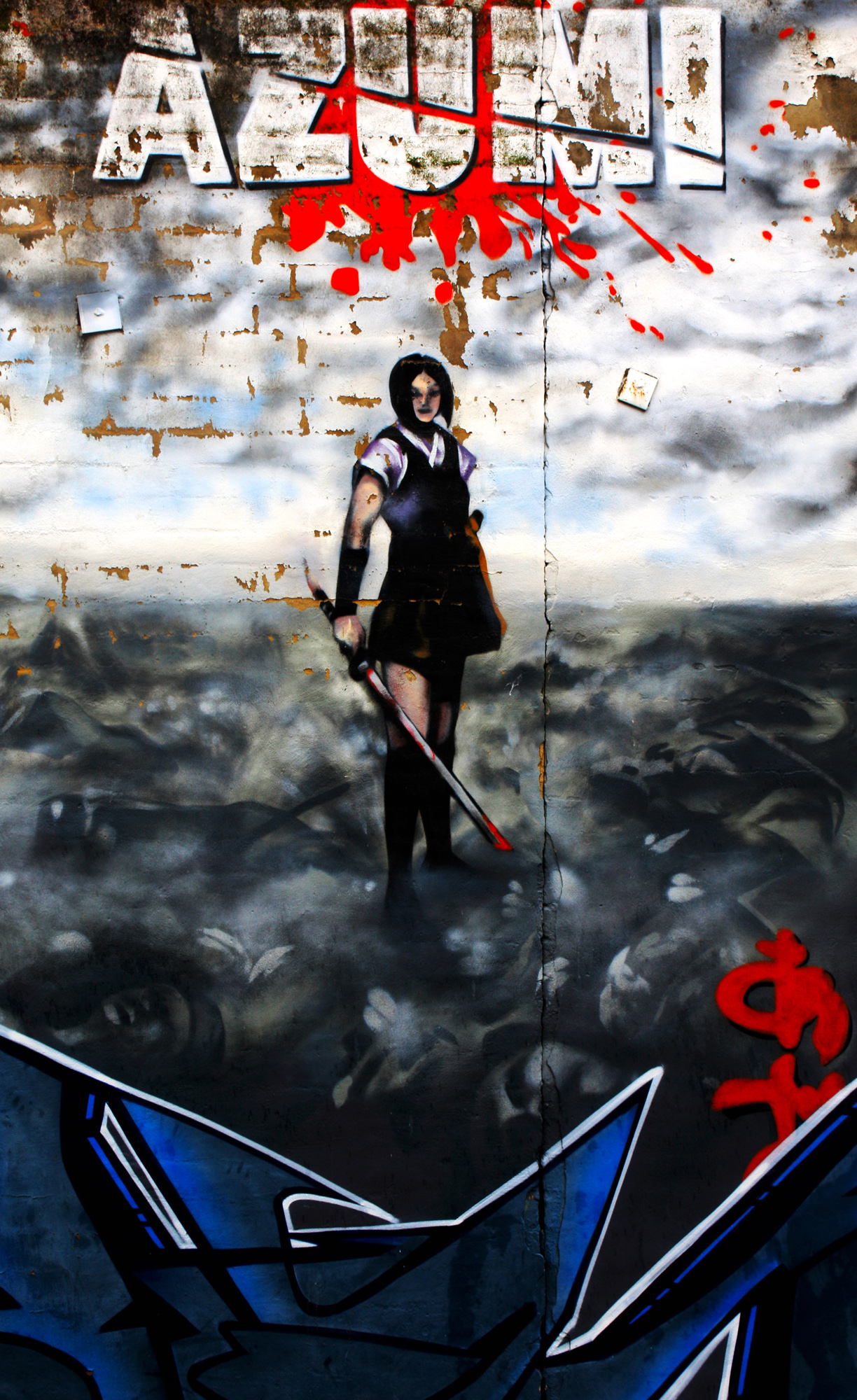
Graffertiti

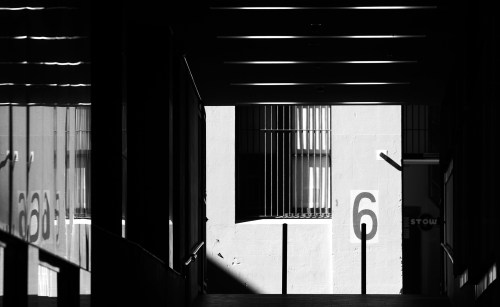
4010 Six

9820 Bronte sand

Reminded me of Marvin, crashing into the sun

GPO

Toby's estate

Hilton side

6001 Railway 3

Grace Kelly

ben sherman 2

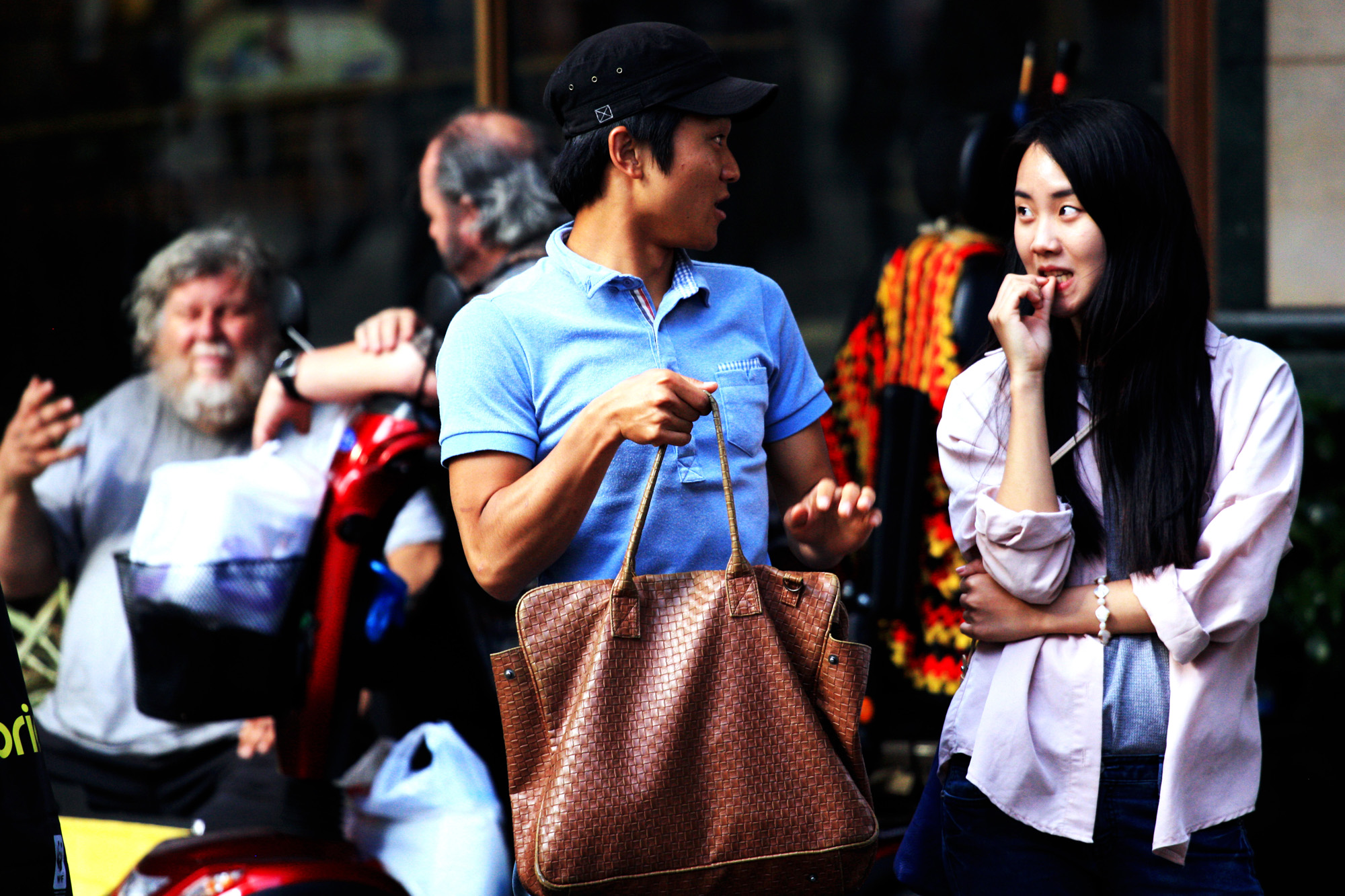
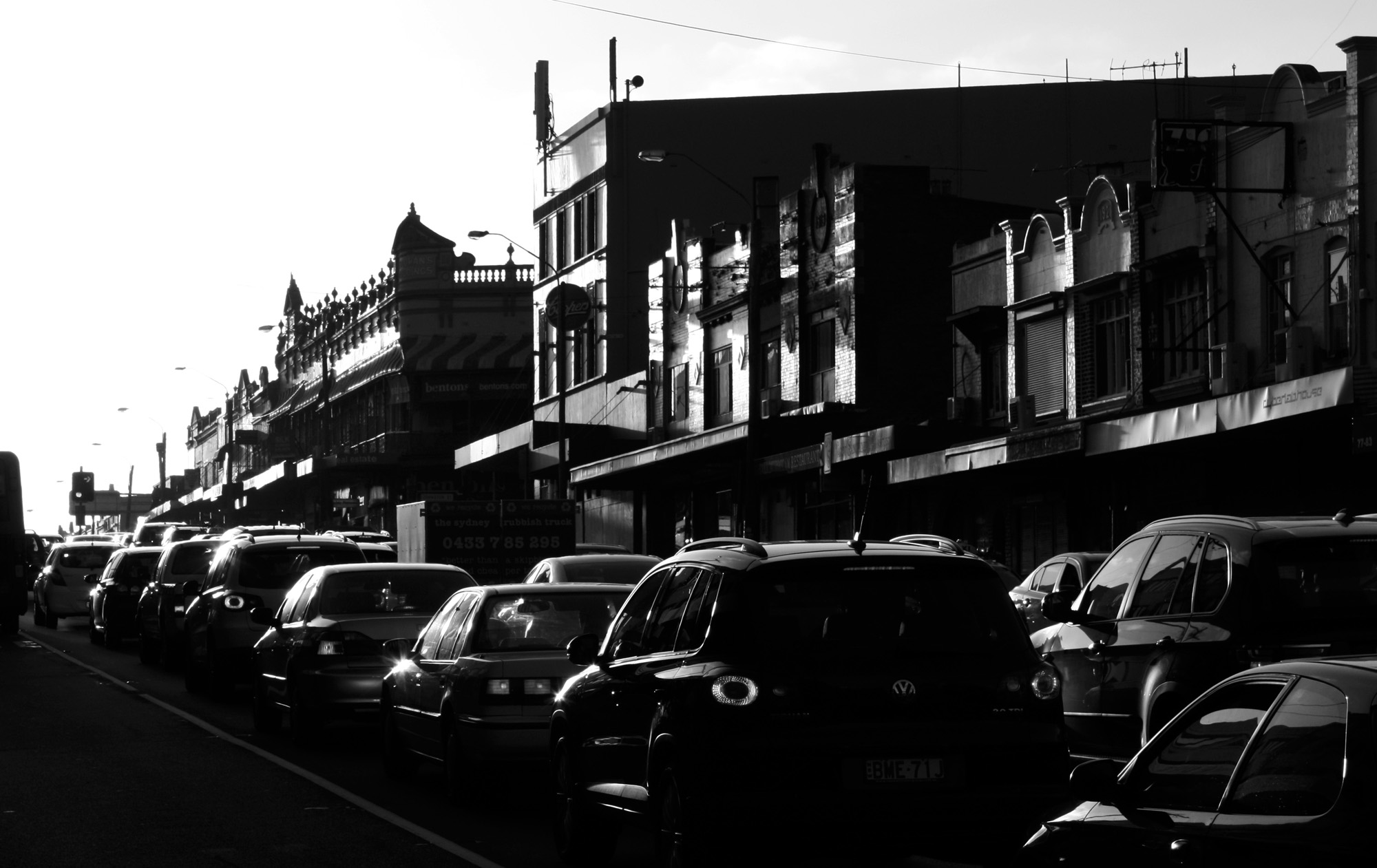
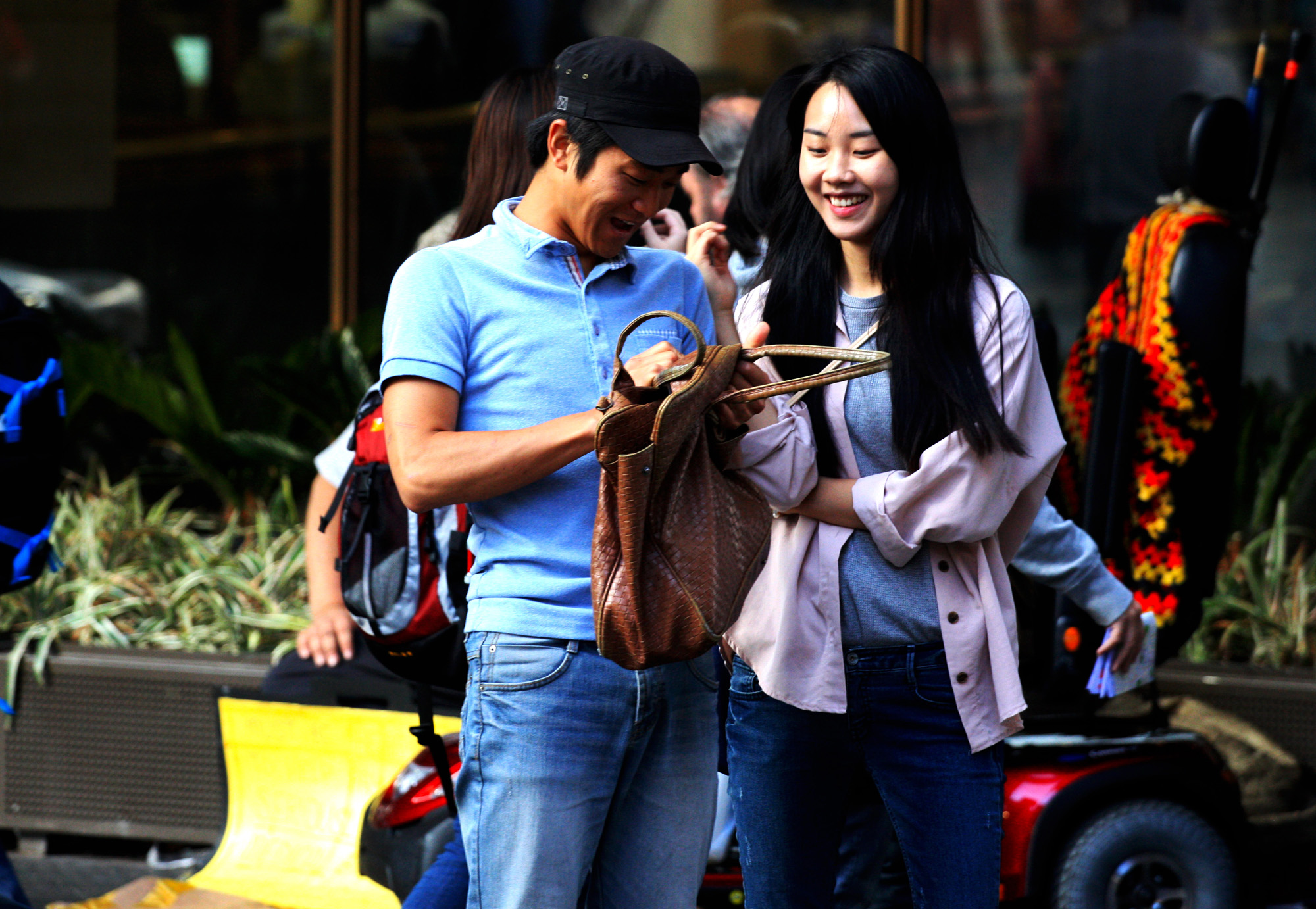
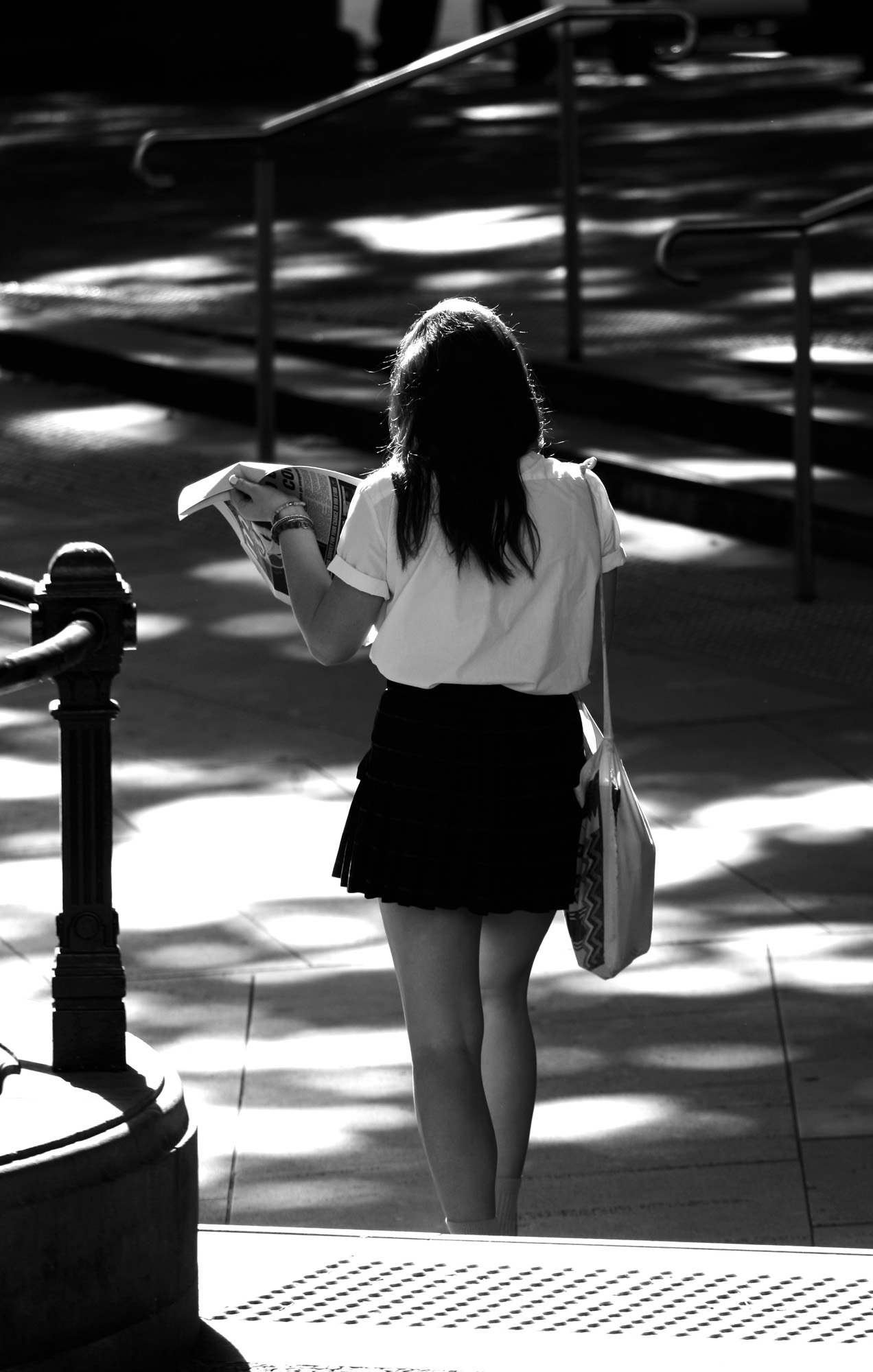
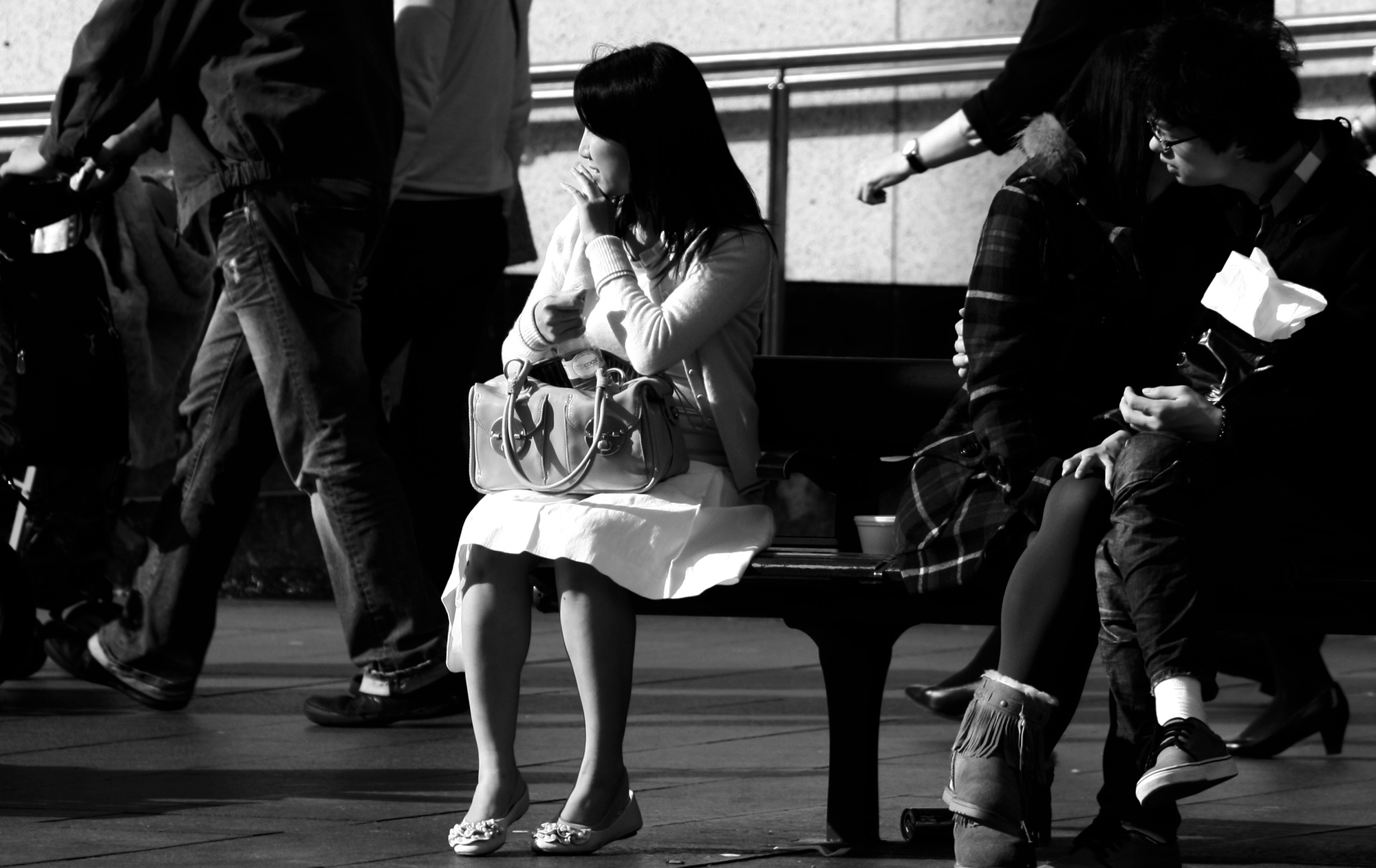
This collection of photographs comes from spending the last month mostly going through older folders and picking out things I might have missed. They’re all shots I either ignored or overlooked the first time around, and so, whilst I don’t consider them the cream of the crop, there are a good few I like all the same.

This is also likely the last post I’ll me making from Australia for seven weeks, as I’ll be heading to India with V, via Bali and Singapore. The first stop in India is Thiruvananthapuram, which took me a few days to learn to say correctly, and the last is Kolkata. As to what happens in between, we are really not sure.

Inevitably, I’m totally pumped about the photographic opportunities that will present themselves and, of course, the holiday itself. I’m don’t know how much I’ll blog while away, though I will certainly be taking my laptop – despite travelling light again with just a carry-on bag and a pair of thongs.

Finally, I’m moving house tomorrow. I’ve written about how much I love this place in the past and my deep affection for it has not diminished one whit. However, I am moving in with V, so I suppose that constitutes an upgrade : )

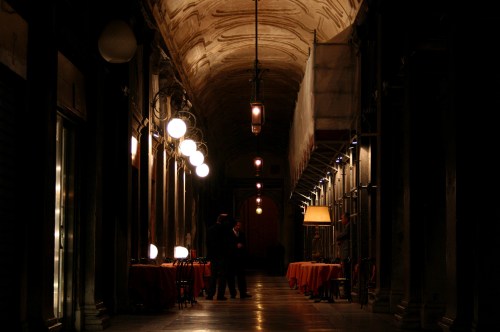
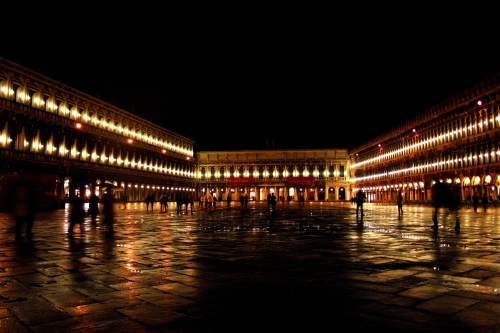
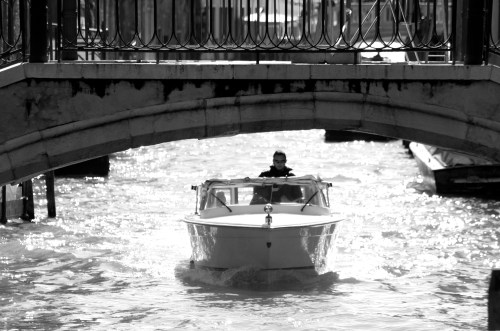
Venice

Many people complain about Venice – that it’s too crowded, too full of tourists, that it’s a rip-off, that it’s depressing, that it is, dare I say it, boring. These complaints seem to me rather tiresome and fill me with a deepening sense of despair about humanity. I should be more charitable, for Venice can’t be everyone’s cup of tea, yet the so-called Queen of the Adriatic does have some very attractive characteristics which I might be forgiven for thinking have universal appeal.

I first visited Venice in 1996 on a five-month trip across Europe and I fell in love with the place immediately. Well, almost immediately, for that first visit didn’t begin so well. I arrived after a hellish, fifteen-hour overnight bus ride from Avignon, in the days before they banned smoking on coaches. Apart from the lack of sleep, my girlfriend and I felt positively toxic and were not in the best of moods. We soon got lost on our way through the city and, in one of those typical courtyards from which two or three passages lead, the tensions flared into an ugly argument about which direction we ought to head in.

Fortunately we sorted things out and, once back at the grand canal and on a Vaporetto, began to indulge ourselves in what Venice had to offer. Perhaps inevitably, it is the sheer novelty of a city that is built on series of islands on a lagoon, with canals instead of streets through much of its urban centre which first arrests the visitor. The city’s architectural, artistic and engineering wonders, its unique panoramic and intimate views and its romantic opportunities for aimless wandering, flesh out the plus column.

On that first visit, we stayed in the youth hostel on the Isola della Guidecca, across the water from the core of the city. I would have preferred to stay in the centre, but this location had the important advantage of being cheaper. It also offered a painterly view across the lolling water to Venice in the salty haze and morning mist. I recall sitting on the embankment one morning, smoking a borrowed cigarette and, with a pencil, writing some rather florid descriptions in my notebook. Of all the places I’d visited so far on that first trip to Europe – in England, France and Spain, it was this sight across the water that most took my breath away. I had to remind myself that yes, I was here, in Venice, that it was real, and, again, yes, I was really here in Venice. Venice. THE Venice.

I’ve since visited the place on three other occasions, all at different times of year, and nothing has diminished my excitement about the city. With each successive visit, I’ve explored further the streets and canals, the islands around the lagoon, the museums, the churches the markets and cafés. I’ve been fortunate enough to be there during alta aqua – when the high tide floods the city and the locals are forced to get around in gumboots. I’ve been stoned in Venice, drunk in Venice, wet, cold, hot and tired and locked out of my hotel room in nothing but a towel for several hours, but I’ve never been bored or disappointed. Of course Venice has a lot of tourists – it’s Venice. Of course the place is more expensive – it’s much more logistically difficult to deliver supplies. None of these things have ever bothered me in the slightest, as they were all to be expected. Complaining about the crowds is like complaining about the weather in England – there’s nothing you can do about it, so let it go.

Venice can certainly seem claustrophobic – its narrow, confusing streets are difficult to navigate and if you don’t keep a tight grip on where you are going, it’s all too easy to get lost. Yet, provided one doesn’t care too much about getting anywhere in a hurry – probably a mistake in Venice – then being lost in the maze of streets, canals and bridges can be one of the city’s greatest sources of enjoyment. It’s not everywhere that you get to round a corner and find yourself faced with a cute arched bridge over a jade-green canal, down which stretch the tired and sagging, yet proudly defiant bricks of Renaissance apartments. Venice offers a mix of shimmering excitement and gob-smacking sights with a queer, disquieting, almost wrenching melancholy that speaks directly to the heart.

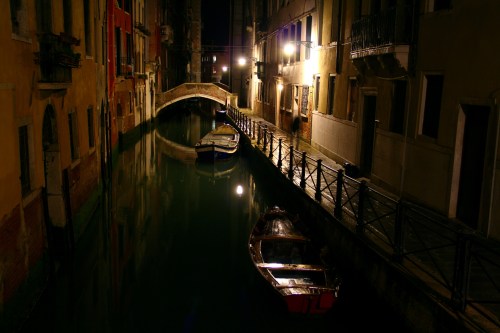
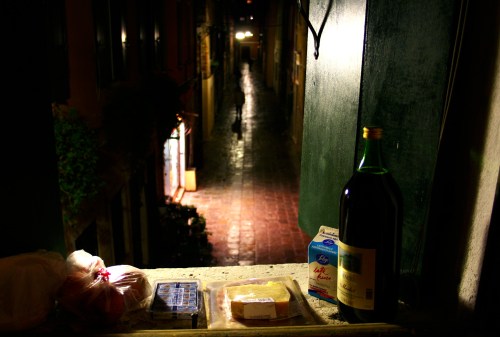
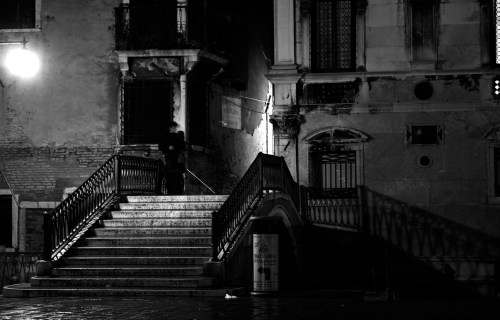
During my last visit it drizzled for two days and at night the streets were almost empty. I wandered for hours, having little idea of where I was, seeing everywhere a beautiful sadness and antiquity. The dim street lamps created pockets of light, etched by the thin, misty rain amidst bold shadows, strange shapes and architectural curiosities. The surreal sight of a boat gliding through what would otherwise be a street is even more captivating in the darkness of the Venetian night.

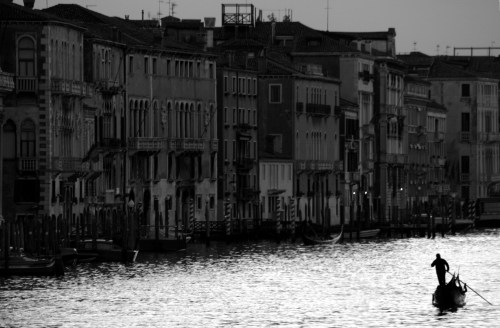
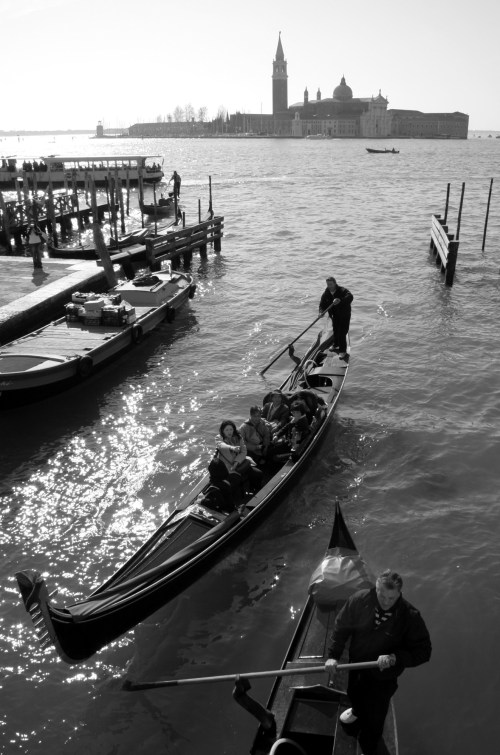
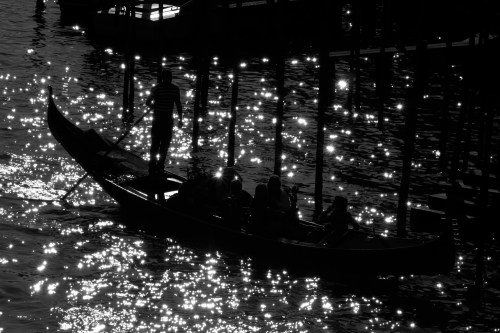
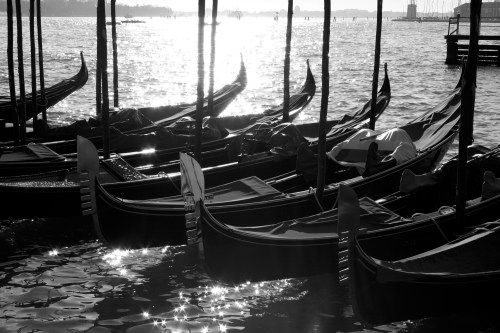
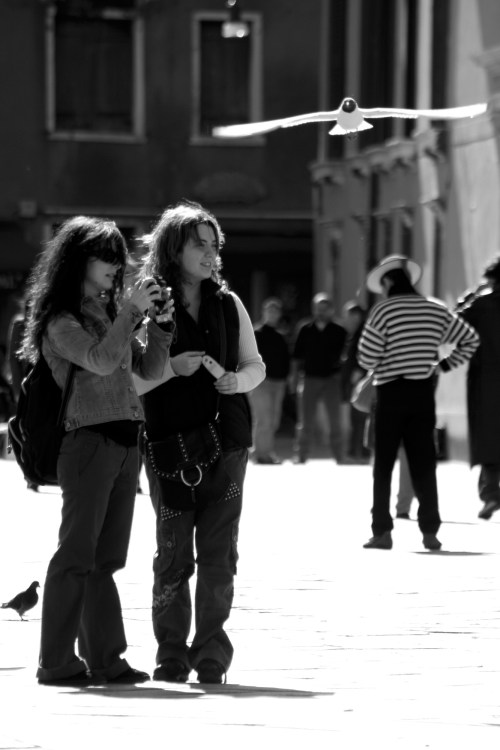
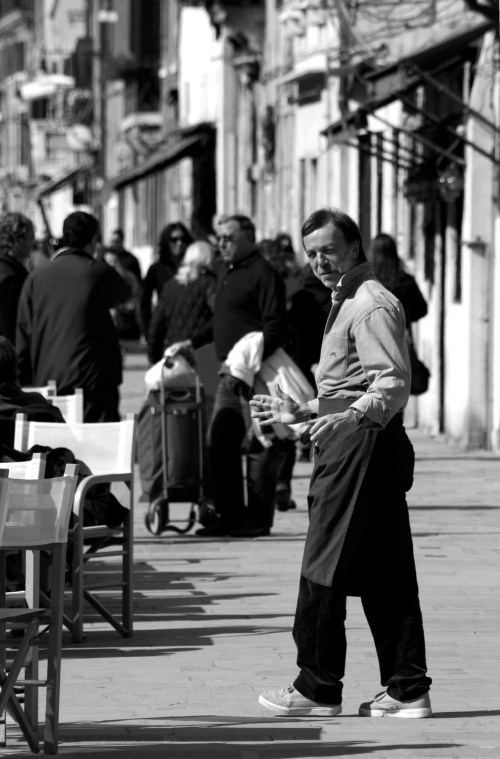
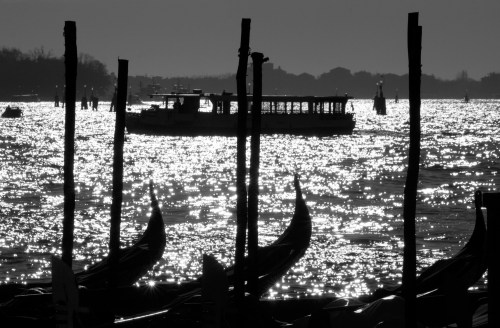
Venice has been photographed so often that it is difficult to do anything very original on that front. The Gondoliers and the Piazza di San Marco are the flagships of a whole host of clichés that have long been established in postcards, brochures and posters. Sure, any place offers more anonymous, less obvious subject matter, but to photograph the recognisable elements of Venice in an original way is probably beyond the capacity of most photographers. On my last trip to Venice in March 2007, I gave up trying to be original and focused on getting the cliché right. The photos included below are from that visit.

“Get out, get out!”

Michelle was awake in an instant.

“What? What?”

“Get it out!”

Seth was sitting upright in the bed, hands over his ears.

“Get the damn thing out!” he shouted.

He shook his head madly, clutching at his ear. The whole bed shook and Michelle bobbed up and down.

“What is it, Seth? What is it?”

“Jesus Christ, get out!”

“What, what?”

“There’s something in my ear. Something’s crawled in my ear.”

“Oh my god! Here, let me see.”

Michelle turned on the light. Seth swung his legs over and sat on the side of the bed. He stuck his pinkie inside his ear and dug around, hoping to catch it under his nail.

“It’s right inside my head! I can’t get at it.”

Michelle touched him on the shoulder.

“Seth, quick, come here, lie under the light.”

“Holy shit,” said Seth, “it’s burrowing. It’s burrowing into my ear!”

“Seth!” Michelle shouted. “Come here under the light.”

Seth stood up, shaking his hands on either side of his head; theatrical panic and indecision.

“Get some water, anything. Flush the bastard out!”

Michelle jumped from the bed, naked. She picked up a towel and threw it over her shoulder, then ran to the kitchen. How could this happen? How could she be so unlucky?

Seth paced up and down at the foot of the bed. He could feel the bug clawing away at his ear-drum, scraping away and making one hell of a racket. Damn he could hear it close – it was right there, banging on his goddamned drum. It was probably eating his wax!

Michelle rushed back with a glass of water, she had wrapped herself in the towel.

“Seth,” she said sternly, a schoolteacher through and through. “Lie on the bed and let me look in your ear.”

“Flush the bastard out,” said Seth. “Get him!”

He was not at all calm, but he came to the bed all the same. He lay down and Michelle bent the lamp over.

“Can you see it?” asked Seth. “I’m not bullshitting, it’s in there. Some big, fuck-off bug.”

Michelle strained and squinted. She brought her eyes right up close and tried to see something. It was dark in there; perhaps it was the angle.

“It’s in there, I’m telling you!” He lay on his side, squirming and kicking his feet.

“Stay still,” said Michelle. “Stop moving.”

Seth looked across at the clock radio. It was four seventeen. He tried to focus on the light but his whole being was agitated. Once, when he was six, the doctor told him to look at the tennis balls on the shelf while he gave him an injection. He spent weeks wondering what it was he was supposed to have seen in the tennis balls. Then, one rainy day, years later, he sussed that it was just a ploy.

Michelle shifted her head and tried another angle. She picked the lamp up and held it right over Seth’s ear. She noticed his temples were greying. How thick and black his sideburns were. He had a strong profile and the way he was lying emphasised his high cheekbones.

“Is it there?”

“I can’t see anything. It’s too dark. Maybe it’s gone in too far.”

“It’s bloody big, I’m telling you. It’s huge. I can feel it.”

“Maybe it just feels big. I guess it might.”

“No way,” said Seth. “This thing’s big, I’m telling you.”

“Aahh!” he cried.

“What is it?”

“Sonofabitch! It’s started burrowing again. It’s clawing right up against my eardrum.”

He held both hands to his head, shaking and squeezing it.

“It’s driving me insane!”

He shot her a bolt of panic. His eyes were wide and manic, then clamped and red and pained.

“Flush it out!” he shouted. “Flush the bloody thing out.”

“Okay,” said Michelle. “Calm down.”

She stood by the bed in growing horror. Despite the excitement, she felt deflated now that she had woken up; deflated with impotence, in being so isolated from the trauma. How could this happen on their first night together? In her own home? She wished he would stop shouting at her.

“Lie still, Seth,” said Michelle. “Lie still and I’ll pour in the water.”

Then she remembered a film, Mountains of the Moon which she saw as a teenager. In it, one of the explorers, the blonde one, got a beetle in his ear and went wild with panic. He poured in hot wax, then tried to stab it out with a letter opener and wrecked his ear for good. She quivered, imagining a bug in her ear.

Seth lay stock still, his face screwed up tight. Michelle tipped the water in, slowly at first, then, raising her hand, she increased the force of it. Seth clutched the edge of the mattress; he pulled at the sheets. The water tickled and ran down his cheek, snaking along the back of his neck. He shivered, picturing the bug floating up like a cork in a glass. He saw it bobbing, rising with the tide, bursting from his ear on the top of a geyser.

“Has anything happened?” asked Seth.

“No,” said Michelle. “Nothing’s come up.”

Seth lay quietly, waiting. The bug had stopped moving. He’d seen flies drown before, but this didn’t feel like a fly. If it was a cockroach, then nothing would stop it, not even nukes.

“Anything at all? Pour in some more,” he said.

Michelle tipped more water into his ear. Again she raised the height from which she poured, hoping to flush the bug out. What was it? An earwig? Is that why they called them earwigs? Seth kicked and squirmed again as the water leapt around in his ear. The bug wasn’t moving, but he knew it hadn’t drowned. The water soothed him, though it blocked his hearing like it did in the surf.

“Nothing’s coming out,” said Michelle. “Is it still moving?”

“It’s stopped for now,” said Seth. “Maybe the water freaked him out.”

Michelle wanted to cry. It wasn’t like her place was dirty. Seth himself must be able to see that. Every old terrace in Sydney had cockroaches, it was hardly a revelation. You just couldn’t beat them, try as you might. Put the food away, wipe down the benches, disinfect, polish, scrub; they still managed to breed, living off flakes of dead skin, off dust mites and minuscule crumbs, lurking until dark behind the drainage pipes under the kitchen sink. Those sly bastards would eat anything. Hell, even earwax.

“I’ve got to get it out,” said Seth. “It might do some serious damage. What if it gets into my head, or wrecks my hearing? I’ve got to get the bastard out.”

“Maybe if I poured some hotter water in,” said Michelle. “Not too hot, just lukewarm.”

“No, no,” said Seth. “Those mongrels can handle nukes.”

“Well I don’t know,” said Michelle. “I’ve never had to deal with this before.”

Seth sat up, then got to his feet. He felt dizzy, off balance.

“Okay, sorry, I’m sorry. I’m freaking out. But this is hectic. I’ll have to go somewhere. It’s got to come out.”

“The hospital’s only five minutes walk from here. We could go there.”

“That’s it! The hospital! I didn’t even think of that. They’ll be open for sure.”

Six minutes later they were dressed and in Michelle’s car. She drove in a state of self-imposed disgrace. It didn’t matter that it wasn’t her fault. She knew she wasn’t the best catch in the world, though she was a pretty fine one at that, and if Seth went away with a complex about sleeping over, if every time he saw her he thought of cockroaches, dirty, invasive bugs – by the gods were they going to cop it; spray, bombs, exterminators, the bloody lot – then how on earth were things supposed to work out?

It was just two blocks to the hospital. Seth expected it to be busy on a Saturday night, but when he bustled through the door, emergency was empty.

“I’ve got something in my ear,” he shouted. “An insect crawled in my ear, I need help.”

“What is it, exactly?” asked the man behind the counter. “In your ear?”

“I don’t fucking know! It crawled in while I was sleeping.”

Then the man woke up and came to life.

“Righty-o. Easy, tiger,” he said. “Let’s check it out.”

Michelle came in after parking. A nurse had Seth by the arm and was marching him through to the ward, curious doctor on hand.

“I’m not smoking crack here,” Seth was saying. “I’m not tripping or peaking or anything. I was asleep, and now there’s a cockroach the size of a small dog in my ear and it’s clawing away at my eardrum. It’s killing me – it’s driving me nuts!”

He turned around.

“This is my, ah, girlfriend,” he said. “She’s with me.”

“Come through.”

But? She wondered.

The commotion had already caused a stir. It being a quiet night, the staff began to drift in to have a look. Patients sat up and watched. How could they miss this?

They led Seth to a bed and lay him down. He lay on his side and clutched the edge of the mattress with both hands. The doctor leaned over Seth’s ear and began his inspection. He brought up a pair of tweezers and carefully lowered them into Seth’s ear.

“Aha!”

The doctor held up his tweezers. On the end was a long insect leg.

“Got it!”

“Where?” said Seth, sitting up and staring. “Bullshit!” he cried. “That’s just its leg.”

How could they be so stupid? A doctor for Christ’s sake?

“Keep going. It’s still in there.”

“Okay, okay, let me try again.”

The doctor leaned over again and reached in deep with the tweezers. Seth had mastered himself now. He lay as straight as an arrow, neck held thick like a bull’s.

The crowd was still growing. There were ten people watching now. One of the staff went outside to tell the paramedics who were smoking on the sly.

“You gotta see this,” said the nurse. “There’s a bloke inside who’s either nuts or a huge bug crawled in his ear. They’re trying to fish it out.”

The paramedics came in. The cleaners gathered round. The nurses came from across the ward to watch the struggle of man against insect.

“There!” shouted the doctor. “Got it!”

He held up the prize on the end of his tweezers. All could see that it was a large insect, doubtless a young cockroach, but not, perhaps, as large as it ought to be.

“That’s just the back half!” shouted Seth, who was now sure he was the only sane person in the room. “They don’t even need half their shit, they just keep going. Keep looking!”

Michelle wished she had brought her camera with her. At the extreme end of her embarrassment was a liberating sense of what it means to be alive. She wanted to take a video, talk over it, make a little documentary. She wanted to get that cockroach and have it mounted.

Everyone was leaning in; sweat on brows, eyes strained. Seth’s distress was so assertive they were all infused with urgency, as though the cockroach really might kill him if left unchecked.

“That’s it, that’s it!” cried the doctor, and this time he was right.

On the end of his tweezers was the front half of a German cockroach, clawing away at the air in some discomfort, as one might be inclined to do when cut in two. A great cheer went up around the bed; eruptions of laughter and spontaneous clapping. Michelle was clapping too; relief like a shot of soft emotion; the flushing, the draining of the poison mood.

Seth was on his feet. He grabbed the hand that held the tweezers and looked the bug in the eye. It was reaching out towards him, motoring away like the stripped-down Terminator with itslegs blown off.

“You dirty son of a bitch,” said Seth. “Next time you try going up my arse and I’ll show you who’s boss.”

Michelle started crying, and she wasn’t entirely sure why.

Cleaning up

Lately, I’ve been cleaning up. This might sound boastful, but really I mean it in the humdrum sense of organising my life. Not that my life isn’t organised, but my files need sorting. I want to have everything backed up and archived before I move house then head into Asia in December. There is a special type of phobia about the possible loss of digital files which I’m sure already has a name. Anyway, the important thing is that I have lots of work to do and am rather enjoying being busy.

Work has genuinely been enjoyable of late as I’ve been teaching Genre this term to year 10 high school students, and the last few weeks have focussed on military science fiction. It’s an odd early focal point for a study of genre, it makes a degree of sense in that it’s quite an easily classifiable genre, so far as its salient features are concerned. This subject was paralleled with a look at the “going native” narrative, prevalent in films such as Dances with Wolves, The Emerald Forest, The Last Samurai and The Mission. Winding up with a close look at the mixed genres of Avatar – military science fiction, going native, fantasy, western, romance etc. all rolled into one – made for a clean lead into the MSF material.

It was satisfying to find myself standing in front of a class showing clips from Aliens, having been such a fan of the movie as a teenager. It’s a testimony to the post-modern world we live in that we treat these popular works with the same intellectual rigour as high culture products. It is indeed satisfying to know that the cultural context in which I grew up has become a part of the global cultural and intellectual corpus. This week was a look at the parodic elements in Starship Troopers and its apparent subversion of the novel’s happily fascist narrative with a futility of war twist.

Right, definitely rambling now. Above are some photos. I’d like to think I’ve also been cleaning up with the camera as well, but judge for yourself.

Hot and Bothered

The following is a short story set in Varanasi and written roughly a year ago, with various edits and updates since. As I shall be returning to India for five weeks in December and January, I figured I ought to get closure on the last trip and get this short story out there.

Varanasi

The hustle was more than enough to keep him in the hotel room. If it wasn’t a boat ride on the Ganges, then a head massage or a fortune told; future mapped and past explained. There was much on offer: spiritual comfort, physical relief, food, drink, trinkets, baubles, ornaments, silk, hashish, charras and flowers for Puja. It wouldn’t have been so bad if it wasn’t always so hot; if they weren’t always so insistent. Dirk was having none of it – with the exception of the hashish and charras.

The heat was everywhere; in the air and in the stones; even it seemed, in the river. It hung in the atmosphere like grease; textured by the dry dust of the north Indian plains. It coated everything in a thin film; hair, clothes, skin, eyes, camera lenses and sunglasses. Dirk could take all kinds of privation, but humidity was his kryptonite. It made him irritable and short-tempered; enough so at times to act with a rare lack of courtesy. It had wiped him out in Vietnam, where, having been cheated, his anger had risen in a volcanic surge. With that incident in mind, he worked hard to maintain his equilibrium. Yet, for the first time the evening before, after two months of diplomacy, Dirk had lost his cool and called a man a “slack-jawed cunt.”

He had taken his first shower at 0615. It was the time to get things done, for by midday the air would be porridge. He sat on the end of the bed, rolling a joint.

“Buy a pipe today, Dog.”

He mostly spoke just to hear the sound of his voice, and had taken to addressing himself as “Dog.” Travelling solo, it was in part to prevent himself going mad, though he now wondered if that was precisely how people went mad; by becoming accustomed to it. Outside of his own company, most of his utterances took the form of polite refusals. He was not unsympathetic to the countless poor traders, shopkeepers and rickshaw drivers, but nor was he inclined to accept their constant overtures just to please them.

“You should have stayed in the mountains, Dog. You ran away like a coward.”

Dirk licked the paper and sealed the roll. He twisted one end, then picked up a match and tamped down the contents of the other. He tore off a length of slim cardboard from the cigarette papers, rolled it and slid it in for a filter. Working it with the match, he made the filter fit snugly and tightly inside the joint. He was both proud and fatigued by this meticulousness. These small things, these necessities, he could manage quite well, though the effort left him work-shy.

Dirk stood up and listened at the door. He heard only the rushing of the fan outside, blowing hot air up the suffocating staircase. Lately, Dirk had retreated from the expansive, affable mood in which his holiday began. Perhaps he had smoked too much; become isolated, paranoid. He had, in various locations, often felt he was playing cat and mouse with the hotel staff; that they knew somehow of his furtive joints, but hadn’t caught him yet. Perhaps they didn’t care, but he couldn’t take the risk. He remained bluff, assertive, yet could not meet their eyes; not without sunglasses. He always wore sunglasses, cleaning the lenses obsessively.

Dirk moved to the squat balcony door. It was firmly shut, as was the patterned window beside it. The glass was green in some places and gold in others; a blended reflection of painted walls. The wooden frame had been sloppily coated and thick dark brush-strokes marred the regal pattern on the glass. From outside, red and ochre light crept through, and the room was in earthy semi-dark.

Dirk lit his joint. He sat back on the bed and smoked. He lay back and smoked. He savoured it, holding it in for greater effect. First of the day would send him straight to the toilet, but he lay a while, blowing it up to the ceiling. All this time and now more than ever habituated to dissipation, to aimlessness. He was a tourist, he wanted to see things – he saw things. He was a traveller, he wanted to go places – he went places. He was on holiday, he wanted to holiday – he didn’t have to do a single goddamned thing if he didn’t want to.

Dirk struggled to sit up. He was tired already from thinking about how much he could do. He could leave his room and walk around for hours taking photographs, or, he could fall back on the bed and stay there, day-dreaming. Time had slunk off after the first month, taking much significance and purpose with it. The hungry search for “gold”, for photographs he deemed to be of quality, still niggled him. It was his purpose, and the inspiration on which it was contingent was ever-present if he could tap it just right. The joints helped him get started, but later he would slow to a crawl.

Dirk stood up, buzzing with the creeping stone. He had eaten breakfast in his room; banana pancake with honey, a bowl of fresh curd and a pot of heavy-duty filter coffee. He still had some coffee left. He reached over and took a slug; all this, and only now did he feel ready; ready for another shower.

The sun hit hard. At eight o’clock the shade was still cool, but not for long. The jagged steps of the staggered Ghats swung down the river facing fully into the light. Dirk retreated to the small laneway outside the Ganpati Guesthouse where he was staying. A goat had climbed onto the protruding foundations of the wall opposite and stood there staring at a dog. Dirk stood and stared and thought about a photograph. Already he’d taken twelve thousand shots. Did he need one of a goat looking at a dog? He stood watching; a dog looking at a goat looking at a dog. That settled it. He took the photo.

“Hello sir, good morning!”

A young local man approached him.

“Which country sir? Which country?”

“Umm. Australia.”

“Australia, very nice. You like cricket?”

“I guess, sure.”

The young man had a killer tan and wore western garb. He was handsome, but his eyes were milky and red.

“Listen my friend, how can I help you? Anything you need, I can get for you. Hashish, marijuana. Best hashish, pure and soft. So good.”

“I have some thanks. I’m okay.”

“What have you got? Where from?”

“Actually, it comes from Varanasi. But I got it in McLeod Ganj.”

“From Varanasi? My friend, it won’t be like this stuff. I have the best. You want, you come with me.”

“Look, not now. I’m going for a walk. Maybe later.”

“Anything you need my friend. I am here all day. Here, around, on the ghats. You will see me. I will see you.”

Dirk laughed. “Yeah, I bet you will. Everyone sees me.”

“Because we have what you want,” said the young man, smiling.

Dirk was impressed that he got it.

“Okay, maybe later.”

“Later then, my friend.”

Dirk set off with more purpose, full of confidence from his first refusal. He had never liked talking to people in the morning and tried to avoid all contact. He adjusted his sunglasses, ran his hand through his hair and walked down closer to the river. It was a blinding expanse. The Ganges was low, but still wide and glittering and, across the water, the bright flatness continued in a dry floodplain.

Dirk took note of those who would approach him. He had come with an innate sense of how close he could get to a hawker before they would attempt to ensnare him, like attracting the aggro in a computer game. Yet, since arriving in India, this sense had been blown away, for here there seemed to be no limit to the ground they were willing to cross to offer him something he invariably did not want. In Varanasi, it was always boat rides and head massages.

“Boat, sir,” called a man, from twenty metres away. He was moving purposefully towards Dirk, and Dirk, having seen him, was shaking his head. The man grew closer, but Dirk paid him no further attention. “Don’t look back,” his mother had always told him with stray dogs and cats. “They will follow you.” Dirk fiddled with his headphones, which hung from inside his tee-shirt.

“Boat, sir! I take you across, see ghats.” The man was now only a few feet away and Dirk had begun to shift. He didn’t feel it was necessary to say no twice, but as the man hadn’t accepted his first indication, he now turned his face to him.

“No thanks,” he said firmly.

“Very cheap,” said the man. “Good price.”

“No,” said Dirk.

“Maybe later?”

“Maybe later, but I don’t think so.”

“Okay, okay,” said the man. “Later it is! I will be here.”

Dirk nodded, putting the headphones in his ears. He didn’t like to be rude to people, but he also didn’t like it that people continued to address him despite wearing sunglasses and headphones. If he wanted something, he would ask for it, not otherwise. He wanted a tee-shirt with “Do Not Disturb” written on it, though he doubted it would make a difference. The man was still lingering, so Dirk walked away, not looking back. He made a point of casting his eyes across the river, away from the boatman, and then, following his gaze, moved quickly down the steps towards the water.

There were many small boats moored in the fetid shallows; some with tall wooden prows, others low and flat. A short, black-tanned, wiry man, with muscles hard as nails, glutes like iron muffin-tops, scrubbed the underside of a propped boat. To Dirk’s right, the river curved in a long, slow arc, and down its length lay the curious geometry of the unevenly stepped banks, the stacked hotels and temples. It was yellow, red and purple, green where the trees protruded, and already it was shimmering in haze.

Another man approached him. Dirk kept his eyes facing forward with even greater purpose, refusing to make eye contact. He was determined not to say anything, especially now the music was in his ears. The man arrived beside him, asking him if he wanted a boat. Dirk could hear him, but he pretended he did not. He pointed to his headphones and, opening his arms in a gesture of helplessness, said “sorry, I can’t hear you.” Didn’t they get it? He didn’t want a fucking boat.

The man repeated his offer and Dirk ambled forward a few steps to indicate that he was not listening. What annoyed him was that he was listening. He was listening intently, watching from the corner of his eye, waiting for the man to leave. How was he supposed to enjoy this morning, this wonderful, hammering stone that he had achieved, when people must interrupt him? Could he ever be alone in India?

He wandered a few steps further towards the water. More men had noticed him now and he could feel their hands tingling with the desire to massage his head. Maybe a head massage would be nice now that he was baked. He was standing very close to the water and took a closer look at it. It was poo-brown in colour, tinged green near the bank with the algae that grew from the stones. The water, so polluted in some places as to be septic, had undergone a transformative journey from the fresh thaws of the Himalaya. Just a month ago Dirk had watched it, rushing through Rishikesh, clean as a whistle; so clean he could swim in it. From there it had passed through more than a hundred towns and cities, collecting their poisonous run-off.

The man beside him shook his head and walked off in a huff. Huh! So it was Dirk who was rude. This mutual distaste was not his idea of a cultural exchange. He stepped back from the water and continued down the ghats. It was still relatively quiet, unlike the middle of the day when so many tourists arrived to suffer in the heat. Further along, men and women stood in the shallows beating clothes upon stones. The vigour of their work churned the water, giving it oxygen and life. To his amazement, the clothes came out stunningly clean. Dirk stopped to take photographs. He shifted every time someone took an interest; like a magnet repelled by the same polarity.

A bearded man in white robes stood with two goats on a leash. Beside him, dressed in black robes, another bearded man held his own goat on a rope. They looked like themed chess pieces. Dirk shot them without restraint. The river backdrop snaked lazily away through the heat haze; the foreground’s tail. Just beyond the goat men, he watched a man pulling on his trousers; as immaculate as most Indians; poor but bleached and starched. He was selling fake bags; the Reebok label poorly rendered. Dirk walked past him and clambered atop an octagonal parapet. From there he could see further down to another distant parapet, whereon a red-robed, bearded mystic sat cross-legged with a cup of tea. His face was black, yet his hands were white; the pigment lost in some genetic mishap. It was a common problem in India. In a country with so many skin-whitening products for sale, Dirk wondered if such was considered a blessing or a curse. He photographed the man indiscriminately.

Three hours later Dirk sat on a step in a cool lane near his hotel. He had just finished e-mailing his family; updating Facebook and tweeting: I said to the man are you trying to tempt me? Because I come from the land of plenty. He smiled at the conceit of this quotation. The contact had brought him back to earth; he felt the tug of Australia, and the impending sense of his holiday’s end. Already he knew he was in the coda and had few expectations of further beauty. Since leaving the mountains of Himachal Pradesh he had been sad; despite the energetic chaos and colour of the north Indian plains, or, indeed, because of it. The people of the mountains were less pushy; Buddhists mostly, they were quieter, less wanting. The mountains were clean and quiet; the air thin and brisk. The high rise of the peaks, the towering cedars, the crashing cascades had left Dirk tilting and small. He had lost himself in the scale, reduced to the smallest unit in a cool, epic landscape. The rough spines of the Himalayas had a stark and beautiful brutality; unaffected by people, without their complications.

Here, in Varanasi, Dirk carried his body like a burden. He could feel the weight of his limbs at all times, as though he had just stepped out of water.

He put his head in his hands. It was approaching midday and already he was spent. He had smoked another joint on the ghats and, once the high had passed, his lids and frame had grown heavier.

“Hello, sir!”

Dirk looked up, for the voice was familiar. So was the face. The young man he had met that morning approached him on the step.

“Hi there,” said Dirk. He felt strangely pleased to see the young man, and realised only then that he was lonely.

“How are you? Is there anything you need, sir?”

“Dirk,” he said. “You can call me Dirk.”

“Dirk!” said the young man, flourishing it like the shiny dagger of its namesake.

“I am Manoj. Like the cricketer!”
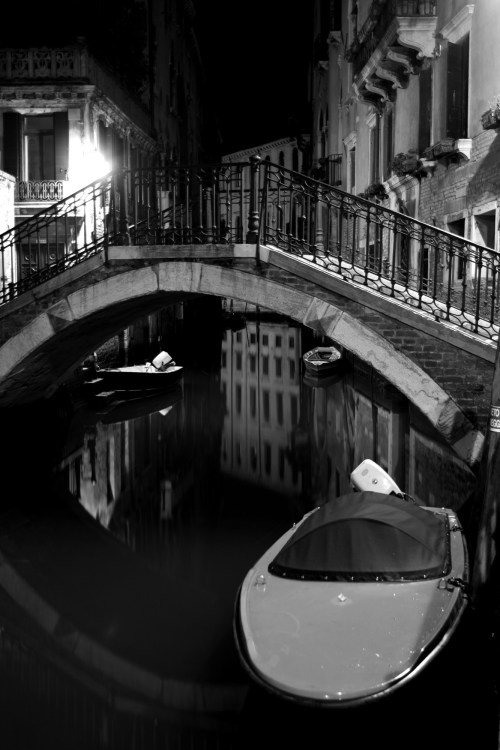
“Manoj Prabharkar?”

“Yes! See, I can talk to Australians. They know.”

The young man stood beside Dirk, leaning over him. He leaned in closer.

“Do you want some hashish, some marijuana? I have the finest hashish, not far to go.”

“How much?” asked Dirk.

“How much do you want?”

“No more than one thousand rupees. I’m running out of money.”

“One thousand rupees, no problem. But for one thousand five hundred, you can have the best quality.”

“Maybe,” said Dirk. “But that’s more than I want to spend.”

“You can spend what you like. First, I show you.”

Dirk shrugged. Again he noted Manoj’s milky, red eyes, and Dirk was sure that he must be a heavy smoker himself. In Darjeeling the local dealers, the pony-handlers, had eyes like piss-holes in the snow; their gaze always disquietingly unfocussed.

“Fuck  it.” he said. “Come on, show me. Is it far?”

“Not far, very close.”

Dirk stood up and swung his pack over both shoulders. The small bag, his only luggage, never left his sight, nor was it ever out of reach when not in his hotel room. The young man waited for him to be ready then set off keenly down the lane.

Manoj led Dirk through a network of alleys. Dirk wasn’t especially worried about becoming lost, for despite the confusion of streets, he only needed to find his way back to the river to orient, and the Ganges was hard to miss. The city stopped dead at its banks, with no bridges across, nor settlement on the other side. Instead it spread in a white blaze of heat towards a wobbling horizon; the flood plain of a river not now swollen.

The back lanes were full of small businesses; hole-in-the-wall shops, barbers, kitchens, spice-traders, grocers. Since he first began exploring Asia, Dirk had finally come to understand what the cities of the Roman Empire, which he had spent much time studying, must have been like. The eateries, with their counters sunk with vessels, stoves and ovens, fronting straight onto the street, were practically the same design. These huddled buildings would leave similar ruins. Here too was a polytheistic society. Manoj led Dirk through a great crowd milling about a Brahmin-blue temple entrance.

Five minutes of walking through the winding streets, brought them to a white-washed wooden door. Manoj pushed it open and walked straight through. Dirk followed cautiously, whilst Manoj waited inside for him then closed the door behind.

Manoj called something which Dirk did not catch, then beckoned him to follow. They were in a dark corridor that led into a small room at the base of a stairwell. Sitting on the floor was another young man. He smiled up at Dirk with the same milky red eyes.

“Hello,” he said. “I am Sanjay.”

“This is my brother,” said Manoj. “He will show you what you want.”

“Hi,” said Dirk. “Thanks.”

“Sit down,” said Manoj. “Take off your bag.”

Dirk sat down as instructed, though he did not remove his bag from his shoulders. There was something strange about the way Sanjay was sitting, and a moment later, as Sanjay shuffled on his hands across to an old wooden cupboard, Dirk noticed the horrible marks on his right leg. Almost the entire leg was covered with large, lumpy scabs; dark brown masses surrounded by yellow skin. Dirk shuddered at the colour and scale of it, and felt a wave of revulsion. What on earth could have caused such a thing? Was it a skin disease, or a horrible accident? It looked so unnatural, like burned foam. He caught himself staring as Sanjay, still resting on his haunches, pulled two large bricks of hashish from the cupboard. He crawled back across towards Dirk and placed these bricks on the floor. Wrapped in cling-film, they must have weighed a kilogram each at least.

“I have two varieties, as you can see,” said Sanjay.

Dirk nodded.

“This is the local stuff. From here in Varanasi. I don’t think it is the best. It is harder, less soft. Not so strong.”

“And the other?”

“From Punjab, very special. Very nice. Softer, stronger. You can smell it, please.”
He leaned forward awkwardly, across his wounded leg which was stretched in Dirk’s direction. Dirk took the heavy brick in two hands and tested the weight. It was a hefty block, and when he brought it up under his nose, he caught a strong, nutty scent; pungent and oily, with a dusky sweetness, like cloves.

“It smells good,” he said.

In truth, he had no idea of how good hashish should smell. It had long since vanished from the market in Australia, and the last time he’d seen it with any regularity was eight years ago in Rome.

Dirk handed the brick back to Sanjay. Despite a growing discomfort at the sight of the man’s wounds, his eyes could not help but be drawn to them. He looked around to see Manoj standing behind him and suddenly he felt very uncomfortable. He wanted his back against the wall, did not want anyone between him and the door. Dirk was an experienced traveller who didn’t like to put himself into situations from which he could not easily run, yet here he had done precisely that. He was large and strong, and didn’t doubt he could overpower both of these men, yet what secrets lay within this house of theirs? Other accomplices, a cloth full of chloroform, guns? Perhaps it was just paranoia, but such was his disposition, and anxiety had long been selected for genetically, precisely because the wary stayed alive.
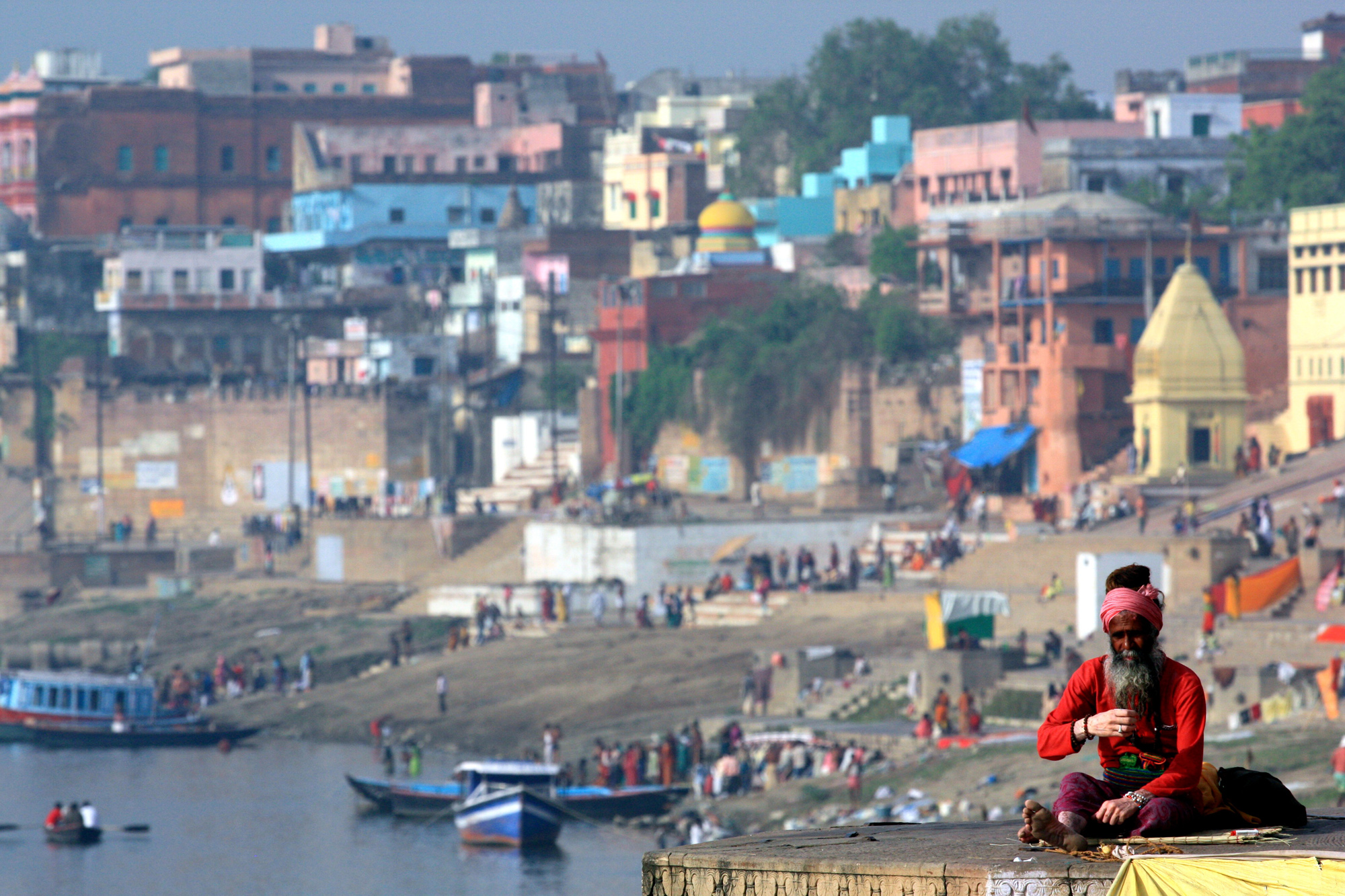
Sanjay was talking to him.

“How much do you want? I can do you any deal you like. Big, small. You want a lot, I make it cheaper.”

“I’m a tourist,” Dirk said. “I just want a little.”

Manoj now spoke from behind him.

“One thousand five hundred. One thousand five hundred for the good stuff.”

Dirk had a feeling of growing sickness in his stomach. He couldn’t stop looking at Sanjay’s leg. Perhaps it was the heat and the sun; perhaps it was the air. There was something vile about the air in Varanasi. The back lanes were full of rubbish and dung, malnourished rag-doll animals skulking half dead among the refuse. From the river came the cloying humidity; full of the ash of funeral pyres, burning plastic and septic, stagnant water. Dirk could only guess in horror at what manner of bacteria must have crept into his lungs. The wounds on Sanjay’s leg seemed to herald some tropical corruption; some grotesque, mutilating virus unheard of outside these swollen latitudes. Dirk felt himself reeling. His mouth went dry then quickly flushed with saliva. He was not about to be sick, yet fear had risen swiftly in him and he felt an urgent panic. He swallowed nervously.

Sanjay was talking, but Dirk, tired, stoned and dizzy, was not listening.

“I only want to spend one thousand,” he interrupted. “Can you just give me less? Really, I don’t care. Just give me less.”

“This is one thousand,” said Sanjay. “This one thousand five hundred.”

“I don’t mind,” said Dirk. “One thousand, please.”

“You don’t want the good stuff?”

“No. I mean, yes. But not so much. Can you just give me less?”

“Sure. But it won’t be so much.”

“Any is plenty. I don’t care.”

Sanjay watched him closely. His smile made Dirk feel even more nervous.

“You are wondering about my leg?” said Sanjay. “You are wondering what happened?”

“Umm, sure. What happened?”

“I was catching a train,” he said. “The train was leaving and I had to run to catch it. I tried to climb in, but fell and got caught on the step. The train dragged me for a very long way. My leg was skinned. My whole leg. Look, you can see. All the way.”

Dirk did not want to look, but something compelled him to do so. The yellow skin around the dreadful scabs seemed worse than the wounds themselves. What had made it that putrid, mustard colour? Was it the bruising? It seemed artificial, like the stains of mercurochrome. Dirk felt a new wave of sickness coming over him, and again he flushed with panic.

“I was selling hashish. I sold two kilos. I had two thousand dollars in a bag. Two thousand dollars and another kilogram of hashish. I dropped it on the train tracks. There was no chance to go back. All was lost.”

All was lost indeed, thought Dirk. This guy was the real deal; a proper dealer. A criminal. What was Dirk doing here, in this strange man’s house? With a drug dealer who dealt in kilogram blocks? Coming here was a bad call; it was too big for him. Sure, he wanted some hashish, but he didn’t like to be so close to the source. Inside this house, in a corrupt foreign country, anything might happen. He should have kept all such business to the streets; where he could run, where he could lose himself. Was the front door locked? Would he be able to escape if they tried to take him down? It was all taking too long and Manoj was still standing behind him, making him feel even more nervous. He hadn’t come here to be social; he had come here to score some goddamned hashish and didn’t want to be kept waiting; not when he was hot, not when he was scared, not when he was paranoid. He stood to his feet, clearing his throat in an exaggerated manner.

“I need to spit. I feel a bit sick.” He summoned up all he could in the hope of maintaining the ruse, despite his mouth having gone dry again after swallowing. Manoj stepped aside and watched him; the path was clear to the door! He stepped around the corner into the corridor; only metres from the street and from freedom. He hurried along, his bag still on his back. The door was not locked. Indeed, it was slightly ajar. If he needed to make a break for it, he could go right now, leave them wondering. He cleared his throat again, pushed open the door and stepped into the street.

Outside the sunlight was blinding. Thank god he still had his sunglasses on. He rolled his shoulders and opened his lungs. He spat what little he could manage. They must not suspect that he feared they wished him ill. Perhaps they would take offence, and rob him. He looked up and down the street. It was bright with the overhead sun; quiet in the midday heat. He took deep breaths and ran his hands through his hair.

“It’s okay,” he muttered to himself. “It’s okay, dog, relax.”

A moment later the tension seemed to go. They were waiting for him patiently. It was just a simple drug deal after all.

Dirk turned back inside, leaving the door slightly open. In the corridor, he reached into his pocket, withdrawing the small wad of notes he kept there to avoid fishing his wallet out in public. He peeled two five-hundred rupee notes off the roll, and returned to where he had been sitting on the floor. This time, however, he remained standing. The two young men smiled at him.

“All good,” said Dirk, handing out the money.

Sanjay reached up from the floor, handing him a fat little ball of hash.

“I think you will like it,” said Sanjay.

Dirk took the hash and placed it in the pocket of his tired, dirty shorts. He adjusted the bag on his shoulders and made a snorting laugh of release. The men chuckled with him; business done and everybody friends now.

Nothing, after all, was amiss.

The weather of late has been a titillating mix of dry heat and cool, crisp sunny days. There has been a lot of good eating and plenty of outdoors adventures, an especially indulgent start to spring. This last week also heralded the first two swims of the season. The first at what we like to call “the Resort”, which is the part of Bronte Beach immediately next to the ocean pool where the water from the pool spills down onto the rocks in a wide, continuous fan. It acts like a splendid water feature, and adds a certain luxuriousness to what is otherwise swimming in a large natural rockpool with abundant swaying seagrass.

So, a good start to the season on every level, with a lot of work to be done and plenty of things to look forward to. The good news is a coming holiday of seven weeks in Asia with V. We plan to fly via Bali and Singapore to India and spend the bulk of our time there. The local budget carriers make for a very surprisingly cheap round trip, which is, to say the least, very fortunate. Anyways, enough said, other than best wishes and an invitation to enjoy these photographs.

One Year On

It’s now more than a year since I moved to my lovely place of residence, a sunny little studio in Glebe – the aptly named Cornieworld 2. I should start by pointing out that there was, as implied, a Cornieworld 1. This was my previous apartment in Glebe, which I inhabited for roughly one year, between 2005 and 2006. This place, which was also lovely and sunny, and, it must be said, considerably larger than its sequel, was dubbed Cornieworld by my former partner in crime, “Pockets”, on account of my surname – not actually Rollmops, incidentally.

Cornieworld 2 is really very close to Cornieworld 1 geographically – so much so, that if I stick my head out the back window, I can see the balcony of Cornieworld 1 across the backyards and through the trees. It is not more than eighty metres from where I now lie on my beloved bed, writing this piece of fluff. I remain as deeply attached nostalgically to Cornieworld 1 as I have to many other favourite places of residence, and, indeed, to this one, in anticipation of the fact that I shall have to leave here at some point in the not too distant future.

So, one year on, my place has changed very little, physically. I’ve kept the same arrangement of furnishings, have not changed the decorations, and have kept it clean and orderly by regular vacuuming, dusting, polishing and the like. Consequently, it actually looks identical to how it looked once I’d completed my initial wave of home-making, which is nice, because I like to think I nailed it first up.

Having now experienced all four seasons in my studio, I can safely say that it’s a lovely place to be, come rain hail or shine. It did get a bit stuffy in summer and my failure to buy a larger fan was a regrettable oversight, yet it was rarely, if ever, unbearable and the amount of light and space I felt inside, despite its small size, was always refreshing. I’m also very partial to the blue-green end of the spectrum when it comes to living spaces. Without blues and greens I feel oppressed and desolate, and need these colours to comfort me. Too much red and brown leaves me very sad indeed, both impatient and harassed, and the colour scheme here has always been much to my taste. I can’t claim credit for the pale blue-grey of the walls, yet I do like to think I have balanced this nicely with the various pictures I’ve put up. Now, with the trees and grape vines on the trellis blooming fully again with fresh, spring greens the atmosphere is, more than ever, one of refreshing and beautiful calm.

When I wrote about moving here back in August last year, I titled the piece Sleeping with a Fridge. The reason for this was that, inevitably, in a studio, without a separate kitchen, there is little choice but to share the space with a fridge, and we all know that fridges have a habit of rumbling and grunting in their own sweet way. Having moved in, I was very soon reassured that my fridge would not be keeping me up at night or distracting me, and this has, fortunately, continued to be the case. The only times I notice the little guy is when he stops his quiet churning – an event punctuated by a brief stumbling as the parts cease to move. On such occasions I am assailed by such a sense of peaceful stillness that I am forced, every time, to remark at how I hadn’t realised the fridge was running until it stopped. And so, on that score, I can safely say that the fridge has proven to be a good housemate, and I’d quite happily share with him again.

My studio has one rather odd feature about it. The ceiling slopes down from one end to the other, so that above the door and the compact, yet spacious bathroom, there is a space which begins at roughly two feet in height, and reaches a height of three feet at the point where the ceiling meets with the wall. This space is the depth of the bathroom, about four and a half feet, and thus, above the bathroom and door, there is a sort of miniature loft. When I first moved in here, I wondered if it would be at all possible to make use of this space – perhaps getting a ladder to make it accessible – and for months used to joke about installing a Korean student and subletting for a hundred dollars a week. Well, I never did buy a ladder nor make any use of the space, and, for the sake of my peace and well-being, and, indeed, my sex life and privacy, I’m pleased that ultimately no Koreans were installed.

When I first moved into this place, I was riding high on a wave of personal revolution. Emerging like a phoenix from the ashes of a devastating break-up, I was full of an almost unbearable, restless energy and threw myself at everything I did with a vengeance – be it writing, photography, running, weightlifting and, indeed, dating. In this intense state of being I also found myself assailed by memories of the intense work ethic and level of output I’d had during my last time in Glebe, where I’d not only taken a lot of photographs and written a lot of prose, but spent much of my time agonisingly crafting poetry.

Thus, shortly after returning to this neck of the woods, inspired by the sheer compact brilliance of my studio, and totally in love with life in a new and profound way, I found myself writing a lot of poetry again. I do think some good material came out of this, but the new wave of enthusiasm for writing poetry soon petered out and has now evaporated.

This is unfortunate in that writing poetry is very much a craft and the less I do it, the less well I do it. Back in 2004 when I first began my Creative Writing Masters, I had a very excellent mentor in the form of Robert Gray, who was teaching poetry at UTS. I’d dabbled in the stuff before, but it was mostly pretty trite and unpolished and lacked any real technical sense. After being in the presence of this most erudite and kind man, who seemed not only to know everything it was possible to know about poetry, but also to be gifted with the wisdom of the ages, I was so inspired that my first poetry submission to Meanjin was successful. As soon as I was given such a sense of credibility, I was overwhelmed with a sense of destiny and, after an initial celebration in the form of a long, hard run where I pumped my fists a lot and shouted “I’m a fucking poet!” I kept it up and, for the next four years I diligently worked on my poems.

It seems strange in retrospect, having always considered myself a prose writer and having turned almost entirely to prose in recent years, that for a while there it was the poetry and not the novels or short stories that came out most completely. Much of the best material was written during my time in Cornieworld 1 and my second stint in Cambridge. Yet, when I returned to Australia in 2008, I ran out of steam and stopped working on poetry altogether.

It was nice therefore, albeit briefly, to find joy once again in crafting poems. I do hope this desire comes back, but for now it is the photography that has taken over as my preferred form of expression. Again, however, on this front, I have my return to Glebe to thank for this. As I’ve written elsewhere, I long ago grew tired of Sydney as a photographic subject, but over the last year, I have come to love shooting the place again. Photography too is very much a craft and whilst it might not be the same for everyone, I find that the more I do it, the more my eye is “in form”. Thus, much of my time here has been spent on editing photographs and putting together collections to publish on this very blog. It’s something I’m very pleased about, as I feared that only the stimulus of a foreign country was sufficient to get me out of my shell have take photos. I now never leave home without my camera, except when going running, and thus am well placed to catch those unexpected and ephemeral compositions that life throws up.

And so, the next phase of life approaches. Having been very fortunate in finding love in the last year, I shall be packing up this little haven in the next couple of months. It will be very sad to leave, but it has served me so amazingly well that I wouldn’t want to stress the relationship I have with the place and grow stagnant. For now, however, Cornieworld 2 lives on, and I shall make the most of its glorious last days.

Interregnum

I’m not entirely sure why, but I haven’t gotten a lot of writing done lately. The best excuse I can conjure is that I’ve worked a lot more mornings in recent weeks, and the morning is my best time for writing. In fact, I find it difficult to write once I’ve left the house and my head has been filled with stimuli and distractions. It’s surprising what can put my concentration off – even a simple conversation with someone can shift me out of the clear-headed mood that the morning brings. Still, my little perch here in Glebe has proven as accommodating as ever and offers the promise of future writing sessions to make up for the recently rather slack rate of output.

I have, however, taken a lot of photographs over the last month. Most of these have been in the same locales around which I’ve been gravitating for the past year, and I’m finding it increasingly difficult to put an original spin on things. A trip to the Blue Mountains with V last weekend offered the chance of new subject matter, yet I almost invariably fail to capitalise on natural settings. Perhaps it’s the fact that I’m too busy enjoying being outdoors and walking to want to focus on taking shots, and partly because I find nature more difficult to frame than people and architecture. It’s either too asymmetrical, or looks beautiful in its totality, but doesn’t fit into a frame well. The only things that ever seem to work are macros and vignettes, but I never seem to come away with much on that front. Still, what the hell, there is life, and there’s blogging, and I guess the former is more important than the latter.

The world has also provided another very effective distraction, having been rather riveting of late. What with the US presidential election and eruptions of violence over the release of the film The Innocence of Muslims – a topic I plan to address in the coming weeks – I have spent a lot of time listening to and reading news like a junkie. I certainly hope to hammer out a few more articles in the coming month, yet, having just taken on the task of reworking some of the English-teaching materials the high-school tutoring college in which I work, I suspect I shall be rather busy…

As for this collection of photographs, it took me a while to feel happy enough with what I had, but I got there in the end. The title, Interregnum, is the Latin term for a period between kings, and, of late, it feels as though no one has been sitting on the throne of Tragicocomedia. Fear not, however, Professor Rollmops is not dead. Long live Professor Rollmops!