Feeds:
Posts
Comments

This year really was remarkable, and it was remarkable on a number of levels: politically, economically, militarily, and, indeed, personally. So many exceptional things happened that, scanning back over the events of 2011, I see myself as a blur, flailing about between massive international stories and personal crises. 2011 was the year of the Arab Spring, and I don’t think even the economic crisis in Europe or the earthquake and Tsunami in Japan could trump that. Three absolutely colossal sequences of events, all of which, in themselves, contain individual events that would be considered huge stories in and of themselves; Tunisia, Egypt, Libya, Syria, Greece, the Fukushima nuclear crisis… And this is not to mention the Occupy movement, the London riots and the ongoing decline of American industrial might.

Just as the massive earthquake in Japan shifted the planet Earth ever so slightly off its axis, so 2011 saw the planet shift geopolitically. The rise of the Arab street has transformed the Middle East forever. The change is not yet securely in place, but the mechanism of change certainly is. It is difficult to predict what sort of governments and societies might emerge from the popular uprisings in the Middle East, but now that the people have found their voice, there is a real hope that they will no longer allow themselves to be lorded over by tyrants. One can only hope they seek a new direction in liberal governance and not religious fundamentalism. In the case of Egypt, one can only hope that they actually do get their revolution in the end. For, the sad fact of the matter is that a successful revolution means the removal and replacement of the governing body with a new one installed by the revolutionaries, and this has not happened in Egypt yet. The army is still in command as it always has been and despite them allowing elections to proceed, just how much power and privilege they are willing to relinquish is anyone’s guess. A possible worst-case scenario might be a marriage between the military and a resurgently non-secular Muslim Brotherhood. Wait and see.

Of course, Syria is the story of the moment – a situation about which I feel totally incapable of making confident predictions. Will the uprising spread further through the armed forces? Will there be a bloody civil war? Will the presence of Arab League observers ensure a transition to a more peaceful political solution? Will the sanctions hurt the government and security forces sufficiently to disrupt their campaign of oppression, or merely drive the people further into deprivation, poverty and anger, causing them to rise up with greater fury? Will the Assad regime come unstuck, or will they, through deception and manipulation, mitigate change to accommodate their continued rule?

And what now of Europe? The collapse of the Greek economy and their ability to service debt has not so much spread across Europe as it has occurred concurrently with other poor models of economic management. Spain, Ireland and even possibly Italy have all borrowed and spent beyond their means and now face internal crises of spiralling debt, stagnation, stagflation, and mass unemployment. It was once thought that a great strength of the Euro was that should one country encounter difficulties, it oughtn’t be sufficient to effect an economy as large as the Eurozone. Few predicted such a widespread debt and financial crisis, and few also predicted that the response would be so tiresomely old-fashioned. Austerity measures are one way of saving money, but they significantly inhibit the ability to produce money by removing stimulus from the economy. It might be cheaper to support workers on unemployment benefits than to pay them their public sector salaries, but the newly unemployed have very limited purchasing power, this further reducing consumer spending and increasing economic contraction.

Europe it seems, has yet to hit rock bottom, and precisely how it can recover long term is anyone’s guess. No doubt it will, but how with much social compromise? The rising success of authoritarian capitalism in China might be anomalous in the long term, but it could also presage a new model wherein democracy is no longer the inevitable consequence of prosperity. In China, the economy has always been strong when the state has been strong. Democracy might prove too big a risk in so vast a region, too unwieldy and detrimental to the smooth flow of capital and the operation of business and industry. Perhaps this is a particularly Chinese situation, but will Europe, in the grip of its highly divisive social pressures, ultimately seek solace once more in right wing politics: old fascism, new fascism? With China buying up global debt and investing its vast reserves in infrastructure projects at home and abroad, is this the moment when the west fatally stumbles and loses its hegemony? It has, to a great degree, lost much of its legitimacy, and were it not for the Arab Spring, one might fear that democracy itself as a desirable goal globally has lost much of its legitimacy.

This is quite an intense period globally, with communism dead and buried, capitalism has largely reigned triumphant by default. Apart from the more alarming extremes of ideology such as totalitarianism or religious fundamentalism the only real alternative ideology in politics, and one which is by no means intrinsically at odds with neo-liberal capitalism, is environmentalism. As this is seen as a challenge to capitalism, rather than as a means by which to regulate the worst excesses of capitalism, it has been demonised as the new communism – attracting venomous attacks by right wing forces the world over as nanny-state socialism designed to destroy private enterprise and restrict social freedoms, especially in the realm of consumer choice. And, let’s face it, consumer choice is the new democracy, providing sufficient of a sense of freedom to satisfy the over-consuming needs of the largely apolitical middle classes the world over. Singapore is a perfect example of this marriage of authoritarian government and consumer freedom, which may, alarmingly, provide an ideal template for the capitalist management of future societies.

So 2011 was, in some ways a very hopeful year for democracy and the empowerment of people, in others, a testament to the failings of western democratic capitalism versus Asian authoritarian capitalism. It was also a year that saw the further delay of any legal, binding environmental treaty to replace Kyoto, an almost purely symbolic treaty in itself. With governments mostly limiting themselves to voluntary reductions in greenhouse gases, with half-baked promises of a legally binding treaty to be determined in 2015, and hopefully taking force by the end of the decade, we can pretty well write off the next ten years so far as meaningful reductions are concerned. Certainly, there will be further investment in alternative renewable energy sources and other efforts to reduce carbon through greater industrial efficiency, yet without a grand global strategy and any real oversight, governments will default on their promises whenever convenient or expedient, or continue to move the goalposts as they have done for years while increasing carbon output. In truth, they would likely do this with a treaty in place anyway, as has proven to be the case with Kyoto.

The world is only just beginning to grasp the nature of the playing field that has developed in the twenty years since the collapse of the Soviet Bloc. Asia is in the ascendant, well on its way to becoming the wealthiest region on the planet, as it was for most of human history until Europe got lucky and discovered and exploited the wealth of the Americas. Brazil has now overtaken the UK as the world’s sixth-largest economy and the United States will finally be eclipsed by China by roughly 2025, possibly even sooner. To understand global priorities looking ahead, one only has to compare actions and words – governments are really only concerned about their economic vitality and thus the success of the businesses and economic activity that drives those economies – everything else is a sideshow. The gulf between the energy, speed and money poured into attempting to solve the economic crisis and funding the military, and the money and energy applied to tackling global warming, disease, sanitation, the rising cost of food, growing social inequality etc is absolutely staggering. Money talks and bullshit walks. As Leonard Cohen sang, “I’ve seen the future, brother, it is murder.”

On a more personal level, 2011 was an incredible year in which I finally returned to full productivity and regained my engagement with and interest in the world around me. After spending almost eighteen months in a virtual world, it took me some time, from the end of 2010 until roughly June of this year, to fully shake off the hangover and wake up.

To mix up some lyrics by The Church, “I embraced a machine, went through the routine, and hid from the people who were trying to find me.” Well, again, to quote The Church, 2011 was the year I came “back from software limbo.”

An ex-girlfriend once told me many years ago, when largely unenthused about life and engrossed in Baldur’s Gate 2, that it was as though I had lost the will to live. She was right, at the time, in a way, because there have been times when I’ve found, through hard work, drudgery, or indeed, overindulgence, that my interest in things around me has diminished to a shrug and forget “whatever.” Throughout 2009 and 2010, I found myself continually struggling against losing the will to live. Not in a serious sense – I’ve never been suicidal, but in the sense of putting a lot of energy into life and doing active and exciting things. There were moments where I really came back to life, such as the two months in India I had between March and May 2010, yet on the whole I was lacklustre, single and quite frankly, not at all bothered about where I was at in life.

Such a state of being was a luxury of sorts, but when I found things that mattered again, met new people and re-engaged, I was drawn back into reality and began to pay attention to it once more. Without wishing to go further into it, falling in love and getting dumped earlier in the year was the best thing that happened to me in ages. It shook off the last vestiges of the torpor that prevailed even in the post-gaming haze. Going to emotional hell and back, where I realised how much I hated myself and thus needed either to rebuild, reprogram or reinterpret myself, was precisely what I needed. It was only when deeply depressed and despairing that I could see the truth clearly and thus prioritise accordingly. Moving house, working harder, running harder and faster, seeing a psychologist, making new friends, finding new venues, applying myself fully to writing and photography, all proved beneficial. In effect, getting dumped kick-started a thoroughly enjoyable period of personal spring-cleaning that has filled me with hope and purpose. It also put me in a great place from which to meet someone amazing, the best possible finish to a very trying and exciting year. I certainly won’t be forgetting this year in a hurry.
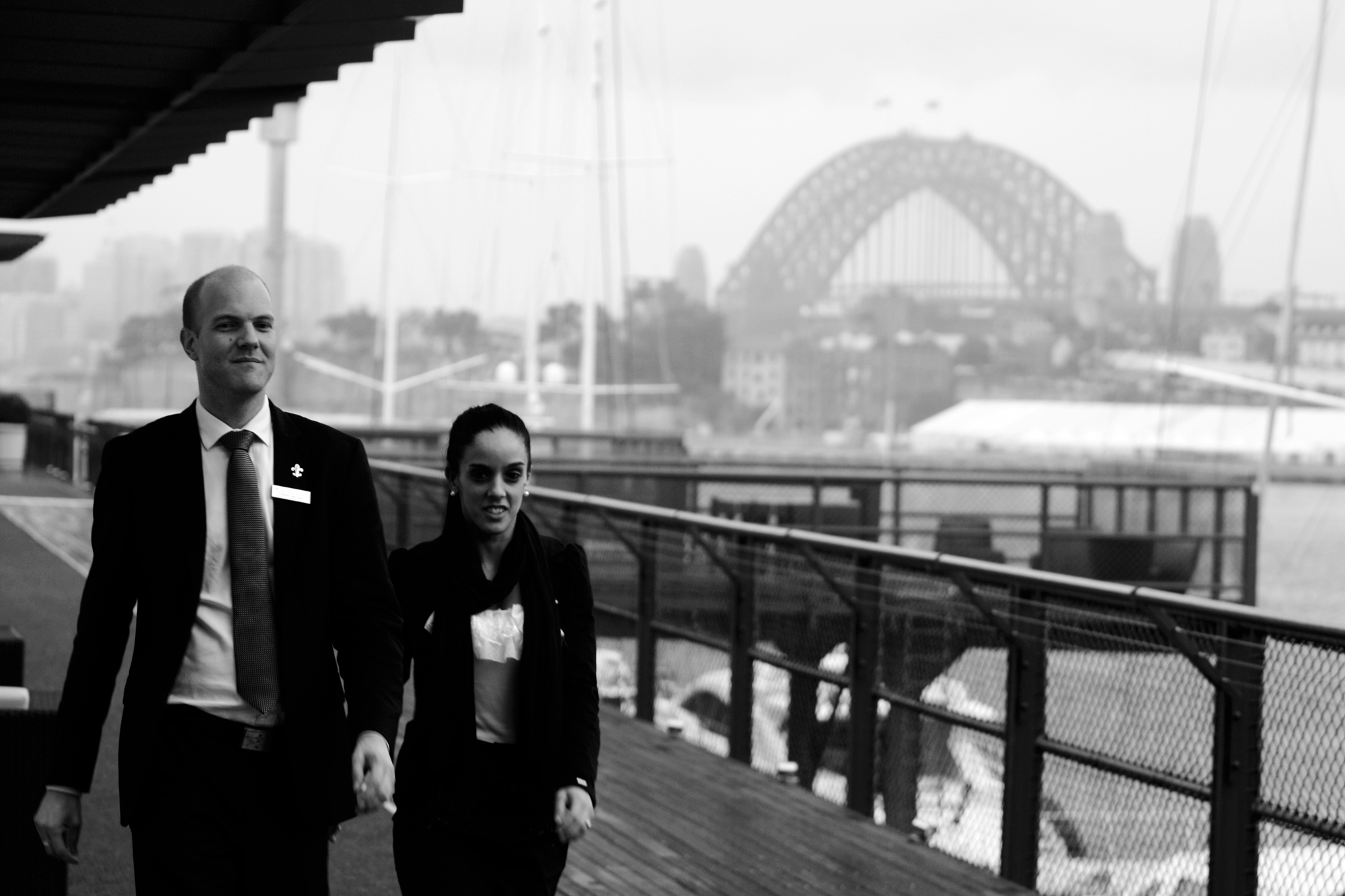
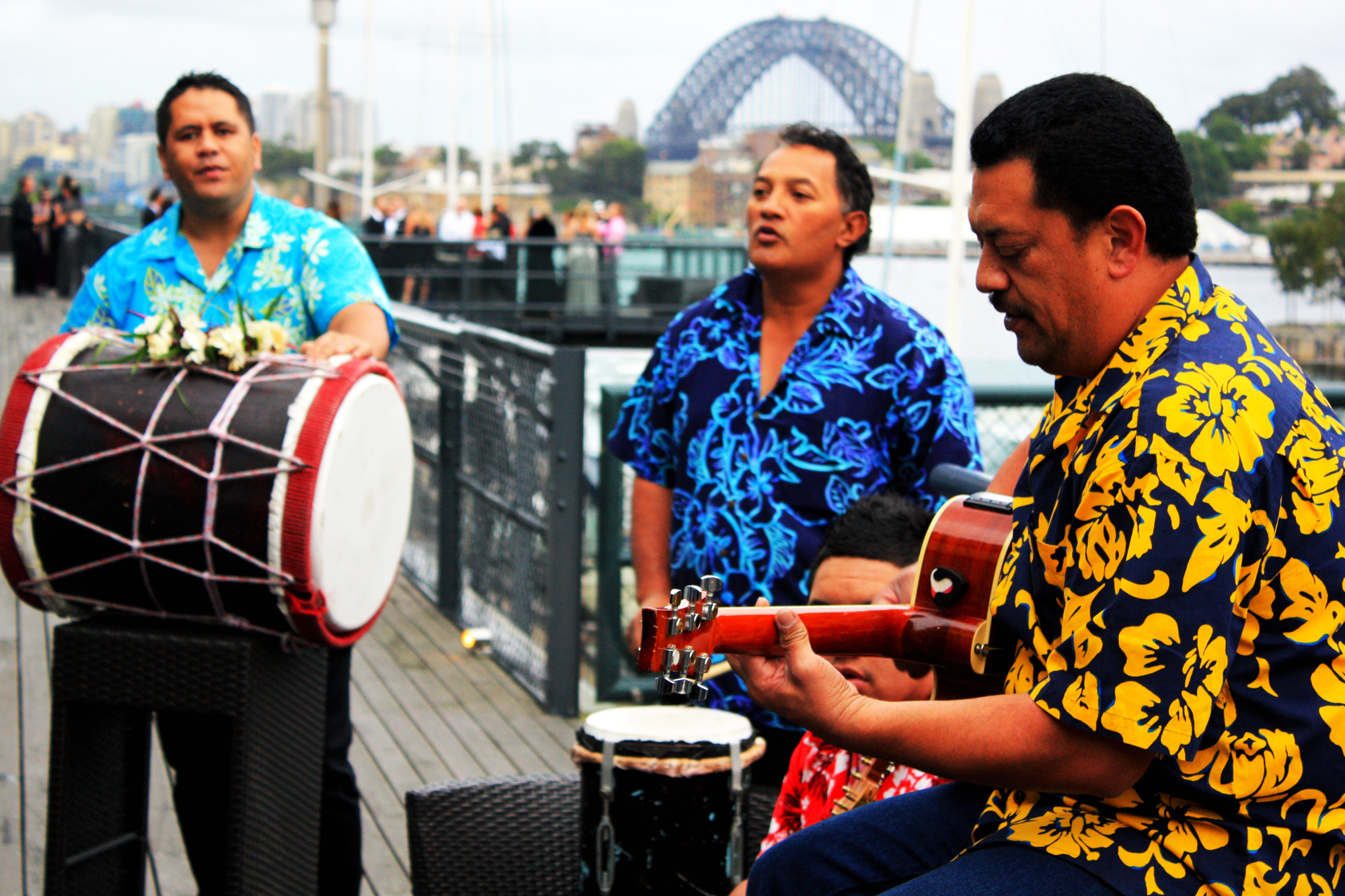
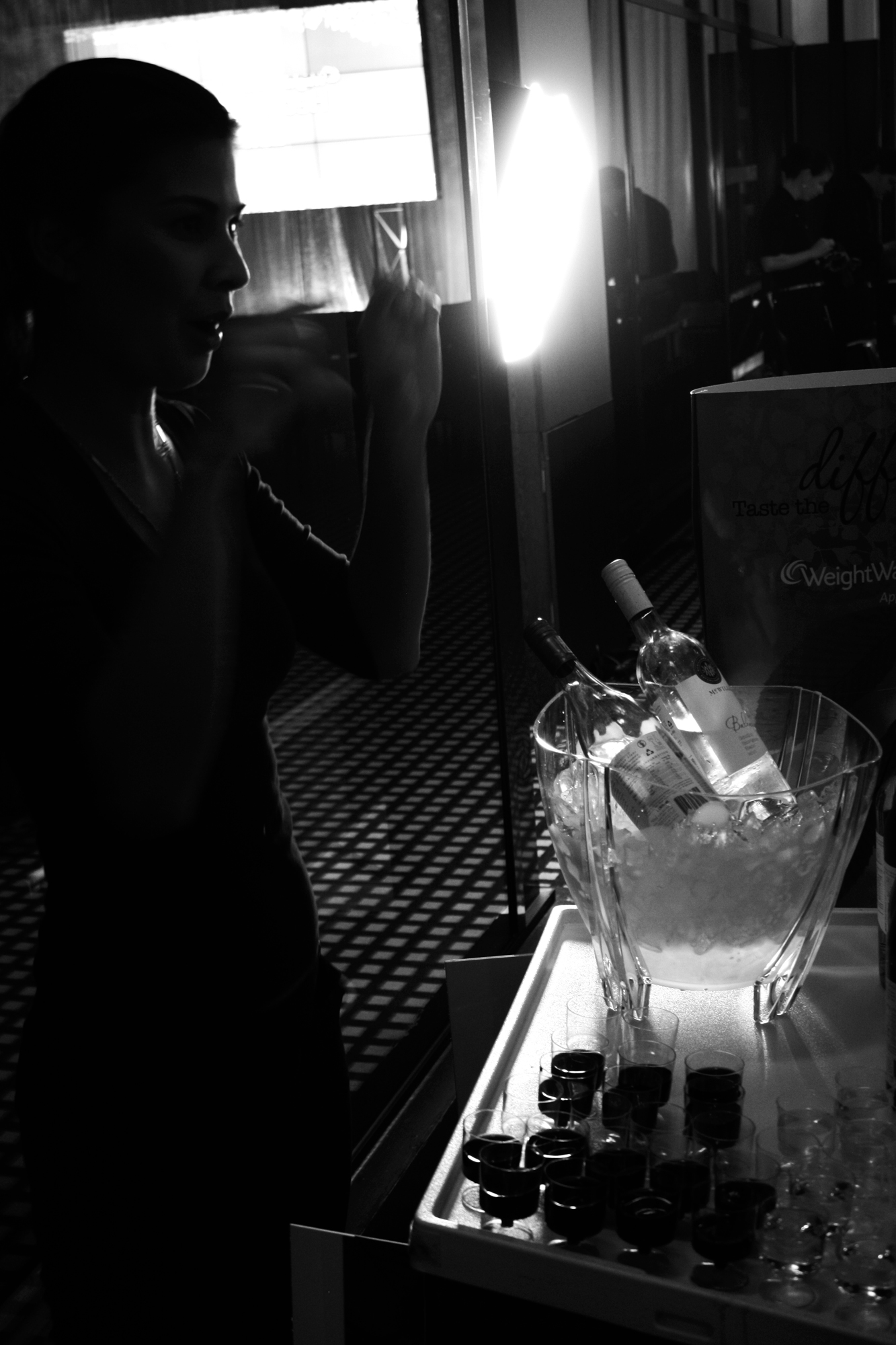
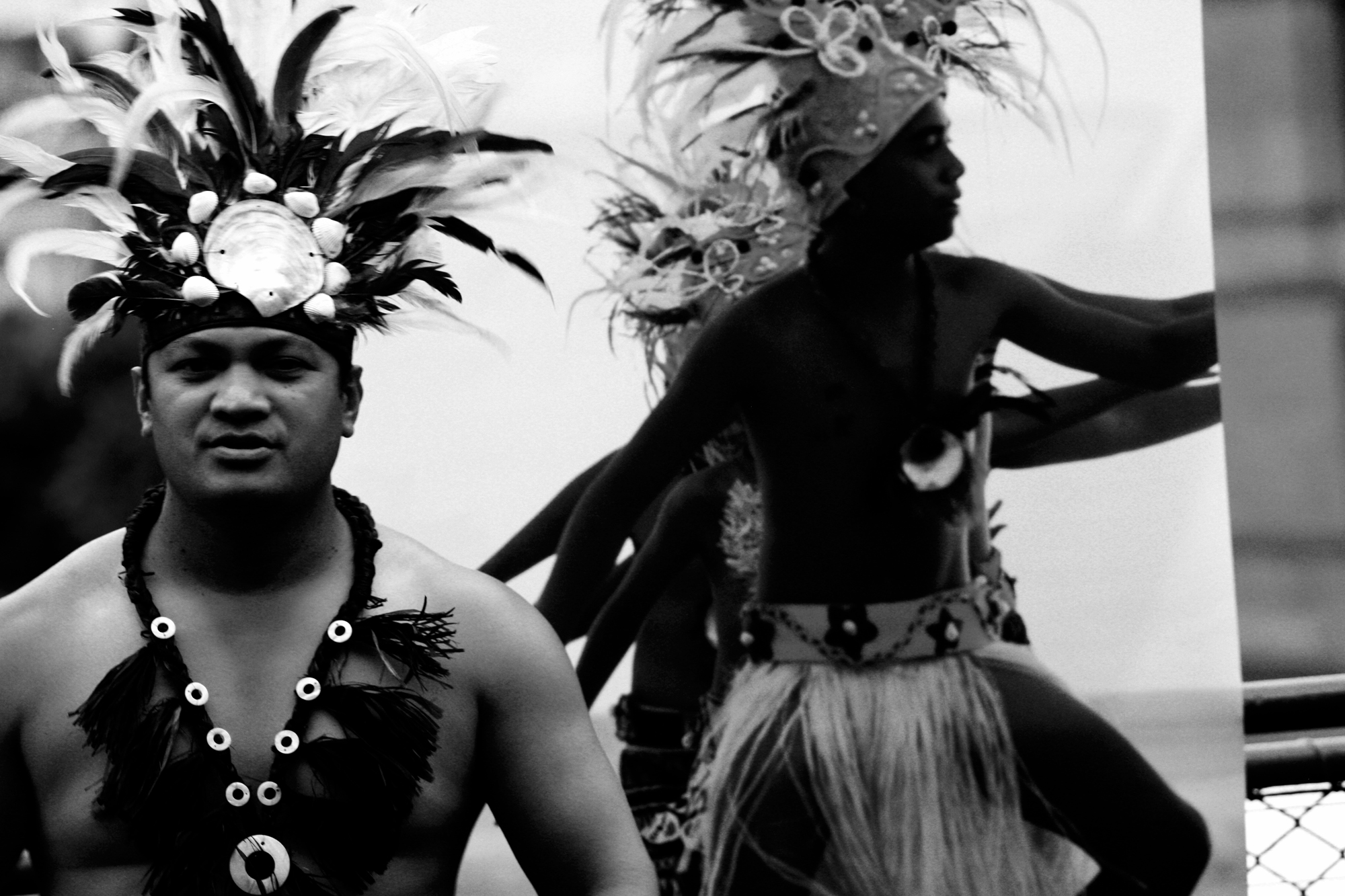
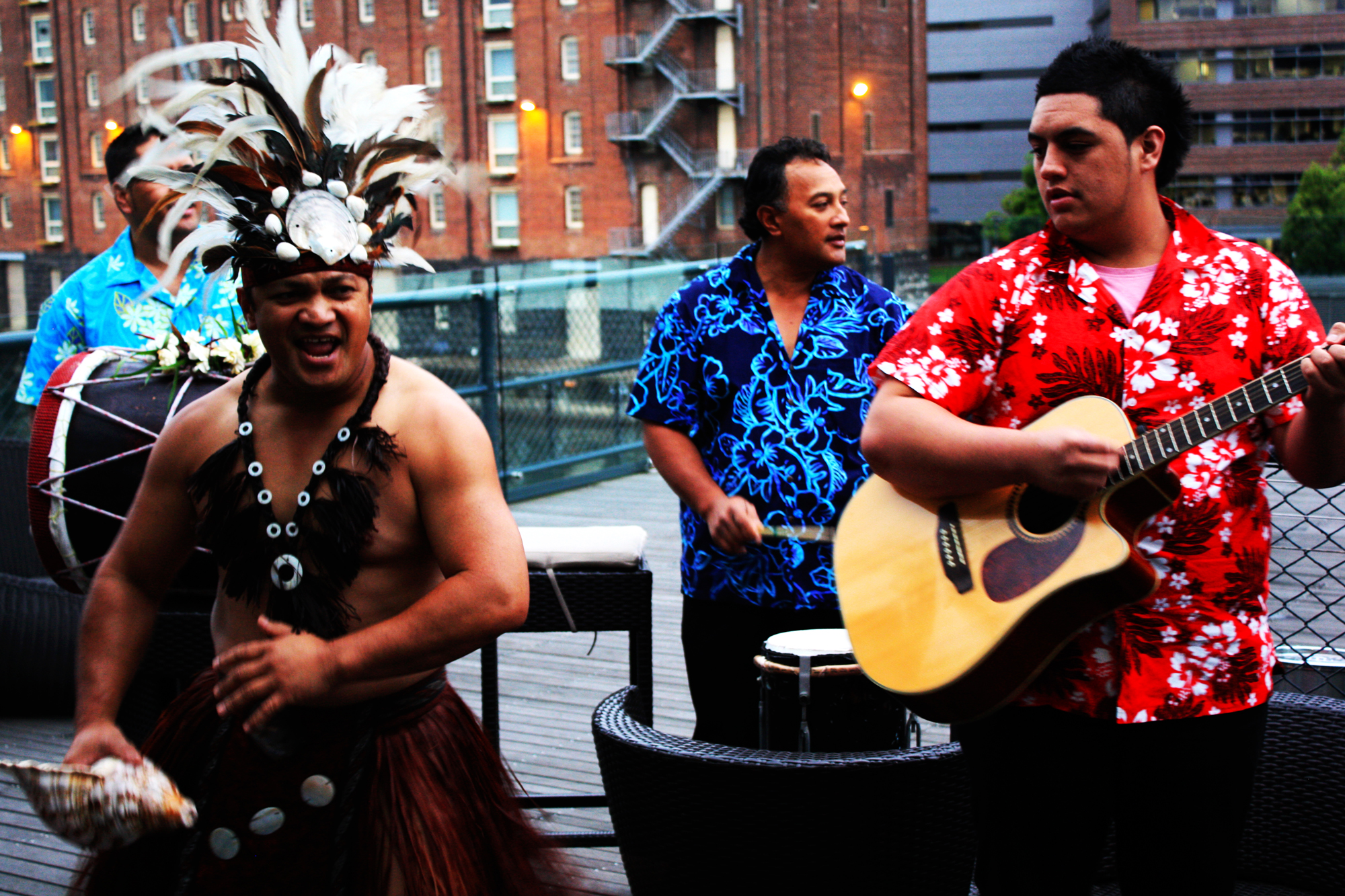
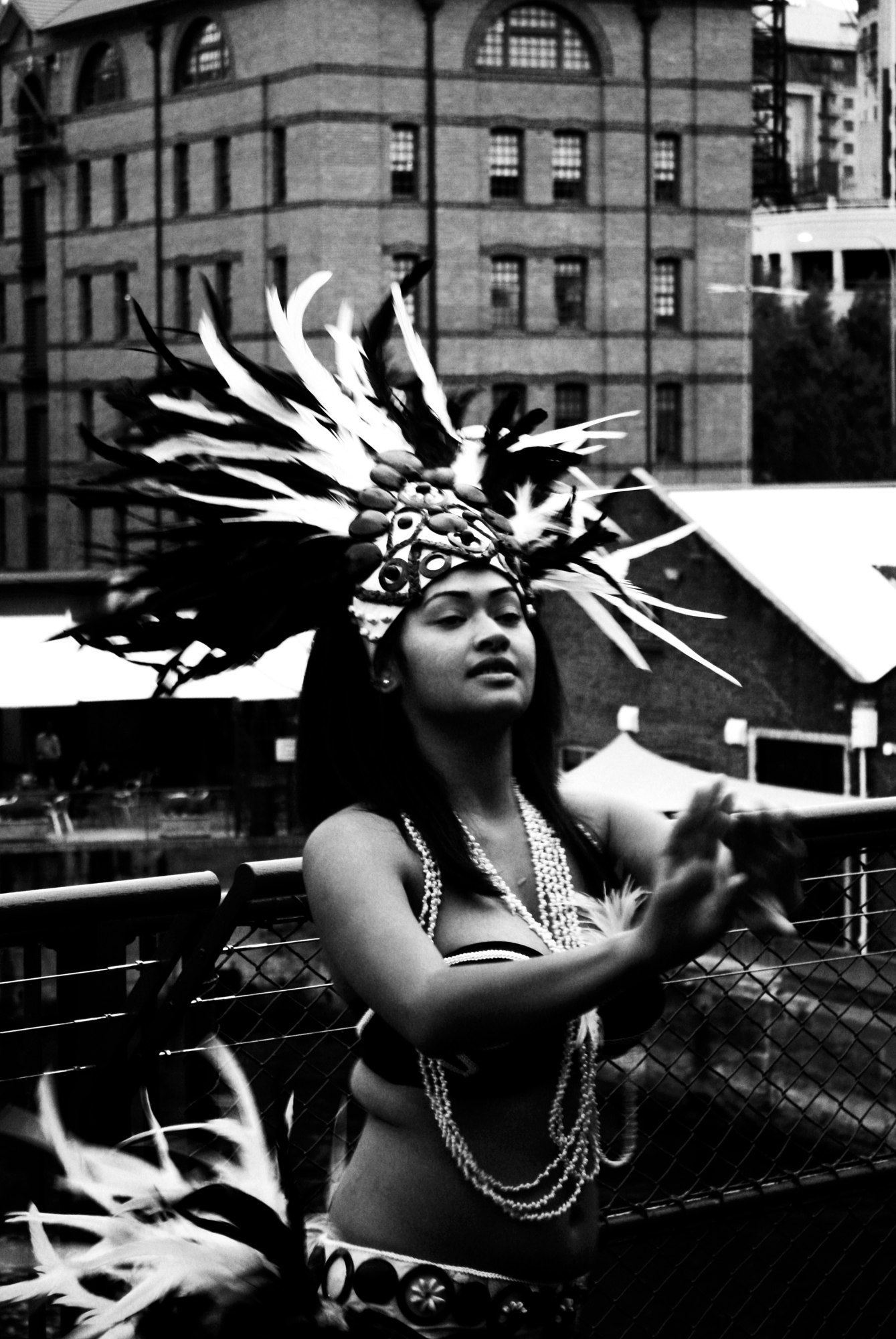
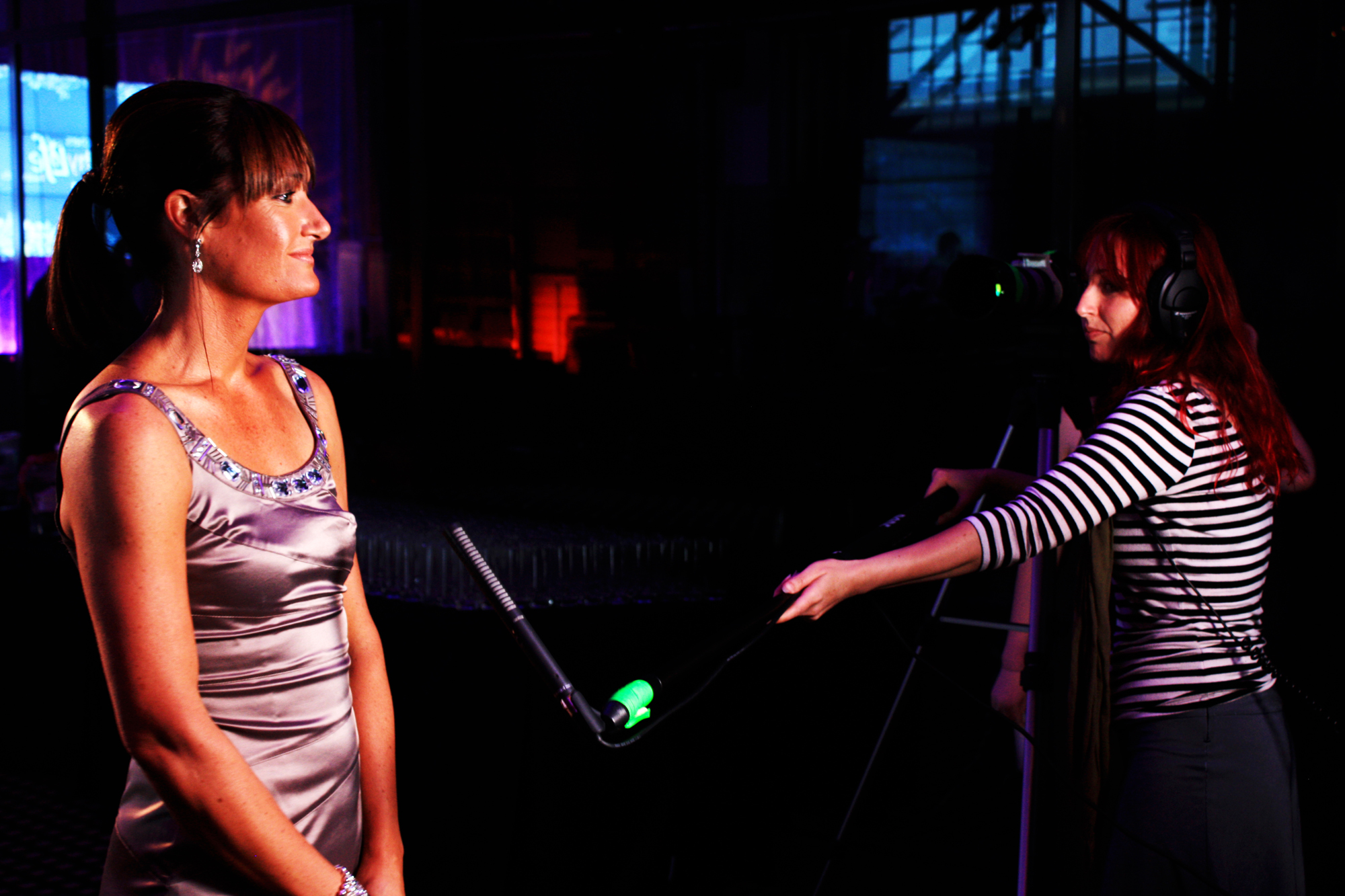
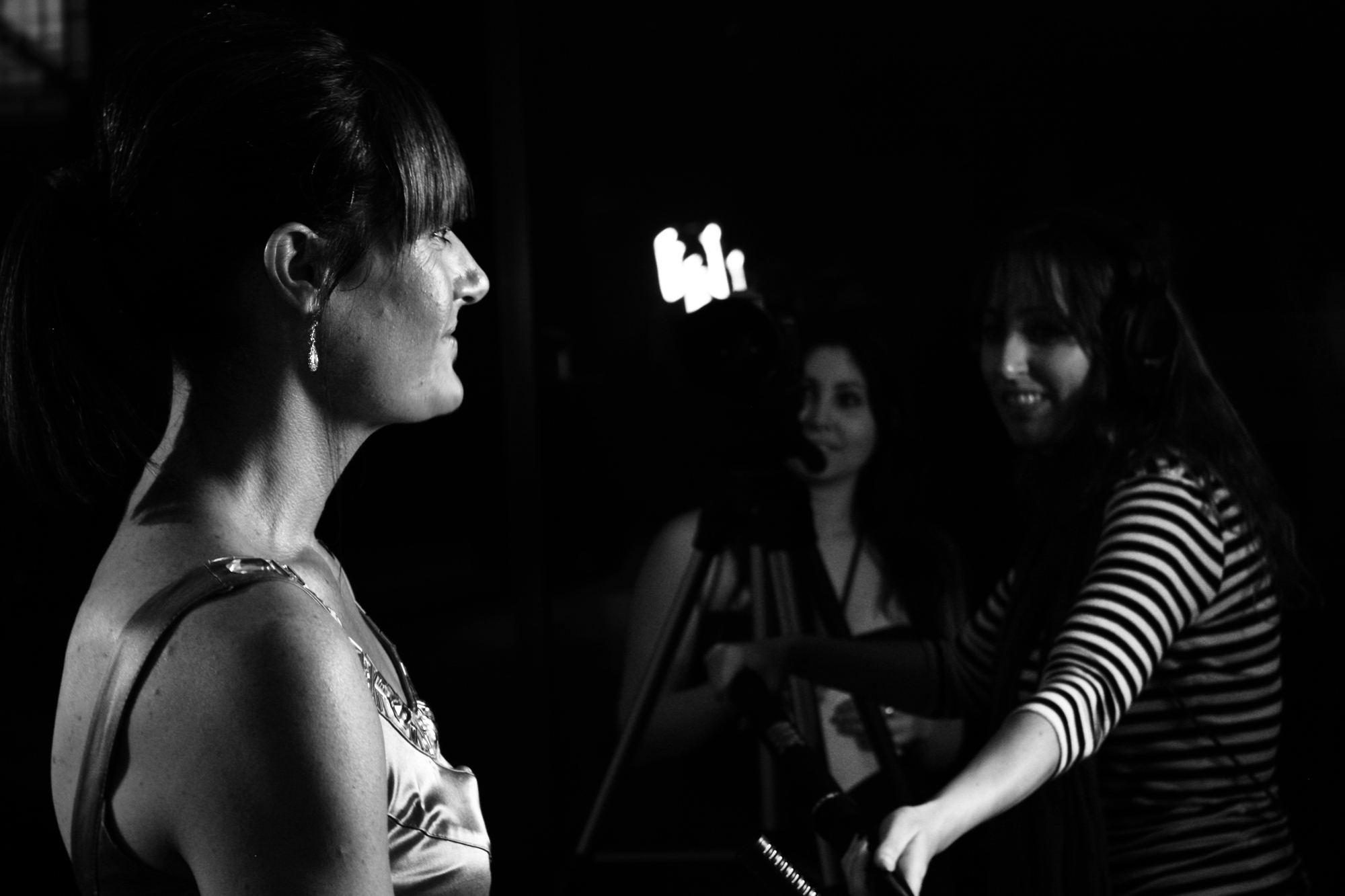
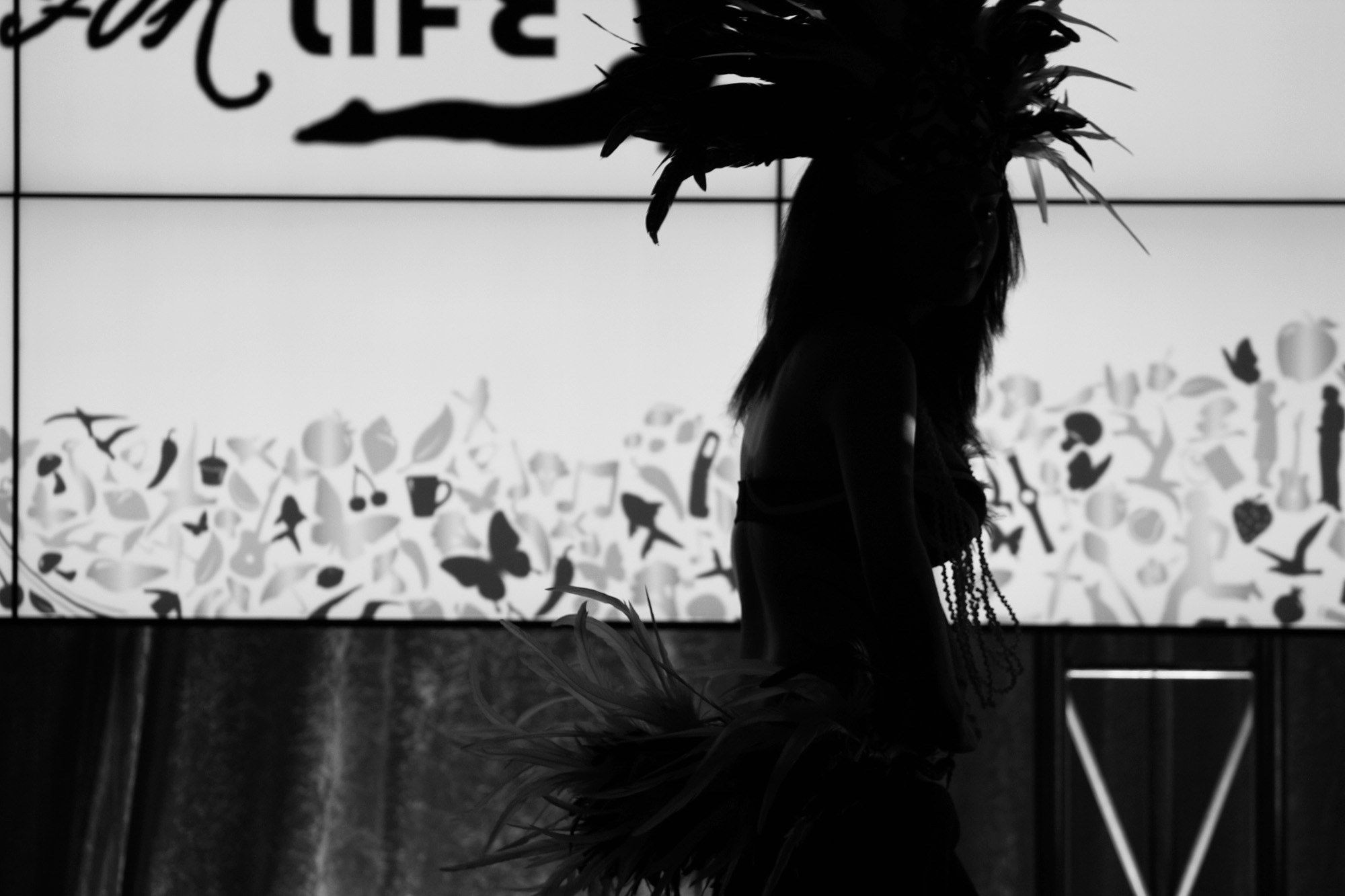
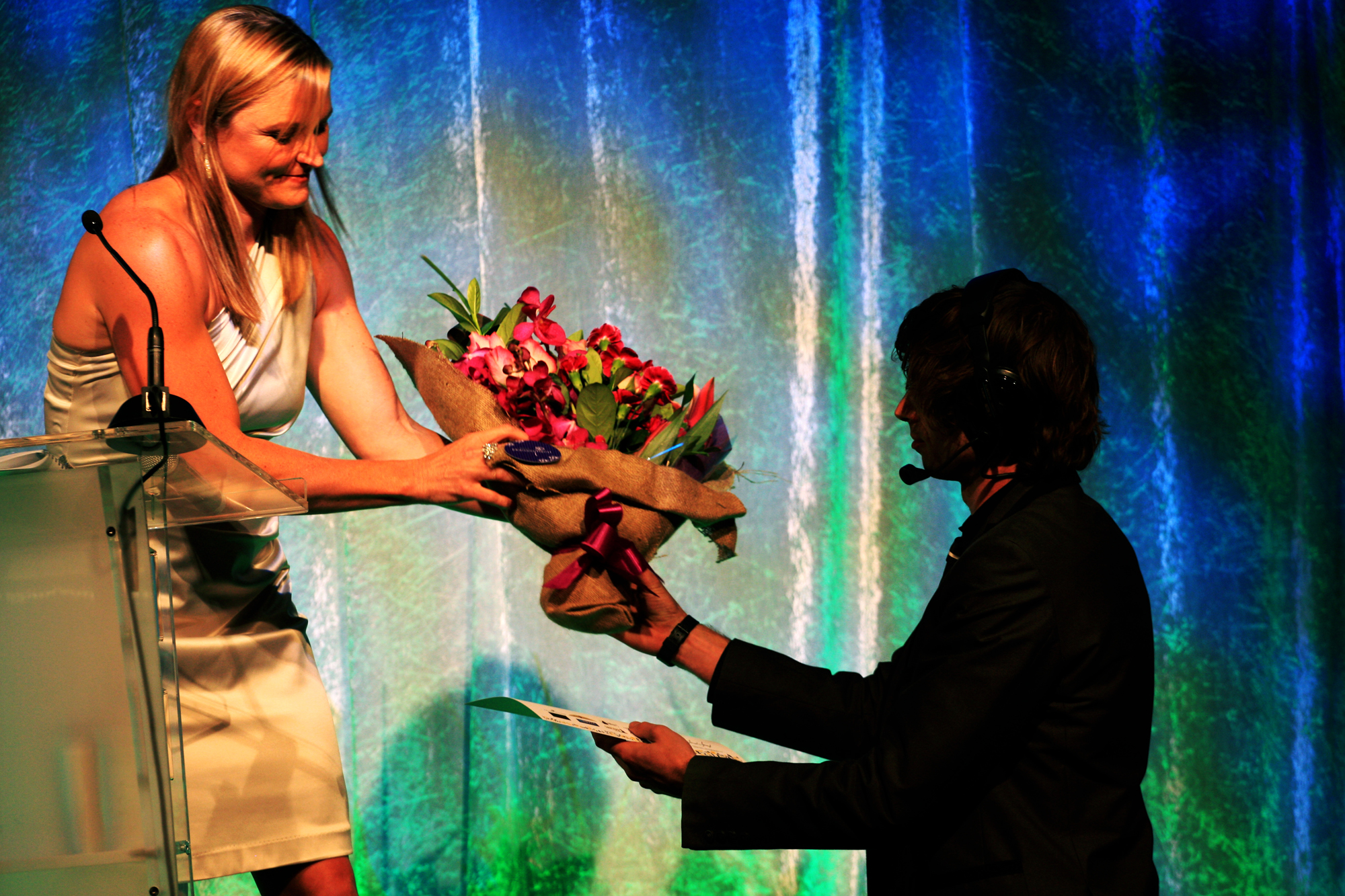
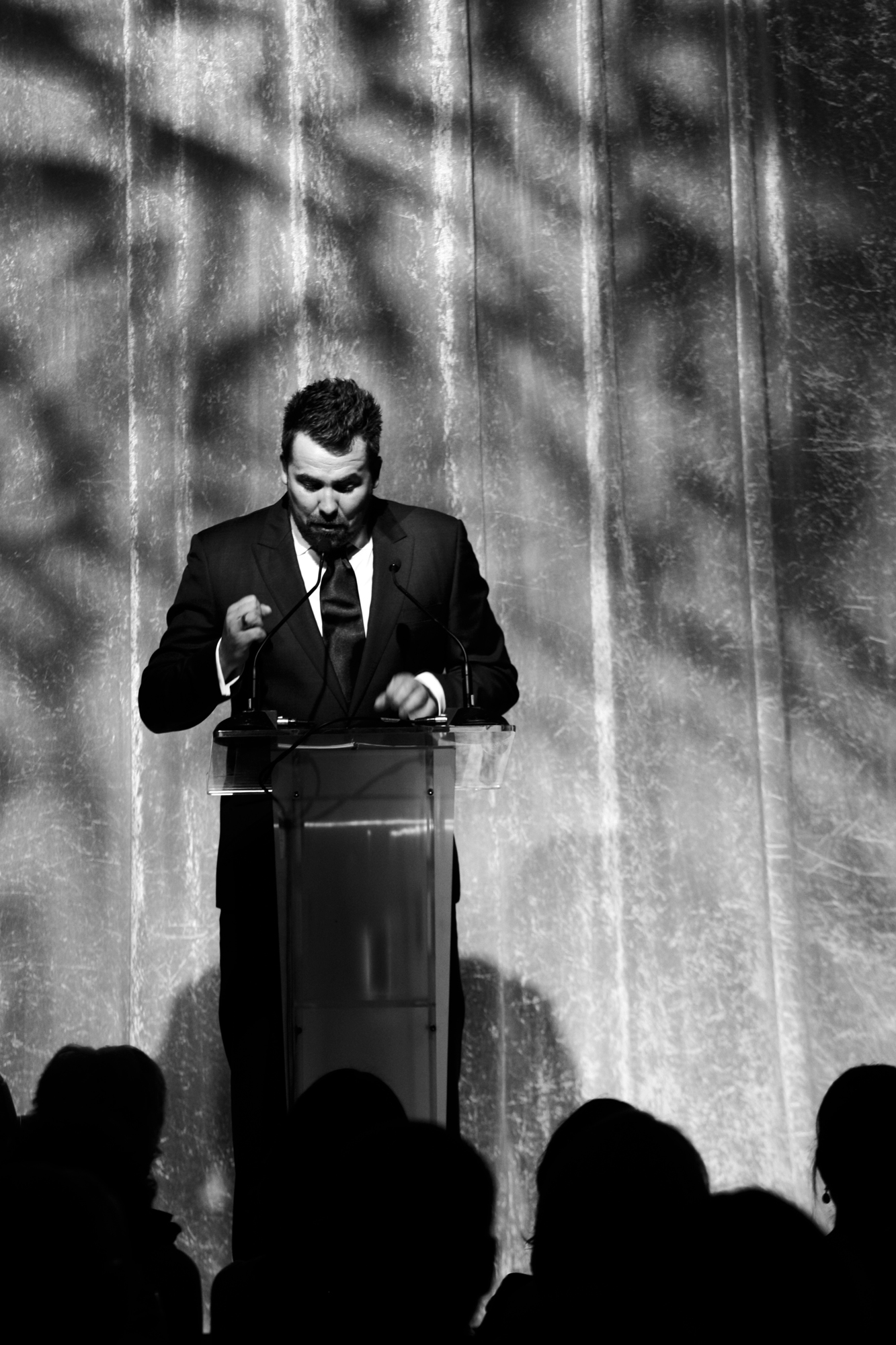
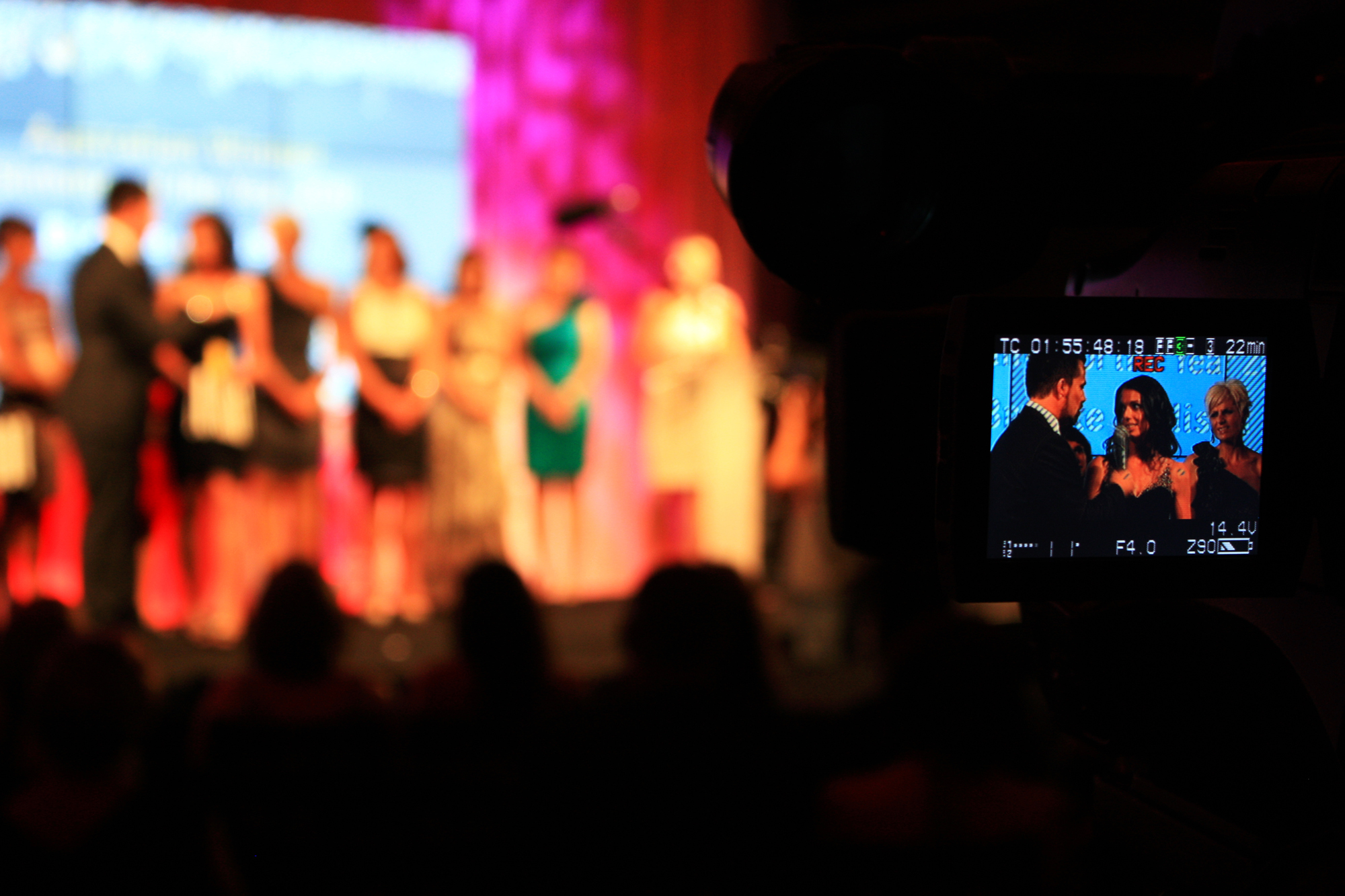
Here are a selection of photographs from my first paid job. It was a fun evening – the Weight Watchers Slimmer of the Year awards, or something along those lines – held at Doltone House in Sydney Harbour, near Jackson’s Landing. As the event was already being photographed and videoed by other people, my job was to prowl around the edges and take more candid, arty photographs of the event. I worked pretty hard throughout the evening and didn’t stop shooting for almost four hours, during which time I took around 900 images. From those I ultimately selected roughly ninety for the final package and edited them in a seven-hour spree that very night, staying up until dawn, oddly zealous about finishing the job.

The photographs featured here are those which I liked the most from the evening, with perhaps a few too many of the Fijian musicians!

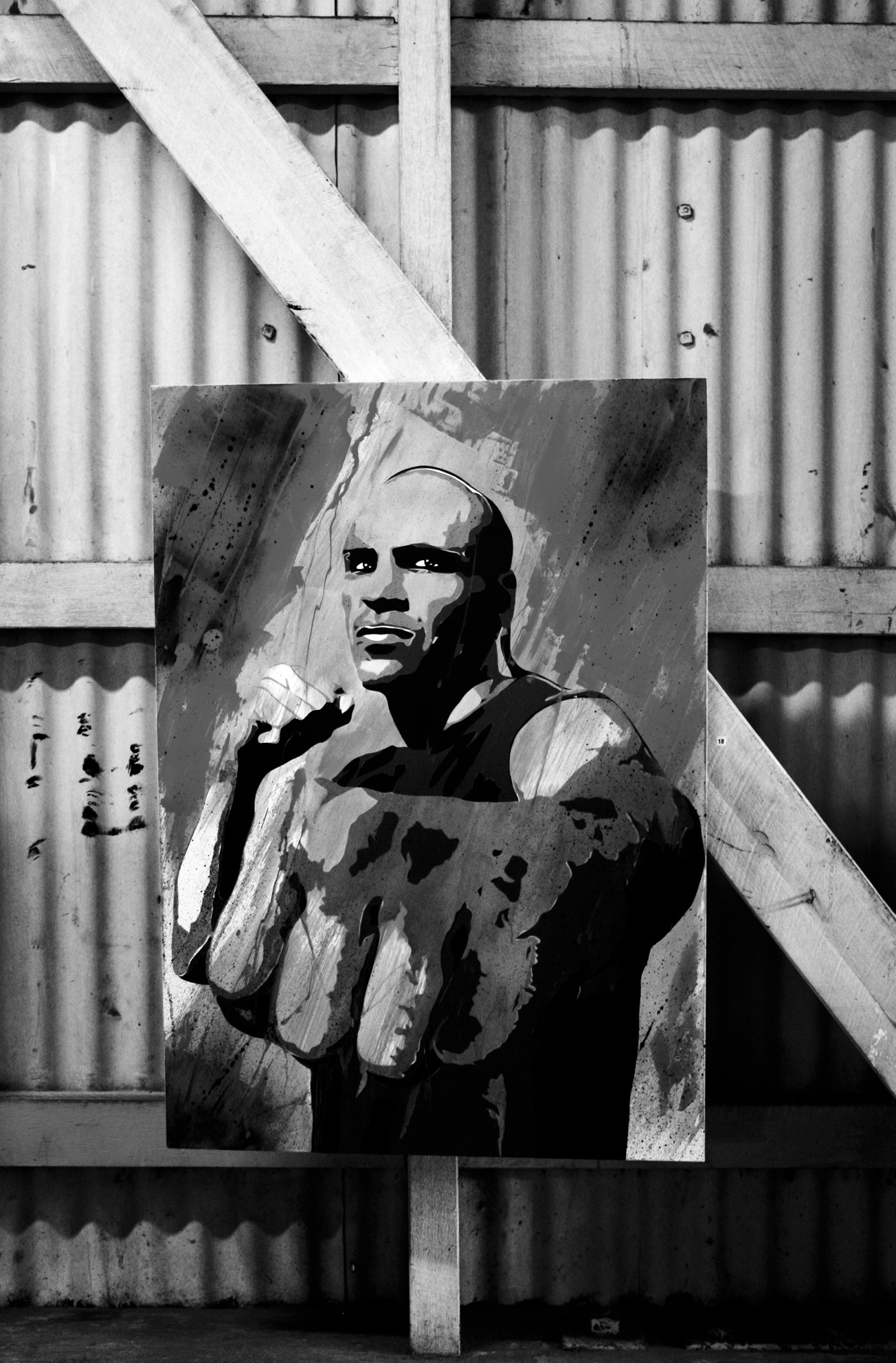
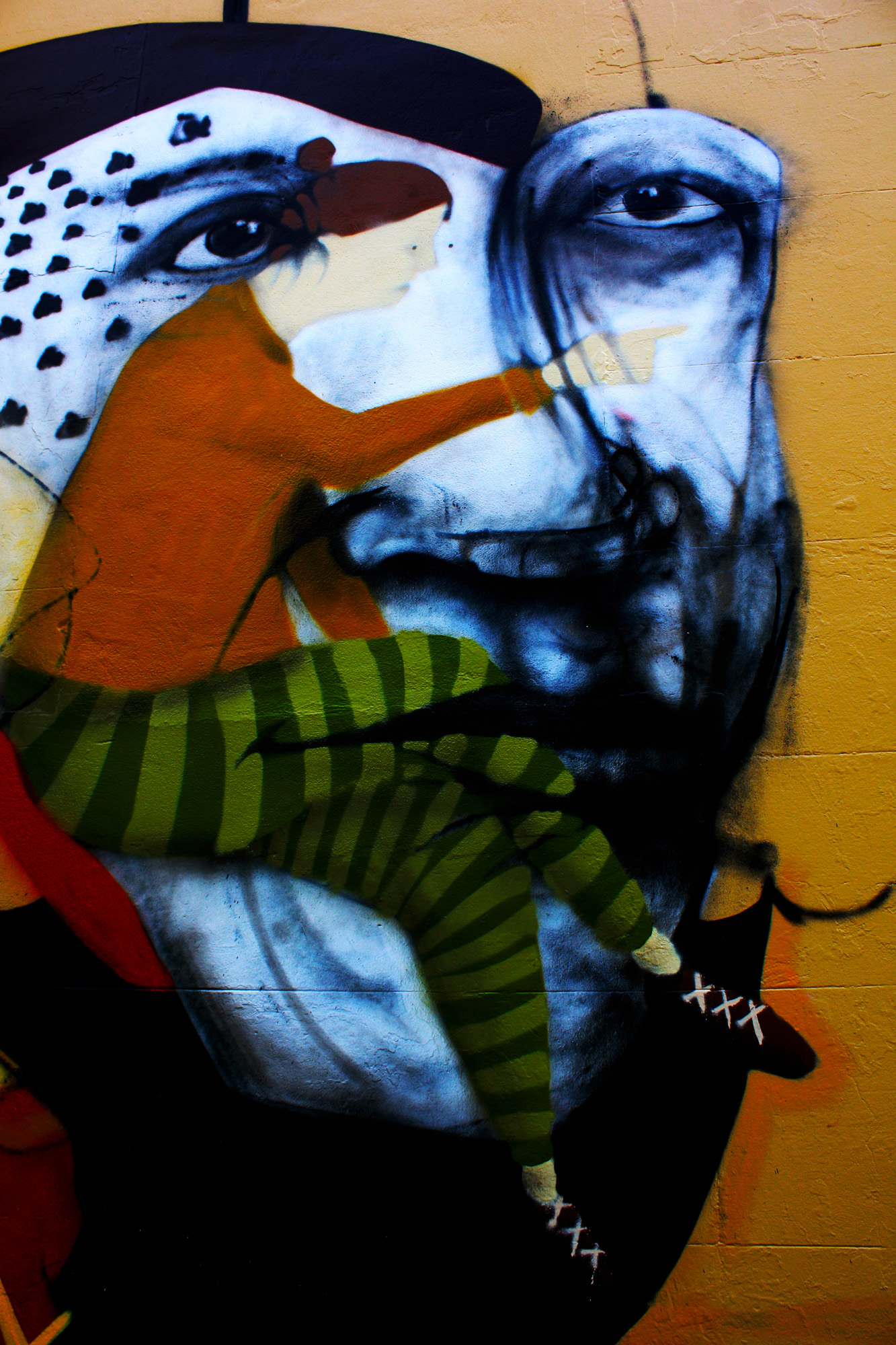
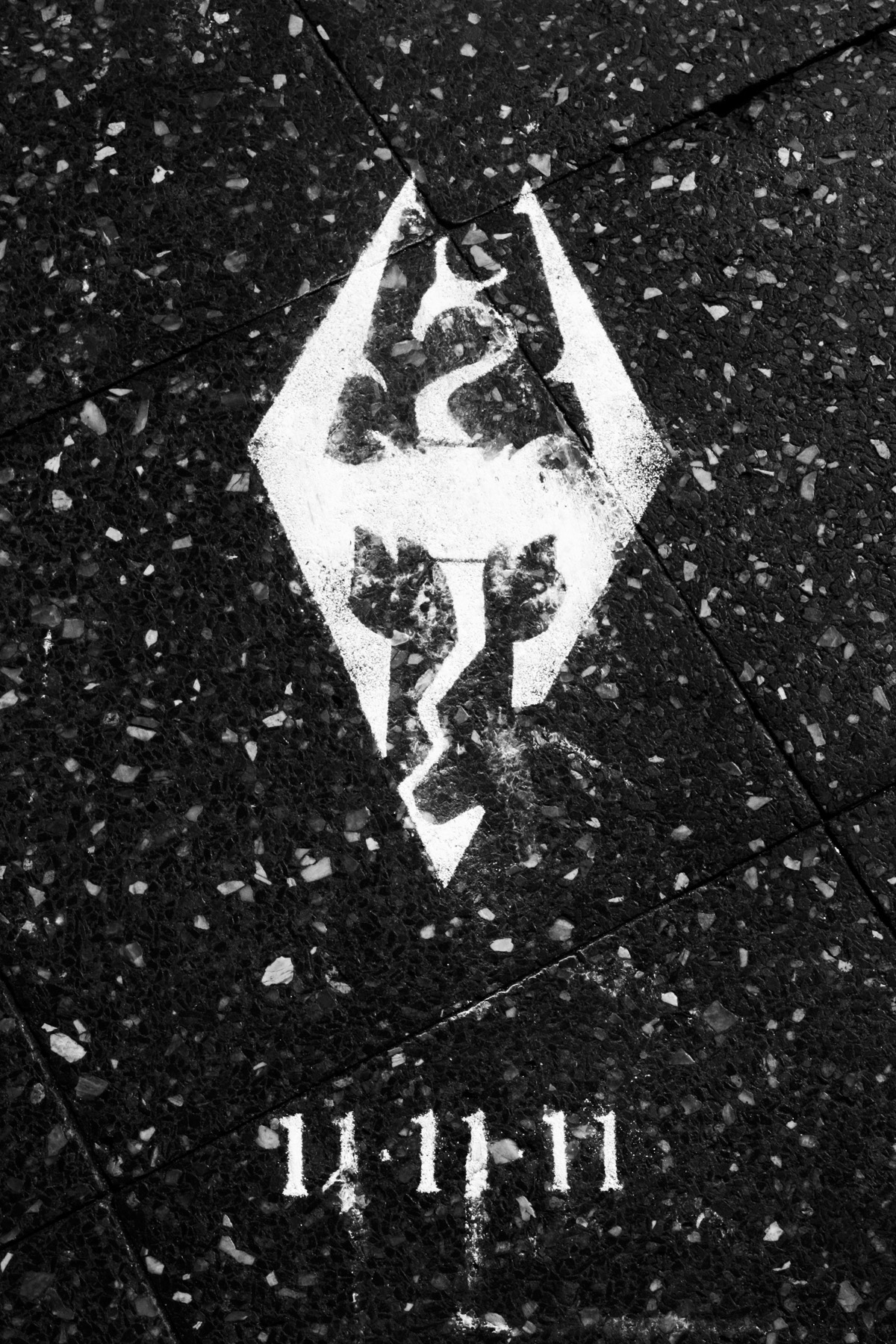
I recently attended the OUTPOST street art and graffiti exhibition on Cockatoo Island in Sydney Harbour. I had never actually been to Cockatoo Island before and was very impressed by the ways in which this former industrial site is being utilised. It makes for an excellent exhibition space, as well as a good venue for festivals, concerts and the like. The timing of this seemed surprisingly appropriate, as it comes shortly after my having developed more of an interest in contemporary street art around Sydney. I recall a few years ago a friend from Melbourne lamenting the lack of stencil art and other, more creative and, indeed, political forms of street art in Sydney. Whilst Melbourne may still be ahead on this front, Sydney has certainly taken to stencil art and there seems to be a greater diversity of styles of graffiti generally, many of which are immediately recognisable as belonging to particular artists.

I must confess that I’m hopeless on the attribution front. I should take more of an interest in the artists themselves, yet seem to have a blind-spot for tags and signatures on murals, which all too often are left out of the composition when I take a photograph. Perhaps it’s time to reintroduce the old photographer’s notebook.

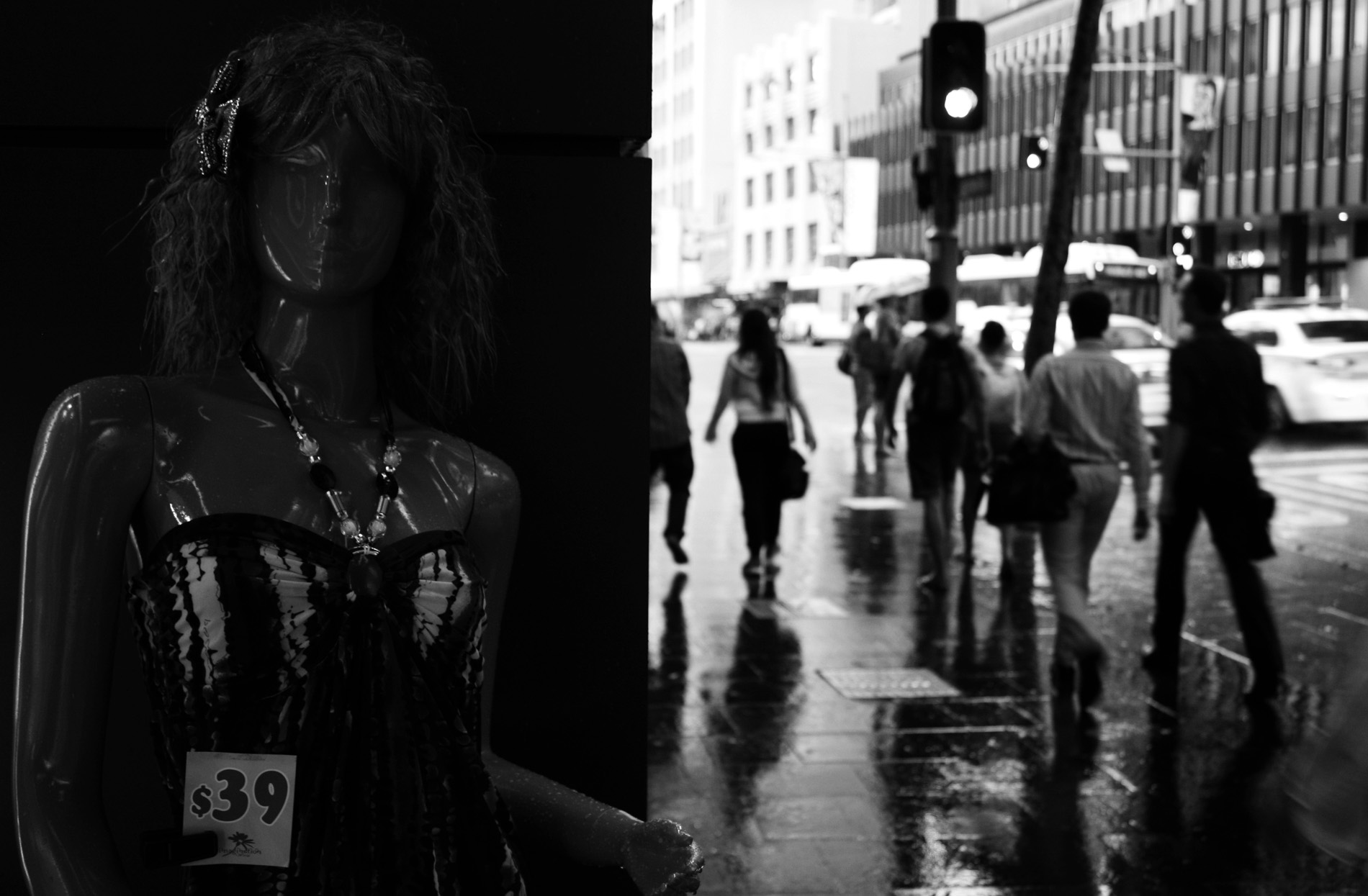
The other current point of fascination is shop windows, both on account of their content and their reflections, but also a combination of the two. It’s nice to have an almost-human subject that does not move, just as it is equally nice to be surprised by the unexpected rhythms of human motion.

Then, of course, there is the hottest topic of the summer: The weather.

The rain has kept on coming and the many lovers of summer seem baffled. I suppose sunshine is the predominant narrative of Australia, in much the same way that the bush and, subsequently, the beach, has dominated Australian identity. These are all narratives that I have, at various times, embraced and rejected with equal enthusiasm. After a pale and indoor childhood of nerdy pursuits, I finally took an interest in outdoor activities with the arrival of puberty. By the summers of 1991-93, I went to the beach almost five days a week. From December 1995 to late April, 1996, I lived at Bronte and swam at the beach pretty well every day. Soon after this, my excitement about summer began to wane. In 1997, after a five and a half month trip around Europe, I returned to a more bookish, autumnal and wintry mood. This despite an undercurrent of yearning, almost poetic in character, inspired by Lawrence of Arabia, for a desert aesthetic: I painted my Glebe apartment a combination of sky blue and pale desert sand.

When I lived in England from 1999 to 2003, I craved the beach, hot weather and sunshine. I remember enthusing, with my good friend Chris, about “stinkers” – really disgustingly hot days that began very hot indeed. If anyone can recall New Year’s Day 2006, when it was 38 by 0800AM and ultimately hit 46 centigrade, then you know what I’m talking about. Stuff died. People died. Yet once my time in England was through, I realised how little of a sop the hot weather and beaches of Australia were, compared to the urban centres, archaeological sites, museums, galleries, and indeed, more mountainous landscape of Europe. Since then I’ve hardly gone to the beach at all, despite enjoying it every time I do. Unless a lift is on offer, getting there seems more hassle than it’s worth. Without the beach, summer is almost entirely redundant, with the exception of a dimly flickering interest in the outcome of the seasonal cricket tests…

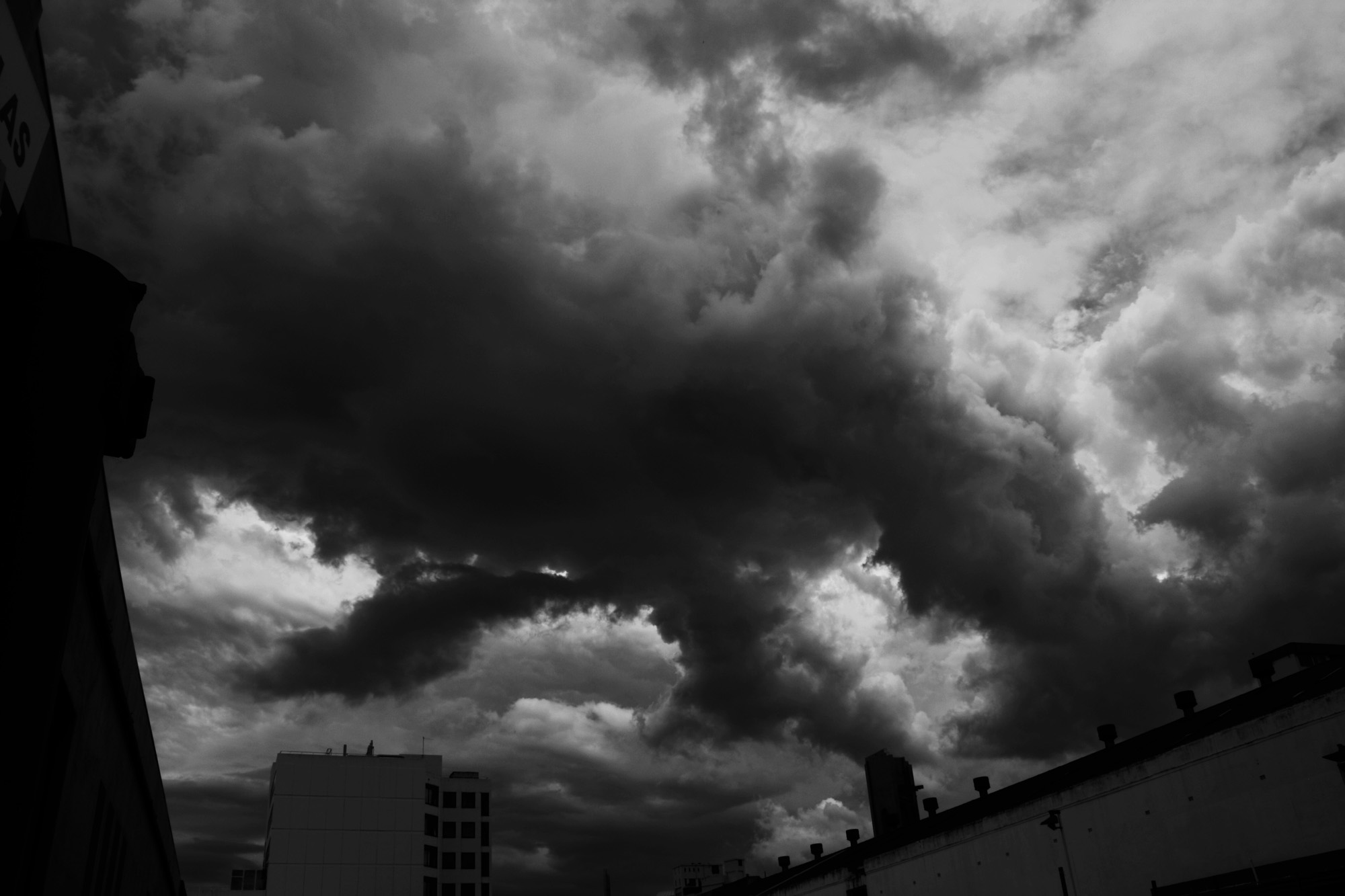
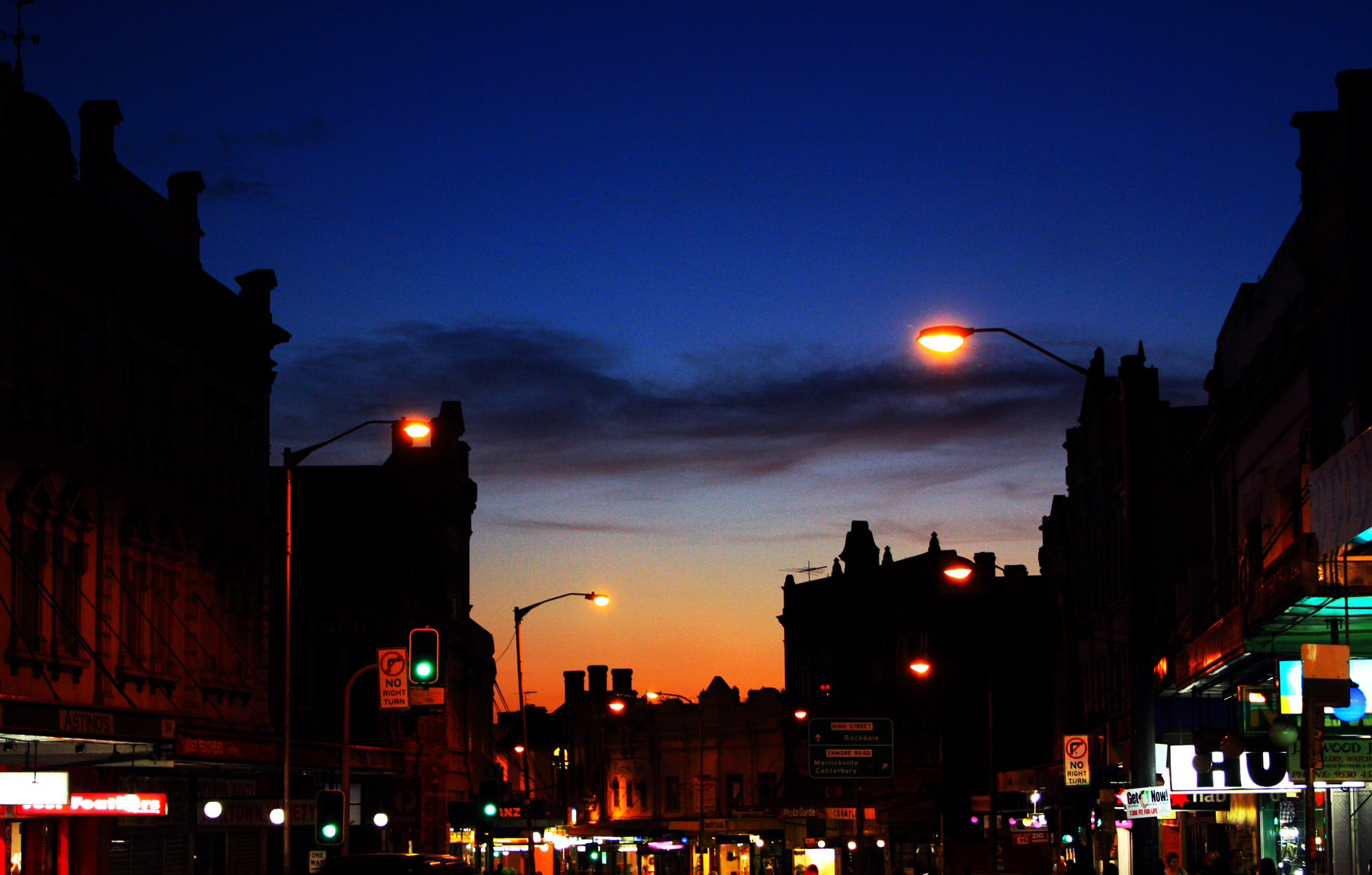
So, we’ve been privy to plenty of rain, plenty of incredible cloud formations, plenty of slick, wet streets and almost endemic umbrella use. Not a day goes by where I don’t check the radar from the meteorological bureau to see how best to prepare. I’m people will curse me for wishing so, but I do hope the summer continues as is; anything to spare me from the horrors of humid February!

Two Hundred Metres

Dirk stepped out onto the broken street. The hotel was a furnace, and for once the air outside seemed cooler. Beneath his feet, the road surface had been stripped; a jumble of steel and plastic pipes ran along the narrow passage between the stacked hotels. The concrete buildings formed a canopy over the lane. The bright lights of shop-fronts, the signage and hanging bulbs, lit the place up like a bombed-out shopping mall.

Dirk turned left and stepped along the pipes onto Main Bazar, the central street of Paharganj. Here too the road was being re-surfaced, and even now, at eight in the evening, they were concreting a section of it just twenty metres away. All about was busy with human traffic; Indians mostly, but tourists as well, traipsing up and down through the open ground, pitted and full of mud.

Dirk had come to India with just a pair of thongs and he stepped carefully amidst the slush. The caps of manholes, sumps and drains protruded here and there as islands in the muck. Dirk stepped up onto a manhole and surveyed the scene. Just ten feet away was a man with a camp-stove and small wok; a pile of eggs beside him and a taper burning beside some loaves of bread.

He walked over to the man, who was dressed in a white smock with a round, peak-less white cap.

“Hello, sir! Omelette for you?”

“Yes, please,” said Dirk.

“How many eggs? One, two…?

“Two eggs, please.”

“No problem, sir. You want bread? Like sandwich?”

“Sure,” said Dirk. “Sounds great.”

“Chilli?”

“Sure.”

The man cracked two eggs into the wok, then threw in some chopped green chillies. Dirk stood waiting for the conversation that seemed inevitable, but, to his surprise, the man busied himself in the rising steam and said nothing. Thus freed, he turned back to the street and watched the scene. There was mayhem around a choke point, where rough barricades had been erected to block the traffic. In the lightning flash of welding sparks, a man was trying to squeeze his motorbike past a camel-cart, which had paused on the other side, unable to pass. The camel-driver backed the animal up, which coughed its displeasure and, after a couple of feet, stopped and stood working its jaws. Once the motorbike was through, the shadows shifted and people emerged from the pools of darkness about the shabby shopfronts, flowing through the gap. In their wake came a line of bicycles, the riders seated and stepping along the puddled road.

“Drink, sir? Lemonade, cola?”

The man had finished cooking and placed the omelette on a slice of white sandwich bread on a white, disposable plastic plate. The bread had been lightly fried. He covered it with another slice.

“Sure. I’ll take a Thumbs Up,” said Dirk. He had grown rather fond of India’s answer to Coke.

“Thirty rupees.”

Dirk took the money from his pocket and paid the man. His dinner cost less than a dollar. If he was still hungry, he’d buy another one later.

Dirk strode across to an empty doorway and stood on the step. With his back to the door, he ate and watched the procession of people along the street. The bread tasted lightly of smoke and charcoal, and the chillies were hot and flavoursome. He had arrived at his hotel only half an hour before and had not eaten since breakfast, yet the heat left him with only half an appetite.

Dirk finished his omelette and wiped his hands on his dirty shorts. Everything he wore had been repeatedly hand-washed with soap and shampoo in showers and sinks. Despite his best efforts, his tan shorts were stained with ingrained dirt and grease.

Dirk waited until the path was clear then walked past the road-block behind which men were toiling with shovels and mattocks. On the other side, the street opened out and was soon met by a cross-road. Coming towards him was a teenage boy pushing an iron-banded wooden cart, covered in what looked like biscuits. Dirk stepped one way, trying to get around him and the boy turned his cart in the same direction, accidentally blocking his path. They both laughed and Dirk stepped the other way, just as the boy swung the cart in the same direction, blocking him again. Now they both laughed aloud, and the boy said:

“Try my biscuits!”

“Maybe. What are they?”

The boy stopped and walked around to the side of his cart.

“Butter, nuts, very nice. It’s the local recipe!”

What nuts? wondered Dirk, but he wasn’t too fussed. The biscuits looked excellent; like rough-cut, round shortbreads, crumbly and greasy. His mouth watered as he thought of how buttery they looked.

“You like? Fifty rupees, one bag.”

“Okay, go on then.” The price seemed rather high for India, but it was still just over a dollar.

“You will love these biscuits very much, sir,” said the boy, who can’t have been much more than fourteen. He picked up a bunch with a wooden scoop and tipped them into a paper cone. Dirk got the money out and paid as soon as the bag was offered. The boy smiled so broadly that Dirk wondered what the regular price was. Still, at such prices, it was a win for them both.

A minute later, Dirk stood leaning against a telegraph pole, eating the biscuits. They were indeed good and he relished the buttery, nutty flavour. It tasted like macadamia, but he wasn’t sure whether macadamias were available in India. Eating the biscuits was as enjoyable as buying them had been. How often these things happened to him in India! He was less than a hundred metres from his hotel and already he’d been fed twice.

Further down, the street was lit by lights festooned with power cables, hanging at various heights. Everything seemed so slapdash and unfinished; beneath the wires and lights surged a crowd of the urgent and enterprising poor. Dirk stood and marvelled, until a young man walked directly towards him, raising his index finger to get Dirk’s attention.

“Hello sir, how are you?”

He didn’t wait for Dirk to answer.

“Can I help you? I can get you hashish, marijuana. You want to smoke charras? I can help you.”

“Maybe,” said Dirk. “What exactly have you got?”

The young man looked different to most of the locals. His features were more Asiatic, like the people Dirk had seen in the foot hills of the Himalayas. He was dressed in jeans, overly busy with buttons and embroidery, and a simple black tee-shirt. He didn’t look dirt poor, but nor did he seem exactly wealthy.

“Which do you prefer? Marijuana or hashish?”

“I’d prefer marijuana,” said Dirk. He liked the way this man was straight down to business. “If you have it.”

“I have it!” said the man, excited.

“I want only five hundred rupees.”

“Okay, okay. You get what you pay, no problem sir. You want more, pay more, want less, pay less. Which country, sir?”

“I’m from Australia. Where are you from?”

“India, of course!”

“But where in India? You’re not from Delhi, are you?”

“No, I’m from West Bengal. From the north, in the mountains. Near Darjeeling.”

“Darjeeling!” said Dirk. “My favourite place!”

“Yes? You like Darjeeling?”

The young man was clearly excited.

“Yes, I’ve just come from there. I stayed ten days.”

“That is great, sir, great.”

Dirk stuffed the bag of biscuits into the thigh pocket on his shorts and adjusted the camera on his shoulder. The young man read the signs and motioned for Dirk to follow him.

“Come with me. Here, sir, this way.”

Dirk followed the young man into a narrow back lane. He was wary of what might happen once he got there, but he also knew such deals could not be done on the busy street. He was a strong man with a large upper body, and he made sure his arms were ready, like a probing wrestler. So far he had managed to avoid any genuine hassle on his travels, and he liked to think this was in part because he looked capable of handling himself. He was certainly better built than most of the locals, though he didn’t doubt their wiry strength. He had once worked in a pub with a man much thinner than he, who could lift a full keg to chest height.

“Here, take this,” said the young man, holding out a bony hand. Dirk opened his palm and a cluster of tightly-compressed, dry buds were placed into it.

“Thank you.”

“No problem, sir. You will enjoy it! Very nice smoke, very sweet high.”

“Excellent.”

Dirk closed his hand tightly then reached into his pocket to produce the five hundred rupees. He passed the note to the young man, then took another note from his pocket and wrapped the marijuana in it. Another day in India, another deal. He began to laugh and the young man gave him a curious look, standing there amidst the trash and dinginess.

“Good joke, eh?” the young man asked.

“No. Yes. It’s just India,” said Dirk.

“You like India?”

“Man, I love India. But it’s crazy.”

He reached into his pocket again. “Here,” he said. “Take this.” He took out a one hundred rupee note and handed it to the young man. “Thanks for your help.”

“Thank you very much, sir! Thank you.”

“No worries. You’re a champion.”

They walked back out onto Main Bazar, both of them smiling. Dirk wondered as he did about everyone he met in India, how this young man’s life would turn out. Would it be ceaseless toil and poverty, would he wind up in prison, or would he get a lucky start and crack into the new middle class? It seemed unlikely somehow, but then, what did Dirk know of this man’s abilities? Perhaps he already was middle class.

“Good luck,” said the young man, as they reached the milling chaos of the busy road.

“You too,” said Dirk. “Take care.”

They shook hands, beaming at each other. Just now, things were going well for the both of them.

“See you later!”

The young man walked off into the crowd and was soon gone from sight. Dirk stepped across the mud to another manhole island in the stripped, dirt road. He surveyed the scene a while, then took his camera from his shoulder and began to line up shots. Part of him was inclined to return to the hotel and get baked, but he also knew that this street was a potential goldmine with its characters and curiosities. A long continuity of heads and shoulders bobbed beneath the dark mess of wires and dim street lights. The low light made it difficult to capture anything in a brief exposure, and Dirk struggled to hold the camera firm and steady, opening it up for a second or more each shot.

He stepped off the manhole and slowly walked further down the street. He soon reached another crossroad, on the other side of which the street was paved and busy with traffic. Dirk stepped up onto the pavement and leaned against a pole. He placed his camera against the metal and pressed hard to stabilise it. The people, auto-rickshaws, cars, carts, cows and camels that filled the long, wider street before him, offered a shifting collection of silhouettes.

Dirk became so engrossed in concentrating on his photographs that he didn’t at first notice the high, thin voice that was attempting to address him.

“Hello, sir. Hello, sir.”

Dirk heard the voice now and inwardly groaned. He had barely made it two hundred metres down the street and it had taken him forty minutes. Now another person wanted his attention. Despite the pleasure of his last three encounters, he wanted to focus on photographs. Would he ever be left alone? He was determined to see this one off as quickly as possible.

“Hello, sir, can you help me?”

Dirk lowered his camera and turned to his right. Standing before him, with a look of anxious concern on his face, was a terrifically thin young man. Dirk was so astonished by his appearance that he blinked and looked again. The young man was mere skin stretched taut over a skeleton. He was dark-skinned, yet somehow pale, almost white, his arms and legs covered with dry dust. His clothes were threadbare, but clean, and hung from him like they might from a clothes-horse.

“Can you help me, sir? Can you buy me some food?”

“Sure,” said Dirk. “Here,” he reached into his pocket to take some money out, and the young man began shaking his head.

“No, please, sir. No money, no money. Please come with me, please can you buy me the food?”

“You don’t want money?”

“No, no money, thank you. Please, it’s not far.”

Dirk had encountered this before in McLeod Ganj, when a young boy had become enraged after he handed him 100 rupees, a decent sum. At that time Dirk had been hurrying back to his hotel and needed the toilet. He was surprised and annoyed by the boy’s reaction, though he was equally mystified and by no means unsympathetic. Why didn’t they want the money? Would the shopkeepers not sell to them? Would no one sell to them? Was it a caste taboo? Could every shopkeeper be intimately aware of the caste of every urchin in the town? There must have been somewhere for them to go. He thought again. How else would caste work if people didn’t make it their business to know what caste other people were? It still seemed incomprehensible to him; the scale of it, the antiquity of it. Was caste still so prevalent in modern India, in Delhi? It struck him how hopelessly ignorant he was of all this.

Shocked by the emaciated appearance of the young man, and not wanting to disappoint him, Dirk was determined to help. He felt a very sudden and overwhelming sense of responsibility and wanted to do more than just buy him some food, yet he had no idea where to start. His thinness was alarming, like the wrecked bodies of the holocaust; huge sorrowful eyes, peering from an oversized head atop a tiny neck. He had an almost alien air, like those depictions of visitors from other worlds.

The young man began to walk and Dirk walked with him.

“It’s not far, sir, not far.”

“It’s okay,” said Dirk. “I’ll buy you some food, no worries.” He could see how anxious the young man was that he not change his mind, and Dirk wanted to reassure him. Indeed, he could feel the horror of anxiety that filled this boy’s whole life. If he could, just for a moment, save him from this draining, sapping worry, he would be doing something real, something substantial.

“Not much,” said the boy. “Just some chapati, some dahl, some lassi. Please, sir, also one lassi for my brother.”

“Of course,” said Dirk. “Of course. Just tell me what you want, you can have it.”

They stepped along the broken street, over the puddles and mounds of mud and gravel, heading in the direction of Dirk’s hotel. They walked around the barriers where the men were concreting, ducking under the hanging wires of the arc-lights. The young man walked with the lanky gait of a spider. His stick-thin legs stretched ahead like feelers, and his body seemed to pitch forward, as though his upper body had its own momentum. He glanced continually at Dirk, eyes full of guidance, like a man leading an animal or a child, making sure it did not stray.

Dirk was brimming with questions. He wanted to ask about the boy’s life, to know about his circumstances, his privations, yet he had no idea where to start. He remembered hearing a prostitute complain about how men always asked why they did what they did; showing a pathetic sympathy, which perhaps disguised a lurid curiosity. “I hate it when they ask,” she had said. “Are they trying to make me feel ashamed? Are they trying to make me feel like a victim?” Dirk wondered if they boy wanted to tell his story; he also wondered if the boy would tell the truth. He wanted to know the truth, but how could he ever be sure? Even if the boy lied to him, was there any doubting his thinness, his horrid emaciation? What could have made him so thin? Was it simply hunger, or was there something worse, something terminal? He pondered all this, half losing himself in the careful placement of his feet.

“Here,” said the boy, as they arrived at a counter selling hot foodstuffs. “This place.”

“What do you want?” asked Dirk.

The man standing behind the blackened bricks and boiling pots of the roadside kitchen smiled at Dirk, and before Dirk could say hello, the boy began to rattle off his order.

“Four chapatti, dahl, two lassi.”

Dirk, watched him smiling. “Whatever you want, just order.”

But the boy’s order remained modest.

“It’s enough, for me and my brother.”

Dirk thought of his own brother; how they loved and hated and loved each other as children. He felt a great welling of emotion in his heart at this boy’s fraternal care. On very few occasions had he or his brother ever found themselves wanting; not for anything they needed; food, shelter, love, warmth. When his older brother had stood up for him as a child, Dirk had felt a loving admiration and deep trust that only family could engender. It was sweet that this boy cared so much for his brother, but Dirk wanted them to have plenty.

“Are you sure you don’t want anything else? You can order, go ahead. It’s no problem.”

“No, it is enough. Thank you.”

“What about some money? Would some money help? You could buy something for your brother. Really, it’s nothing to me.”

“No, thank you,” said the boy. “No money.”

The man behind the pots handed over the food. The lassi were in clear plastic bags, like prize goldfish. The young man took the food and smiled at Dirk.

“Thank you again,” he said. “You are very kind.”

“Okay, sure,” said Dirk. “But won’t you take some money?”

The young man shook his head and began to walk off. He was smiling and, apparently, greatly relieved. The relief in his face choked Dirk right up.

“Thank you, and good luck,” he said, rather quietly, his voice catching. The young man turned and his pale face flashed a moment in the crowd, like one of Caravaggio’s urchins. Then he was gone.

Dirk felt as though he had dropped a coin into a well, not for luck, but in the hope of one day filling it. His heart was fit to burst with the hunger to help; an appetite for altruism that surprised him. Perhaps, however, one must be very select in this business; unable to give to everyone, it made more sense to give something significant to one person.

This young man had indeed moved him. He stood on the pavement on tiptoe and looked through the crowd, trying to catch another glimpse of him. He was tempted to try to follow the boy, as much out of curiosity as anything else. Perhaps he could do something, if there was an address, a family, he might be able to help them further; even once back in Australia. Yet, the boy had vanished into the stream of people on the dark street and his fate was entirely his own.

Dirk turned back towards his hotel, eager to photograph and remember, to smoke and, perhaps, to forget.

For many years now my friend Gus and I have had a deep and abiding love for Rugby League. It seems anathema to many, and to some degree, out of character, yet as the sport which most captured my fancy as a teenager, I have remained attached to it. There is something of a current of rugby league in the family. When my grandmother emigrated to Sydney from New Caledonia in 1922, she began supporting the Eastern Suburbs Roosters because their symbol was the rooster and their colours, red white and blue, also those of France. Consequently, my mother has held a membership of the Eastern Suburbs Leagues club in Bondi Junction for her entire adult life.

My father, far more of a rugby union fan, played rugby league as a schoolboy and, no doubt with some element of nostalgia, used to take my brother and I to see games every so often when we were young. The only thing I remember is hearing some chap shout “rip his bloody heady off, Kevin,” and otherwise pulling up grassblades. There is a famous family moment when the Roosters were playing in the 1980 grand final, a game which they lost. My mother sat watching the game, gripped, holding Jason, the dachshund’s ears, one in each hand. At moments of real tension and suspense, she would pull on Jason’s ears, absentmindedly, not causing Jason any harm, but all the same, grabbing his attention. It became known as the time my mother almost pulled Jason’s ears off and, since then, the idea of “almost pulling Jason’s ears off” has been something of a byword for exciting entertainment.

And then, in 1987, it happened. I fell in love with rugby league. I could not begin to tell you quite why, but it all began when I watched the Roosters flog St George 44-2 in one of the opening games of the season. I came to love all aspects of the game, but most especially the boofhead players. There was something quite magnificent about these working class gladiators who would pit themselves against each other. Rugby league could be a very violent game, full of punch ups and heavy hits, and it had a raw brutality that was utterly captivating as a teenager. The incredible skill and finesse they displayed amidst such hardness was astonishing, and, to be honest, it still is.

So, loving the characters of rugby league, especially the truly working class blokes who could tackle all day and take a hundred hits without blinking, blokes with nicknames like “cement” and “blocker”, blokes who would play with a broken arm, we began to imagine alternative lives for them, after rugby league. It began with the first e-mail I ever sent. It was a little vignette about some of the personalities of rugby league from the 80s.

“I eat it by the truckload!” said Blocker, with a piping shrug.

Is about the only line I remember… Yet it began an exchange of e-mails over the following years, in which we would say things like. “Hey, I ran into Ian Schubert the other day, you remember, he played for Wests. He’s doing a PhD on logging in the Papua New Guinean highlands.”

It wasn’t long before the first ode to a rugby league player emerged, followed by poems allegedly written by rugby league players, almost invariably about the game. Anyways, without further ado, I present those poems I have so far managed to dig up, which are disappointingly few in number. There are others, however, which I shall dig out. I have also commissioned new works from some of the games greats, and will update this page accordingly.

R.I.P Artie Beetson. Long a by-word for bigger than Ben Hur.


THE COATHANGER

Out the gallows’ arm

Bane of dwarves and giants

winter on the sidelines


– Haiku, Trevor Gillmeister, 1989


MEN OF THE PLAINS

Thunder from the mountains
lightning o’er the plains
men of steel and paddock
hard as rock.
Big men defiant
-biff and stoush and hang ‘em
out to dry.
Don’t argue, says Achilles
stiff-arm sinners in the bin.


– Royce Simmons, 1994

 
CAMPBELLTOWN

A blue in 87

Campbelltown in winter

Schuey, he was there


– Haiku, Alan Fallah, 1999


DRY JULY

What’s dry July?
I think I qualify
for it’s been a while
since I looked
through the bottom
of a glass.


– Phil “Whatsapacketa” Sigsworth, 1985


Excerpts from correspondence:

Jean Desfosses definitely approves – he has started working on his own contributions at his Institut du Rugby League at the Sorbonne. Peter Spring is there on sabbatical.


Hey, what happened to the chooks? I might come back and see about coaching them myself. I’ve been talking to Peter Spring about it a bit over here (he’s still working on waste-disposal in the Bangladeshi river deltas) and he thinks it’s pure pshychology.


“There’s no dynasty better than a rugby league dynasty” – Simon Schama, 1997
“I ran into Peter Tunks the other day and he reckons it’ll come down to whichever team adheres most strictly to the sex ban the night before. “I’ve been studying testosterone levels in league players for years with the Ponds Institute,” he said, “and let me tell you, you blow your load, you blow the game.”


…the little read title “Harriet Wisecastle at the Blues Training
Camp” by Allan Fallah.


Good to hear Peter Spring is keeping busy. I have been doing some work with Jean Desfosses on his genealogy and turned up the following information which should interest Peter and Shoey:

Jean DESFOSSÉS
(1787-1854)
Né à Nicolet et baptisé dans la paroisse Saint-Jean-Baptiste, le 27 novembre 1787, fils de Joseph Desfossés et de Madeleine Boudreau.


I hear that Sam Backo has developed an online “lewdconverter” which translates lascivious material into aussie slang. He developed it as a political protest in conjunction with Kerry Hemsley.


Much of the focus of the debate on global warming has been on the level of carbon dioxide emissions. There is very good reason for this, considering how much C02 we are pumping into the atmosphere and its proven relationship with average global temperature. Yet, of course, carbon dioxide is by no means the only culprit, only the most abundant and significant contributor. Another, far more potent greenhouse gas is methane (CH4), which, depending who you listen to, is between twenty and thirty times more potent than C02. Its presence in the atmosphere is rapidly growing. Indeed, according to recent research headed by Natalia Shakhova, we might be on the brink of a tipping point, the result of a massive environmental feedback in the Arctic.

Firstly, I’d like to say something about climate change prediction models. Most climate models have focussed on the shorter term, namely, the 21st century, with few daring to venture into the 22nd or 23rd centuries and beyond to predict global atmospheric and climatic conditions. It goes without saying that such modelling is fraught with uncertainty, especially considering our relatively limited understanding of environmental feedback mechanisms. This inclines most climate models to be overly conservative in their predictions, especially in the case of sea-level rise. The IPCC’s calculations in its fourth assessment of sea-level rise, based largely on melting ice and thermal expansion of water, did not factor in dynamic processes such as calving ice-sheets and the observed acceleration of ice-loss and melting, effects which are less easy to predict and model. Their most recent figure of an 18-59cm rise in sea-level by 2100 falls short when we use a different measuring stick – average global temperature relative to sea-level.

With the planet currently trending at the highest end of greenhouse gas emission scenarios, bearing in mind the strong relationship between atmospheric carbon dioxide levels and global temperature, a more likely outcome is a sea-level rise of between 75 to 190cm. It is worth noting that a sea-level rise of one metre would be devastating for low-lying coastal regions, such as The Netherlands, Florida, Bangladesh and Shanghai to name a few. It’s all very well to argue over the numbers, which, at this stage, seem so abstract, yet their manifestation in reality would be akin to a vast global crisis, potentially making some of the most populous regions of the planet effectively uninhabitable. Humans will no doubt battle it very effectively initially, but if major cities are subjected to consistent flooding, it will be very difficult to sustain year-round economic activity and industrial output will decline, as might coastal infrastructure. It is by no means impossible that major metropolises will eventually have to be abandoned.

There is another fundamental problem with our shorter-term climate modelling. Scientists may talk of a potential sea-level rise by the end of the 21st century, but where will that leave us at the end of the 22nd century? In a warmer planet, ice-melt is not about to stop at some arbitrary date that humans see as a convenient cap for current predictions. If, as has so far been observed, the rate of melt increases as the temperature increases and sea-level rise accelerates towards a worst-case outcome by the year 2100, then what of the subsequent century? Can we expect to add a further two metres, or three perhaps? And what of the very long term?

Of course, the idea is to achieve a zero carbon global economy by the end of the 21st century. I don’t mean to be overly cynical, but the idea seems, at this stage, so utterly fanciful that it’s quite difficult to accept. Humans will, in all likelihood, continue to use fossil fuels as long as they can dig them up. Fears of peak oil have been pushed significantly back as the vast reserves trapped in tar sands have been factored in. As is discussed below, there are vast methane reserves in the Arctic. I expect this planet will be very much a going concern in the middle of the next century. When food hits the roof, we’ll clear out the remaining 82% of the Amazon and plant it all with crops. I hate to say it, but that’s a hell of a lot of good agricultural land. When Chinese capital completes its quasi-colonial infrastructural investment in Africa, the vast forested lands of the Congo basin will be developed and exploited. When the aquifers fail in China and India, they’ll desalinate the overlapping sea. Human industrial society is just beginning; it will, in all likelihood, get a great deal bigger. Inequalities will be vast, but both human and industrial resources will be fully shackled to the task with the eternal bribe of hope.
In the short term, the failure of Europe marks the beginning of a decline in European leadership. They will likely become, ultimately, an effete satellite of East Asia. Wealth and power will shift back to India and China, where it resided for the first sixteen centuries of the last two millennia. One thing is for certain, there are going to be a lot of serious hiccups along the way, for, throughout all this, we’ll be pumping out shitloads of carbon.

Presently the level of atmospheric C02 is roughly 392 parts per million (ppm), up from roughly 315 ppm in 1960. Atmospheric levels are now estimated to be at their highest for twenty million years. There is little likelihood of another ice-age occurring any time soon, put it that way.

Carbon dioxide is now increasing in the atmosphere at roughly 2ppm each year, a rate which has picked up considerably since forty years ago, when it was measured at 0.9 ppm / year. We know that during the Eocene period, a mere thirty-eight million years ago, atmospheric levels of carbon dioxide sat at around 2000 parts per million and the average global temperature was roughly ten degrees warmer than today. Indeed, the Earth currently sits in a temperature trough, likely the terminal end of an extended cool period that began at the end of the Eocene, after a lengthy hot period that spanned most of the Cretaceous. The hot period peaked in the Eocene, when there was no ice at the poles and both the Arctic region and the continent of Antarctica were forested with tropical plant species and populated by dinosaurs. As Antarctica drifted south it gradually lost the warming benefits of tropical ocean currents and began to cool. Its isolation at the bottom of the planet from tropical currents might be sufficient to see it retain its ice, even during a significant rise in average global temperatures, but such is by no means clear. One thing is certain, that the poles are warming significantly faster than the tropics and the eventual loss of Antarctic ice is, if not inevitable, certainly plausible in the long term. It is worth noting that during the Eocene, sea-level was, take note, 170 METRES higher than it is today. Have a look at this map:

This is clearly a worst case-scenario, yet even should it take two thousand years to melt all the planet’s ice, it’s difficult to imagine anything equally catastrophic having occurred in the previous two thousand years of human history. The fall of the Roman Empire, the Crusades, Black Plague, genocide in South America, Depression and World War 2 look very mild by comparison. Simply put, we really do not want to return atmospheric conditions to those of the Cretaceous or Eocene, yet if humans continue to burn fossil fuels far into the future, and in the last year, our rate of output was the highest ever recorded, despite depressed global economic conditions, it is by no means impossible that we could push atmospheric carbon dioxide levels towards those seen during those epochs in the very long term. Of course, such a situation is unlikely, especially considering the disruption to industrial and economic activity that would occur should we see even one fifth of the above 170 metre rise in sea-level.

I came here to talk about methane, and the above is clearly off-topic. Yet it serves to demonstrate the degree to which climate models often limit their predictions to currently observable and measurable factors, ignoring many feedbacks that are less easy to measure accurately, sticking to methods that are sufficiently robust to make solid predictions, such as atmospheric carbon dioxide levels. They also tend to tell us about the next hundred years, and not the next thousand, which is equally relevant to the future of humanity and our ability to survive and thrive in a comfortable and stable environment. Such caution is good scientific practice, yet it leaves us with predictions that are almost certainly considerably below the likely more serious consequences of global warming.

One such unpredictable feedback is methane, and methane is a hell of a problem. Pound for pound methane is roughly twenty-two times worse than carbon dioxide as a greenhouse gas. When we think of methane’s role in global warming, we usually consider the flatulence of cattle. Meat production generally produces roughly 80% of all agricultural emissions globally – a figure which is bound to get worse as the rapidly expanding middle class across Asia in particular demands more protein. Livestock currently contribute roughly 20% of methane output, with the rest coming from rice production, landfill sites, coal mining, and as a bi-product of decomposition, particularly from methane-producing bacteria in places such as the Amazon and Congo basins. These are the measureable outputs included in most climate models, yet what the models do not include is the steady and rapid increase in methane release across the Arctic circle.

The Arctic circle is full of methane. Most of it is locked up in permafrost soils and seabed, though the gas has long been escaping through taliks, areas of unfrozen ground surrounded by permafrost. Global warming, however, has seen the most pronounced temperature increases at the poles, with a measured 2.5 degree average increase across the Arctic. As the region warms (current rates suggest a 10 degree temperature spike by the end of the century), as less ice forms, and as ocean temperatures in the region also rise, the until recently frozen seabed, more than 750 million square miles across this vast region, has slowly, but surely, begun to melt. An area of permafrost roughly one third this size, with equally intense concentrations of methane, also exists on land, mostly in far eastern Russia. This too has, in places, begun to thaw.

Lower-end estimates suggest that there is roughly 1400 gigatons of carbon locked up in the Arctic seabed. A release of merely 50 gigatons of methane would increase atmospheric methane levels twelve-fold. Presently, as Natalia Shakhova of the International Arctic Research Center, states,

“The amount of methane currently coming out of the East Siberian Arctic Shelf is comparable to the amount coming out of the entire world’s oceans. Subsea permafrost is losing its ability to be an impermeable cap.”

Much of the methane released is being absorbed by the ocean. In the area studied, more than 80% of deep water and more than half of the surface water had methane concentrations eight times higher than normal seawater. In some areas concentrations were considerably higher, reaching up to 250 times greater than background levels in summer, and 1400 times higher in winter. In shallower water, the methane has little time to oxidise and hence more of it escapes into the atmosphere.

Offshore drilling has revealed that the seabed in the region is dangerously close to thawing. The temperature of the seafloor was measured at between -1 and -1.5 degrees celsius within three to twelve miles of the coastline. Paul Overduin, a geophysicist at the Alfred Wegener Institute for Polar and Marine Research (AWI), speaking to Der Spiegal, stated that:

“If the Arctic Sea ice continues to recede and the shelf becomes ice-free for extended periods, then the water in these flat areas will get much warmer.”

More research is needed into the process and its possible long-term consequences. A sustained and intense release of methane would indeed have a significant impact on global warming, but at this stage it is difficult to be certain whether or not such will occur.

Natalia Shakhova remains cautious as to whether warming in the region will result in increased gradual emissions, or sudden, large-scale and potentially catastrophic releases of methane.

“No one can say right now whether that will take years, decades or hundreds of years.”

The threat, however, is very real. Previous studies showed that just 2% of global methane came from Arctic latitudes, yet with the recent rise in output, by 2007, the global methane contribution had risen to 7%. Atmospheric methane tends to linger in the atmosphere for ten years before reacting with hydroxyl radicals and breaking down into carbon dioxide. Yet in the case of ongoing large releases, the available hydroxyl might be swamped, allowing the methane to hang around for up to fifteen years. This would be an even more significant problem should rapid methane release be ongoing. Not only would the atmosphere’s ability to break down methane be significantly compromised, but the warming effect of the lasting methane presence would trigger further warming and thus further methane release. This is a classic case of a potentially dire environmental feedback, and it might be a very long time before we see the end of such a cycle should it commence. It is especially concerning when we take into account that the pre-requisites for triggering such an event might already be in place. Irrespective of how much humans cut emissions output, which, quite simply put, in real terms, they are not doing in the slightest, the trajectory of global temperature increase based on current greenhouse gas emissions is already sufficient to thaw the Arctic seabed eventually.

Still, there are too many variables and too much uncertainty about the scale and pace of this phenomenon and, for this reason, scientists are right to be cautious. Yet, when we consider that something as potent as this is not being included in climate models on account of its unpredictability, it reminds us how conservative and cautious those models really are and how dangerous our flirtation with heating the planet really is.

It would almost be fitting for humans, as decadent, indulgent and superfluous as they are, to drown in flatulence. It would make for an amusingly sarcastic take on history, written at the consequence end of the great and unfunny fart joke that is the Anthropocene epoch. Perhaps a thousand years from now, when humans, with their cockroach-like ability to adapt and survive in almost any environment, outdone for durability only by the bacteria they seem determined to hand the planet back to, have reconstructed their societies in a more sustainable manner on higher ground, they will look back and wonder why they had their priorities so utterly wrong for so long.

ps. Again, I apologise for lack of references. If you made it this far, no doubt you can do your own research into the matter. The purpose of this article is to be thought-provoking, not comprehensively informative.  Good luck out there!

– P. Rollmops

Downpours aplenty

So, the rainiest and coolest start to summer for years continues. Perhaps I’m mistaken, as even last year was a very wet and variable summer, yet I don’t recall such unseasonal weather since January 2000, when I returned from Cambridge for a three and half week “reality check.” Reality didn’t check out, incidentally, and I was rather pleased to be back in England in the end.

I do feel a little perverse in celebrating this weather and acknowledge that most people love sunshine and warmth. I too love sunshine and warmth, within reason, though I used to love it a whole lot more. When I first moved to the UK in September 1999, I felt a quite incredible longing for the summer on which I was missing out, one of the principal reasons for my reality check. After some time in England I began to adjust and came to realise that there is no such thing as “bad weather.” If asked to define it, however, my inclination would not be to say rain and grey skies, but unbearable heat and humidity. The cold I can do something about, and in England, it’s not even really that cold, but when it’s sticky and forty degrees and I can’t go to work nude, life sucks. So long as it isn’t hostile, and generally I find heat more hostile than cold, and so long as I can achieve a level of comfort, the weather is welcome to do its own thing.

In truth, for me, weather is all about aesthetics, mood and comfort. The wet sheen of freshness that rain brings; the cool crispness of a mild autumn or spring day; the bracing chill that presages a frost; the sheets of ice on roadside puddles; the tendrils of cold across window glass; the eternal wonder of snow; the patter of rain on a roof; the electric, bruise-hued sky of a thunderstorm; the surreal clarity of a rich blue sky, the massed clouds of a rolling weather-front… There is so much pleasure to be had from interesting weather, such a range of moods and themes to indulge, such wonderful sights to see. I could watch and listen to rain all day and not get bored; waking up to a downpour seems even more beautiful than dancing sunshine, and lately, there have been many downpours indeed.

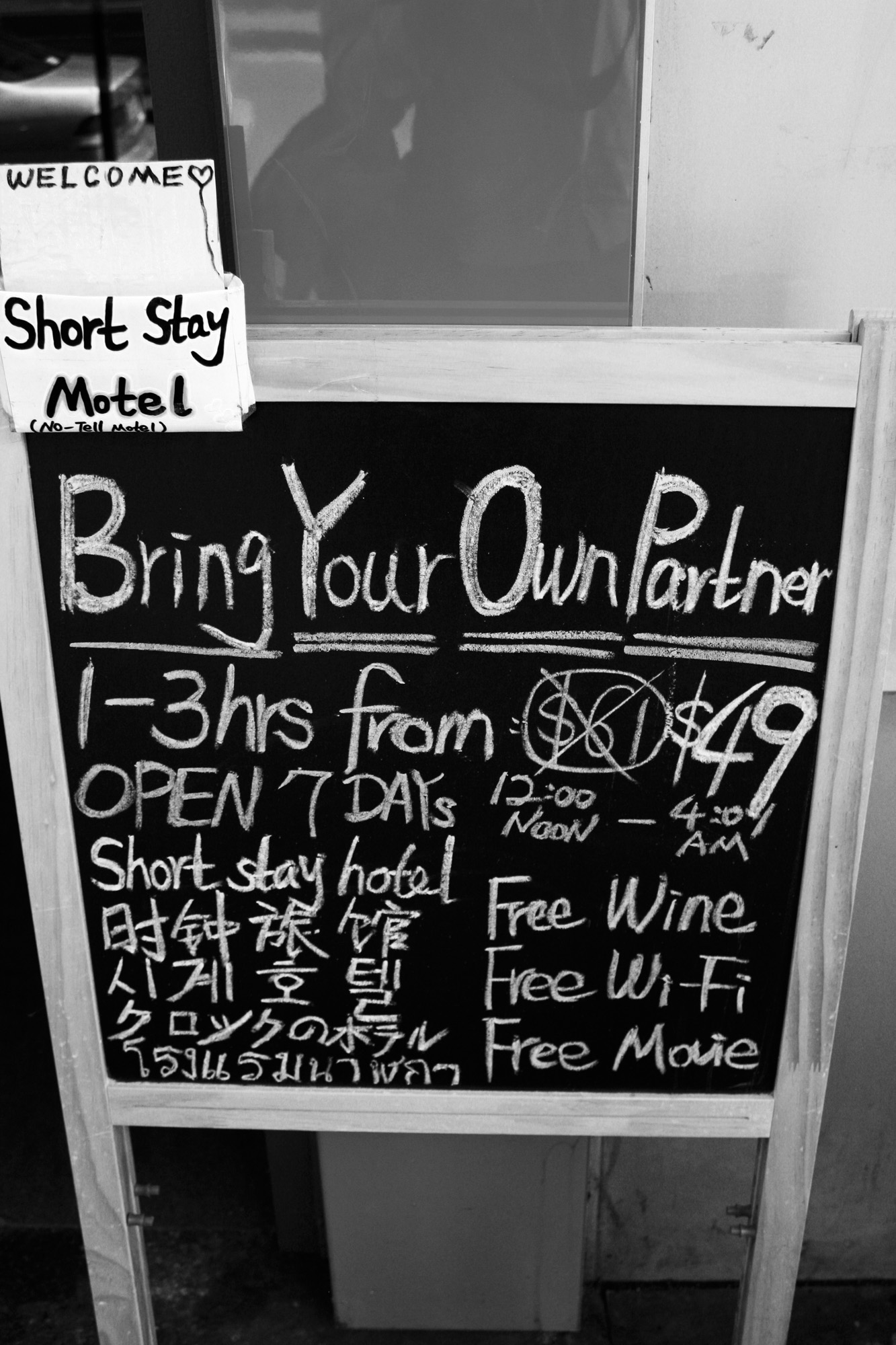
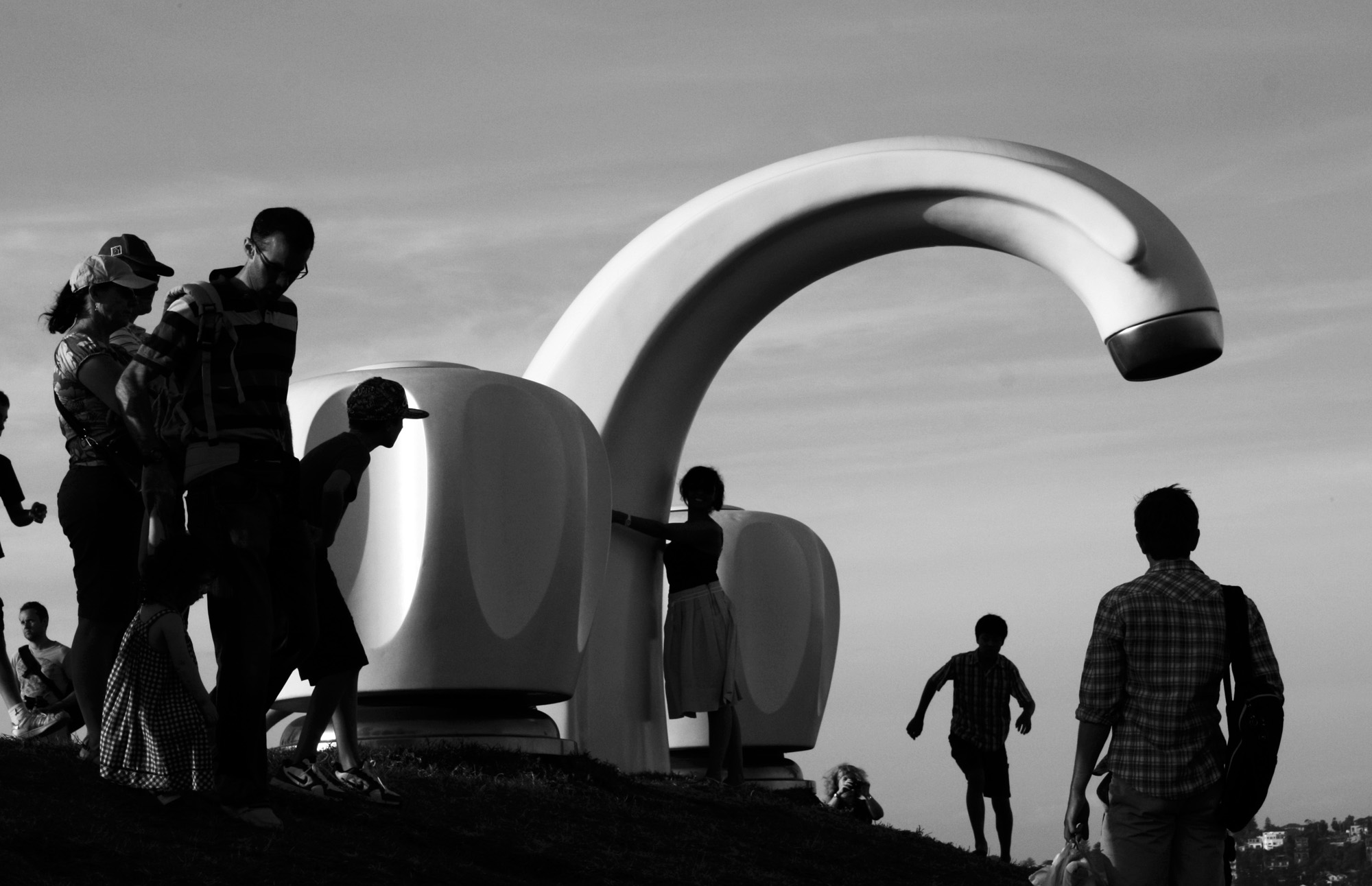
And so, above is another collection of photographs: some heavy skies, some graffiti art, sunsets, architecture, people – the usual subjects. One of these photos I consider to be the best I’ve taken for a while, namely, that titled “Watchful”, from the sculpture by the sea exhibition. The fortunate arrangement of the figures around the great conceit of a gigantic tap was a very lucky strike indeed. Either way, you be the judge, and for now I shall sign off.

The first time my brother really chose to acknowledge me was about two weeks after I was born. He asked my mother, “Mummy, when are we taking Benny back to the hospital?” As soon as he realised that this was not happening, the assassination attempts began. One of his earliest was a daring scheme to pull the entire kitchen table over, whilst I was reclining on top of it in a bouncinette. His next attempt was by shoving a model plane up my nose. He then tried to flush me down the toilet as we celebrated his fifth birthday in the Blue Mountains. After a while he just resorted to assaulting me when I least suspected it, hitting me over the head, or pushing me in front of a moving dog. I soon realised that this was the natural order of things, but that didn’t mean I was going to take it lying down, and after a time I learned to emulate his methods.

One afternoon I lay in wait behind the door frame at the top of the short flight of stairs leading from the kitchen to the back yard, armed with a Sesame Street bedroom slipper. As my brother came running up the stairs, I stepped in and lashed out, heel-first, and whacked him across the mouth. I hadn’t intended to hit him in the face, but being an uncoordinated four-year old, I clocked him quite by accident. I don’t think he saw Ernie and Burt coming and it was shock as well as pain that set him screaming and bawling. I was almost as stunned as he was; firstly that I had actually hurt my brother, who, despite frequent torments, I loved and admired, and secondly with the realisation that this could be two-way traffic. Matthew was so put out by this reversal of the natural order of things that he, in return, emulated my methods and dobbed me in to my mother.

The narrative of our early relationship as brothers is distorted by the strong impression left by these few violent incidents, for on the whole, we got on well and acted as co-conspirators. There’s a photo of Matthew and I in the Blue Mountains from around this time in which we have our arms around each other. I am holding my red stuffed tortoise (Mama Tort) and we both look entirely happy. That photo was taken about ten minutes before we wandered off along the slope at the back of the house to play in the garden. It was a steep slope, landscaped with little flower beds surrounded by large stones which formed simple terraces. At the bottom of the slope was a trail that marked the start of one of the local bushwalks. The temptation to roll a few of these stones down the hill was irresistible, so we prised one of the larger rocks from its place of rest and sent it off down the slope, just as a family of four walked by underneath. My brother, of course, had the good sense immediately to hide behind a shrub, but for some reason I just stood there. I watched the rock crash into the bushes, heard the cries of alarm, and stood beside the marigolds staring with my mouth open. Then a man began shouting.

“I can see you up there. I know you’re there!”

I stood stock still, in my bright pyjamas, staring now at my feet. I had no idea what to do, and Matthew’s hissing whispers of “hide, hide,” drew an entirely gormless response.

“I can see you. Don’t think you can get away with it, you little horror!”

I remained standing still, hoping that if I stayed that way for long enough they might just go away. Fortunately, I was right. After a few more reprimands, they wandered off in a huff.

I have since wondered whether my response was indicative of embarrassment, stupidity, or rather, a show of conscience. Either way, my brother might have had good reason for thinking me stupid and treating me with a measure of contempt. No wonder he was so often trying to put me out of my misery.

My brother’s first day of school was a traumatic occasion. Standing slumped with his red, leather, lunchbox-shaped suitcase, he bawled and bawled until two great stalactites of yellow snot descended from his nose and swung ponderously into space. These two lengths of mucus, one at least two inches long and the other perhaps an inch and a half, hung for long seconds – as they hang still in my mind – before being wiped away by my mother. I was scared as well, for however ambivalent my attitude was to my brother, seeing him in such a state of distress caused my soul to cry out. Or perhaps it was the selfish thought that I’d now have no one to play with.

Two years later, knowing how quickly he grew to love school, I eagerly awaited my entry to the playground and my first day was a day of joy. Kindergarten held many treats, but best of all were the excursions to local businesses. Our first port of call was Churchill’s butchery on Queen Street. I was fascinated by the cheeriness of the staff, who had that simple appeal that so many adults have for children – as grown-ups capable of physical skills and tricks. When they let us into the cold-room, however, I felt a horrible wave of repulsion come over me; not on account of the hanging carcasses and cuts of meat, but the smell. The air was full of frozen death; a not particularly unpleasant smell, but one that was cloyingly neutral; disturbing for its deceptive mildness. I’ve never since felt comfortable walking into a butcher shop and still won’t buy or handle raw meat.

Subsequent excursions to the post-office and fire-station were far more appealing and devoid of anything upsetting, which is perhaps why I don’t recall them in the slightest. Yet, for all the wonder these excursions brought, none could match the excitement of our class, along with several others, being selected to attend the gala opening of the new Angus and Robertson’s bookstore in Pitt Street.

I remember the cake best of all. It was the first thing I noticed – a vast white oblong laid out on a table before a lectern, and all about, men in suits and several television crews. My mother had been excitedly telling me how I would be on television, but I could barely grasp the concept and forgot everything before the sight of that enormous cake. My only fear was that it would prove to be, like the awful, deceitful wedding cake I’d once eaten, fruit cake dressed up as something lovely. The detail of the proceedings was lost on me and my attention was regained only when the knife pushed through the icing. All the children gasped in expectation.

At six that evening, my mother positioned my brother and I in front of the television and switched on the news. When the story finally came on, my mother’s excitement generated a high-pitched thrill within me and I bobbed up and down before the screen, giggling.

“There it is,” said my mother, and sure enough the interior of the bookstore was once again before my eyes.

I stared dumbfounded at the screen. There was the cake again, that immense, crenulated oblong, and there was that nice man in the suit who had cut the cake, he was making his speech. There were a number of children on the screen, but I could not see myself.

“Look, Benjamin, there you are,” shouted my mother. “There you are!”

I stared hard but could see nothing. I was still bubbling, but the mood was being cooled by mystification. Where on earth was I?

Then came the moment when the man cut the cake, I let out a little gasp, remembering the joy at discovering its chocolate heart. I had been standing beside the man, hadn’t I? I was one of the lucky ones, right up the front, only how come I didn’t seem to be in the shot?

“Look, there you are, darling, look!”

Now the screen showed the man smiling across the assembly and everyone clapping. I looked and looked and looked as hard as I could. But where was I?

“There you are, Benjamin, see? Right there.”

I kept looking, but I couldn’t see myself at all, not even at the very tip of my mother’s finger. The news item ended and the scene vanished from the screen and, made distraught by my full realisation of the root of the problem, I burst into tears. My shoulders heaved with soaring whimpers and I turned away, feeling ashamed.

“What’s the matter, darling? What’s the matter?”

I sobbed and spoke through a clenched throat.

“I don’t know what I look like.”

“The games we normally call open worlds – the locked off cities and level-restricted grinding grounds – don’t compare to this. While everyone else is faffing around with how to control and restrict the player, Bethesda just put a fucking country in a box. It’s the best open world game I’ve ever played, the most liberating RPG I’ve ever played, and one of my favourite places in this or any other world.” – PC Gamer UK


SPOILER ALERT!


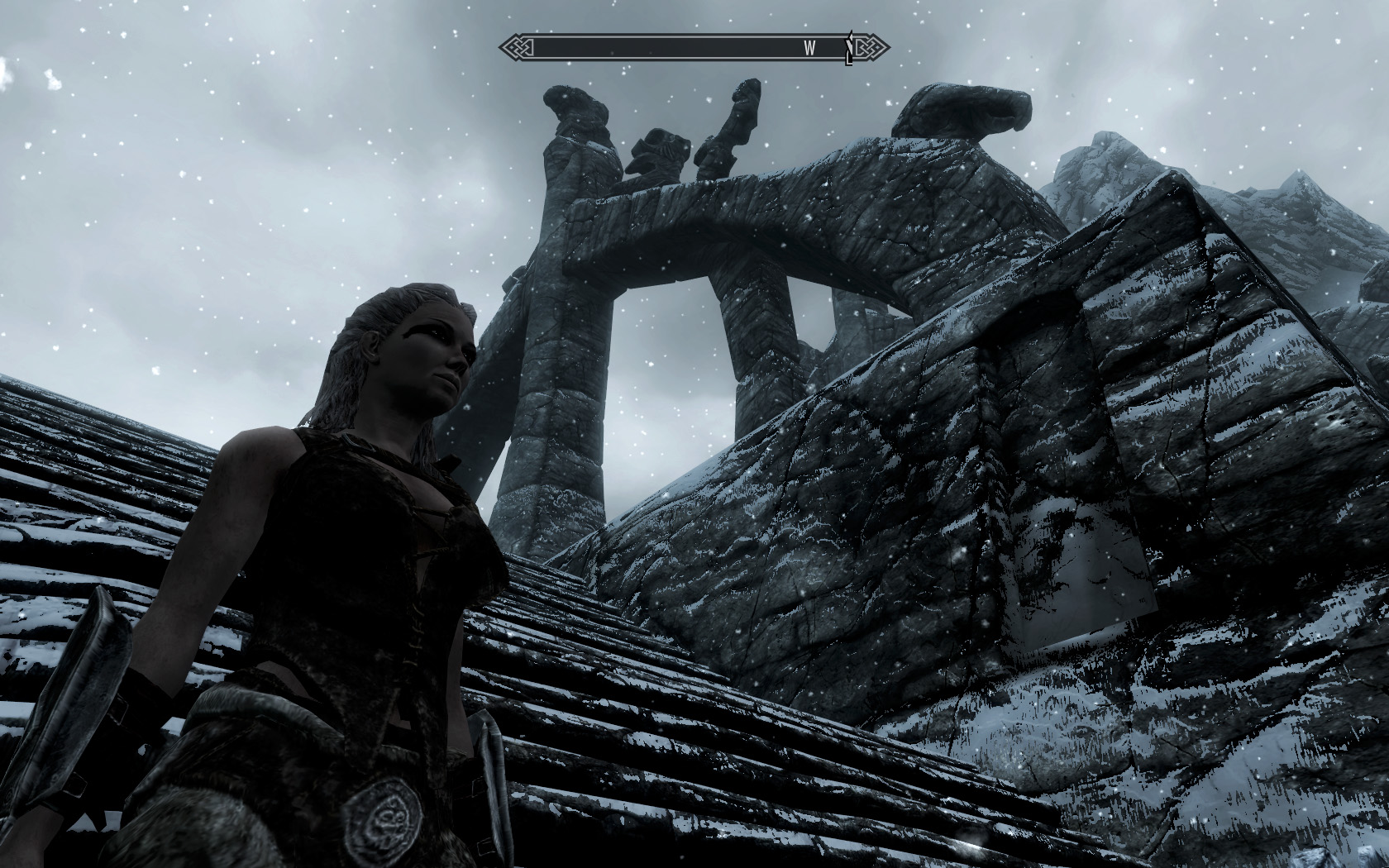
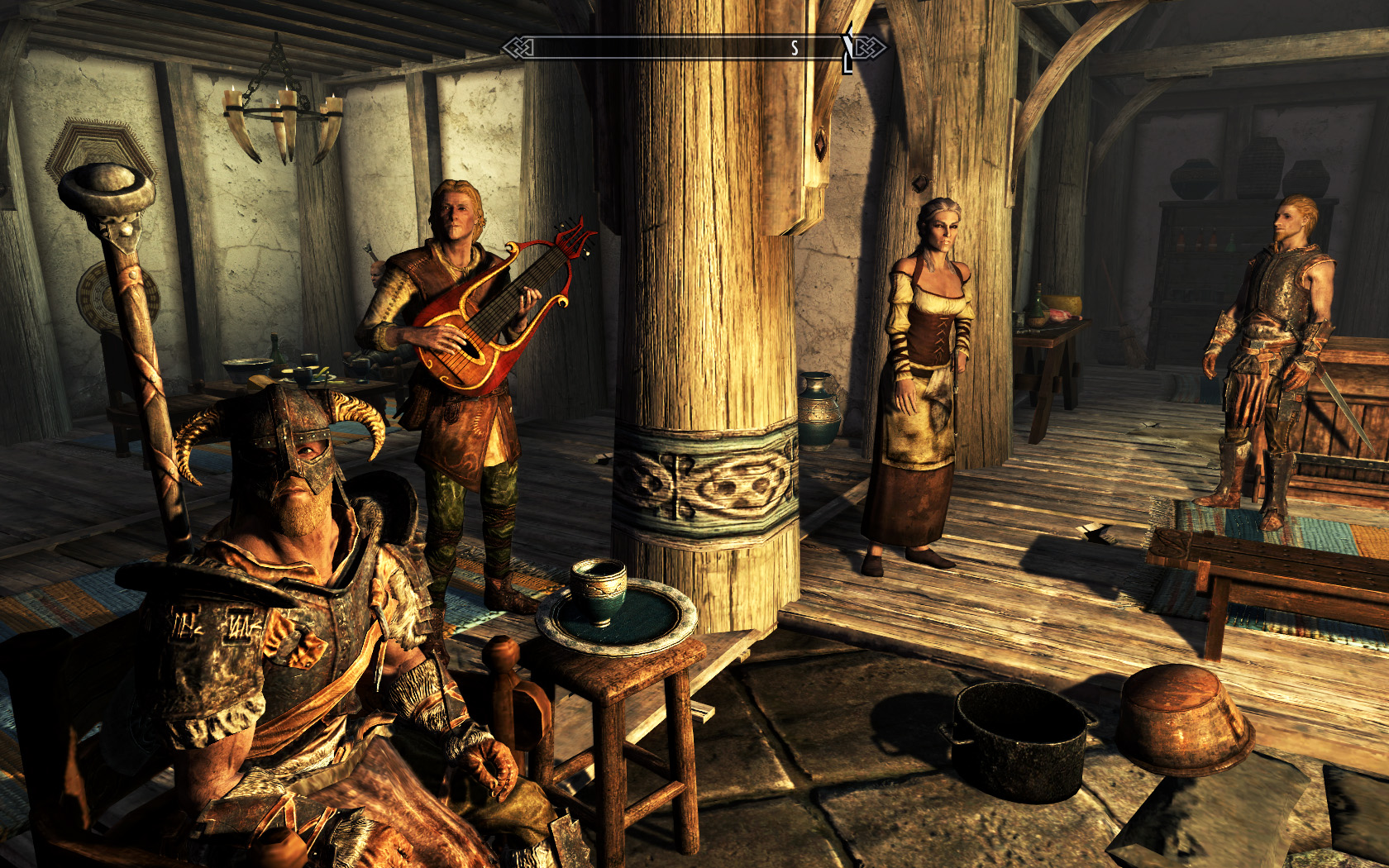
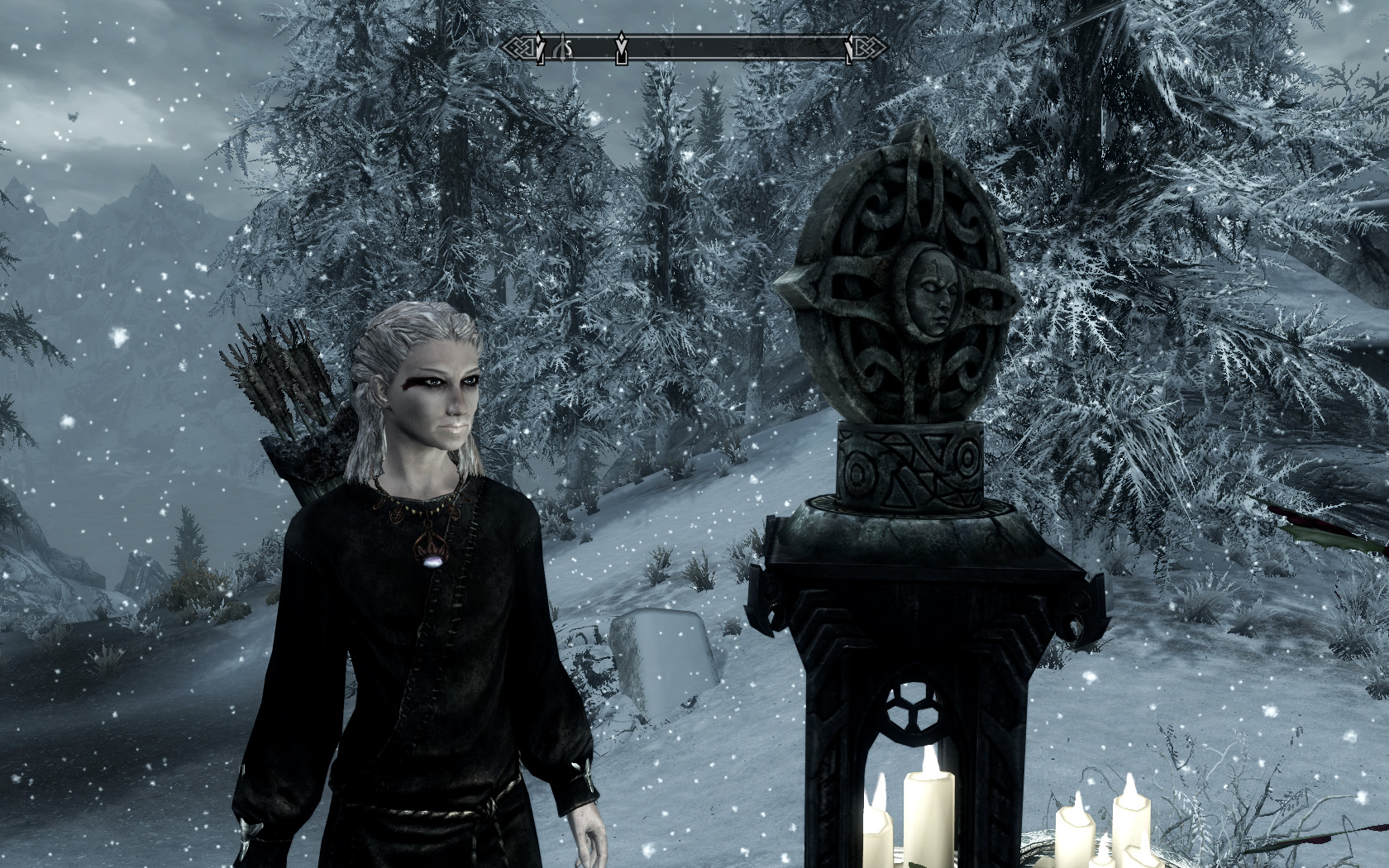
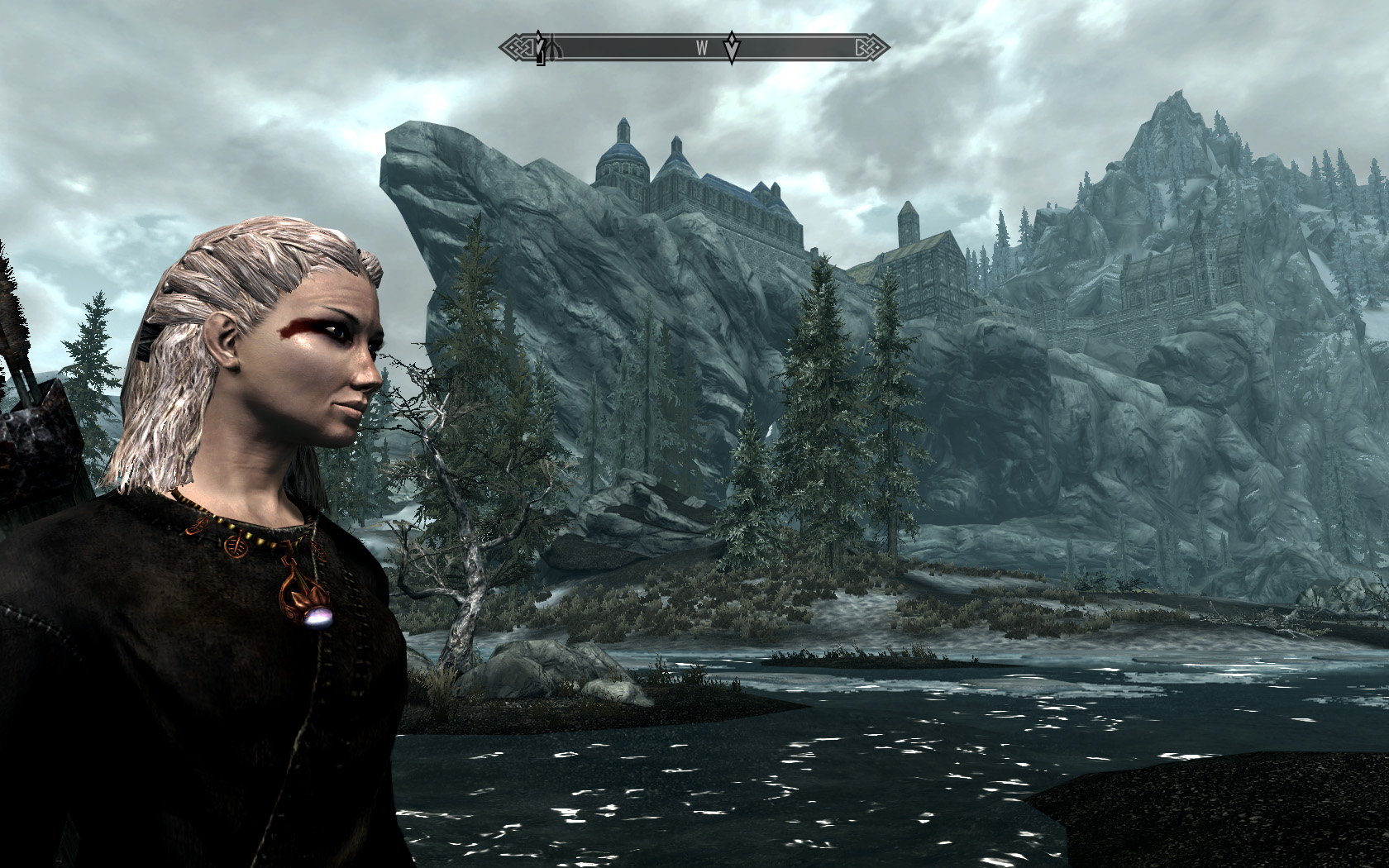
After such a long wait and so much anticipation, it was inevitable that the release of The Elder Scrolls V: Skyrim be prone to a dash of anti-climax. It was also inevitable that it would be subject to the usual responses – hopes and dreams either dashed or realised, depending on your outlook and the percentage of troll blood in your ancestry. Most people were expecting the game to be another masterpiece, based on the developer Bethesda’s incredible track record, but there have been all too many instances when things do not live up to the hype: Age of Conan, anyone?

Another inevitable hurdle in the game’s reception would be the way it was compared with its forerunners. As a massive fan of the immediate predecessors in the series, The Elder Scrolls III and IV, hereafter, Morrowind and Oblivion respectively, I was all too well aware of the ways in which these two games had often been pitted against each other in the realms of opinion. Most would argue that Morrowind was more cerebral, better, more complex and more realistic as a game-world, if less well realised graphically and physically, through its engine. Some people loved Morrowind and loathed Oblivion; the latter had less variation in its armour types, simplified weapon proficiencies, more generically generated interior decoration; whilst others preferred Oblivion, largely because it still matched Morrowind for scale and diversity and on account of its excellent, if now dated engine and its initially stunning appearance.

I can understand many of the specific criticisms, but, having been won over utterly by both games, I find the overall judgements difficult to understand. The pros and cons of either still amounted to an unbelievably satisfying whole. Whatever one’s individual opinion about the games, and many people, from all walks of life, have loved both dearly, there was certainly no injustice in both games winning Game of the Year among many other awards. They are, beyond the shadow of a doubt, two of the greatest open-world role-playing experiences ever created and rightly deserve their place in the pantheon. Only Bioware’s Dragon Age Origins has reached such heights in recent times; a game stronger on story, containing far superior voice-acting and, I feel, a higher standard of writing; both in dialogue and exposition, in books, scrolls, etc. But it was a game that lacked openness. The world, though big, was tiny by comparison to the vast open spaces of The Elder Scrolls games. Dragon Age Origins should be seen more as a long awaited and finally worthy successor to Baldur’s Gate 2. Both are games with closed maps, linked by area transitions, with no scope for exploration outside designated areas. The Elder Scrolls series, on the other hand, with their vast, free-flowing open landscapes, “Put a fucking country in a box,” as the PC Gamer UK review puts it.

Being thus aware of the various qualities and differences of Morrowind and Oblivion, I was prepared to be confronted by Skyrim’s differences. It was inevitable that there would be some frustrating changes, inevitable stream-lining and simplification, but also a lot of innovation, improvement and added complexity and depth in other areas. Time could only tell as to what the overall impression would be, but I knew that Bethesda were unlikely to make a substandard product, especially considering the incredible success and quality of their main interim vehicle, Fallout 3.

The Elder Scrolls V: Skyrim starts in media res.

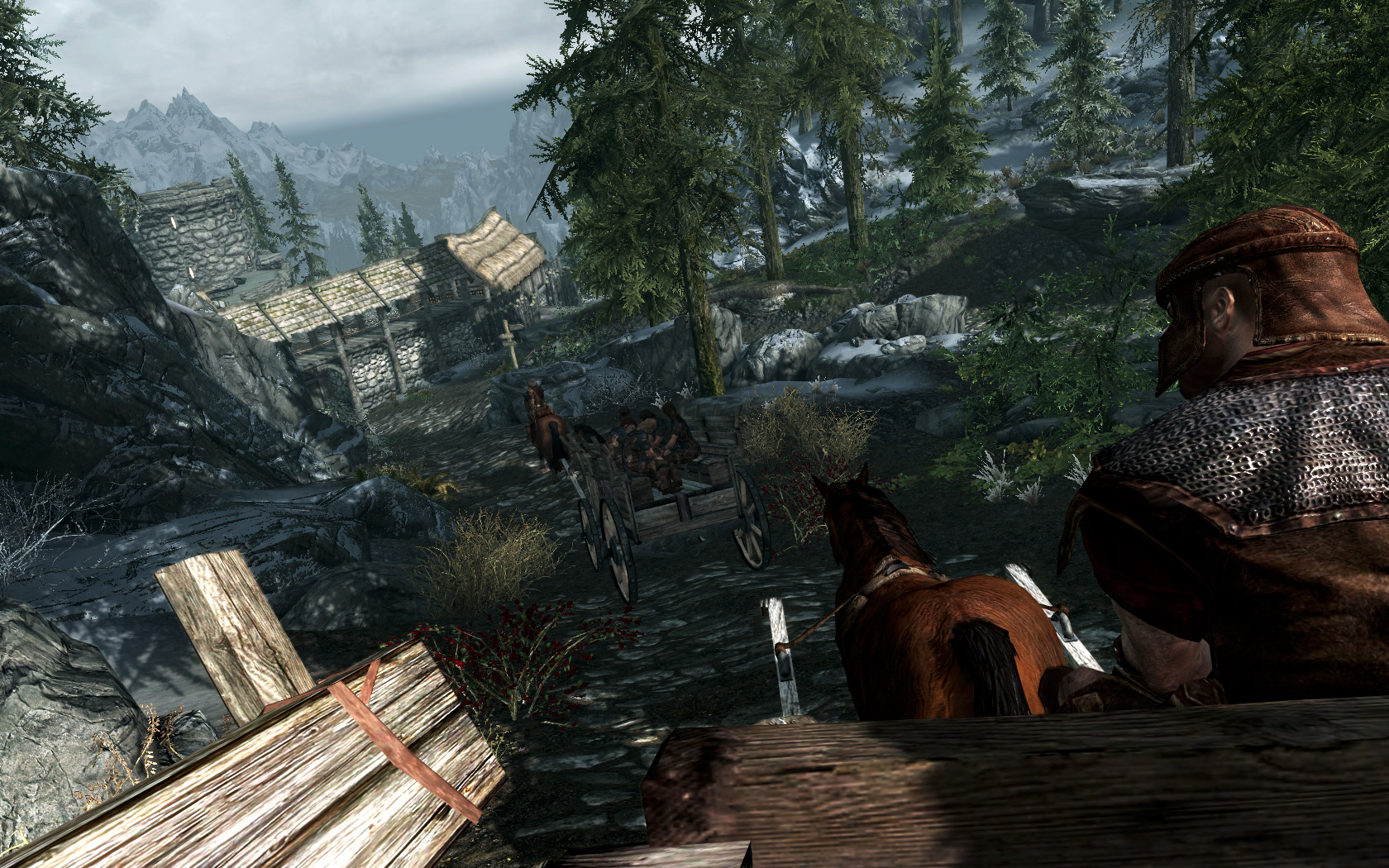
You, the protagonist, have been captured along with a rebel leader and a few other randoms and are being transported in a wagon to a rendez-vous with a chopping block.

It’s a nice way to set the scene, which oddly reminded me of the taxi ride into Pala at the start of Far Cry 2. Upon arrival at the fortified town where the execution is to take place, one is called forward and asked to state one’s name.

Thus begins the process of character creation. Once this is done, one is led to the block, where one’s avatar exhibits a rather disappointingly passive acceptance of fate, and kneels before the executioner.

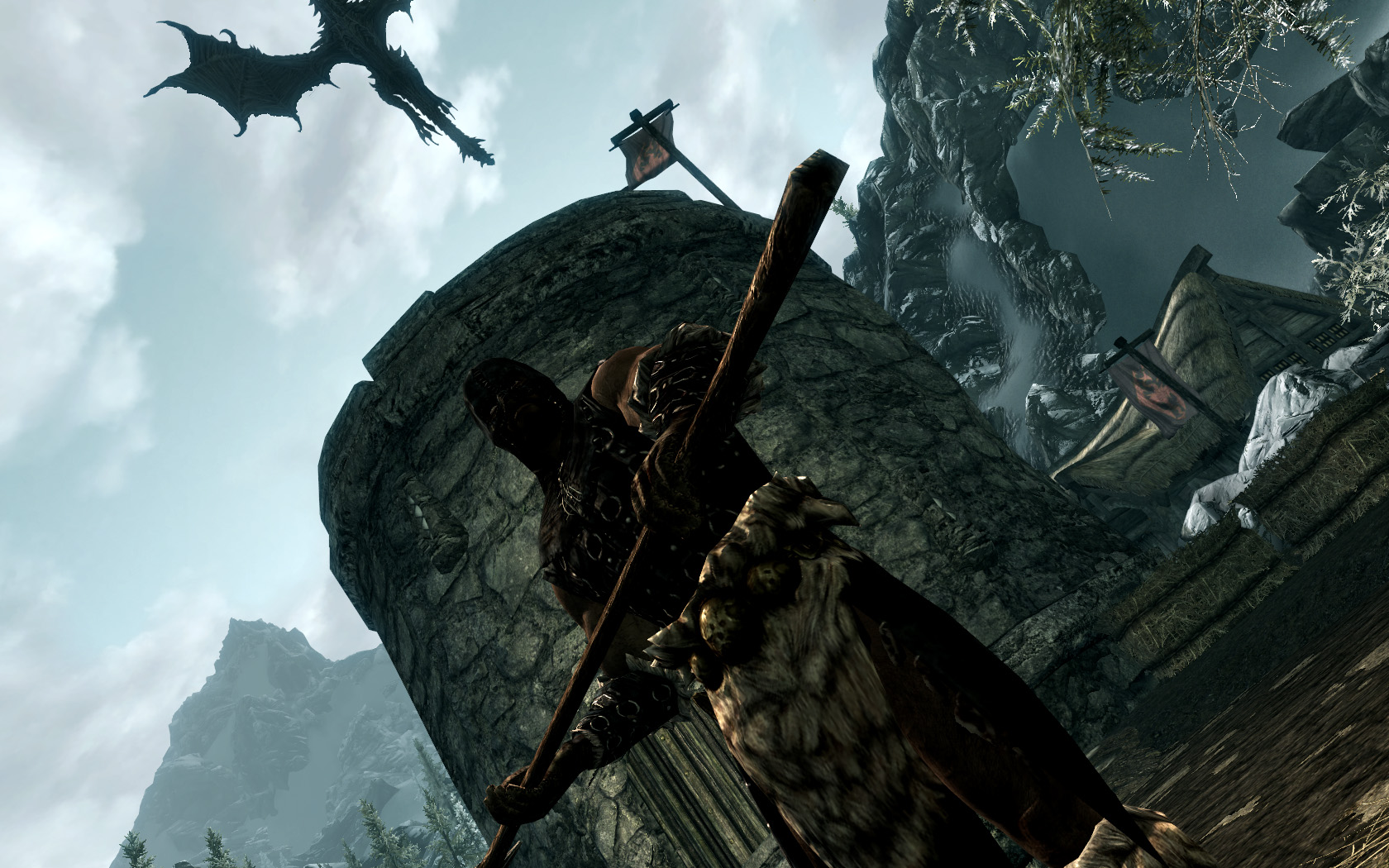
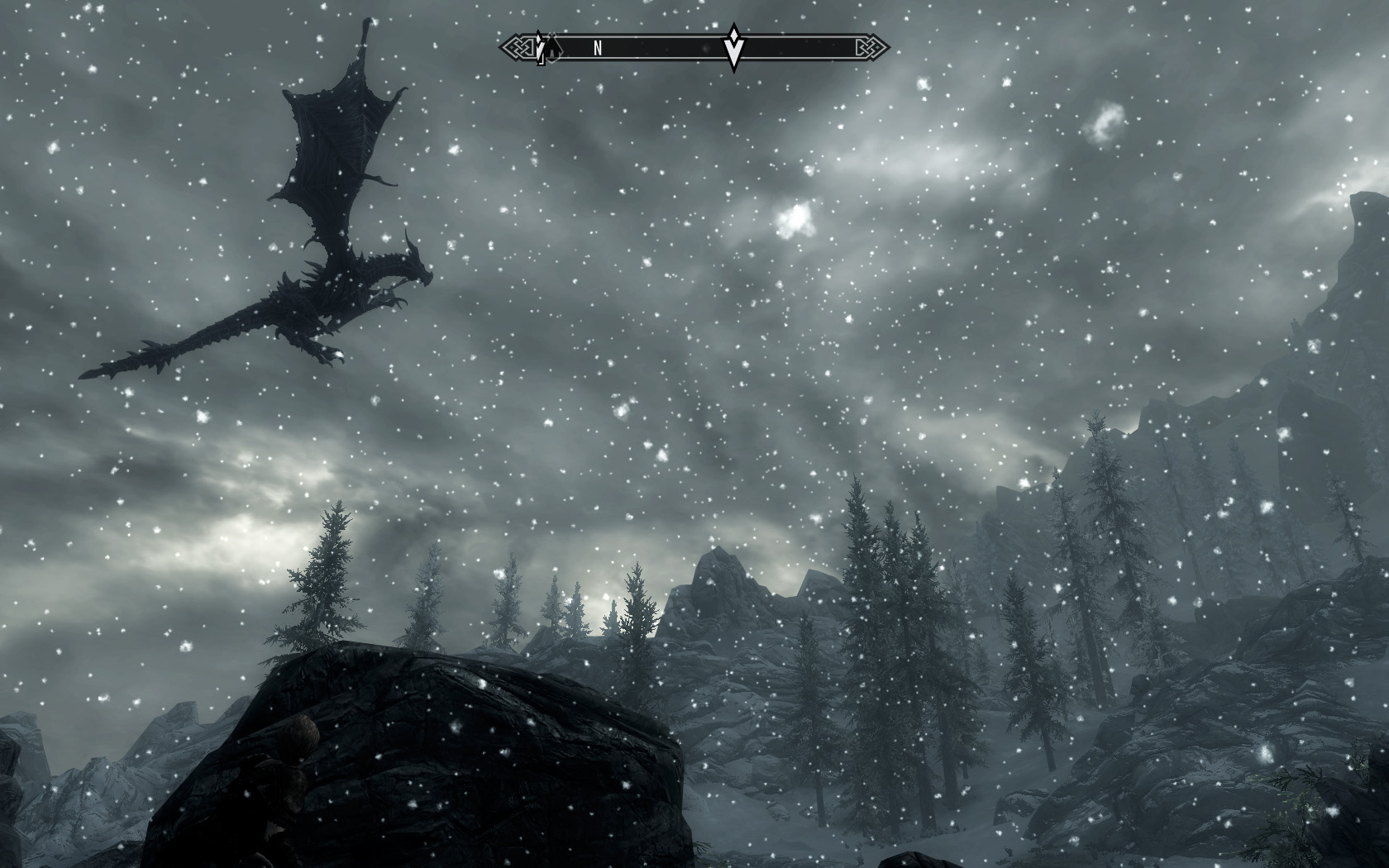
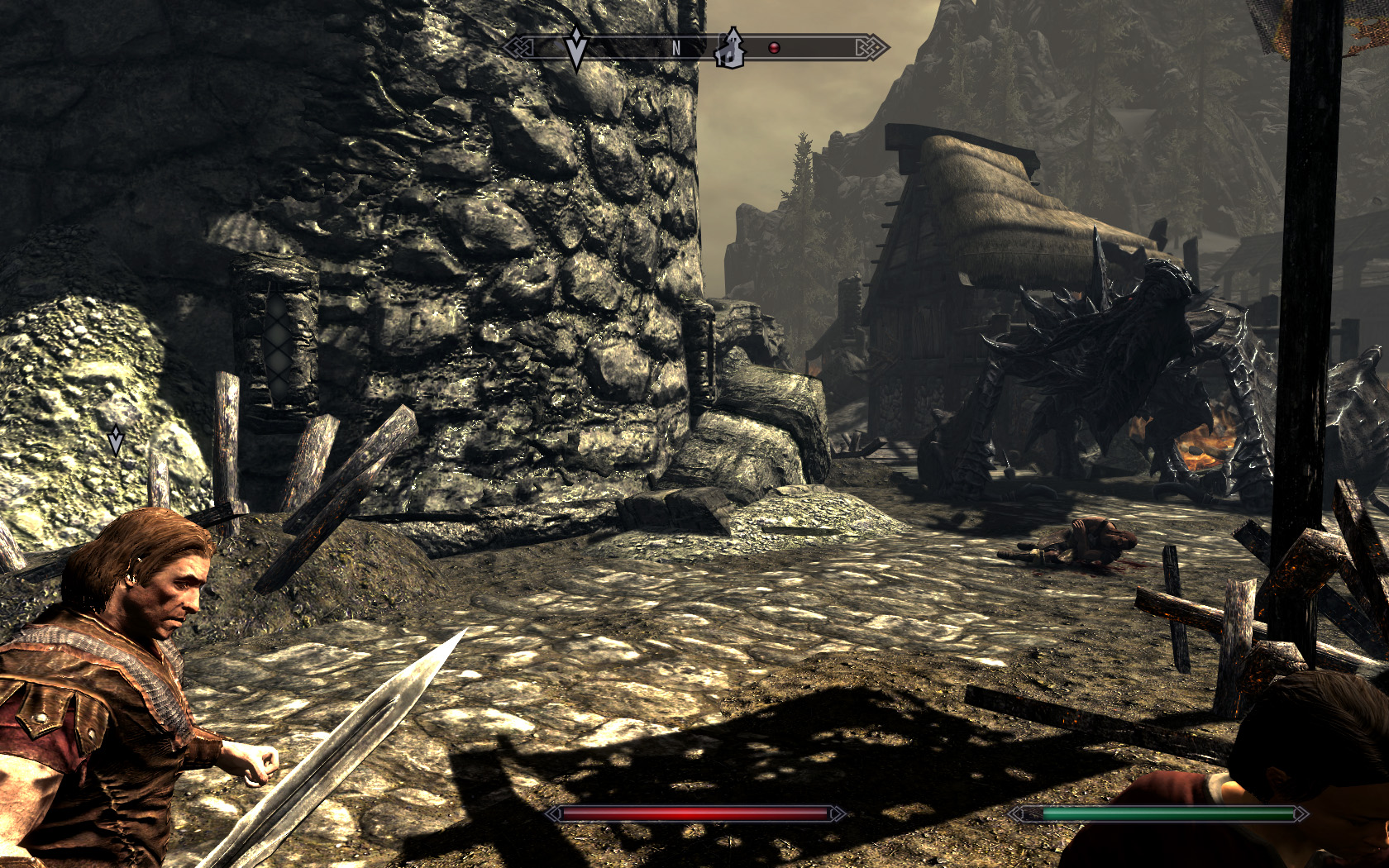
It is at this point that a dragon turns up and, quite literally, all hell breaks loose.

http://bit.ly/DragonAttack

My first response, unfortunately, was a rather visceral disappointment with the graphics and textures of the game. The skins seemed decidedly low-res in some cases, and the textures were large and clunky when viewed up close. These reduced nicely into finer-looking detail when using a more distant zoom, yet having spent so long modding the textures in Oblivion and replacing 128 x 128 pixel skins with 2048 x 2048, for a disturbingly photorealistic finish, it felt oddly like a step back from its predecessor. I also noticed early on that the palette seemed rather wan and muted; the colours were not rich and seemed washed out in the pale light of this northernmost province of Tamriel. This all came as a bit of a shock, especially considering that when Oblivion was released it was pretty much at the pinnacle of graphical achievement; I thought Skyrim might be the game to surpass everything, looks wise. I never expected to be so disappointed that my graphics card could run it smoothly, at 40 fps, with everything maxed!

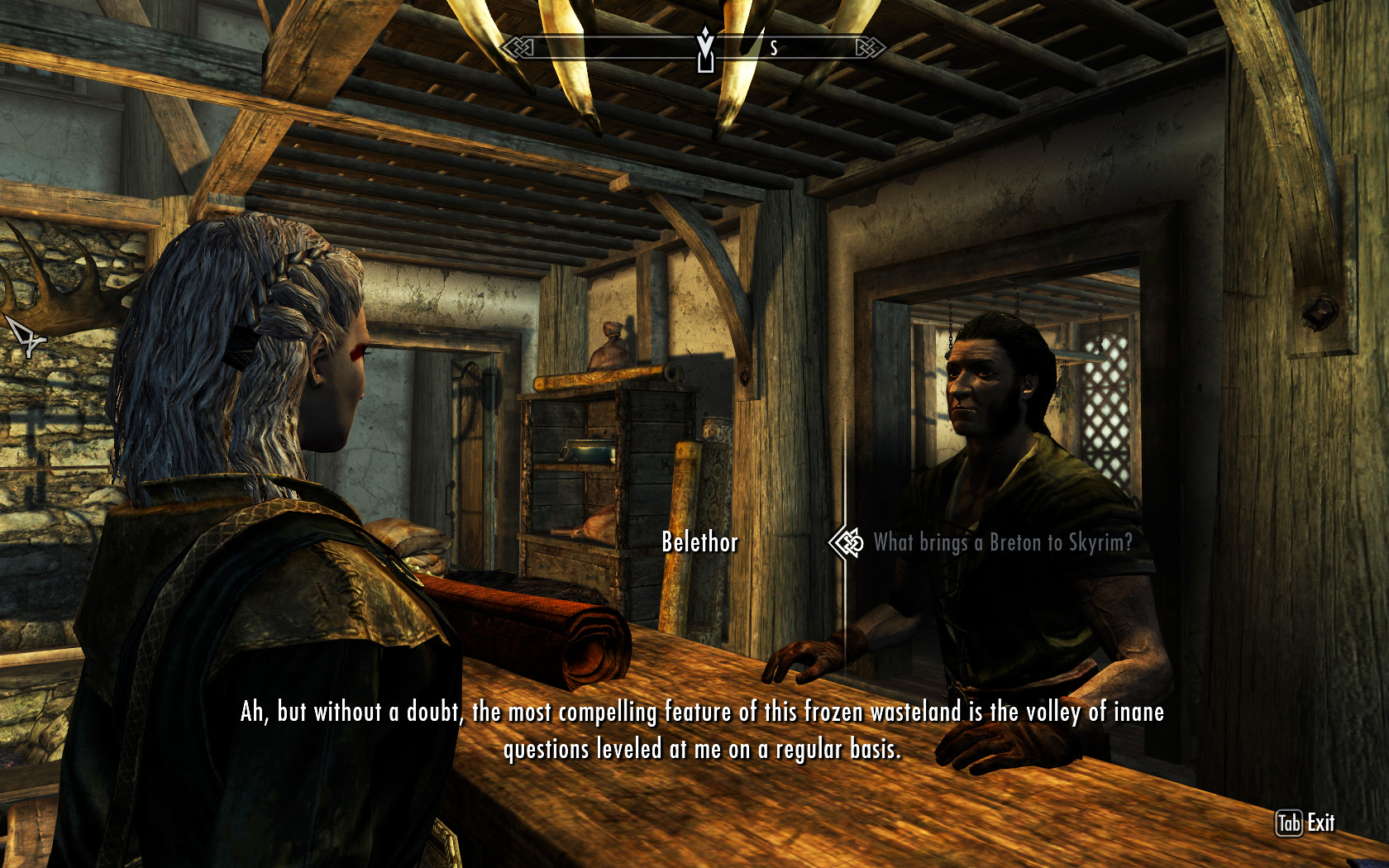
My next response was that the characters felt a little flat. Not, thankfully, as pre-generated and soulless as the speakers of Oblivion, but still, not anything like as dynamic, passionate and emotionally engaging as those in Dragon-Age Origins. I had, ever since hearing Max von Sydow’s voice-over in the trailer, been expecting a game replete with very theatrical, naturalistic and emotive voice-work, yet the NPCs in Skyrim seemed to have a slightly false pitch in their voices. They sounded like actors, reading, whereas the voice artists of Dragon Age Origins were thrillingly human.

My next minor issue with the game arose in the process of character creation. I only have myself to blame, both for not reading the manual or checking the on-screen menus as closely as possible, yet when called forward and asked to state my name to the executioner’s scribe, I chose my race and name, and totally failed to notice the full range of other character generation options across the top of the screen. I had expected more prompting, as both Morrowind and Oblivion had guided one through character creation more closely and in a more staggered fashion. Naively, I assumed, as had been the case in Oblivion, that first I would be asked my name and later asked further details, such as class, appearance etc. Not so! Shoot me.

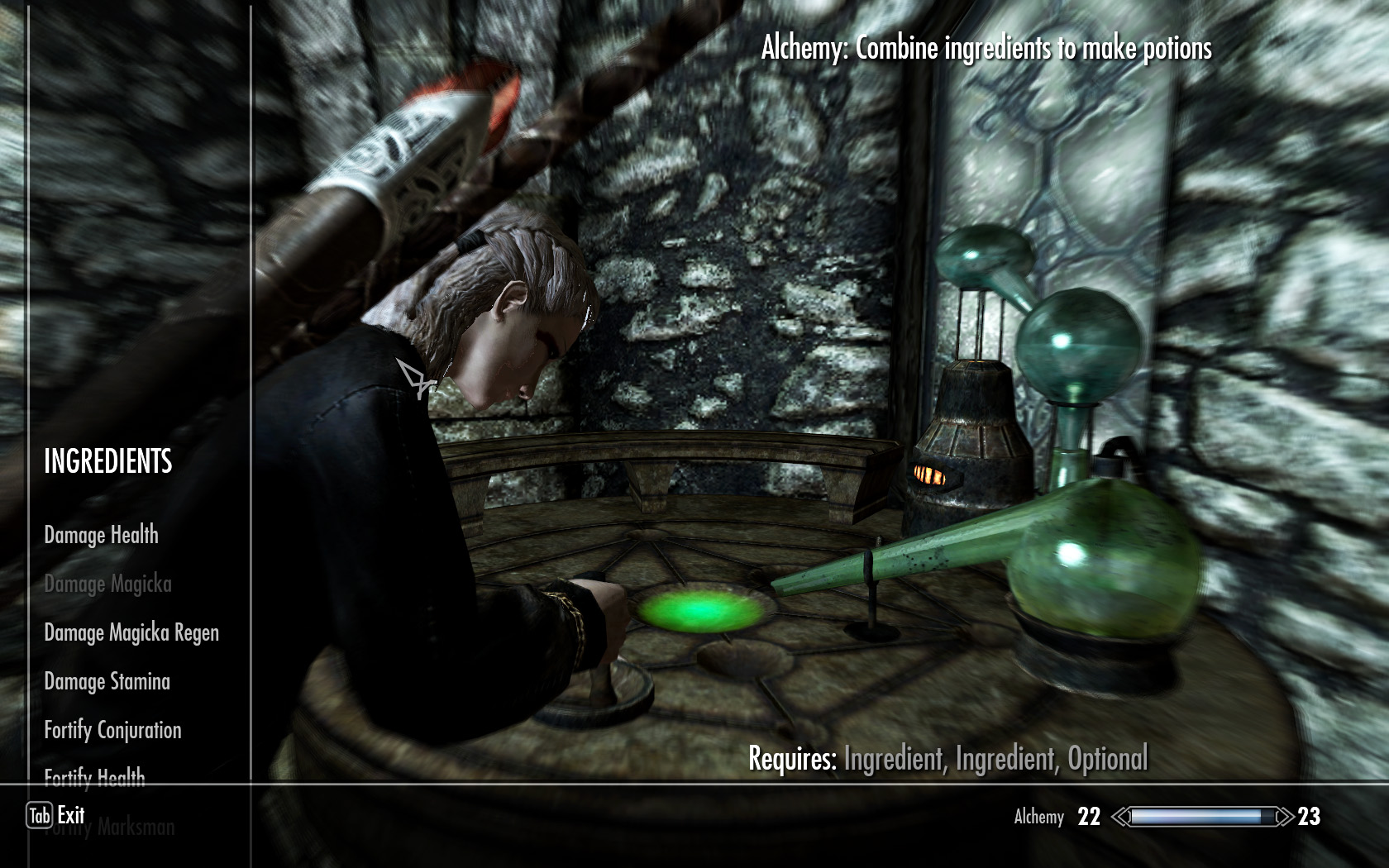
Indeed, I had to play the opening a second time in order to realise that this was, in fact THE moment when one created one’s character entirely, and that the absence of a choice of class or profession, was, indeed, real. There are no classes in Skyrim. It’s as simple as that. One’s starting skills are determined purely by race, and skills advancement happens according either to skill use, training with trainers or by finding tomes that teach skill increases. The rate of advance can, however, be effected by a particular blessing, say an enchantment from a moonstone, like the sign of the warrior, for example. This seemed rather annoying, as I had always enjoyed designing custom classes and selecting skills appropriate to my desired build. Still, I was willing to give it a go, and the perks trees now attached to each skill, which look suspiciously familiar to the feats and enhancements of MMOs like World of Warcraft and Dungeons and Dragons Online, acted in the stead of class and profession. Either way, as much as we all loathe tutorials in games, the absence of more explicit guidance at the point of character generation seems like an oversight in a game so long, involved and complex. I wonder how many others might click through and be stuck with a generic head and body set?

My initial impression of the interface was not exactly positive. It had the stench of console about it and, whilst generally smooth-running, it has some awful glitches in it that will take a patch or two to iron out. I had a lot of trouble with the loot-all R button, causing a CTD on many occasions. It was often difficult to scroll from one item or category to the next, as the mouse would not always highlight the desired option. Patches ought to fix this, so it’s unlikely to remain an issue. Yet I was surprised that something so fundamental, structurally, had not been ironed out completely. Ideally, a new user interface mod will remove all the console-like elements altogether and replace it with a more PC friendly UI.

Having said all this, I was keeping a very open mind. Dragon Age Origins had initially looked disappointing to me, again on account of chunky textures and OTT armours and weapons, which too often had a plastic or rubbery sheen and seemed to lack real, physical weight. Yet I grew to love that game quite unreservedly because of its many other amazing qualities. Indeed, in time, the look of Dragon Age Origins won me over as well. It moved well, the colours were rich and intense, it had just enough epic landscapes and vistas, the interface, was, I felt, quite beautiful, and, oh, the soundtrack was great. At times, a tad bombastic, but on the whole, it was entrancing and reeked of adventure!

The default volume setting for Skyrim’s music is a mere 70% of max, possibly less, and at first I found myself wondering, where is the music? As a massive fan of the soundtracks of Morrowind and Oblivion (Indeed, they are on my iPod!) I was looking forward to hearing Bethesda’s latest efforts on this front. Once I’d adjusted the volume and could hear things perfectly well, I was very impressed. The soundtrack is extremely unobtrusive. It is beautiful, cold and spacious, like the best efforts of twentieth-century minimalism. It is both haunting and lulling and segues almost effortlessly between disquieting and soothing the player. Where appropriate it comes on all epic and grandiose, yet most of the time it acts to create a mood and emotional space that fits the windblown, icy landscape. It is a very impressive soundtrack indeed, and one of the many things which come together to make Skyrim one of the greatest gaming experiences ever.

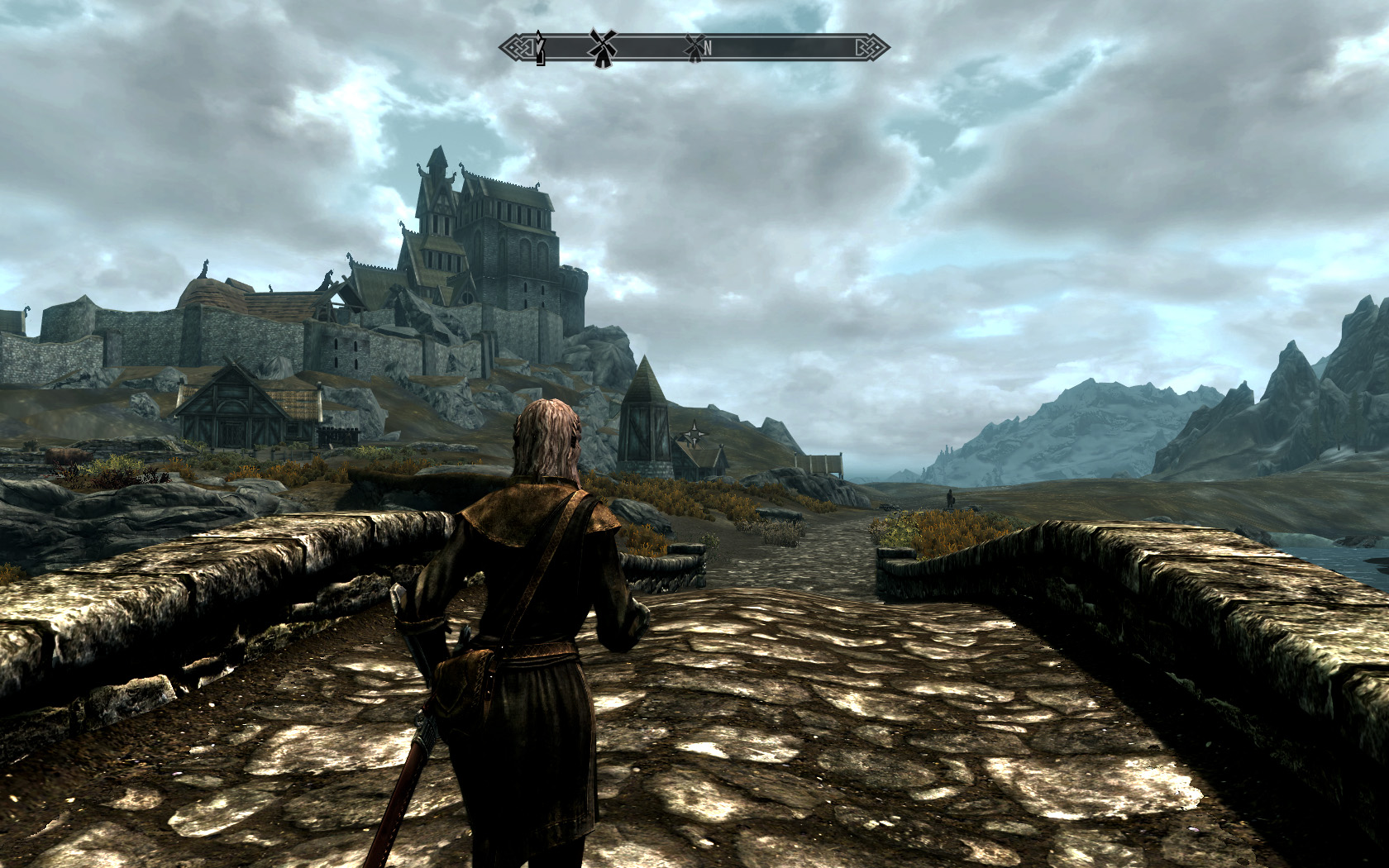
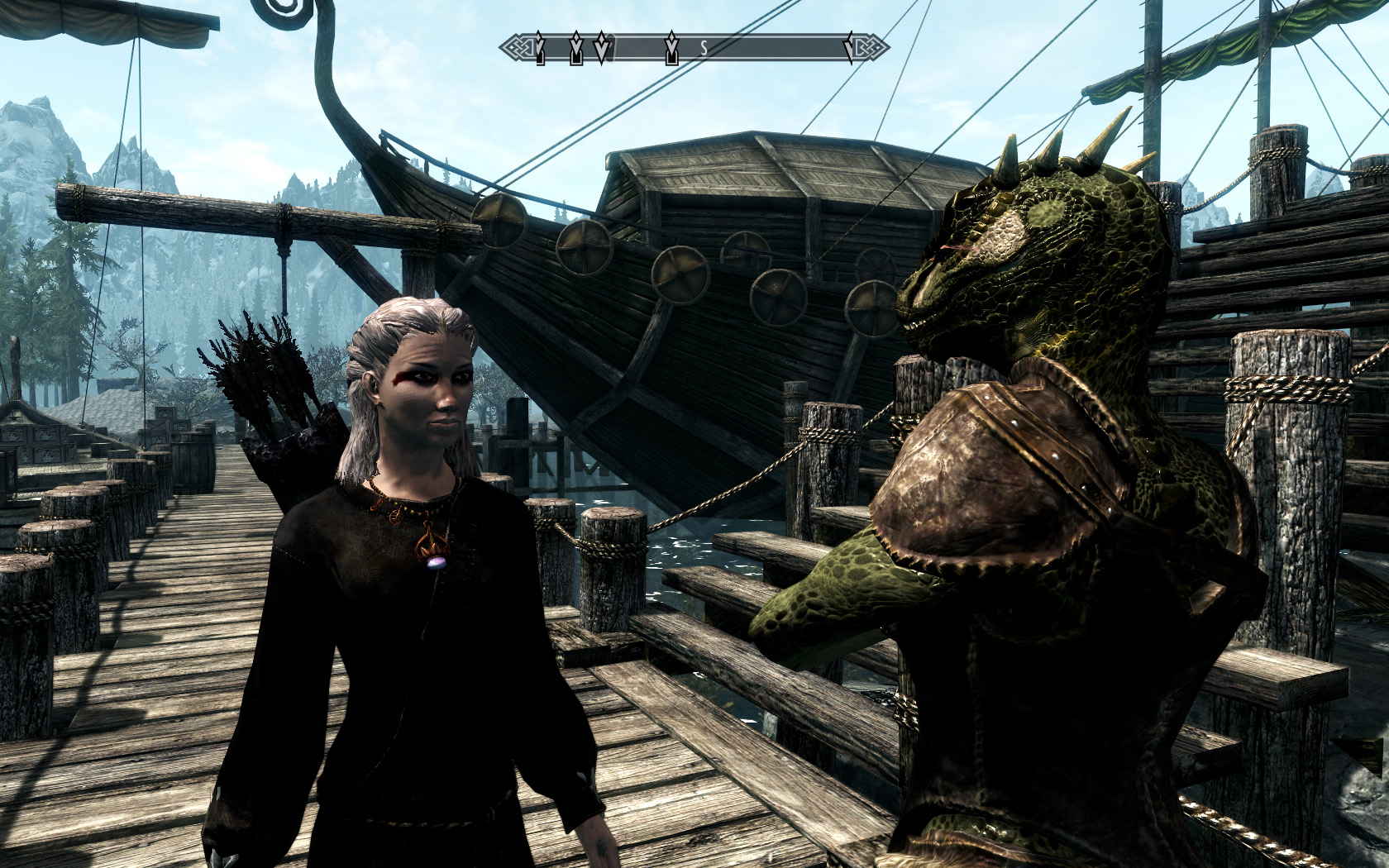
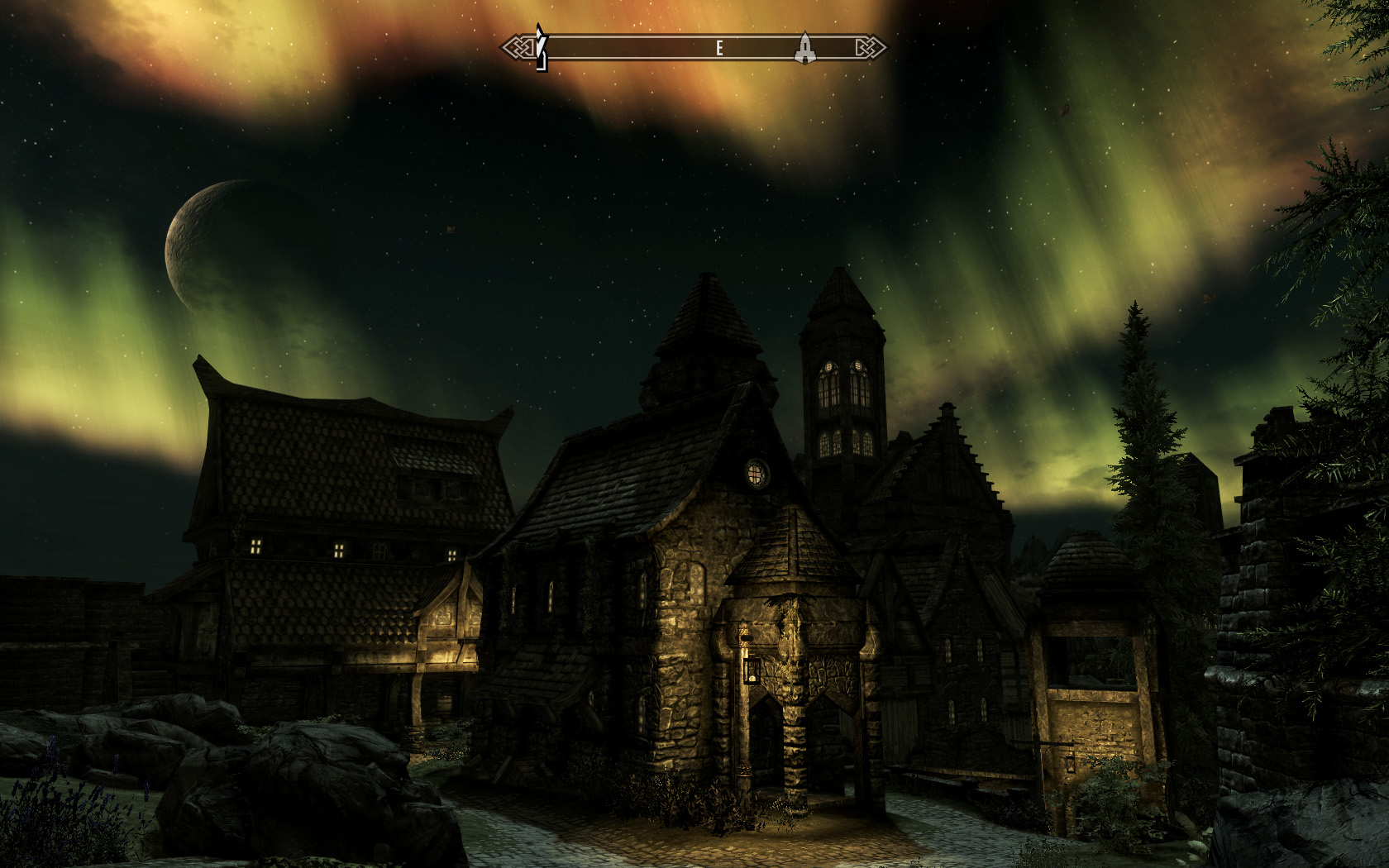
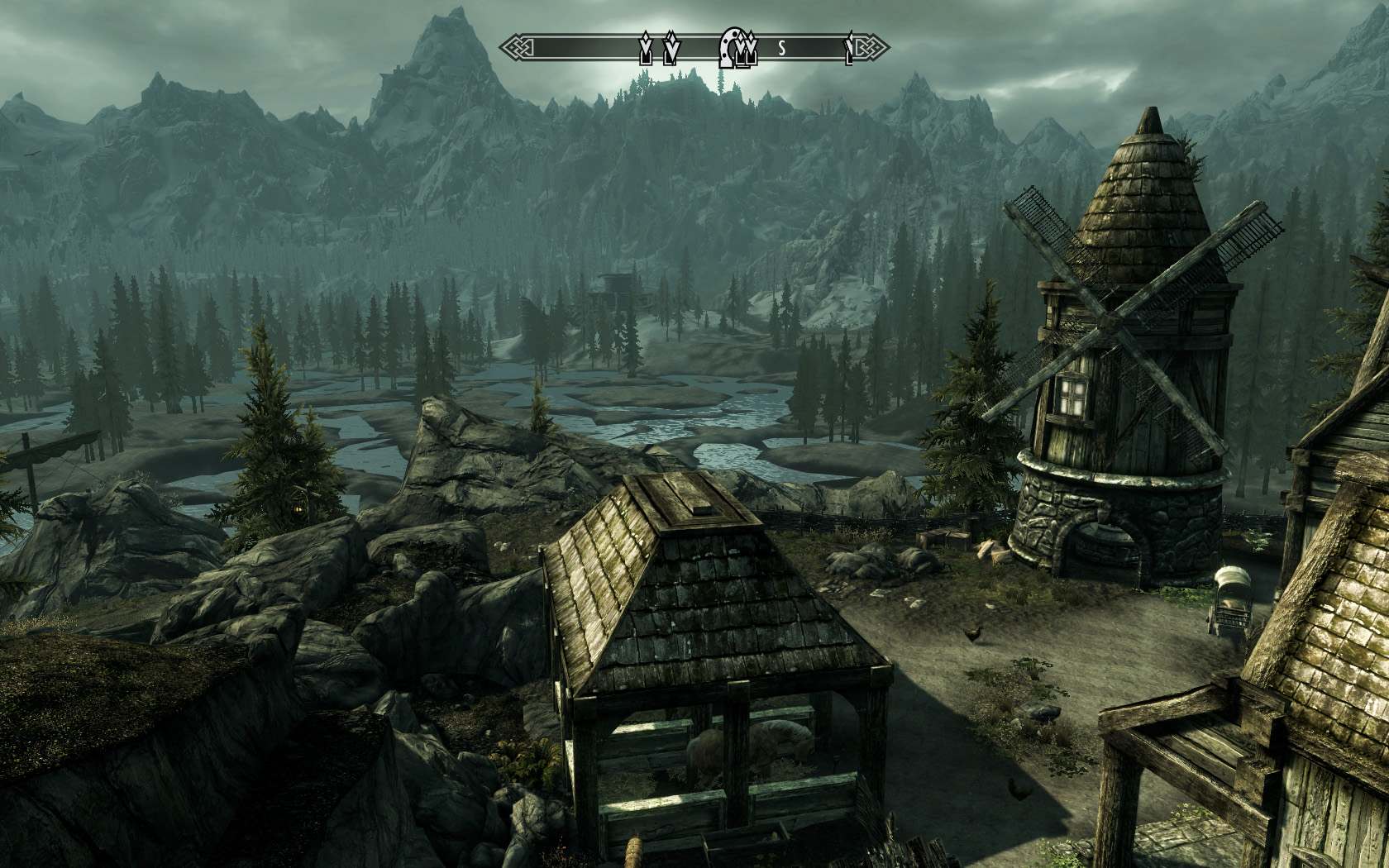
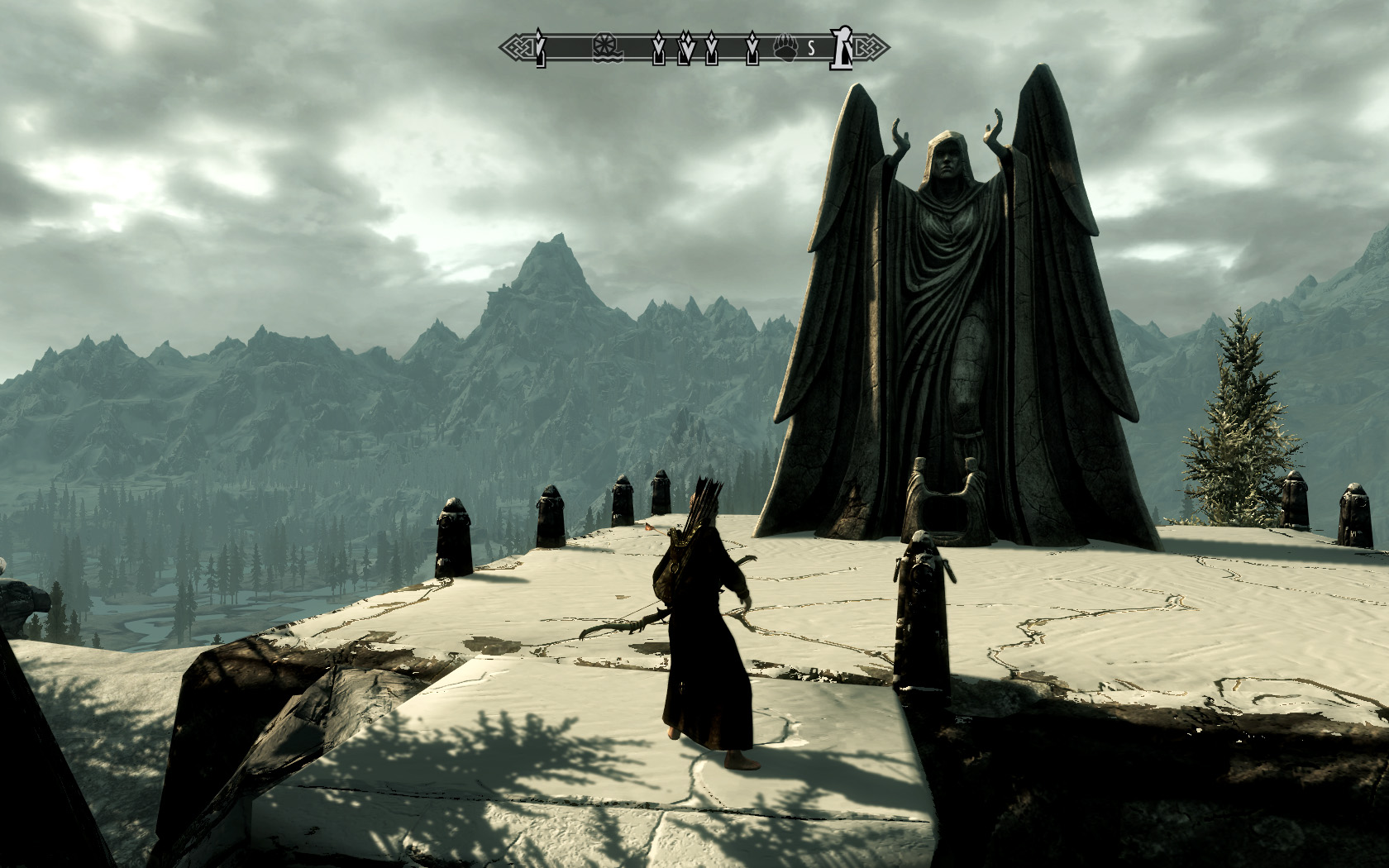
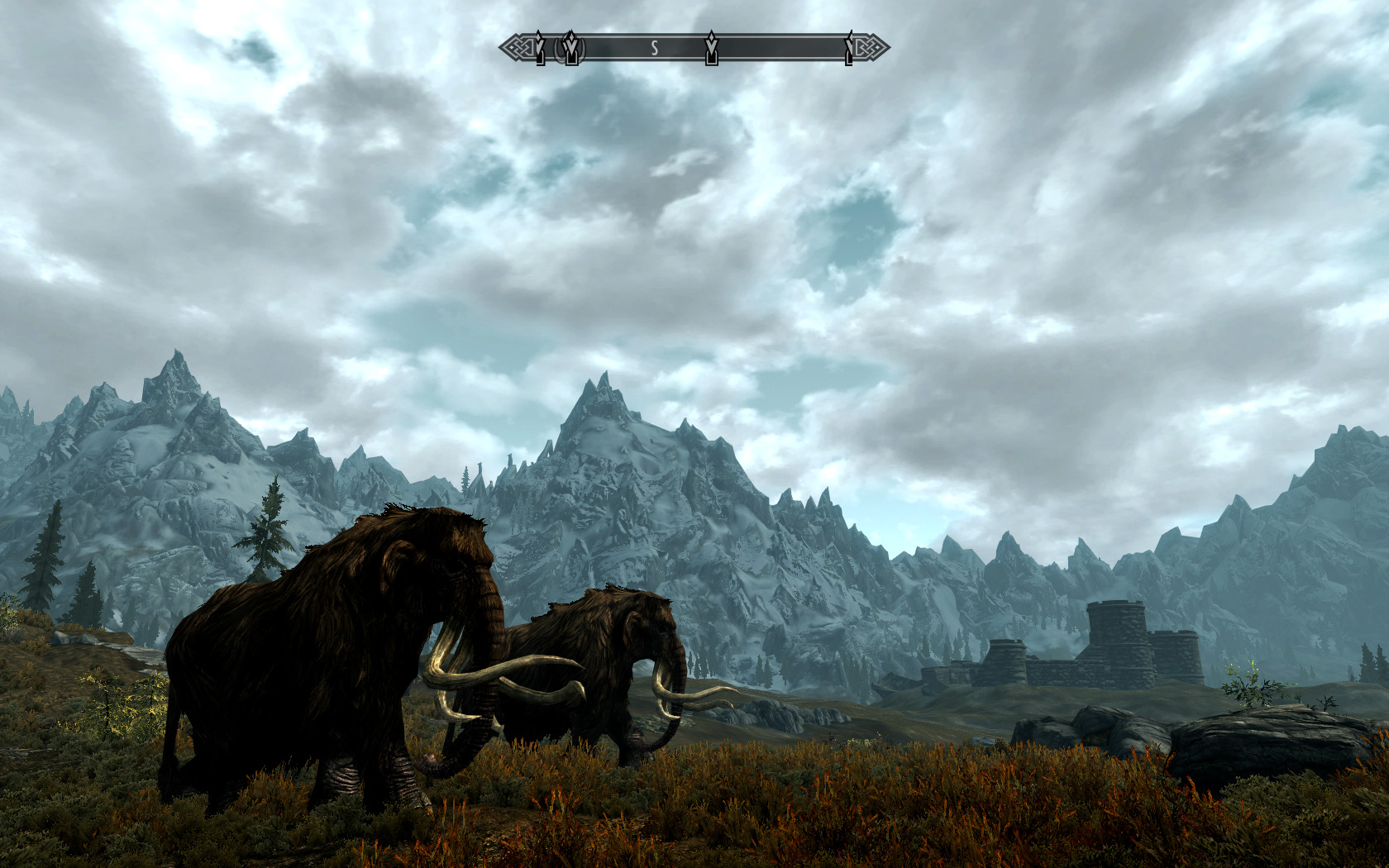
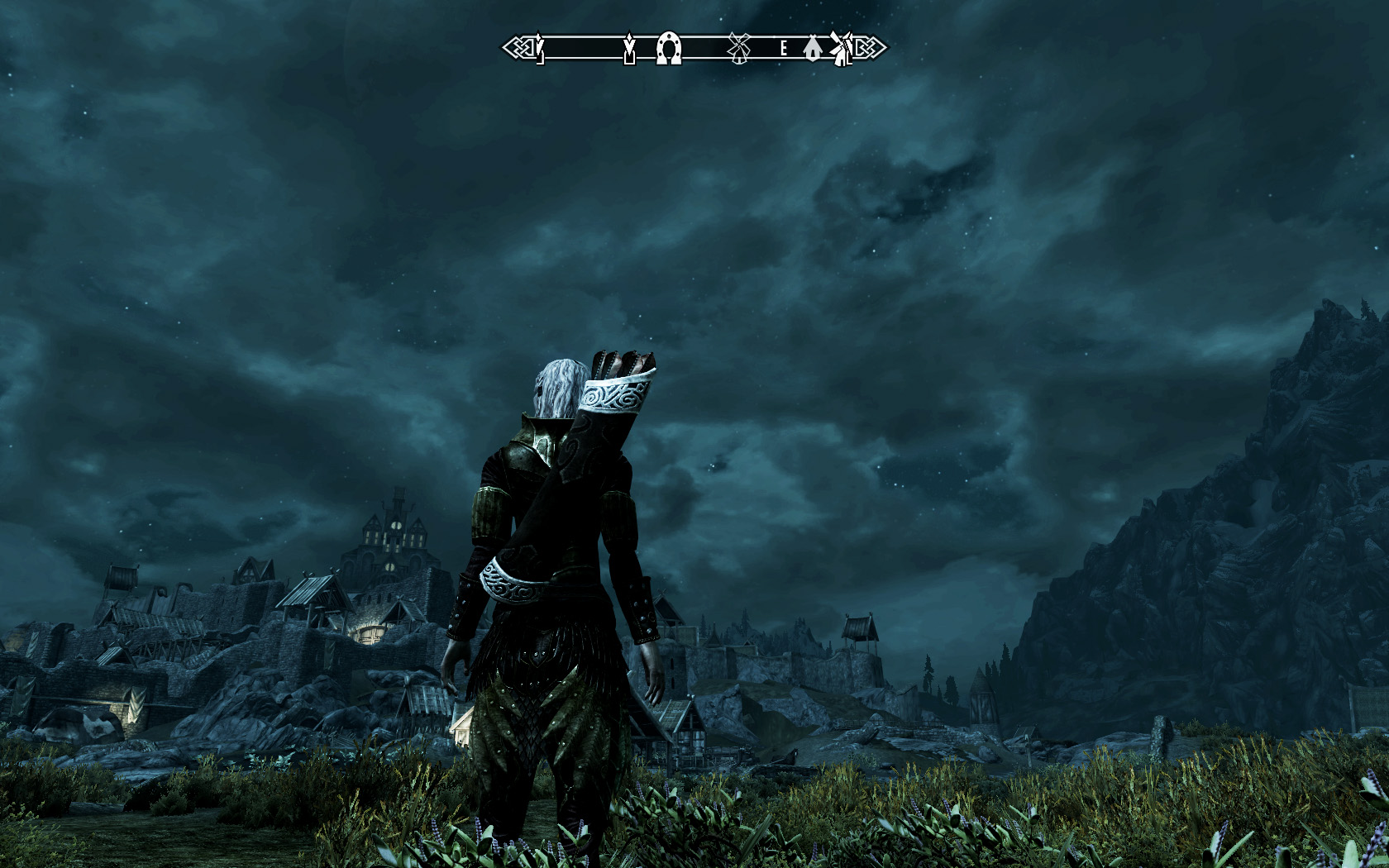
And the simple fact of the matter is, initial concerns aside, Skyrim really is an astonishingly beautiful and amazing game. The world is not only massive, but it is endlessly interesting and engrossing. There are, yes, a lot of snow-covered mountains, which risk giving it a very samey feel across the board, yet there are sufficient sunlit river valleys, stretches of coastline, marshes, swamps, glades, dales, caves, grottos, lakes, ancient ruins, forts, bandit camps, farmsteads, villages, towns, and, of course, great and beautiful cities to give the game a feeling of intense variety. It is surprisingly surprising, and one of the major improvements on both Oblivion and Morrowind is the diversity of the caves and forts one can enter. In Oblivion these locations, the old mines, forts and Ayleid ruins, tended to repeat the same types of interiors and encounters, though in a wide variety of lay-outs. Such locations in Skyrim, so far as I can tell after a relatively short playing experience, but also based on anecdotal evidence from other players, seem to be far more original and varied in their design and content. As one reviewer stated, Skyrim is also the best Indiana Jones game ever made.

After playing for a few hours, when I realised just how smoothly my avatar moved, how freely everything flowed, how vast and open the range of choices were to me, the initial reaction to the game’s appearance fell away and I saw it for the masterpiece that it is. So much effort has been put into this, and it shows. Yes, Bethesda pushed hard to meet their 11 / 11 / 11 deadline, but then, almost all new releases are at least slightly buggy these days, and if the designers don’t sort it out, the players will. Of course, we, the paying public should not be expected to beta-test games, but with something on the scale and complexity of Skyrim, a few issues here and there are inevitable. Nothing, as yet, has proven game-breaking, but then, I’ve clocked up a mere twenty-four hours and explored about one fiftieth of the map available to me, in which time I’ve accepted far more quests and undertakings than I have completed.

The game really does look beautiful. The landscapes are breath-taking, the cities fill one with a sense of awe and the mountains are a source of tireless eye-candy. Skyrim takes after its predecessors in many ways. Both Morrowind and Oblivion chose to focus on a particular province of the continent of Tamriel, Morrowind and Cyrodiil respectively, and Skyrim is named after the province it depicts; the northernmost, mountainous home of the Nords. We are thus treated to a lot of unashamedly Norse-themed architecture, clothing and local culture, which gives the world a rich cultural uniformity. The other races and people are all represented here again, though it took me a long time to find a Khajiit or Argonian! These two races look absolutely magnificent, particularly in the faces; though the feline Khajiit fur could certainly use a texture upgrade.

Like its predecessors, Skyrim also offers a main plot to give the player an overall sense of purpose, yet the game-world is so vast and the hundreds, if not thousands of often lengthy and fully-realised side-quests make it possible to play the game for literally hundreds of hours, without ever actually furthering this plot one jot. Indeed, on my second run-through of Oblivion, I entirely ignored the main plot entirely and engaged instead with all the other subplots, along with new quests and diversions made available by the vast community of dedicated modders.

Rarely will two playing experiences be the same. Comparing notes with a colleague at work, I learned that he is playing an Argonian (lizard-man) thief. So far, he has not furthered the central plot by a single step, but has instead joined The Companions and Dark Brotherhood and has been running quests for these two groups. The Companions are a group of do-gooding mercenaries who replace the fighters’ guilds of previous games, whilst the Dark Brotherhood return once again as a group of Daedra-worshipping assassins. There are further groups one can join in the game, each spawning a long, long list of often very lengthy and involved quests, right around the world of Skyrim.

The main plot itself offers real variation. The province of Skyrim, long ruled by the empire founded by Tiber Septim, has recently rebelled under a Nordic king and is in the thick of a civil war. The player can choose to support the rebellion of Ulfric Greycloak, or side with the Empire. In a sense, this a subplot to the principal plot whereby dragons are coming back to life and harassing the province of Skyrim; whilst the civil war rages, the province is weakened and some suspect a plot by the Thalmor, a group of evil elves, to take advantage of the situation.

No doubt the players chosen path will result in a very different journey through these central storylines; or, indeed, no progressing of the story whatsoever. After all, in a world where one can murder, pick-pocket, break into and rob pretty well every single NPC in the game, there are many other ways to entertain oneself. One can buy horses and property, decorate one’s house, acquire companions, and, I’ve heard it said, even marry in game. As with Morrowind and Oblivion, it is possible to pick up pretty well any of the millions of objects in the game; fruit, vegetables, cutlery; baskets, tableware, cooking pots, books (all of which can be read), scrolls, quills, inkpots, armour, weapons, clothing, jewellery… Just don’t get caught if it doesn’t belong to you. If you carry a pick-axe around with you, it’s possible to extract ores from seams and deposits in the mountains, caves or mines of Skyrim, smelt the ores, then use the refined metals to improve items. Indeed, one could focus entirely on crafting, alchemy, smithing, cooking, tanning and enchanting if one so desired; the pursuit of recipes and materials would, in itself, make a very satisfying game.

So, perhaps inevitably, once I’d gotten out there and really started running around looking at things, the game pulled me in like a black hole. When, after seemingly hours of climbing hostile, stunningly beautiful snowy mountains, skidding down snow drifts, crossing misty, sunlit streams, I caught my first sight of the ocean to the north, I felt tears welling in my eyes at the sheer beauty of the view. What followed is what makes these games so utterly unique.

I walked down to the water at sunset, noticing that my avatar, the latest incarnation of Bethanie Brinsett, here dual-wielding shock spells, with a bitey Orcish sword as a side-arm, was tired, on account of the intensity of the frowns on her forehead. It was seven in the evening and, whilst it was not essentially necessary, I decided to look for a place to sleep. Further along the coast I spied a shipwreck, lying on its side on the beach. I made my way along the sand, staying close to the water and keeping an eye out for mudcrabs, all the while admiring the beautiful sunset.

Just as I reached the wreck, a dragon, randomly thrown into the mix, flew overhead and began swooping on some Tuskers – large, bloated crosses between a walrus, an elephant seal, and the maw of oblivion. Soon after its first sweep, the dragon spotted me. Not yet aware of the relative ease with which one can take down a dragon using combat tactics, I decided to take cover. I sprinted to the wrecked ship, jumped up onto the deck and pushed my way through the tilted door into the cabins. Once inside, it seemed I was safe from the dragon’s attack, yet what exactly lay inside the ship?

I spent the next fifteen minutes cautiously exploring the cabins and the hold. It was a big, cargo-carrying longship, now populated by oversized mudcrabs, including one of the most massive and savage ever encountered. Indeed, it brought to mind and gave credence to that all too common insult from Oblivion, often shouted by enemies: “I’ve fought mudcrabs more fearsome than you!” I worked my way through, electrocuting all the crabs – they were hostile, after all – then, after looting the hold, especially pleased to find some salt piles (an important reagent in cooking food, one of many new elements in the game) and other rare reagents and ingredients, I made my way to the angled bunks and slept until 0430AM.

Feeling fully rested, frowns now gone, I snuck out of the ship just before dawn, the sky already beginning to lighten. The coastline looked more beautiful than ever; the stars still visible in the wan pre-dawn twilight. Over the mountains, dark clouds gathered and the threat of snow was evident.

Fortunately, the dragon had long since cleared off, leaving a bunch of dead tuskers on the beach. I jumped down from the ship, looted their tusks and began my journey again, turning back inland through the wetlands that seemed to dominate this region of coastline. It wasn’t long before I caught my first sight of the city of Solitude on the horizon. Built atop a vast natural arch of rock, the town’s solid stone structures were perched high above a river that flowed beneath the arch. The sight was, once again, breath-takingly epic. With the pale sunlight glinting from the pools of water around me, the city of Solitude and its mountain backdrop, hung like a fantastic vision through the haze. I forded the river and began my approach…

Such experiences give games like Skyrim their enormously immersive quality. The touches of detail are often nothing short of delightful. In another instance, when raiding a fort occupied by bandits, having snuck in and assassinated the poor sod sitting by the fire in the front room, I heard a number of voices coming from nearby. Wearing headphones and marvelling continually at how accurate the directional properties of the in-game sounds were, I could hear everything perfectly clearly. There were three voices, and two were talking about other jobs they were planning, whilst the other chap was moaning about a girl who’d said she’d wait for him, but didn’t. I listened for a while to their conversations, baffled as to where on earth the voices were coming from. The room just off the entrance proved to be empty, and the voices were not carrying down the flight of stairs. It was then that I walked past the fire-place again and realised the voices were in fact coming down the chimney from a room directly above!

It is difficult to articulate the inner rejoicing that comes at moments such as these and, all I can say is, full marks to Bethesda for such exquisite touches, which proliferate throughout their products. So far, so utterly great. Skyrim will almost certainly take its place among the greats of gaming history, and may ultimately find itself elevated to the top of the list. It is nothing less than a masterpiece; a vast and painstakingly detailed work that, alongside its predecessors, and, indeed, its rivals, especially Bioware’s games such as Baldur’s Gate 2, Mass Effect and Dragon Age Origins, makes an increasingly strong case for the acceptance of computer games as one of the highest forms of artistic expression and story-telling, alongside literature and cinema. Skyrim is certainly one of the most beautiful things I’ve ever seen.


It is worth mentioning that these screenshots appear quite static and, the surfaces somewhat flatter. The overall effect, including flickering shadows, shifting light sources, swaying foliage, dynamic weather, clashing weapons, sizzling magic, buzzing insects, rushing rivers, pounding falls, hammered anvils, snorting horses, huffing smelters, turning pages, pots and pans, clashes and bashes, singing birds and, indeed, singing bards, cannot be reproduced here.

Heat and Rain

I always have a bit of a hard time with summer. As much as I like the idea of it, the reality is often long periods of total and utter discomfort. I guess I can’t do much about the fact that humidity is my kryptonite. Recently the weather gave us a taste of summer, and whilst the temperatures registered were only in the low thirties, the stifling humidity made it especially unpleasant. Some are well equipped to deal with warm weather, but the sudden heat seemed to discomfort just about everyone.

What a pleasure it was, therefore, when the storm broke on Monday afternoon, and, indeed, again, more vigorously, on Tuesday. The city is far nicer in the rain, and fun to photograph. The silver and black reflections on the wet surfaces give a stark cleanness that it otherwise lacks. The silhouettes are huddled or posing with umbrellas, and many people run across open spaces, offering instant drama. The cars for once become allies on account of their headlights, which cast great shadows or backlight passers-by. It was nice to be out shooting in the rain, and out walking in it full stop.

Dixon Street, Chinatown, seems to have had markets at night of late. I’m honestly not sure what their schedule is or whether it will happen again at all, but they’re worth a look and have a great buzz of activity around them. Should you chance upon them, you will find plenty of the usual unwanted trinkets and baubles, but also a good deal of grilled, barbecued and wok-fried dishes on offer. Besides the many stalls down the length of the mall, many of the shops remain open late, selling more crap you don’t need, but also, for example, excellent pork buns!

And otherwise, I’ve been trekking around the good old inner west. It has its troubled pockets and many eyesores, but it’s a cracking place filled with great beauty and some rather robust, industrial architecture. The ever-harried stretch of Parramatta Road between Sydney University and Leichhardt can hardly be called attractive, yet it certainly has something going for it; the bite of reality, perhaps.

And so, enough talk! More photos from the last week…